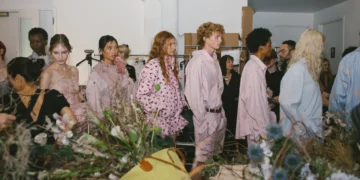



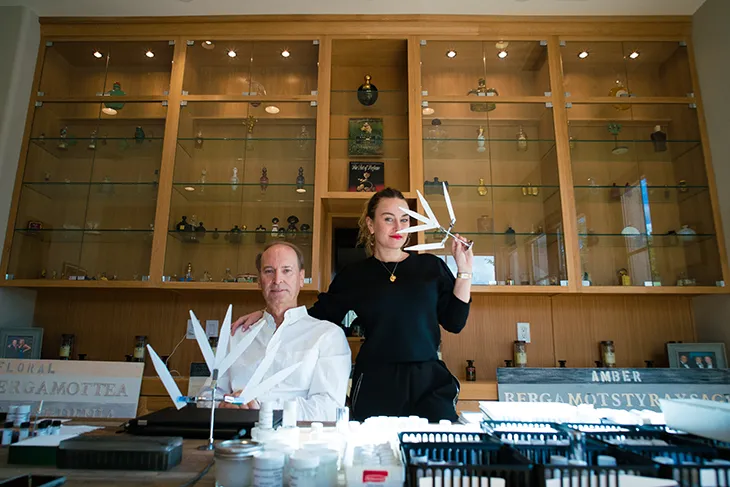
Melanie Dir introduces GAMINE, a new fragrance house rooted in her lifelong relationship with perfumery. Born in Cannes, France, Dir grew up around scent through her father, master perfumer Claude Dir, who led the American expansion of the privately family-owned fragrance house MANE. Her earliest memories formed inside the laboratory, where raw materials, formula blotters, resins, musks, woods, and unexpected accords became part of her daily surroundings.
INTERVIEWS
At six, Dir began formal training with her father in raw materials and composition. That early education shaped the way she understands fragrance today, from ingredient structure to the finished object. After nearly three decades in global beauty, with work tied to Laura Mercier, Virgil Abloh, and Isamaya Ffrench, Dir now brings that experience into GAMINE as founder and author of her own fragrance house.
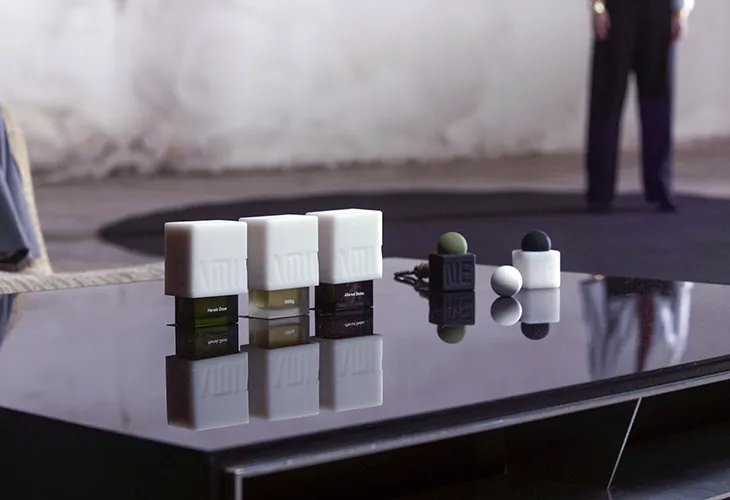
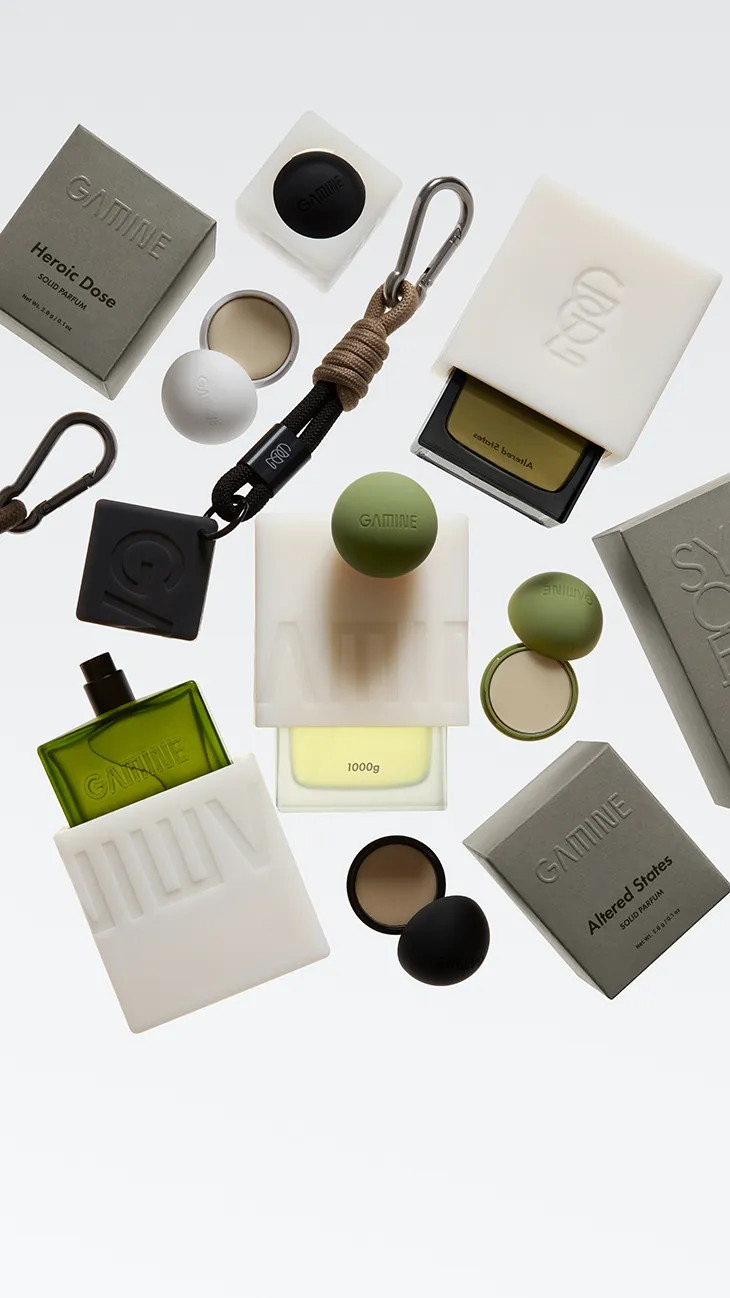
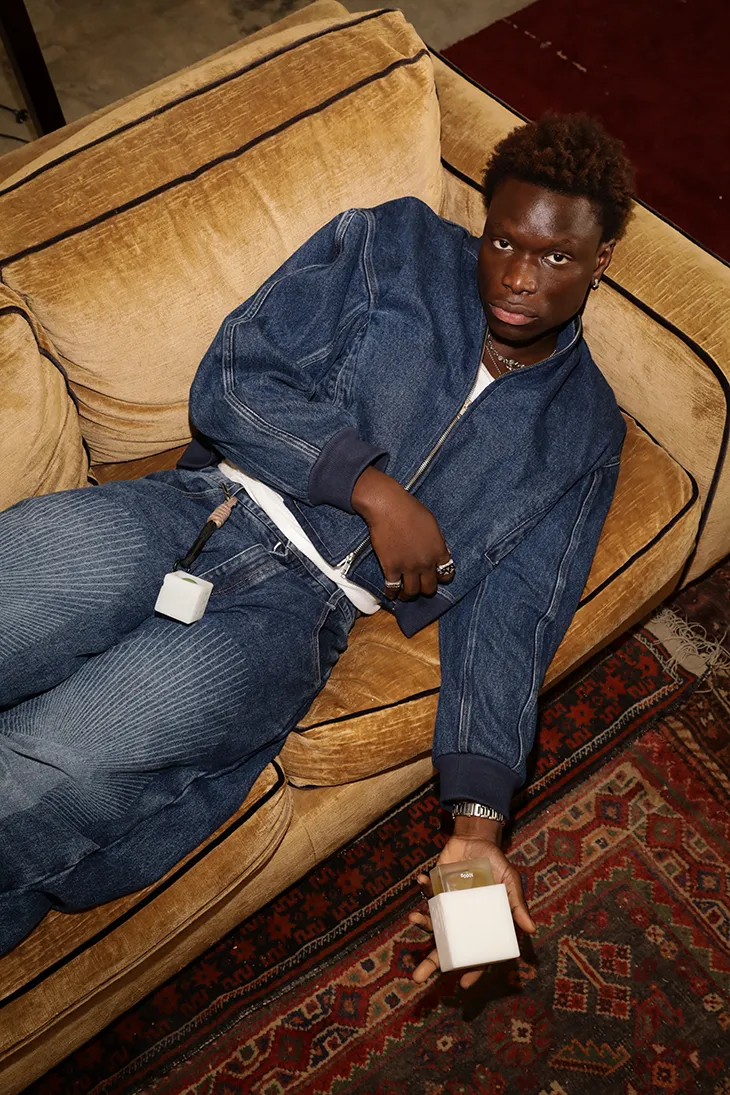
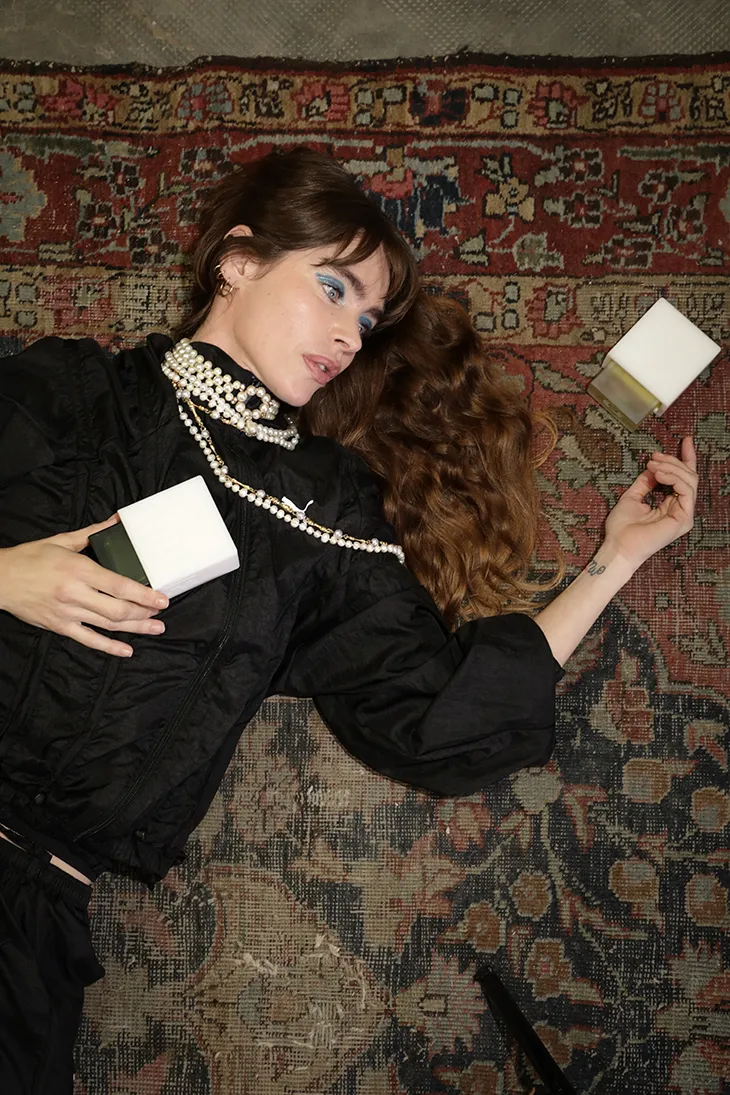
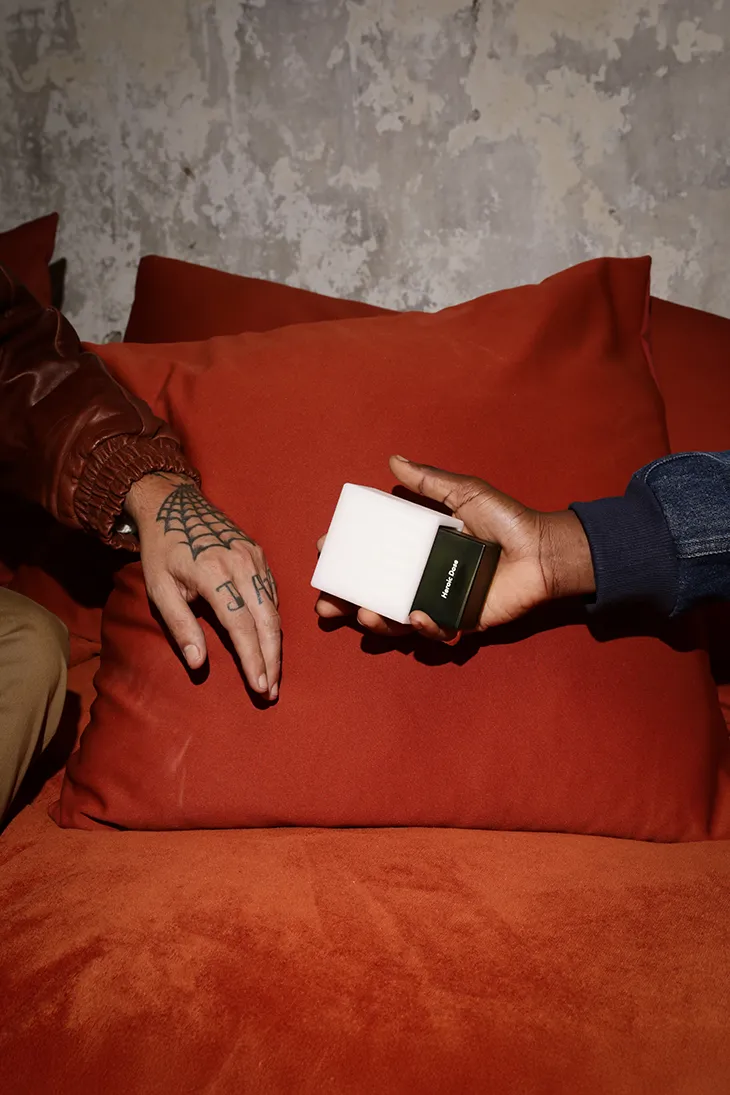
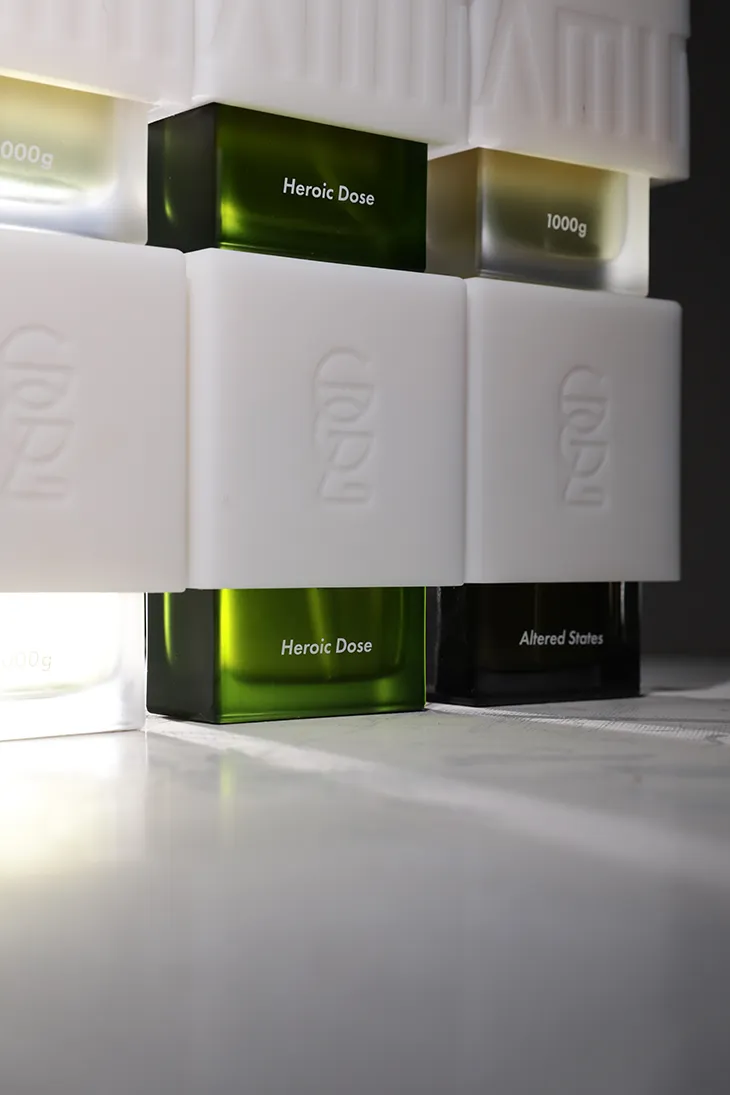
GAMINE develops between Brooklyn, Grasse, and Milan, with design in Brooklyn, batching in Grasse, and composition in Milan. The house introduces two formats at launch: Bricks, a 100ML Eau de Parfum priced at $290, and Transit, a portable system with Hardware priced at $85 and Solid Parfum priced at $75. Bricks arrives in weighted glass encased in custom eco-rubber, while Transit translates the same compositions into a solid format housed in a detachable eco-rubber cube with a suction-release system and industrial carabiner.
I wanted to bring beauty back to something more truthful. More grounded. Something people could engage with sensorially – weight, touch, and the tension of the composition itself.
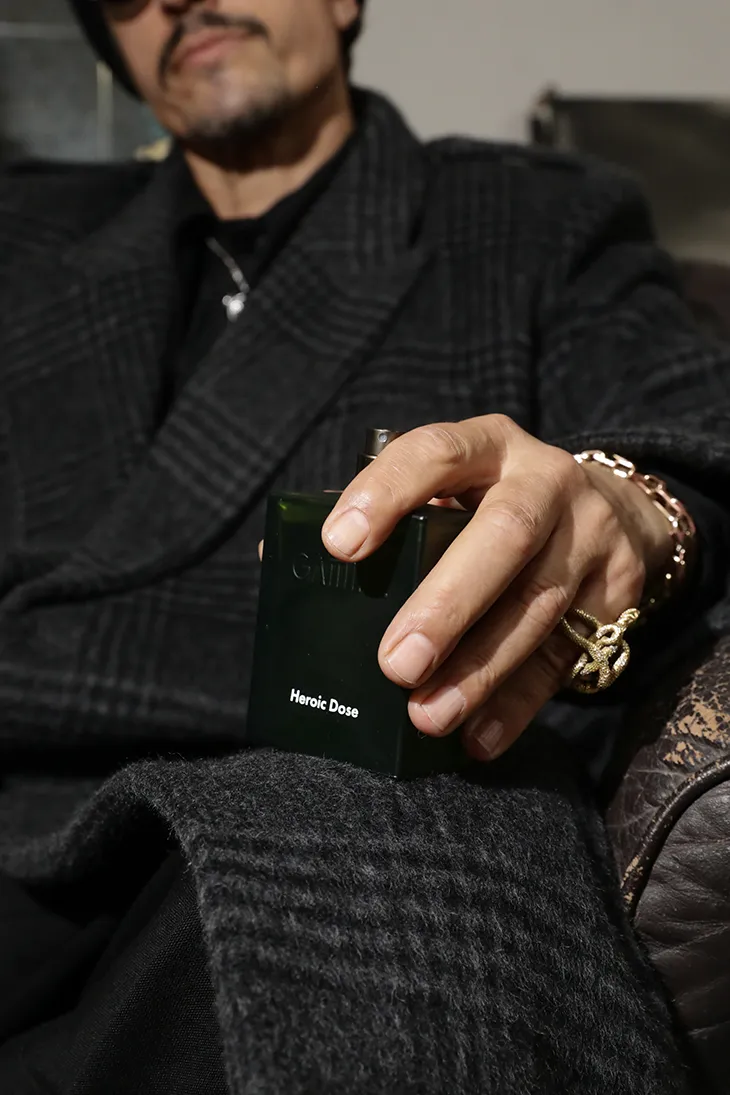
The fragrance lineup opens with three compositions. Heroic Dose brings together Côte d’Azur cypress, blue hemp, salty marine air, chocolat noir, saffron, French hay, vetiver Bourbon absolute, cumin, and patchouli. 1000g combines Nepal pepper, blue chamomile, Lavande de Provence, rose absolute, iris, olibanum incense, oud, oakmoss, and Ambramone. Altered States pairs nutmeg, cardamom, plum, black truffle, jasmine sambac, Namibia Bushman Candle, sandalwood, tonka absolute, and guaiac wood.
In our exclusive interview, Melanie Dir speaks with DSCENE editor Ana Markovic about building GAMINE in her own voice, working from family knowledge, and treating fragrance as scent, object, and daily ritual.

You spent years as the architect behind icons like Pat McGrath and Virgil Abloh, translating their visions into physical products. What specific moments of inspiration or frustration led to the decision to stop being a translator for others and step into the role of primary author?
I always knew I wanted to build something of my own, something that could carry an idea from origin to final form without interruption. But I also knew I had to earn that position. Working alongside Pat and Virgil wasn’t just experience, it was an education in instinct, in rigor, in knowing when to push and when to hold. I was there to translate their visions into something tangible, and in doing that, I learned the discipline behind creation at the highest level. But translation, by nature, has a boundary. No matter how precise you are, the final expression belongs to someone else. Over time, I felt a growing need to follow my own instinct all the way through, to not stop at interpretation, but to carry the idea myself, from the first impulse to the finished object. GAMINE came from that readiness. Not a reaction, but a progression. I put in the time to learn from the masters. Now it’s about building in my own voice. Not translation, authorship.

What did you have to unlearn about the beauty industry to ensure GAMINE stayed rooted in olfactive integrity rather than just becoming another lifestyle accessory?
It wasn’t about unlearning, it was about confronting something I had been immersed in my entire life. Having witnessed the shifts across decades, I felt the landscape become increasingly dreamlike, soft, diffuse, almost untethered. Beautiful, but distant. I wanted to bring it back to something more truthful. More grounded. Something people could engage with sensorially – weight, touch, and the tension of the composition itself. That’s where the instinct to intervene came in, not to reject, but to deconstruct and rebuild a perception that felt more exact. Something I was personally drawn to. The pull was always toward the tangible. Presence, weight. Fragrance that could almost be held. Compositions with a singular identity, ones that don’t blur, but define. At the same time, I was thinking about how we live now. Constant movement, shifting between stillness and transit. Some move through the day in fragments, others seek a fixed olfactive identity. GAMINE is built to hold both. It’s about gesture, how fragrance is carried, applied, lived with, designed for a global audience moving across contexts and speeds. With GAMINE, fragrance returns to presence. Not imagined, but lived. You feel it. You carry it. You make it your own, worn invisibly or with full intention.
What I’ve chosen to disrupt is the idea of harmony as comfort. I work with conflicting raw materials and molecules to create an unexpected tension at the heart of each composition, one that demands presence and invites engagement.
When transitioning from Chief Product Officer at a major group to founding GAMINE, what rule from the corporate beauty playbook did you most enjoy breaking?
After three decades shaped by discipline and the best in the industry, I carry that rigor into GAMINE while stripping away corporate processes and layers of approval, allowing for a quieter, more focused space to build with intention, imagination, and authenticity.
Friction brings humanity back. It creates tension, sometimes even discomfort, that asks you to engage, to notice, to experience something more deeply.
The original 2016 launch of Gamine carried a different energy. What elements of that first vision did you have to abandon to make space for this new Rewired Luxury system?
The 2016 version was a preface, a private capsule of my own curation, quietly shared. Over the past decade, that foundation evolved. Through growth and observation, of how we live, move, and engage today, I expanded that instinct into something more structured, integrating custom materials, packaging, molecular innovation, and new gestures of use. GAMINE today carries that original instinct forward, but within a system shaped by a global audience, one that reflects movement, adaptation, and a broader language of grit and luxury. It’s no longer solely personal expression, it’s a platform. A hybrid of authorship and access. A system designed for the wearer to enter, interpret, and ultimately make their own.
What technical rule of perfumery did your father teach you that you still follow, and which one have you deliberately broken for this collection?
My father, with over 50 years of experience as a master nose, composes with a high percentage of naturals, an olfactive artist building structure, identity, and lasting presence into every formula. For GAMINE, carrying that discipline forward was non-negotiable. It’s what anchors the work – delivering both potency and credibility through the use of best-in-class raw materials. What I’ve chosen to disrupt is the idea of harmony as comfort. I work with conflicting raw materials and molecules to create an unexpected tension at the heart of each composition, one that demands presence and invites engagement, allowing the wearer to interpret it and ultimately make the fragrance their own.
Rubber isn’t traditionally associated with luxury, that’s exactly why it became the core medium for GAMINE. It exists in non-poetic contexts, flooring, tires, industrial mechanisms. It’s grounded, functional, and has stood the test of time. It is what it is. That honesty was the starting point.

Growing up around raw resins and musks, what is the most unexpected or unconventional scent pairing you have experimented with just to test its limits?
This fall, you’ll see. A new dimension of scent molecules coming from GAMINE!
You have said grit keeps GAMINE human. In a market focused on smoothness and refinement, why does sensory friction feel like a more accurate expression of luxury today?
Grit is where soul and character are formed. It’s the truth. That’s where I begin, then build upward, enhancing and fusing it with a more refined expression through production, research, and the use of high-quality materials. Luxury has long been defined by smoothness, polished, resolved, easy to consume. But that removes the human element. It becomes distant. Friction brings it back. It creates tension, sometimes even discomfort, that asks you to engage, to notice, to experience something more deeply. In that moment, perception shifts. You begin to see, and smell, things differently. Perfection is surface. Truth holds.

Most fragrance is presented as an object for display. Does the addition of a heavy industrial carabiner suggest a different relationship, where fragrance functions more like a tool than a decorative item?
Exactly. With HARDWARE, I wanted to shift that relationship. The carabiner introduces function, weight, and movement, a utilitarian gesture that transforms fragrance into something active. It creates a kind of transit collaboration with the wearer, allowing for localized touch-ups throughout the day. The engineering draws from mountaineering tools, heavy cording and metal clip closures, bringing durability and precision into the object itself. The custom rubber cube houses the Solid Parfum with a self-suction release system, holding and releasing with intention. It becomes an olfactive identity in motion. Not something you place, but something that moves with you.
I wanted rose to recognize the power of dominance she could hold, and to shift her narrative. 1000G comes from that evolution. Not removing rose’s beauty, but giving her depth, control, and a stronger sense of identity.
You have been named a Vogue Business 100 Innovator. What is the most significant risk taken with the eco-rubber material that traditional luxury houses would likely avoid?
Rubber isn’t traditionally associated with luxury, that’s exactly why it became the core medium for GAMINE. It ties back to GRIT. Rubber exists in non-poetic contexts, flooring, tires, industrial mechanisms. It’s grounded, functional, and has stood the test of time. It is what it is. No embellishment. That honesty was the starting point. From there, it became a study, of density, opacity, surface, and finish. Taking something with a raw, utilitarian character and elevating it into a new form. Something considered, something precise. The result is a material with its own identity, one that now sits alongside traditional codes of luxury: wood, metal, glass, porcelain. Not replacing them, but redefining what belongs next to them.
1000G is described as a disobedient rose that submits just long enough to take control. Why does dominance feel like a more relevant narrative than traditional romantic framing, and do you see the category becoming more open to stronger floral identities?
I grew up around rose fields in Provence, it was part of my childhood. I’ve always loved her. She’s beautiful, flirty, almost precious. But over time, I felt she needed to be challenged. To be pushed out of that softness. To become a bit tougher, a bit more grounded. She started to feel like a younger sister, one with presence, but not yet fully realized. I wanted her to recognize the power of dominance she could hold, and to shift her narrative. 1000G comes from that evolution. Not removing her beauty, but giving her depth, control, and a stronger sense of identity.
You design in Brooklyn, batch in Grasse, and compose in Milan. How are those three production influences kept aligned, and what remains distinctly Brooklyn in the final composition?
The alignment comes from clarity of roles. Grasse anchors the work in heritage and material excellence. Milan refines it through engineering and precision. Brooklyn is where it begins,the instinct, the tension, the lived energy behind every decision.
There’s no overlap, only progression. What remains distinctly Brooklyn is the friction. The rawness. The refusal to over-refine. It’s what keeps the final composition grounded, human, and present.
If someone finds a GAMINE Brick 100 years from now, what do you want that heavy glass and eco-rubber object to tell them about the cultural era we are living in right now?
I’d want them to recognize the material, not as something new, but as something that has endured, traveling through time with durability and purpose. That we were in a moment of return. Moving away from excess and surface, and back toward materials that hold weight, function, and truth. And that it was designed to be revisited, reinterpreted by the next wearer, and made entirely their own.
Follow Melanie Dir and GAMINE.