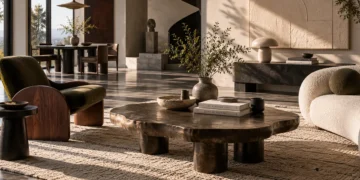



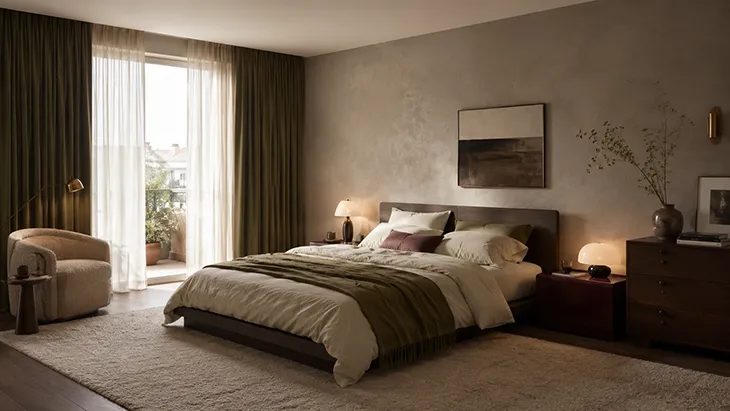
The bedroom is the most personal room in the house. Choosing its colors, fabrics, lighting, and furniture means shaping what greets you in the morning and what surrounds you at night. In 2026, that choice turns toward warmer paint, softer textiles, lower lighting, fuller curtains, and furniture with a lived-in presence.
Bedrooms now feel less like hotel rooms and closer to the people who use them. Matching furniture sets, generic art and identical accessories can make the room feel flat. A mix of old and new pieces gives the bedroom more character.
A vintage chair, framed photograph, handmade vase, stack of books or small artwork can make the room feel personal. These details work best when they have a real connection to daily life. The goal involves warmth and identity, and not decoration for decoration’s sake.
The Bed
The bed is the first major decision. Its size, height, frame, and headboard affect the wall behind it, the scale of the nightstands, the curtains, and the way the room takes color. Current bed design puts the frame back in view, with upholstered bases, curved headboards, vintage iron, darker wood, and low platform forms defining the bed through material and proportion.
These choices make the frame part of the room’s architecture, especially with full curtains, textured walls, and lower bedside lighting. A statement bed frame for a styled bedroom also makes sense as a long-term piece. A quality frame can serve for years.
Warmer Color
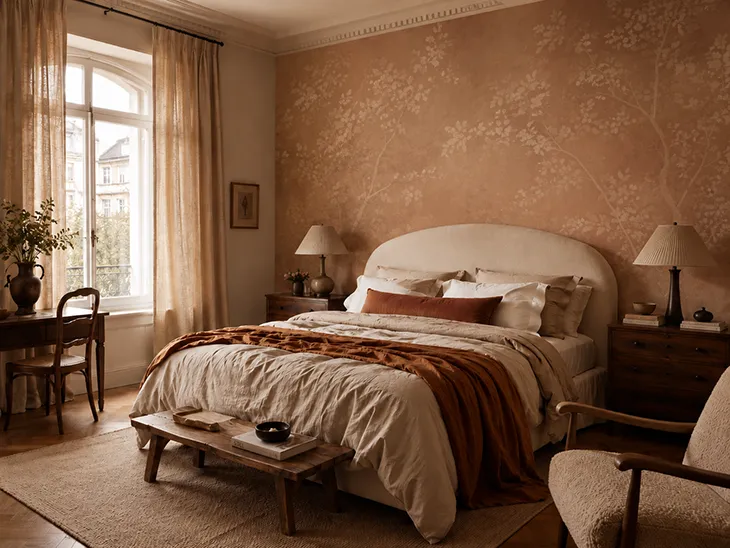
The all-white bedroom no longer dominates interiors. Designers now reach for clay, cocoa, mushroom, olive, ochre, burgundy, cream, sand, and soft brown. These colors give bedrooms a sense of warmth that plain white walls rarely achieve.
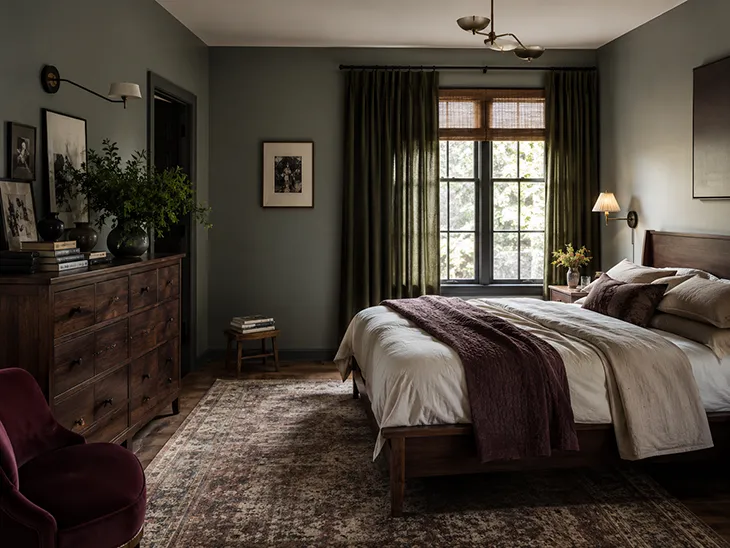
Tone-on-tone color gives bedrooms depth through subtle shifts in shade, material, and finish. One color family can shape the wall, trim, bedding, rug, and furniture, with each element carrying a slightly different shade. A brown bedroom might use espresso wood, linen sheets, a tan rug, and a bronze lamp. A green bedroom might pair sage walls with olive curtains and dark timber. The result depends on small shifts in tone, material, and finish.
Textured Walls
Paint still matters, while surface now plays a larger part in bedroom design. Limewash, plaster, grasscloth, silk wallcovering, timber paneling, and trim give walls texture. These finishes suit bedrooms because they change under morning light, bedside lamps, and the softer glow of evening.
Grasscloth brings fiber to a neutral room. Limewash makes deeper color feel less flat. Paneling gives the bed wall structure and can replace a tall upholstered headboard. Wallpaper has also returned through botanical prints, narrow stripes, and small-scale geometric designs. These patterns work well behind the bed, along a single wall, or throughout smaller bedrooms where paint alone can look too plain.
Full Curtains
Curtains have become one of the clearest signs of a finished bedroom. Designers favor full-height panels, ceiling-mounted tracks, generous pleats, layered sheers, and heavier night curtains. Fabric changes the way daylight enters the room and gives windows a softer frame.
Some projects take curtains beyond the window. Fabric panels behind the bed can replace a traditional headboard. Canopy curtains add enclosure without heavy construction. Wall-to-wall pleats can hide awkward windows or uneven wall lines. Pattern also returns through curtains, especially in bedrooms with simple bedding and restrained walls.
Layered Lighting
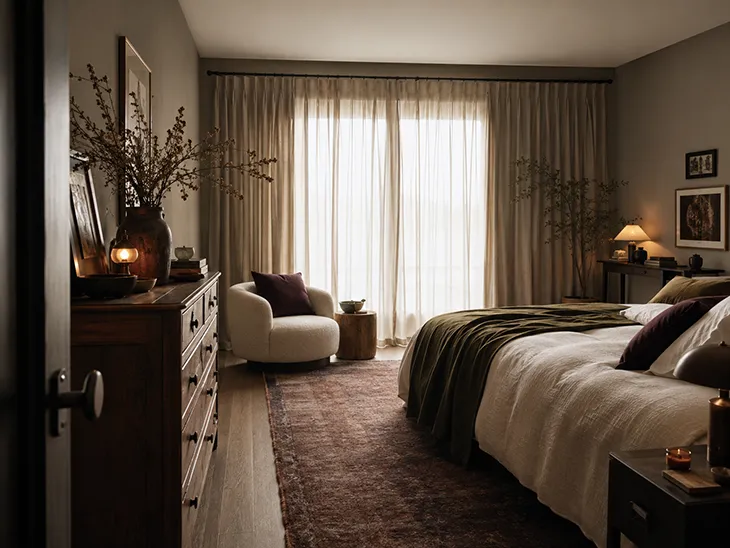
A bedroom needs several kinds of light. Bedside lamps, wall sconces, floor lamps, picture lights, small dresser lamps, pendants, and dimmable ceiling fixtures support different parts of the day. A single overhead light usually creates a flat, practical glare.
Good bedroom lighting stays low and warm. A shaded lamp beside the bed helps with reading. A wall sconce frees space on a small nightstand. A small lamp on a dresser softens a storage area. Picture lights and pendants add glow without filling the ceiling with bright fixtures. Dimmers now matter as much as the fixture itself, especially in rooms where evening light needs gradual adjustment.
Softer Furniture
Bedroom furniture now favors rounder forms, fabric finishes, darker timber, and pieces that feel less matched. Upholstered headboards connect to this shift, while designers also bring back vintage iron beds, skirted tables, curved chairs, benches, and dressers with stronger character.
The matching bedroom set has started to look flat. A better room might pair a timber bed with a lacquered nightstand, a fabric bench, and a vintage dresser. This mix gives the bedroom a collected look. Dressers also return as important bedroom pieces, with enough surface for books, framed photographs, a tray, a lamp, or ceramics. Storage becomes part of daily use, not an afterthought hidden behind the bed.
Relaxed Bedding
Bedding trends now favor layers that can change with the season: washed linen sheets, muslin covers, wool blankets, waffle cotton, jacquard, stitched coverlets, and lighter quilts. These materials give the bed variation through weave, weight, and finish. Color follows warmer room palettes, with off-white, clay, ochre, muted red, and leafy green across sheets, covers, and pillowcases. A complete matching set can feel flat, so related tones with different textures create a richer effect.
Pattern comes through heirloom-style florals, vintage motifs, refined pinstripes, and smaller prints scaled to the bed. These choices add character and keep the frame and headboard visible. Sheets, covers, throws, and pillowcases can shift with the season, giving the bedroom an easy way to change through fabric.
Storage
Storage shapes the way a bedroom feels each day. A beautiful room quickly loses its effect when clothing, books and small items take over surfaces. Current bedroom design gives storage a stronger visual and practical part. Dressers, wardrobes, bedside tables and benches now need to serve daily routines. A dresser with strong proportions can become one of the key furniture pieces in the room. A bedside table with drawers can hide small items. A bench at the end of the bed can hold blankets, clothes or bags during the day.
Built-in wardrobes also suit modern bedrooms, especially in smaller homes. Simple doors, warm wood, fabric panels or painted finishes can make storage feel integrated with the rest of the room. The best bedroom storage reduces clutter and helps the room feel calm.
Finally, the strongest bedroom trends in 2026 point to rooms that support rest, comfort, and daily use. Warm color, tactile walls, natural materials, layered lighting, simpler bedding, and better storage all contribute to that effect. A strong bedroom needs a clear relationship between comfort, function, and personal taste. When those elements work together, the room feels warmer, easier to use, and better suited to the way people live now.