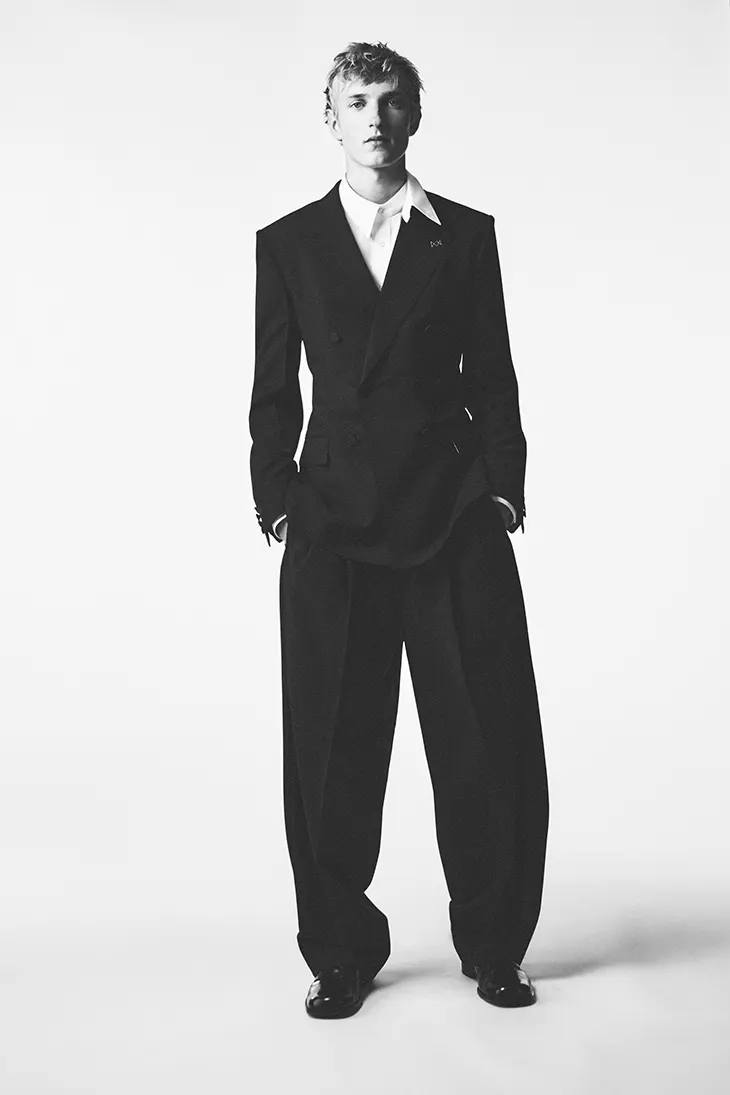



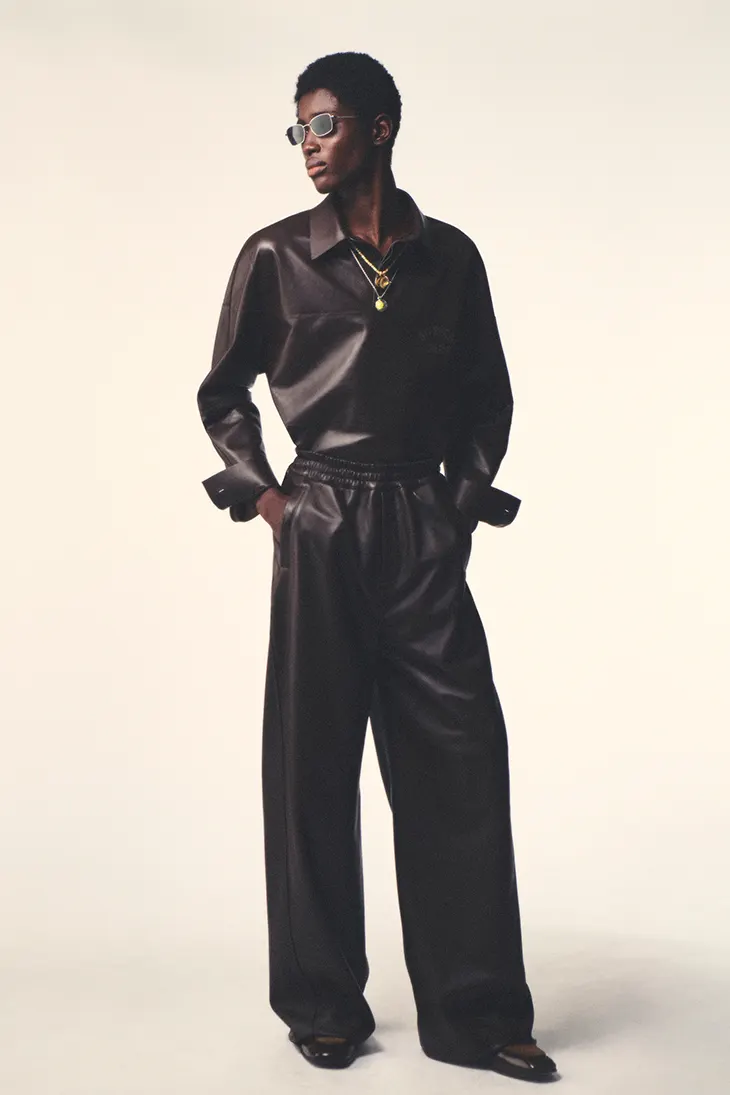
Givenchy returned to menswear for Spring Summer 2027 with a presentation inside its home at 3 avenue George V, where Sarah Burton staged her first public men’s collection for the house as a private study of wardrobe, character and space. The presentation moved through three rooms, and each room carried a different view of dress. Burton framed the project through the idea of a house within a house, using familiar garments as the foundation for a new direction.
SPRING SUMMER 2027
She began with exact forms: a double breasted tailored jacket, wide leg trousers, a white cotton shirt, a bomber and a perfecto. Around them, she placed embroidered pieces, personal treasures and sportswear separates in soft bright leather. She wanted the collection to feel intimate and to reflect her conversations with friends of the house.

Burton worked with British artist Rachel Whiteread, whose sculptures often cast the inner volume of domestic spaces and objects. Whiteread’s Closet came from the inside of a wardrobe, while House made the interior of a Victorian terraced home solid. For Givenchy, Burton recommissioned moulds of wardrobe interiors and used the colored Essex found objects from the campaign shown before the presentation.
Burton focused on observed archetypes: the Prince of Wales suit, pinstripe tailoring, the white shirt, the coat, the tracksuit, the workwear set, a leather rugby shirt, embroidered MA-1 jackets, floral jacquard knits and the evening jacket. These pieces formed her first outline for Givenchy menswear.

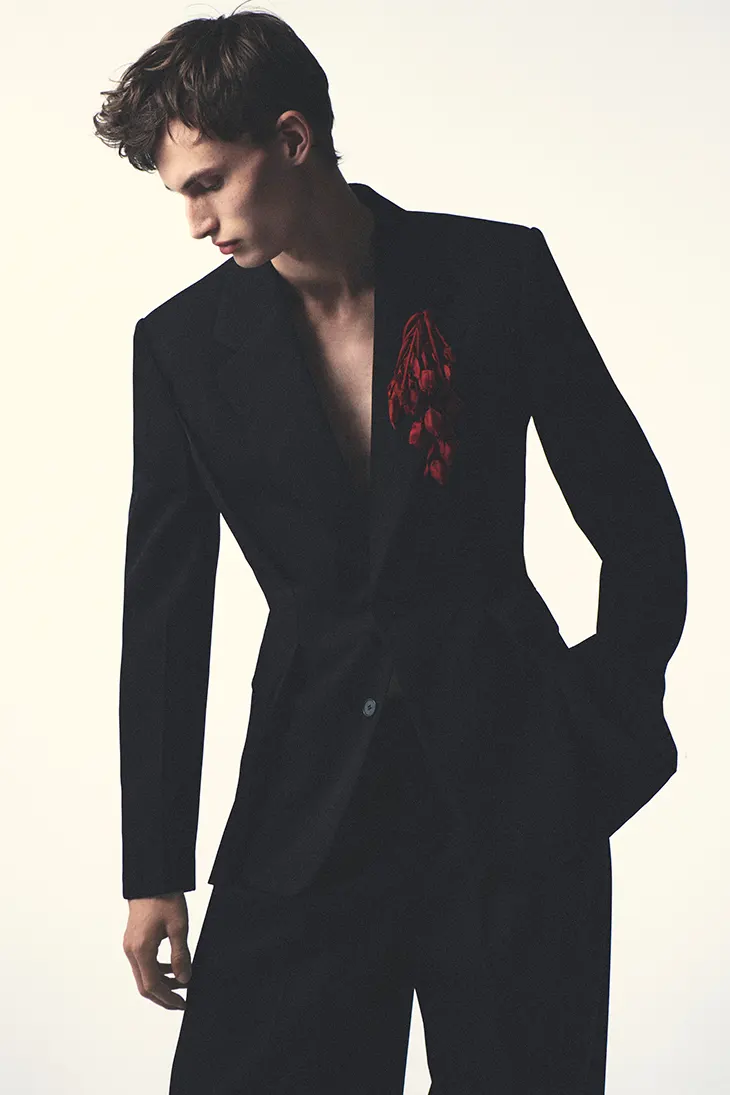
Her tailoring carried a precise sense of intervention. Burton sliced, peeled and cut into the suit, tipping the lapel forward and removing the garment from routine formality. She still began with silhouette and the shoulder, using construction to define presence. Color brought another charge, especially in a near fluoro yellow silk satin car coat worn with a broken in pant and sneaker. Leather tracksuits appeared in full colorways and black, paired with a new softly rounded skate sneaker.
“I wanted this to feel very personal and intimate, and to reflect the conversations that I have with the friends of the house,” said Sarah Burton about the collection.