


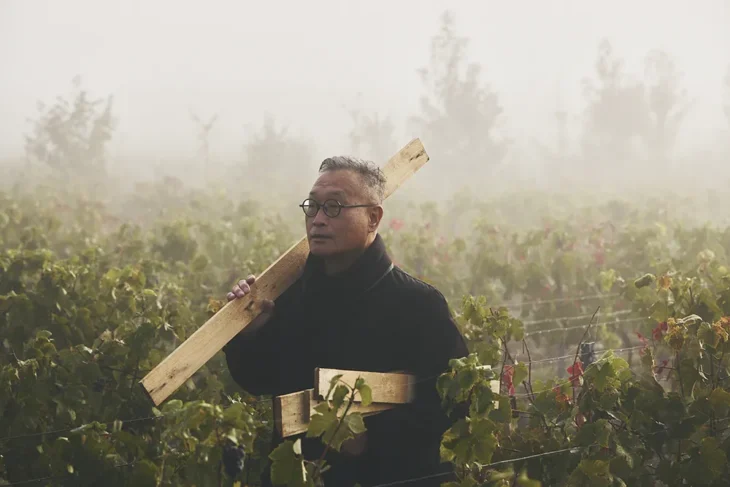
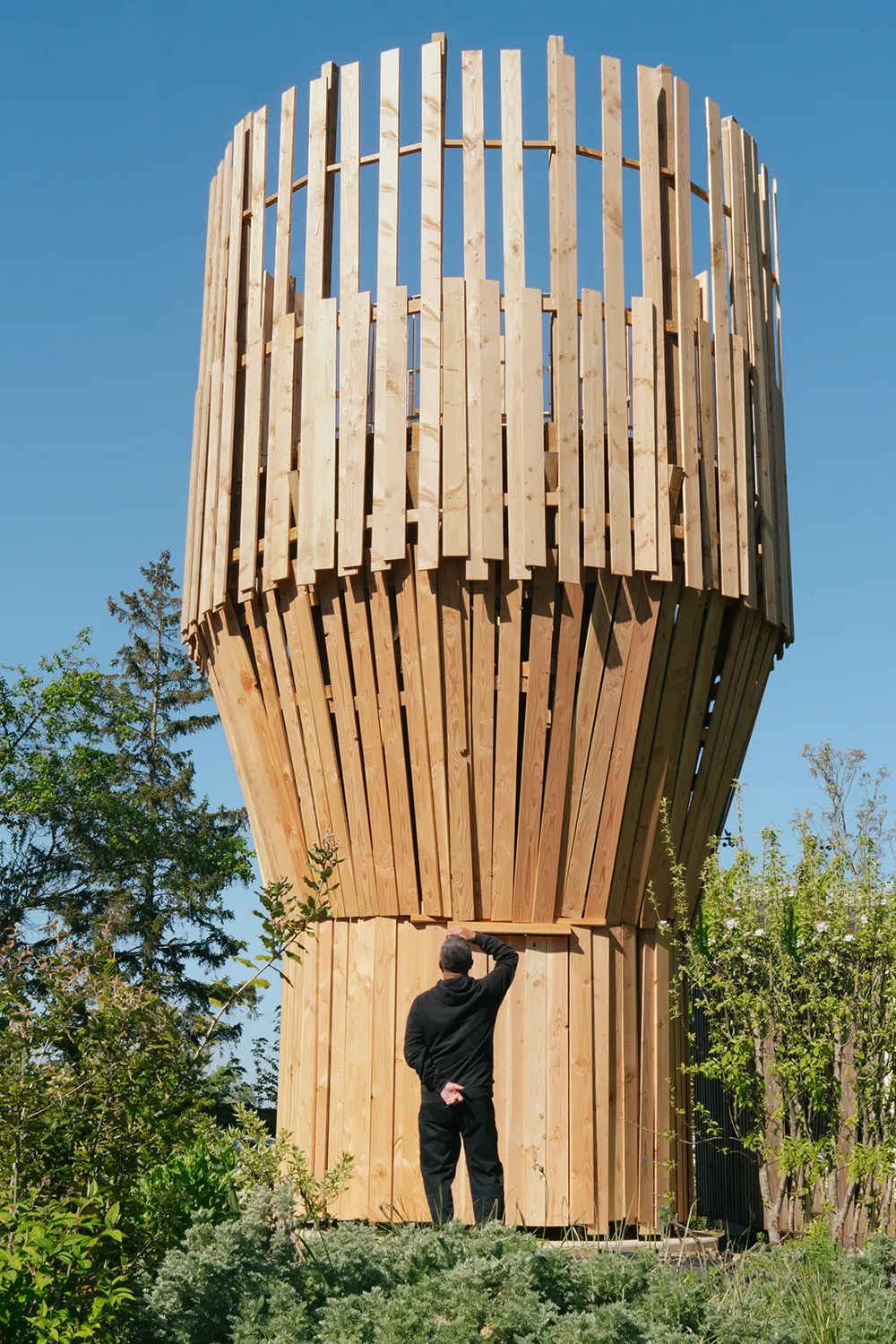
Japanese artist Tadashi Kawamata has long created structures that change how viewers move through and understand space. Working with wood, reclaimed materials and temporary architectural forms, his in-situ installations challenge ideas of permanence while inviting physical interaction. At the end of May 2026, Kawamata’s three permanent installations for Maison Ruinart’s Conversations with Nature were officially unveiled at Ruinart’s historic address in Reims, marking the latest chapter in the house’s ongoing art series dedicated to restoring a conscious connection to the natural world.
ART
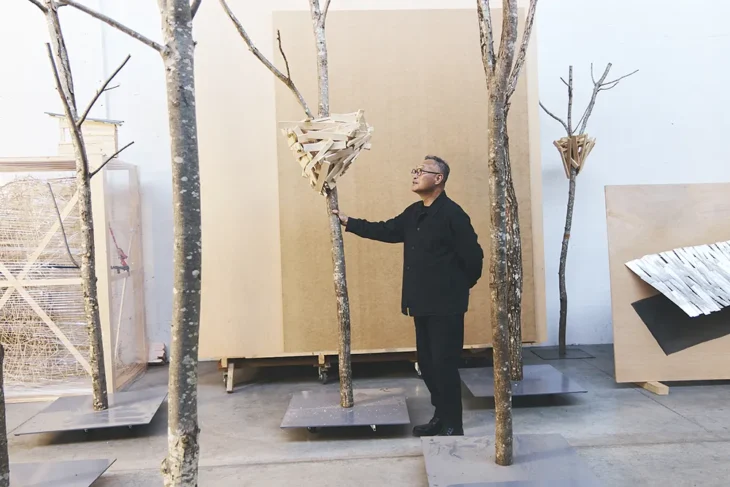
For Ruinart, Kawamata developed Tree Hut, Nest and Observatory, three works shaped by the Champagne region’s vineyards, chalk cellars, shifting light and living biodiversity. Born in Hokkaidō in 1953 and based between Tokyo and Paris, the artist explores the relationship between art, architecture, design and daily life, often using reused natural materials to question permanence and invite new points of view. In conversation with DSCENE Magazine Editor Katarina Doric, Kawamata discusses scale, recycled wood, environmental awareness, the influence of Ruinart’s terroir and how art can help visitors feel nature differently.
Your work often explores scale and perspective. How did the landscape and architecture of the Champagne region influence the design of your three new installations? – When I arrived at 4 RUE DES CRAYÈRES, I was struck by the contrast between what happens above and below ground: the open vineyards, the light, the air, and then the silent depth of the chalk cellars. I wanted to create a dialogue between these two worlds. The three works each respond to that tension in a different way: one creates a sense of refuge, one attaches itself to the architecture, and one moves upward, almost like a bridge between the hidden space below and the open sky above.
The Champagne landscape itself is constantly shifting with climate, humidity, and light, so I wanted to work with materials that reflect that same sense of transformation and vulnerability.
You frequently use recycled wood and materials. How did the environmental values of Ruinart and the Champagne terroir inform your material choices for this project? – Wood is essential to my practice because it is a living material that carries memory; marks, pressure, and time. Each plank tells a story, and like skin, it breathes, changes, and transforms. This felt especially meaningful at Ruinart, where attention to nature and time is central. The Champagne landscape itself is constantly shifting with climate, humidity, and light, so I wanted to work with materials that reflect that same sense of transformation and vulnerability rather than something fixed or closed.
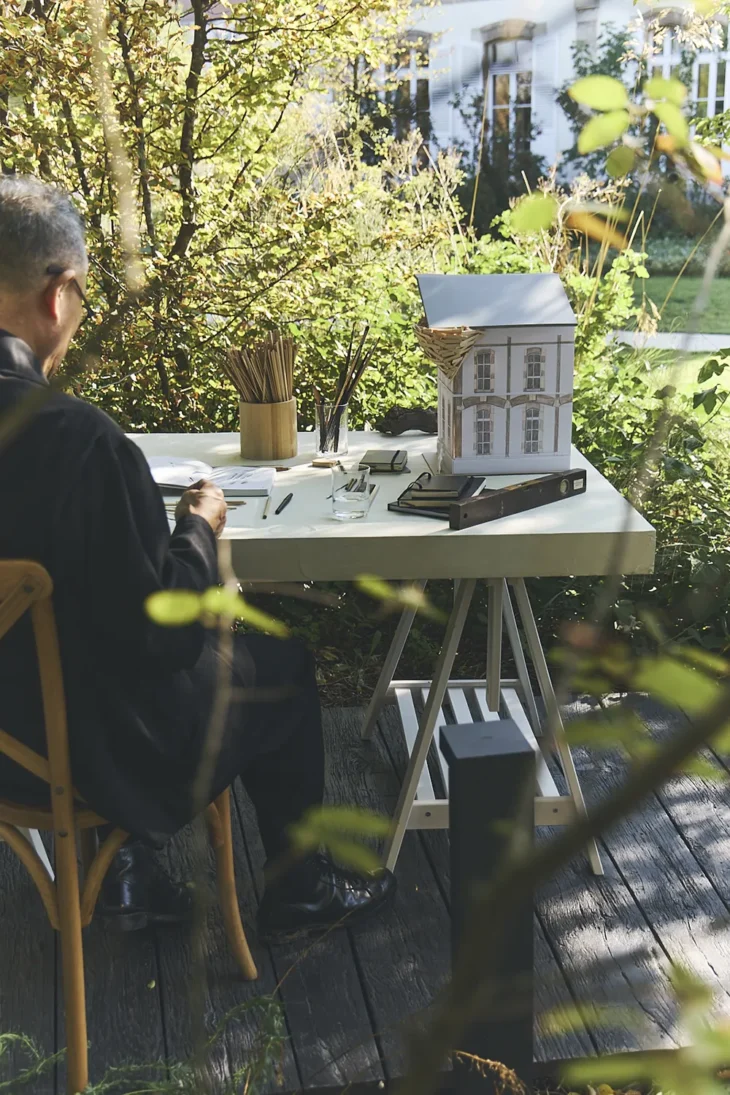
Tree Hut, Nest, and Observatory each offer a unique experience. How do these installations dialogue with one another, and what story do they collectively tell? – I see them as a small ecosystem rather than three separate works. Tree Hut suggests refuge and intimacy, Nest speaks to trust and attachment, and Observatory opens the view outward and upward. Together, they move between protection and exposure, inviting visitors to shift their perspective, from looking inward to looking out, and to consider how human structures must adapt and evolve in dialogue with natural cycles.
Tree Hut suggests refuge and intimacy, Nest speaks to trust and attachment, and Observatory opens the view outward and upward.
Your in-situ installations encourage visitors to climb and move through them. How important is the physical interaction in conveying your vision of nature and space? – Physical interaction of the viewer with my works is very important. I do not want the work to remain only visual. I want people to experience a change in their body, in their breathing, in the way they look and listen. When you move through a structure or rise above the ground, even a few meters, your perception changes. You feel the wind differently, you hear things differently. That shift is part of the artwork itself.
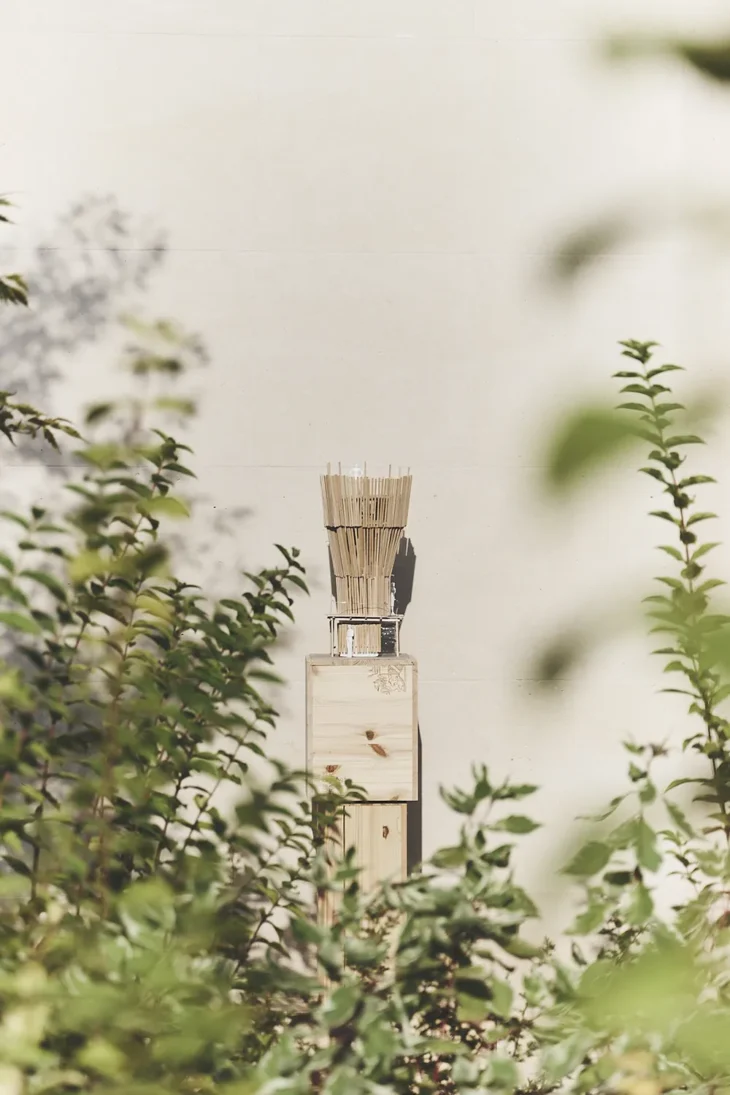
Miniaturization is a recurring theme in your practice. How did your preparatory drawings and small-scale models translate into the monumental installations in Reims? – Drawing and model-making are fundamental to my process; ways of thinking through balance, tension, and scale. These smaller forms allow me to explore ideas, but the work only fully becomes itself on site. Once I am there, working with the material and responding to the space and weather, the installation evolves into something more open and alive.
When you move through a structure or rise above the ground, even a few meters, your perception changes.
Champagne production is deeply connected to natural rhythms and biodiversity. Did observing the vineyards and Maison Ruinart’s environment inspire new elements in your work? – Observing the vineyards resonated deeply with my process. Beyond their visible beauty, I was drawn to the subtle activity, the mist, wind, insects, and movement of the leaves. Everything exists in relation. That atmosphere encouraged me to create works that do not represent nature directly, but instead heighten awareness of it. In a way, this reflects champagne itself, a long, invisible process expressed in something fleeting and ephemeral.
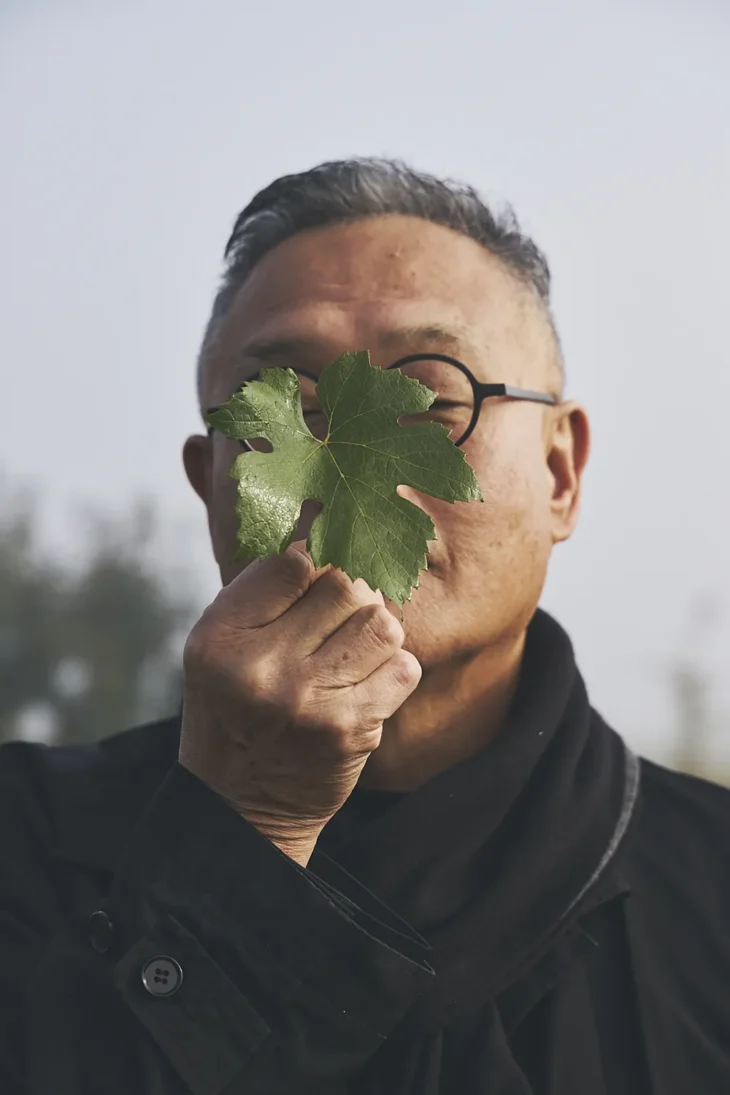
Your installations often blur the line between architecture and sculpture. How do you approach the balance between structural integrity and aesthetic fragility in these projects? – I am interested in structures that appear fragile, even when they are carefully built. There is always a balance between intuition and technical necessity. While public installations require engineering and precision, I try to preserve a sense of lightness and instability so the work continues to express transience rather than permanence.
I want people to experience a change in their body, in their breathing, in the way they look and listen.
How did your first impressions of the Maison including the morning mist, sunlight, and breeze influence the mood, materials, or form of the installations? – My first impressions were essential, the shifting light, humidity, and quiet movement of the Maison created a strong atmosphere. I wanted the works to remain open and porous so that wind, shadow, and changing weather could become part of the experience. That initial encounter with the vineyards, foggy, calm, and deeply sensory, reinforced the connection between nature, time, and the ephemeral qualities I seek in my work.
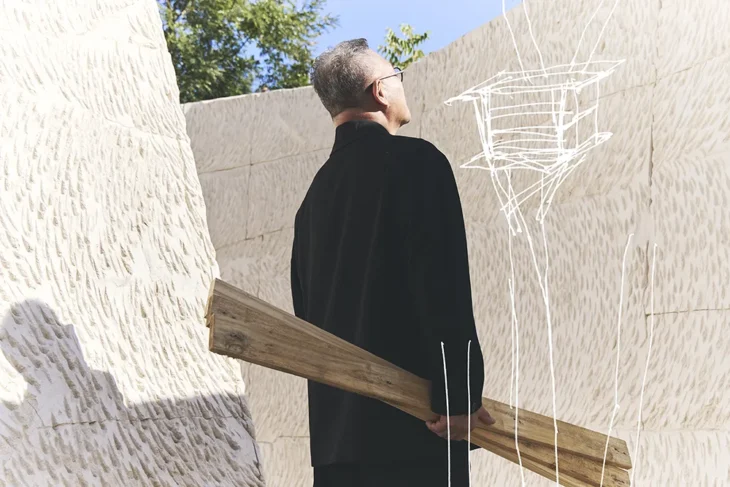
You’ve exhibited internationally at museums and biennales. How does creating a site-specific work for a historical Maison like Ruinart differ from gallery or museum projects? – A place like Ruinart has history, landscape, craft, and architecture that all exist together. In a museum, the context is more open. For Ruinart, I had to respond to a living site with its own rhythms and memory. That is how I prefer to work.
Looking back at your work for Ruinart, what do you hope visitors take away from experiencing your installations and the connection to nature? – A heightened awareness of the place, something simple but lasting. If the work makes them feel the wind differently, notice a detail in the landscape, or think about fragility and shelter in a new way, then that is enough.