


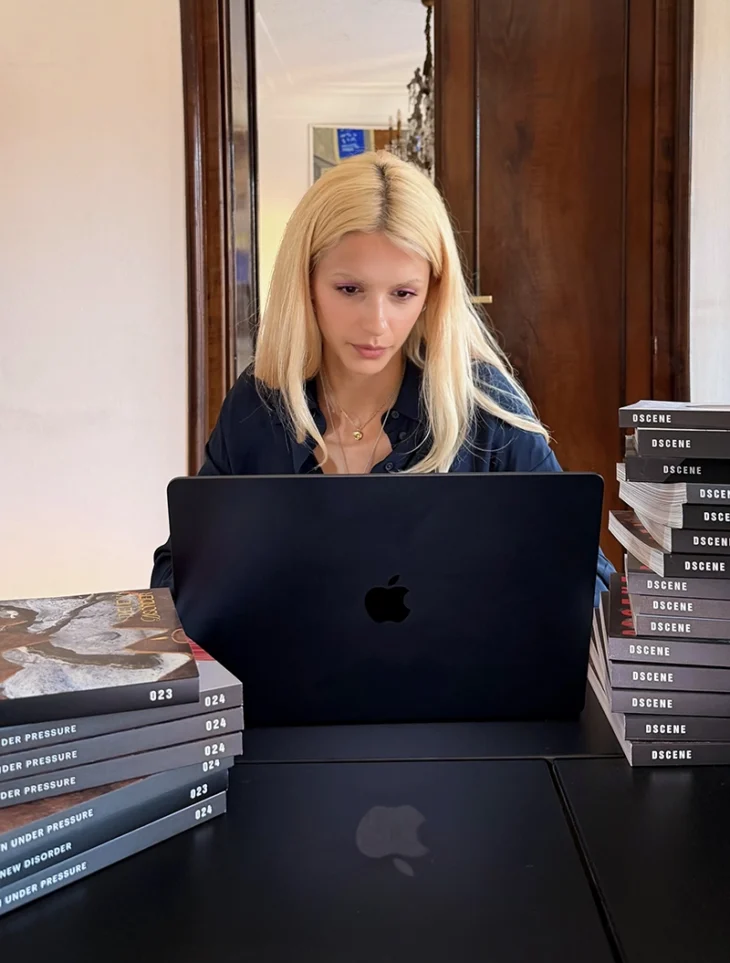
Editors rarely work from one place. The idea of a fixed office still exists, yet much of my work for DSCENE happens somewhere between destinations: in airports, hotel rooms, cars, restaurants, galleries, temporary press spaces, and the quiet hours that appear between scheduled events. A laptop earns its place in this routine through reliability, portability, and its ability to disappear into the work.
TECH
Over the past several months, the MacBook Air M5 has followed me through a sequence of trips that demanded very different things from it. I used it during a safari in Tanzania, while reviewing a hotel in Kos, attending art events in Hydra, visiting an exhibition in Vienna, organizing a DSCENE event at Villa Albertine in New York, and hiking through the Dolomites. I am writing this article during that final trip, with the day’s photographs waiting beside my notes.
The locations changed. The work continued.
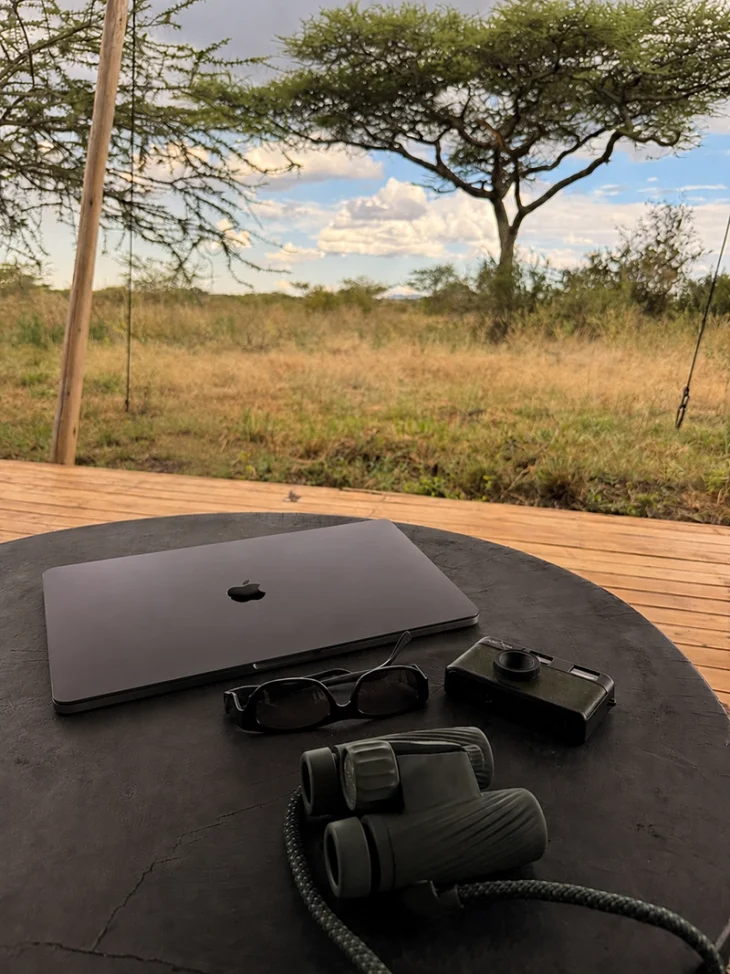
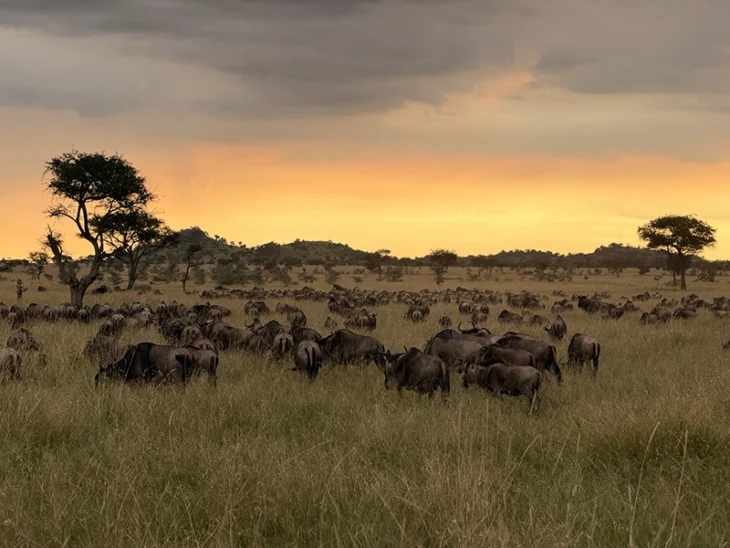
In Tanzania this May, the day began early with game drives and ended with an entirely different kind of concentration. Between excursions, I returned to camp, transferred images from my iPhone through AirDrop, organized photographs, and wrote notes while the details still felt immediate. Safari produces an overwhelming amount of visual information. Light changes quickly, animals appear without warning, and every drive carries small observations that become difficult to reconstruct later.
The MacBook Air gave me a place to process those moments before they turned into distant impressions. I could move photographs, create folders, answer emails, and begin shaping the story without turning the experience into a full production setup. Its thin and light aluminum body mattered because every item in my luggage had to justify its weight. The fanless design also kept the machine completely silent, which felt particularly appropriate in a setting where every sound seemed to belong to the environment.
Apple equips the MacBook Air with the M5 chip, a 10-core CPU, an up-to-10-core GPU, and faster unified memory. Those specifications translate into something simpler in practice: the laptop rarely asks me to think about performance. I move between browser windows, documents, photo libraries, email, messaging, and publishing tools without managing the machine itself. The M5 model also begins with 512GB of storage, twice the previous starting capacity, supported by faster SSD technology. For anyone carrying active editorial projects and large image folders while travelling, that change has practical value.
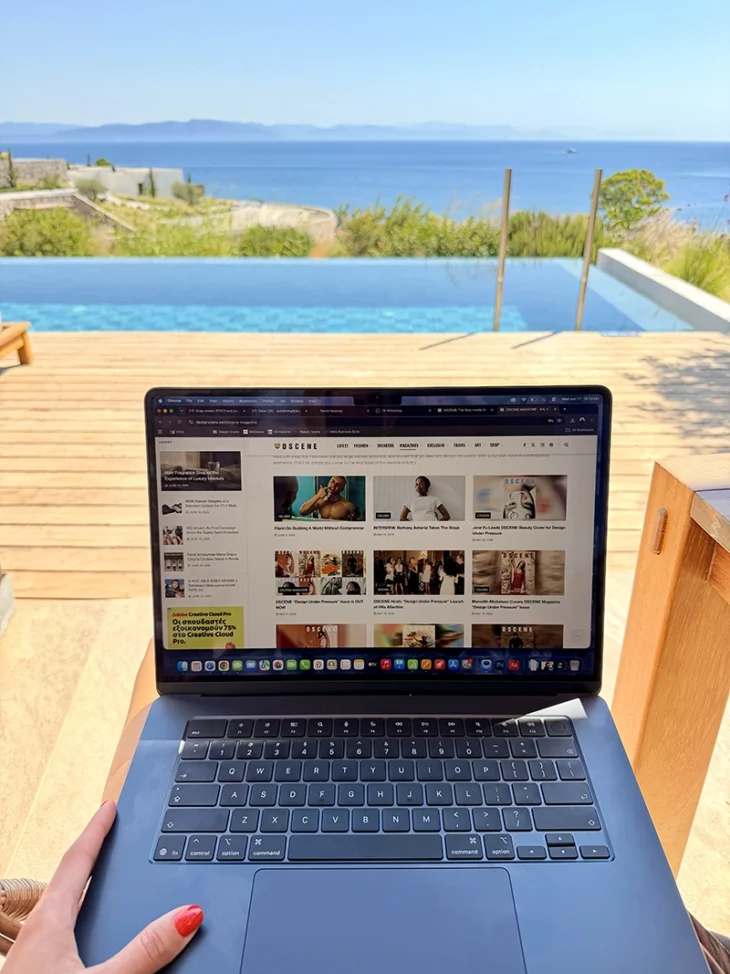
In Kos, the pace slowed. I used the MacBook Air to write a hotel review, working through notes and photographs while the experience remained fresh. Hospitality writing depends on memory: the sequence of arrival, the movement through a property, the atmosphere at breakfast, the quality of light inside a room, and the small operational details that shape a stay. Writing on location allows those elements to remain specific.
Hydra required another rhythm. The island’s art events move between exhibitions, conversations, dinners, and boat transfers, leaving narrow periods for actual editorial work. I carried the laptop from one part of the day to another without planning around it. In the evenings, I used it to review images, organize notes, and begin mapping the people, artworks, and encounters that would later shape our coverage.
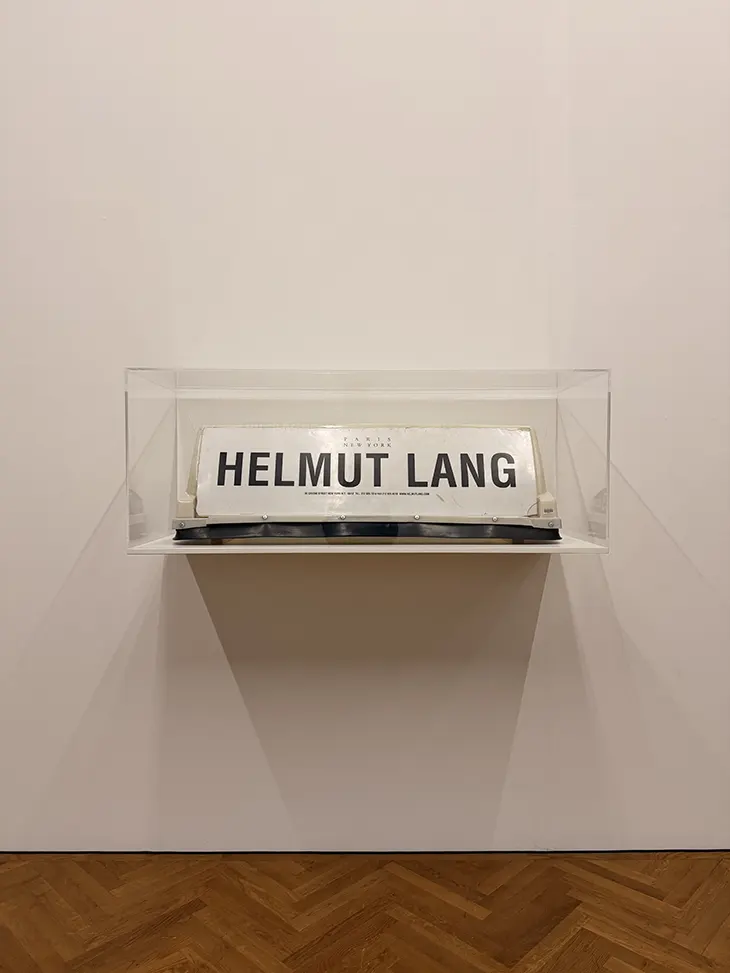
Vienna brought the MacBook Air into the museum and exhibition circuit during my visit to Helmut Lang: Séance de Travail 1986–2005 at the MAK. After moving through the exhibition, I could sit down nearby and record my thoughts before they became softened by travel. A review often begins with a few precise reactions: the scale of a room, the relationship between works, the curatorial logic, or the way an installation alters one’s movement. The ability to write immediately protected those initial responses from hindsight.
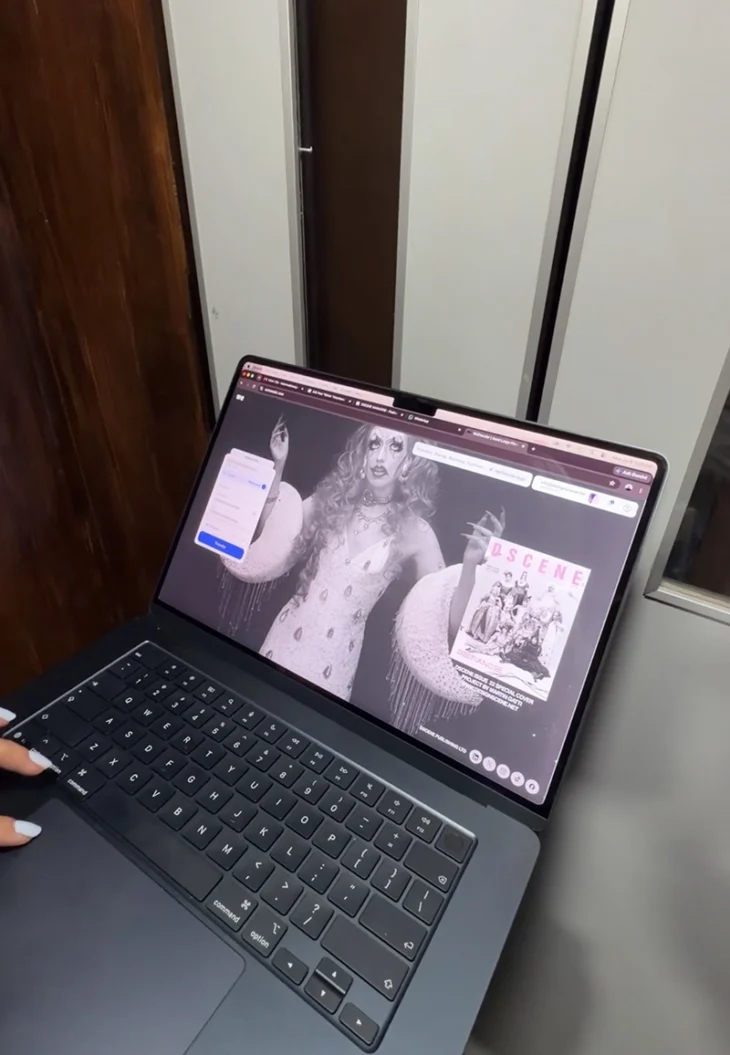
New York tested the laptop in a more operational way. While organizing our DSCENE event at Villa Albertine, I moved between meetings, venues, emails, schedules, guest details, visual materials, and last-minute decisions. The MacBook Air became less a writing device and more a portable newsroom. I carried it from meetings to the office, opened it whenever a decision needed attention, and closed it without feeling as though I had transported an entire workstation across Manhattan.
That portability remains the defining quality of the MacBook Air. The 13-inch model particularly suits someone who moves constantly, while the 15-inch version provides additional room for multitasking. Both offer up to 18 hours of battery life, which reduces the need to carry a charger through every part of the day. Apple’s N1 wireless chip also adds Wi-Fi 7 and Bluetooth 6, useful improvements when work depends on unfamiliar hotel networks, temporary offices, and shifting travel environments.
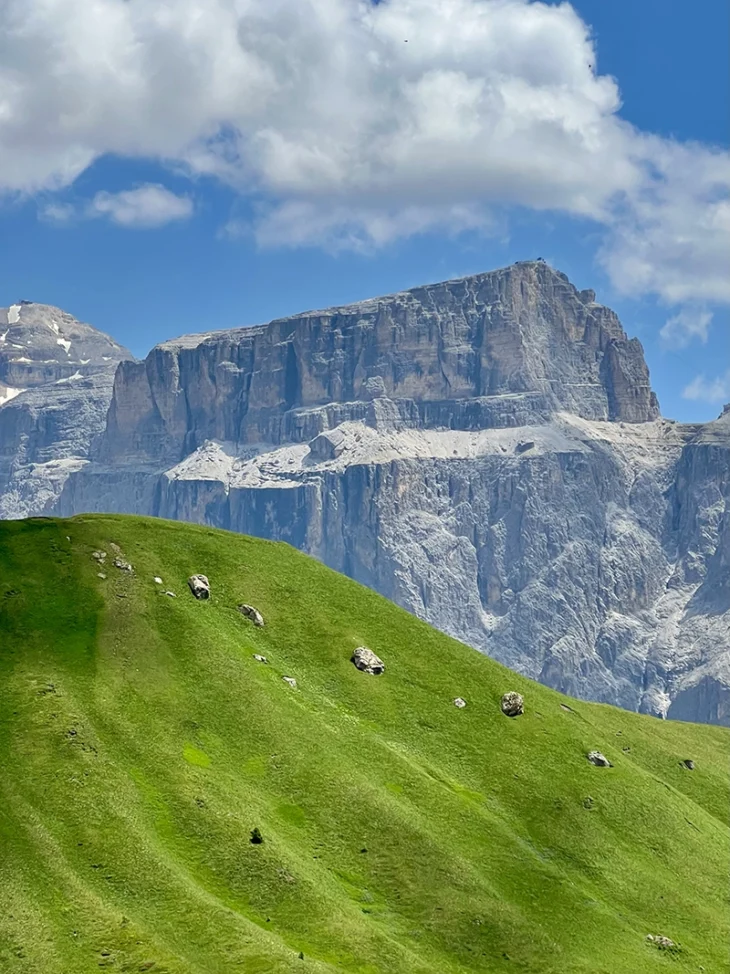
Now, in the Dolomites, the laptop has become part of the evening routine. After hiking, I transfer photographs, separate useful images from hundreds of near-identical views, label locations, and write notes about trails while the physical experience remains present. A mountain route changes significantly in memory. Difficulty becomes abstract, distances compress, and weather turns into atmosphere. Writing on the same day preserves the reality of the place.
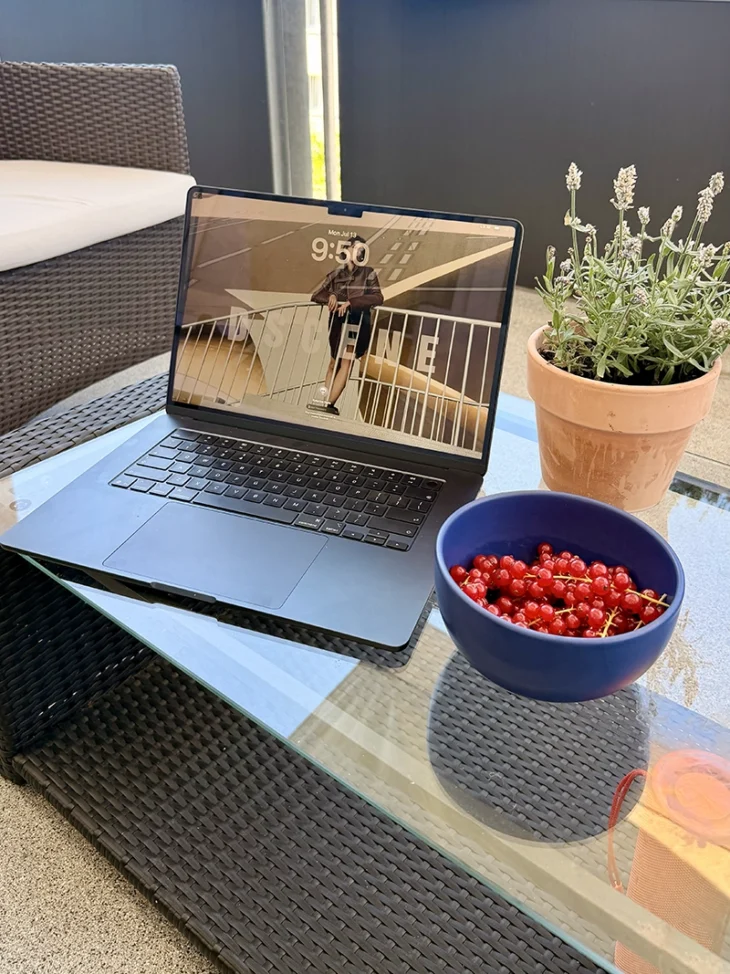
The Liquid Retina display helps when sorting photographs, with support for one billion colors and up to 500 nits of brightness. I still complete final image decisions with our broader editorial workflow in mind, yet the screen gives me a clear and dependable first view of what we captured. Two Thunderbolt 4 ports and support for up to two external displays allow the same machine to expand into a larger workstation once I return to the office.
The best tools do not constantly announce their intelligence. They remove friction. They allow ideas, images, conversations, and deadlines to move through them without becoming the main event.
For someone like me, always travelling between stories, the MacBook Air M5 works because it never feels like a compromise made for portability. It carries the demands of an office without asking me to remain inside one.
View this post on Instagram
Somewhere between Tanzania, Kos, Hydra, Vienna, New York, and the Dolomites, I stopped thinking about where I could work. I simply opened the laptop and continued. That may be the clearest measure of its value. The MacBook Air has become the office I carry, and the one object that allows every destination to become part of the same ongoing editorial life.





wow love the safari photos. And the laptop is one of the best apple design teams have made so far.