



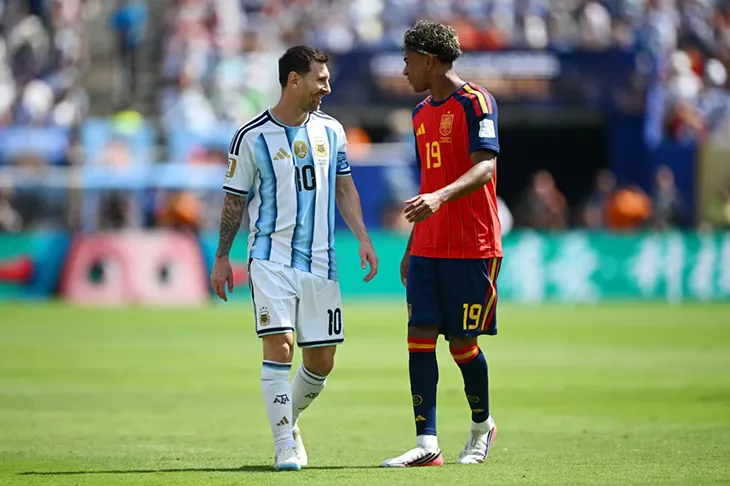
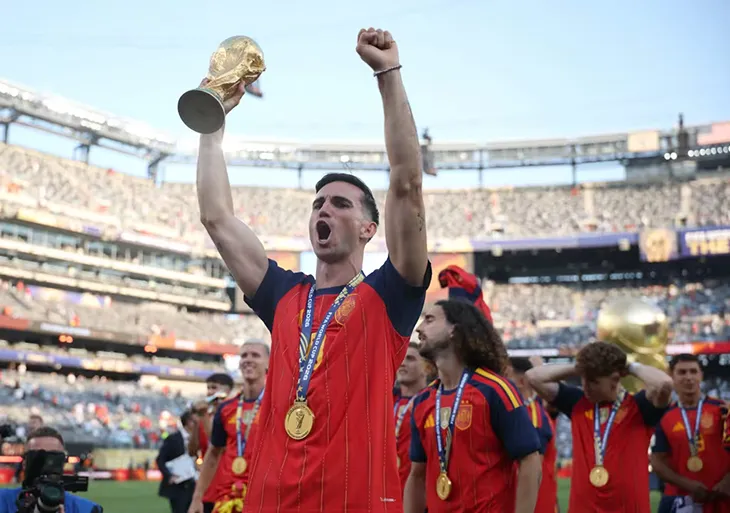
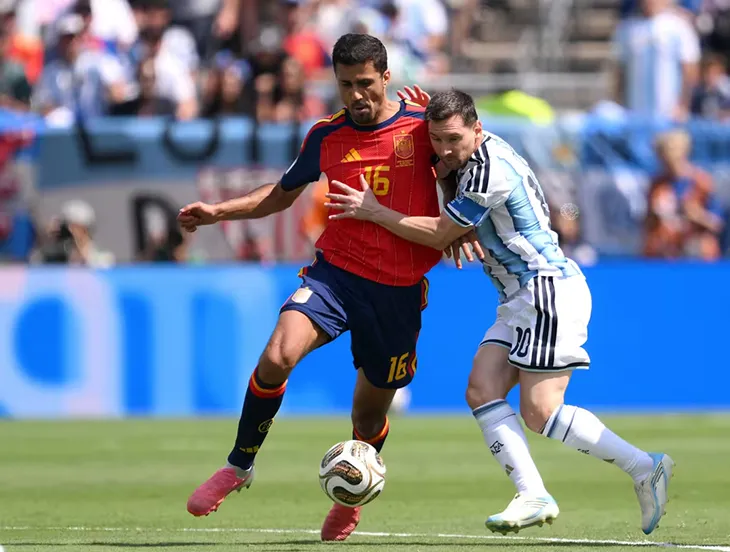
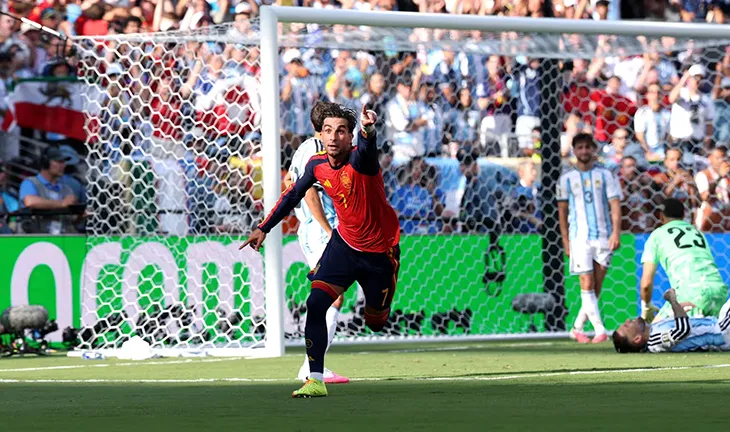
Spain defeated Argentina 1:0 after extra time at New York New Jersey Stadium, where Ferran Torres scored in the 106th minute and delivered the country’s second men’s World Cup title. Pedro Porro sent the ball into the area, Nico Williams redirected it and Torres finished with his left foot. The winning action came from the bench after Spain spent most of the match searching for a way through Argentina’s deep defence.
NEWS
The FIFA World Cup 2026 final offered tension and physical pressure in place of an open attacking contest. Spain produced 20 attempts and placed 12 on target. Argentina failed to record a shot during the opening 90 minutes. Enzo Fernández received a second yellow card near the end of regulation, leaving Argentina with ten players before extra time.
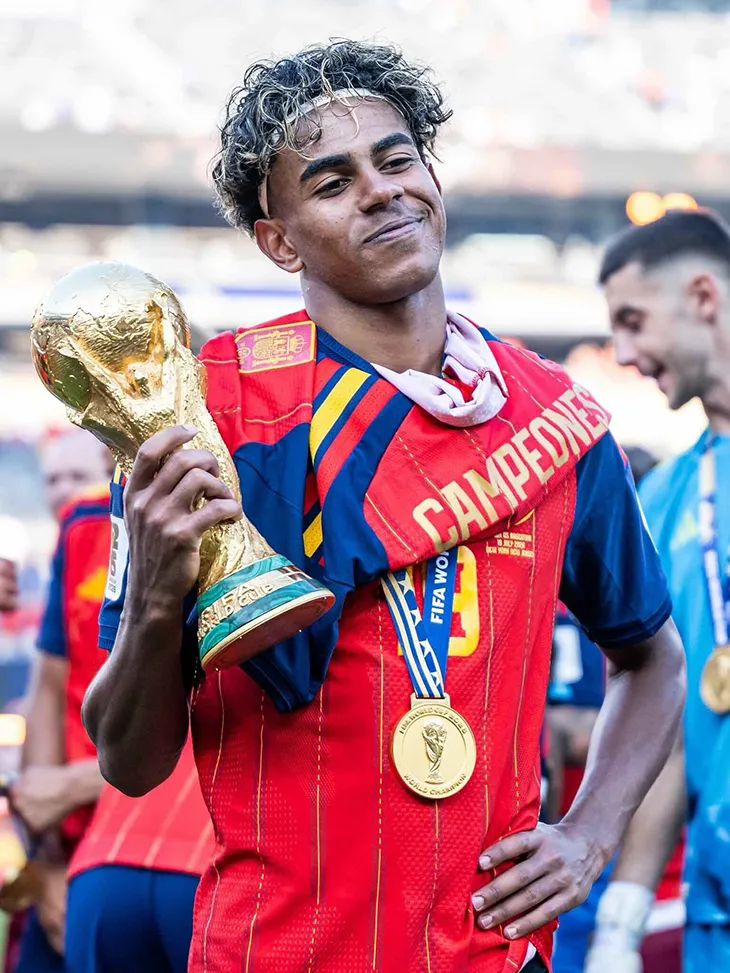
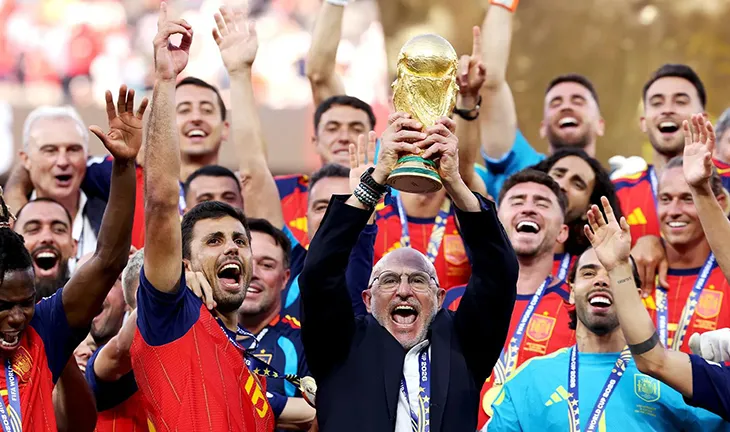
The victory placed a second star above Spain’s badge, sixteen years after the 2010 triumph. It also extended the team’s unbeaten run to 38 matches. Spain conceded one goal across eight games and showed the same collective strength that carried the country to the European title in 2024.
The Players Who Defined World Cup 2026
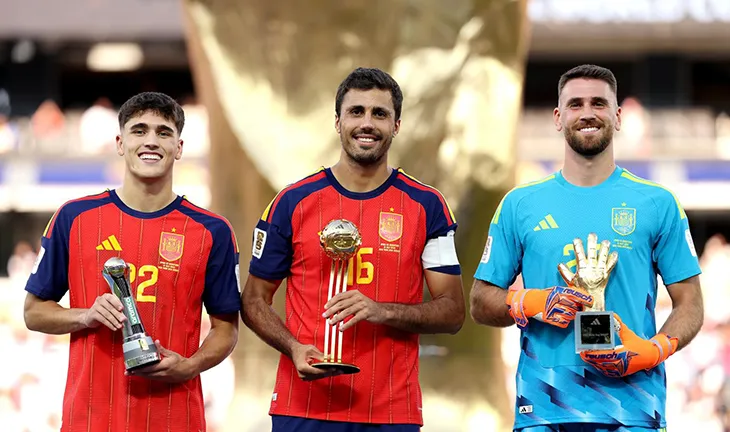
FIFA named Rodri the tournament’s best player, Pau Cubarsí the best young player and Unai Simón the best goalkeeper. The three awards matched Spain’s performances across the competition. Rodri gave Spain authority in midfield and offered an outlet whenever opponents pressed. Cubarsí read danger early and rarely looked overwhelmed by the scale of the matches. Simón faced limited work in the final, yet his record across the tournament made the Golden Glove an obvious choice.
Kylian Mbappé completed the group of leading individual performers. France missed the final, yet Mbappé scored ten goals and won the Golden Boot. His two goals in the third place match took his World Cup career total to 22, sending him above Lionel Messi as the leading scorer in the history of the men’s competition.
That third place game deserves a brief place in the closing account. England beat France 6:4 after leading 4:0 at halftime, Bukayo Saka scored a hat trick and Jude Bellingham added the final goal in stoppage time. The ten goals set a record for a World Cup third place match and gave the tournament one last burst of attacking football before the far tighter final.
The Halftime Show
FIFA staged the first World Cup final halftime show with Madonna, BTS, Justin Bieber, Shakira, Burna Boy, Gustavo Dudamel and The Muppets. The musical section lasted around 11 minutes, though crews extended the full interval to approximately 27 minutes as they brought equipment onto the field and removed it again.
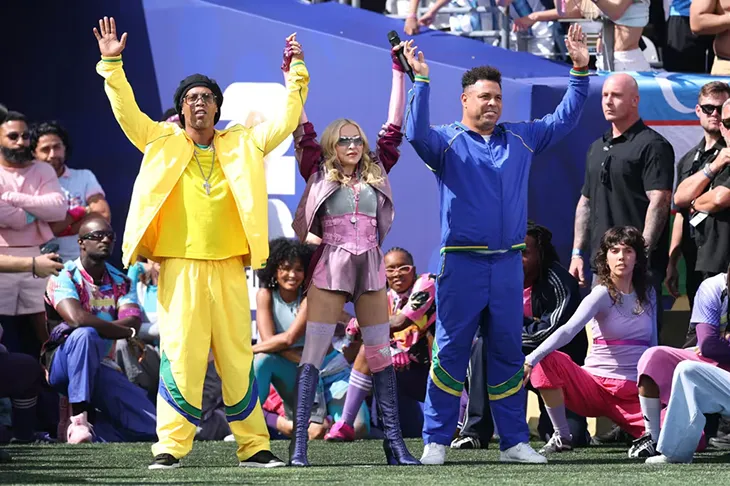
The artists made impressive use of the limited 11 minutes. Madonna opened with “Music,” arriving in a dune buggy driven by Ronaldo and Ronaldinho and immediately giving the show a playful link between pop culture and football history. Gustavo Dudamel then conducted an orchestral version of “Seven Nation Army” with The Muppets’ Electric Mayhem, turning a familiar stadium chant into one of the production’s most inventive moments. BTS brought the strong burst of energy with “Dynamite,” while Justin Bieber changed the pace with a stripped back acoustic version of “Everything Hallelujah.” Shakira and Burna Boy closed the show with “Dai Dai,” joined by dancers and a large globe display that formed the word “LOVE.”
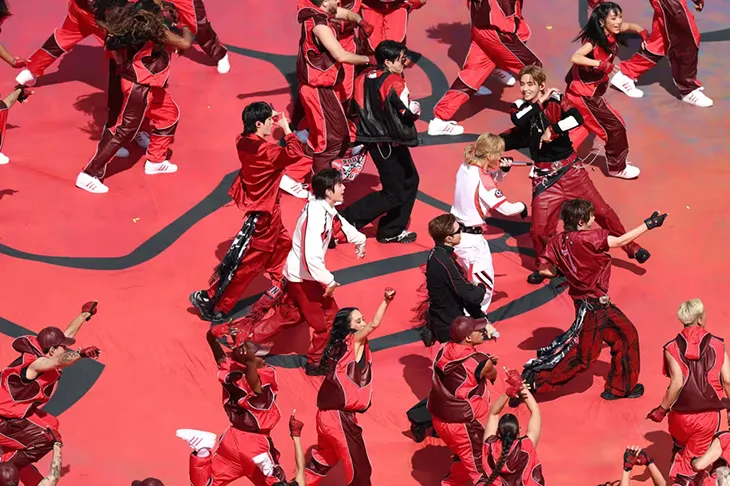
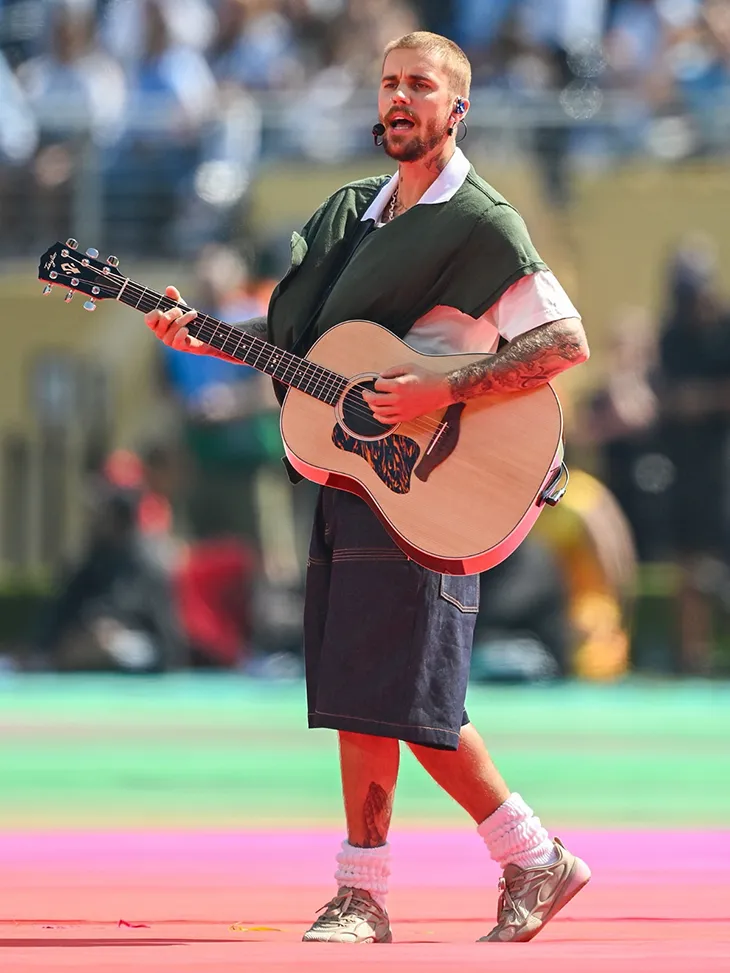
The problem came from the format and the view inside the stadium. Madonna began in the tunnel and travelled toward the field in a dune buggy driven by Ronaldo and Ronaldinho. Television viewers followed the full entrance, while many supporters in the stands watched it on stadium screens. By the time Madonna reached the pitch, “Music” had almost ended.
That difference raised a simple question: did FIFA design the show for the people inside the stadium or for the global broadcast?
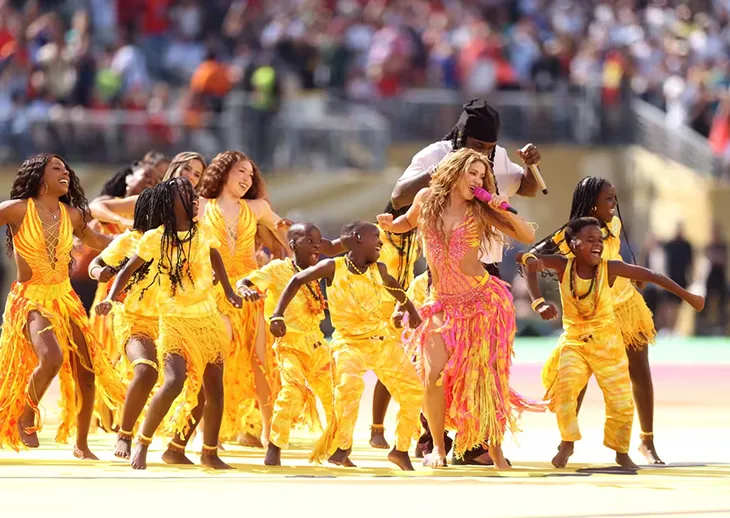
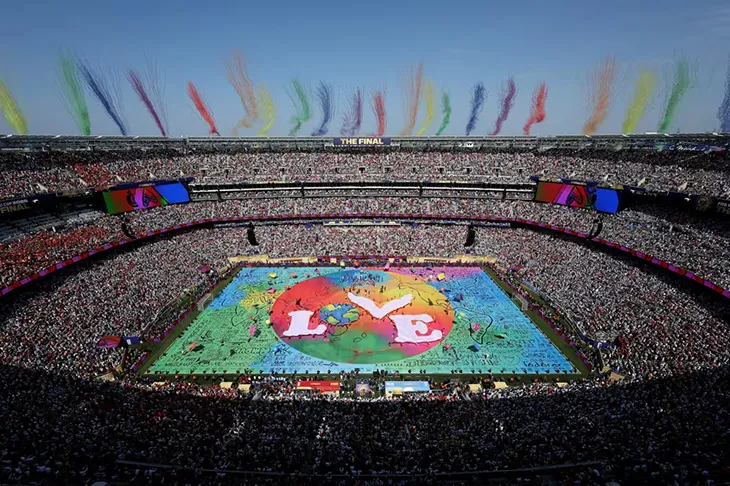
The wider question concerns football itself. A major pregame ceremony fits easily around a World Cup final because it leaves the match intact. A 27 minute interval changes the experience for players and supporters. Football depends on continuity and a short break between halves. FIFA replaced that pause with a separate entertainment product.
The cast and scale drew support, and many football fans rejected the Super Bowl style format. The sport now has to decide whether a halftime concert belongs at future finals or whether it should remain linked to American football culture.
What the first 48 team World Cup leaves behind
The first 48 team edition gave FIFA 104 matches across Canada, Mexico and the United States. It also introduced new interventions inside the game and around it. The chipped ball influenced major knockout decisions, every match included scheduled hydration breaks, the final received a full halftime production and political access reached an active disciplinary case.
The tournament may also have closed the World Cup careers of three players who defined an era. Cristiano Ronaldo confirmed that 2026 would be his final edition after Portugal’s defeat to Spain. Lionel Messi reached a sixth World Cup and another final at 39, though he has yet to confirm his international future. Luka Modrić left the tournament at 40 after Croatia’s defeat to Portugal, in what will almost certainly remain his final appearance.
Messi and Ronaldo became the first men to appear at six World Cups, while Modrić played in five and led Croatia to the 2018 final and third place in 2022.
The Chip Overruled the Eye
Two chipped ball decisions created one of the tournament’s most difficult debates.
During Portugal’s 2–1 win over Croatia, Joško Gvardiol appeared to score a late equaliser. The sensor inside the ball detected contact from Igor Matanović earlier in the action and placed Gvardiol offside. Replays showed no visible touch, and the ball showed no change whatsoever in its direction. FIFA still treated the sensor reading as decisive and disallowed the goal. Croatia called the ruling an abuse of technology.
The England and Norway quarterfinal produced the reverse problem. Norway argued that goalkeeper Ørjan Nyland’s clearance struck an overhead camera cable before England’s equaliser. The ball changed direction abruptly in mid-air and fell almost vertically, yet FIFA said the sensor recorded no contact or abnormal movement. England later won 2–1 after extra time.
In both cases, FIFA asked the public to disregard the evidence available to their eyes and accept data they could not independently examine. When a system detects the invisible in one match and rejects the apparently visible in another, questions about its reliability become unavoidable.
The issue goes beyond either decision. Technology can assist officials, though trust requires explanation and access to evidence. FIFA needs to show how the sensor reached its conclusion, what margin of error exists and why the data deserves authority over video.
Football once asked supporters to accept the referee’s view of an incident. The FIFA World Cup 2026 asked them to accept information that nobody outside FIFA could see, test or fully understand.
Hydration Breaks Split the Match Into Four Parts
FIFA introduced mandatory three minute hydration breaks midway through each half, even when weather conditions created little medical need. The organisation cited player welfare during a tournament played through major heat and humidity across North America.
The breaks made sense during the hottest matches. Players needed protection, and several venues produced difficult conditions. A universal rule created a different effect. Coaches used the pauses for tactical instructions. Broadcasters gained scheduled commercial windows. Supporters saw every game split into four sections.
The halftime show and hydration breaks fed the same concern. FIFA adapted football to the habits of the host market and created extra spaces for entertainment, advertising and tactical instruction. The changes may disappear before 2030. Commercial value gives FIFA a strong reason to keep them.
Political Access Reached the Rulebook
The tournament’s clearest political controversy followed Folarin Balogun’s red card against Bosnia and Herzegovina. U.S. President Donald Trump personally asked FIFA president Gianni Infantino to review the automatic one match ban. FIFA later placed the suspension under a one year probationary period and allowed Balogun to face Belgium.
The original decision matters less than the access that followed it. Football already has formal appeals, disciplinary committees and written rules. A head of state contacted FIFA’s president during an active case involving the host nation, while Belgium objected, UEFA criticised the outcome and Trump publicly claimed credit.
FIFA said its judicial bodies acted independently, yet the sequence created an extraordinary precedent. The political debate returned during the trophy ceremony, when Trump joined Infantino on the field, received boos from the crowd and remained on the podium as Spain collected the trophy.
Passion Cannot Excuse Poor Sportsmanship
Argentina’s intensity has long formed part of the team’s identity, and its ability to make opponents uncomfortable remains one of its competitive strengths. During this World Cup, however, that intensity repeatedly crossed into conduct that football still seems reluctant to examine.
Provocation, confrontations, pressure on officials and incidents after the whistle often received the language of passion and winning mentality. Such descriptions can obscure the difference between psychological competition and poor sportsmanship. The question concerns neither nationality nor footballing tradition. It concerns why the sport continues to romanticise behaviour that it would condemn under different circumstances.
Norway Restores the Joy
Norway gave the tournament one of its most uplifting runs. The country returned after 28 years, beat Brazil 2:1 through two Erling Haaland goals and reached the quarterfinals for the first time.
More than 90,000 people gathered in central Oslo after the Brazil win, while supporters and players performed the Viking Row across stadiums and public squares. England ended the run with a 2:1 extra time victory, though Norway had already won support far beyond its own fans.
The World Cup returns in 2030
The men’s World Cup returns in 2030, with Morocco, Portugal and Spain serving as the main hosts. Argentina, Paraguay and Uruguay will each stage one of three opening centenary matches marking 100 years since the first World Cup. The tournament will begin at Estadio Centenario in Montevideo, the stadium that hosted the 1930 final.