


Amoako Boafo’s first solo exhibition in Italy arrives inside Museo di Palazzo Grimani with a clear sense of spatial and historical awareness. Titled It doesn’t have to always make sense, the exhibition places Boafo’s contemporary portraits within rooms shaped by Renaissance architecture, Venetian decorative traditions and centuries of cultural authority.
ART
Produced by Gagosian and presented during the 61st Venice Biennale, the exhibition brings Boafo’s subjects into an environment long associated with prestige, collection and representation. The paintings do not appear as temporary visitors within that history. Their scale, direct gazes and physical surfaces give each figure an immediate command over the room.
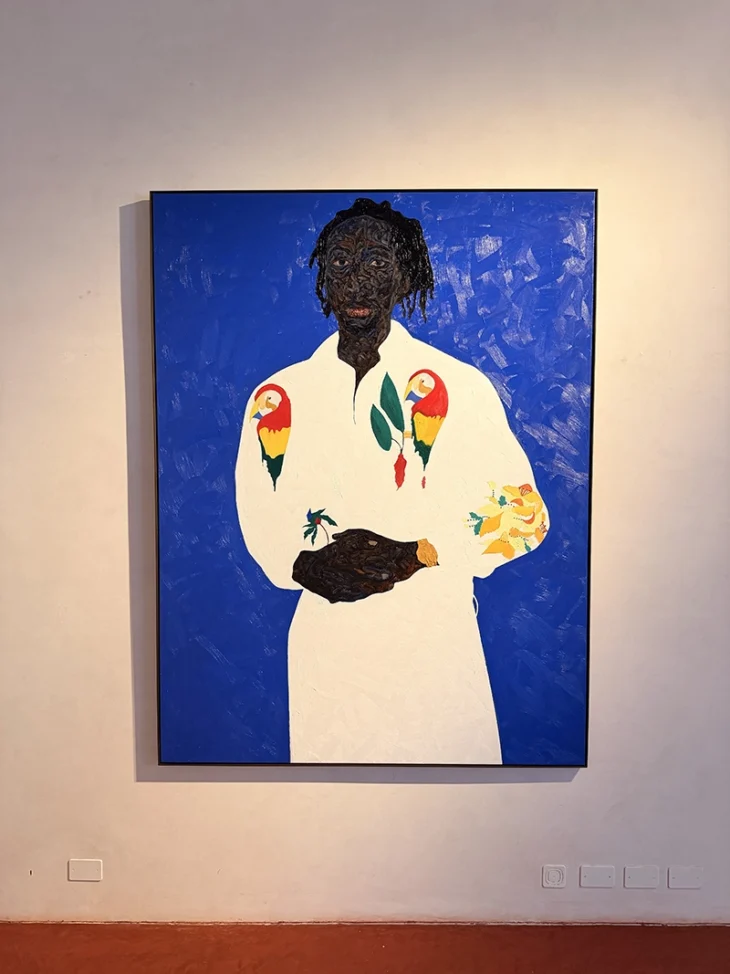
Boafo has built his practice around portraits of Black sitters, often drawn from his personal circle and wider creative community. He paints skin directly with his fingers, creating faces and bodies through dense marks that remain visibly tied to touch. Clothing, accessories and surrounding fields receive a different treatment through brushwork, fabric references and, in several new works, embroidery.
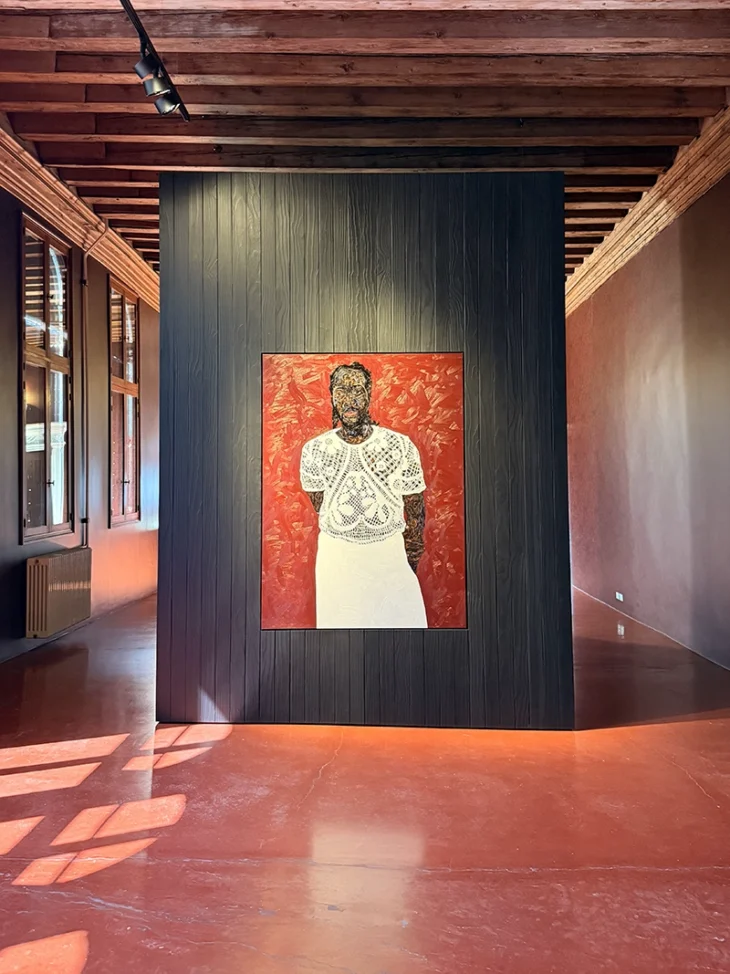
The exhibition opens with Mozzarella White Lace Top, a large portrait set against a dark maroon field. Its lace clothing connects the figure to one of the recurring materials within the exhibition. Boafo draws on Venetian lace as well as its cultural role in Ghana, where it can signal ceremony, importance and formal presentation. The result avoids a simple comparison between two places. Lace becomes a shared material language through which different histories of status and self-presentation enter the same room.
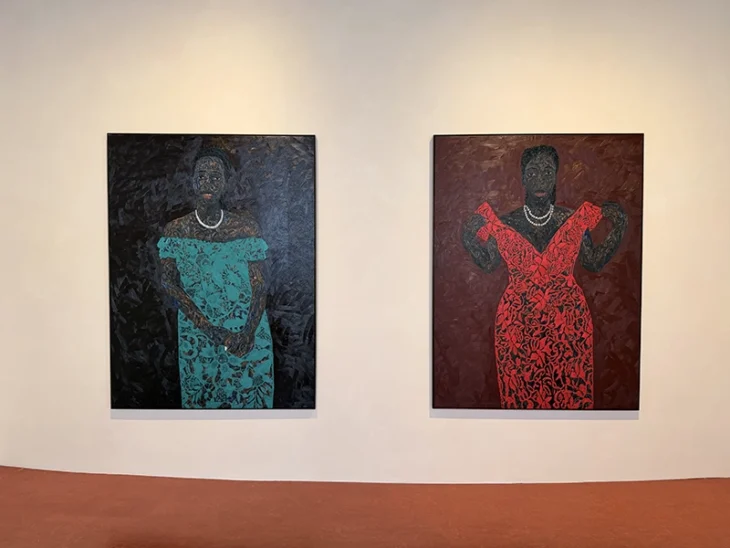
This interest continues in Mint Lace Dress and Tomato Red Lace Dress, two portraits of women wearing off-the-shoulder garments. Their clothing adds texture and structure, though the sitters remain the visual focus. Boafo’s figures rarely recede into their surroundings. They meet the viewer with confidence and retain a strong sense of individual presence.
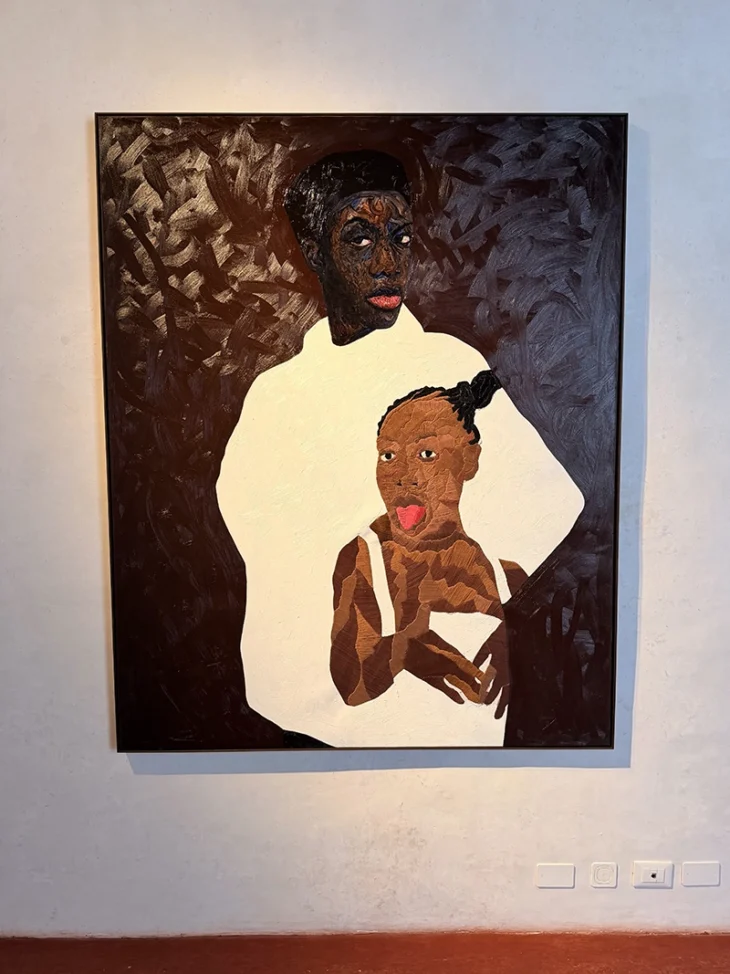
Embroidery introduces another development in his work. In White Swimsuit, threads become part of the painted surface and give the garment its own weight. In Two Faces, Boafo renders the smaller figure through brown embroidery, shifting from painted representation toward a more tactile construction of the body. The thread carries color, form and identity while remaining visibly distinct from the oil paint around it.
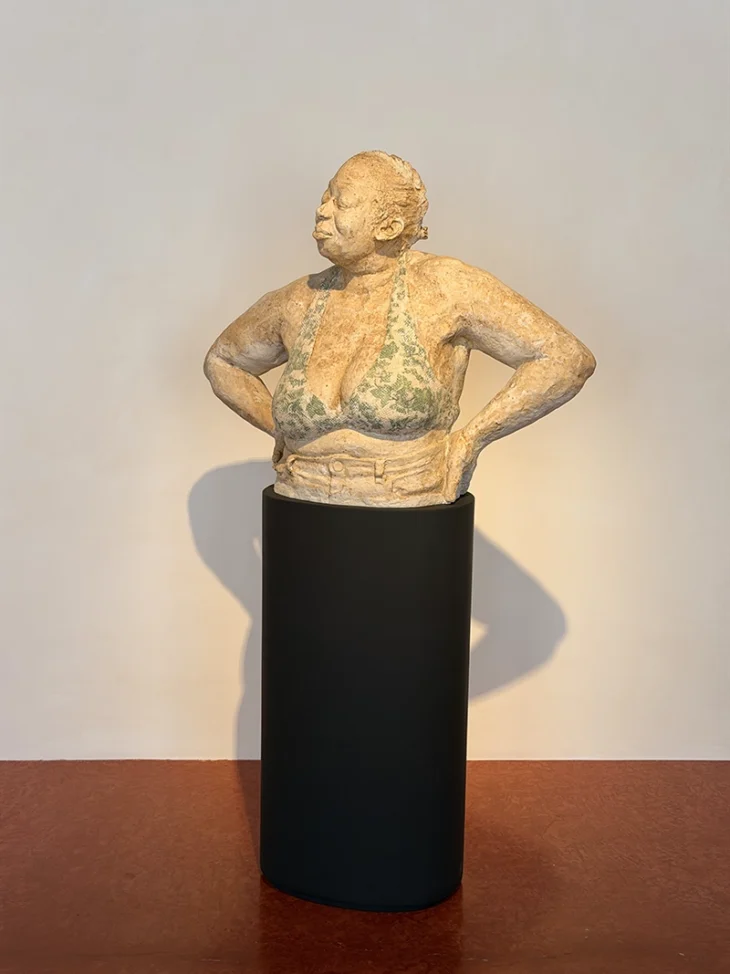
The exhibition extends beyond individual portraits through several collaborations. A video follows Boafo through his home, studio and tennis practice, placing his work within the activities and relationships that shape his daily life. A sculpture developed with Stephen Allotey stands near one of Boafo’s paintings, while poems by Raphael Worlasi Langani appear throughout the galleries.
These contributions support Boafo’s understanding of the studio as a social environment. His practice grows through conversations, friendships and shared production. The exhibition therefore resists presenting artistic creation as an isolated act and instead shows how images develop through exchange.
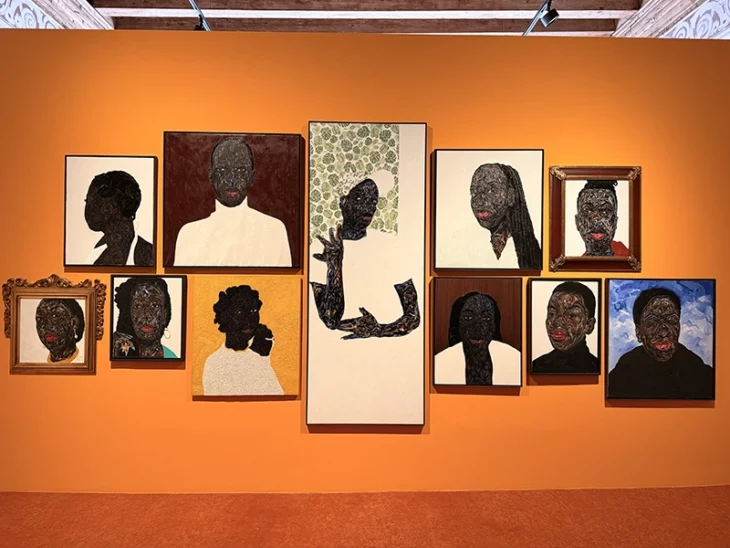
One of the most concentrated sections brings together 11 portraits of women against a marigold-colored wall. Boafo refers to the grouping as the “heroine wall.” The subjects include friends, family members and women whose work he values, among them the late curator Koyo Kouoh. The installation gains force through accumulation, turning separate portraits into a collective field of recognition.
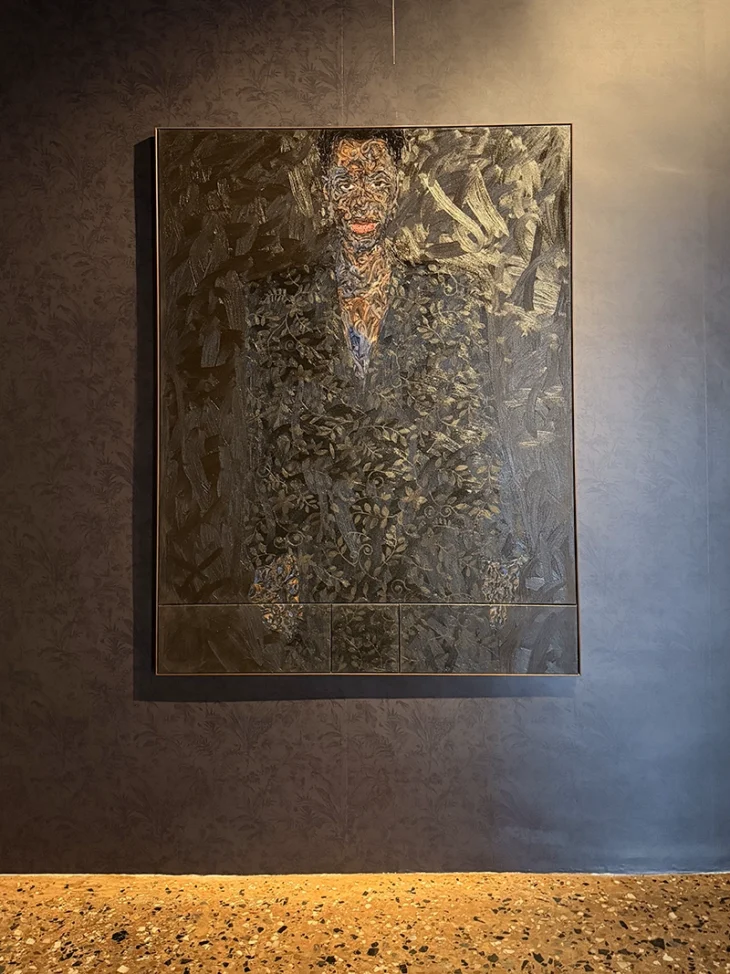
Elsewhere, All Black presents Boafo’s first black-on-black portrait. Paired with Langani’s poem Darkness, the painting reduces the distance between figure and surrounding surface. The face emerges through tonal variation and texture, requiring sustained attention from the viewer.
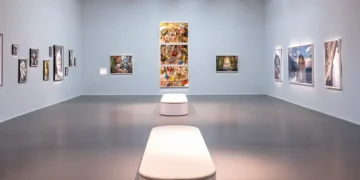
The exhibition design gives most works considerable room. One or two paintings occupy many of the galleries, allowing visitors to study Boafo’s surfaces while remaining aware of the palazzo’s terrazzo floors, timber ceilings and decorated walls. The restrained installation avoids forcing a dramatic clash between contemporary painting and historical architecture.
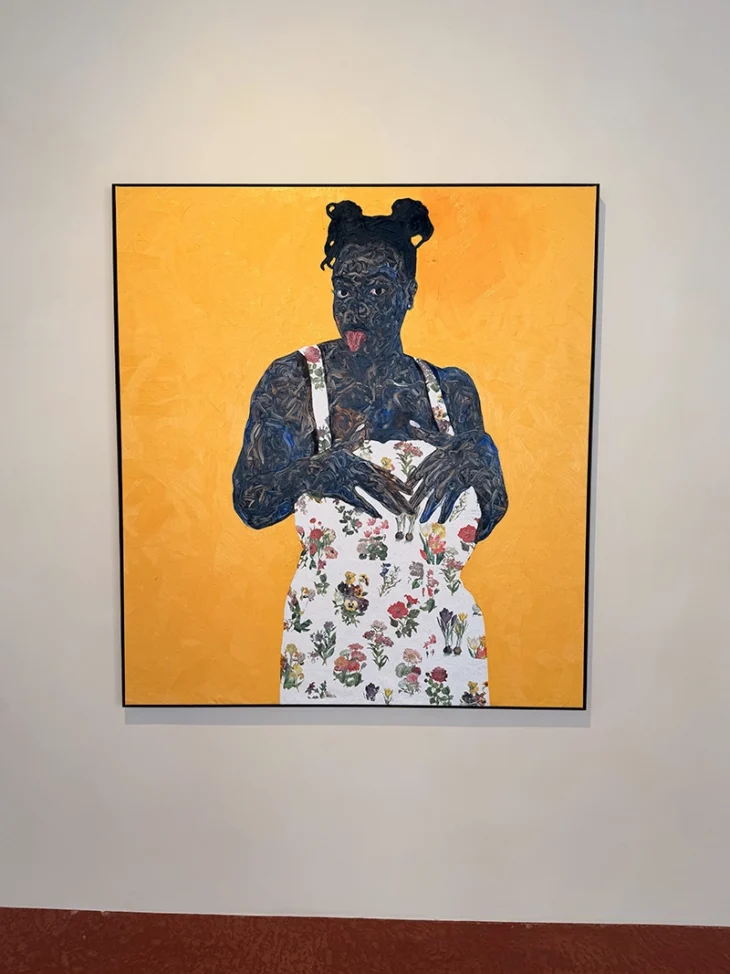
Instead, the exhibition creates a direct encounter between two systems of portraiture. Venetian painting often recorded wealth, lineage and social authority. Boafo brings that history into contact with contemporary Black subjects who define their own image and occupy the museum without apology.
Through painting, embroidery, poetry and collaboration, It doesn’t have to always make sense examines how identity can be carried through material and gesture. Boafo does not ask Palazzo Grimani to validate his subjects. Their presence changes how the building’s visual history can be read.
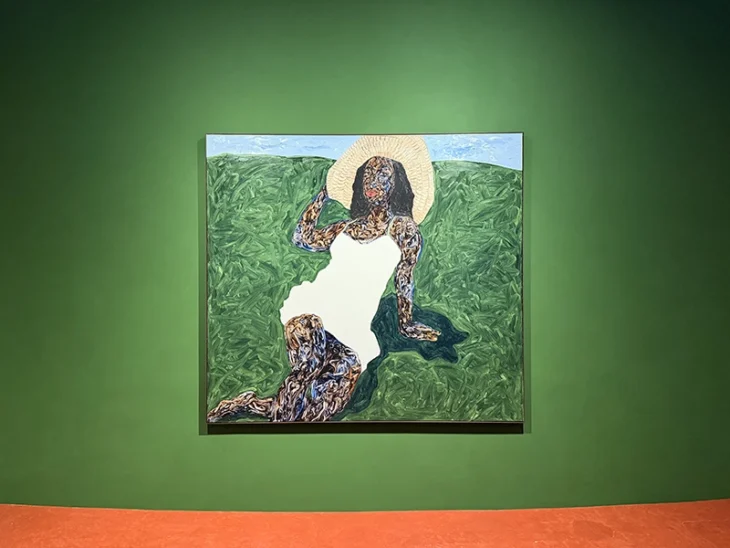
Amoako Boafo “It doesn’t have to always make sense” at the Museo di Palazzo Grimani in Venice is open until November 22, 2026.