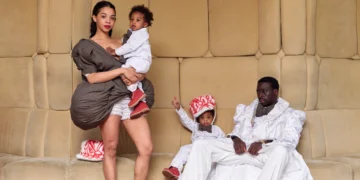



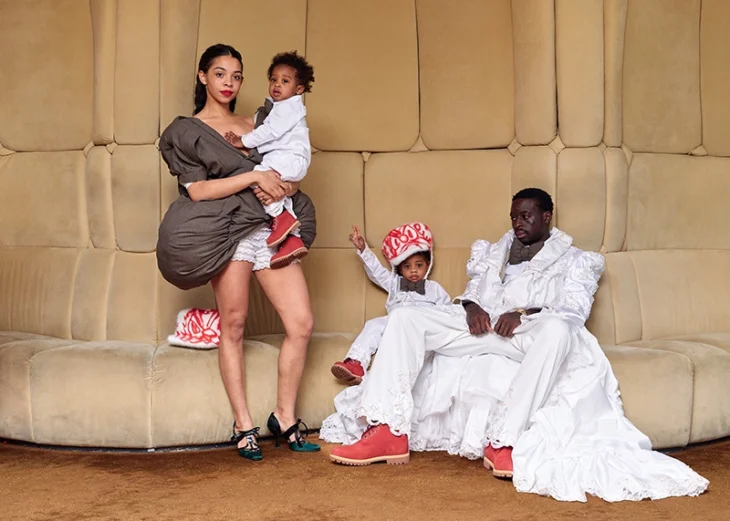
Pipenco builds its language through memory, drawing from Eastern European visual culture and filtering it through a lens of childhood clarity. The work carries a sense of softness without losing precision, where vibrant knits, exaggerated proportions, and trompe-l’œil techniques construct garments that feel both familiar and slightly displaced. Behind that visual directness sits a deeper intention. The brand positions itself as a space that resists inherited expectations, using color and material to revisit personal and collective histories without reducing them to nostalgia.
ORDER IN PRINT AND DIGITAL
In conversation with DSCENE deputy editor Ana Markovic, Lorena Pipenco reflects on maintaining that instinctive, almost naive approach while navigating the realities of a growing label. The discussion moves through questions of heritage, craft, and production, alongside the challenge of building a system that can expand without losing its core. What emerges is a clear perspective on clothing as an emotional structure, one that holds memory, tension, and play in equal measure.
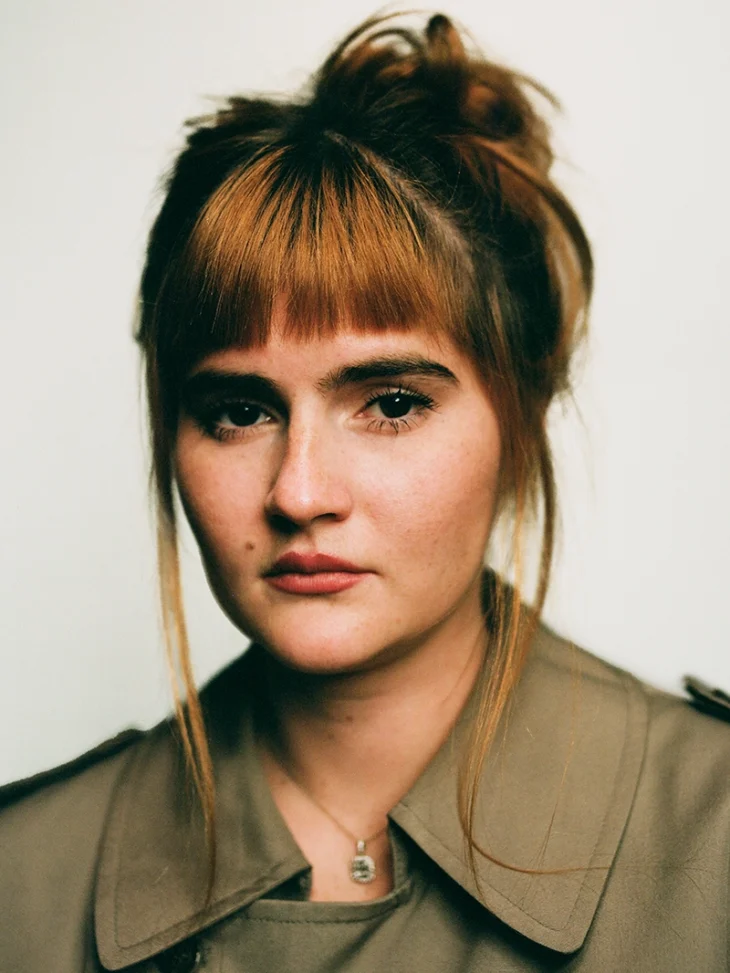
In our 2024 interview, you spoke about reclaiming childhood innocence. Now that the brand is more established, how do you stop the adult pressures of the fashion industry, like sales targets and production deadlines, from killing that naive spirit in the studio? – I think the pressure is always there, but I’ve learned not to treat it as the enemy. The studio is still my apartment, it hasn’t changed in scale, just in intensity. I protect that naive spirit by staying very close to the act of making. When I’m knitting, draping, touching the fabric, I’m back to that instinctive place. The industry exists around the work, but the work itself still comes from a very personal, almost childlike curiosity.
I think the pressure is always there, but I’ve learned not to treat it as the enemy.
How has your relationship with your Romanian heritage changed as you’ve grown into your own voice as a designer? – At the beginning, my Romanian heritage felt like something I was looking at from the outside, almost studying. Now it feels internal. It’s not something I reference, it’s something I live through the work. I’ve stopped trying to “represent” it correctly and instead let it exist in a more emotional, fluid way.
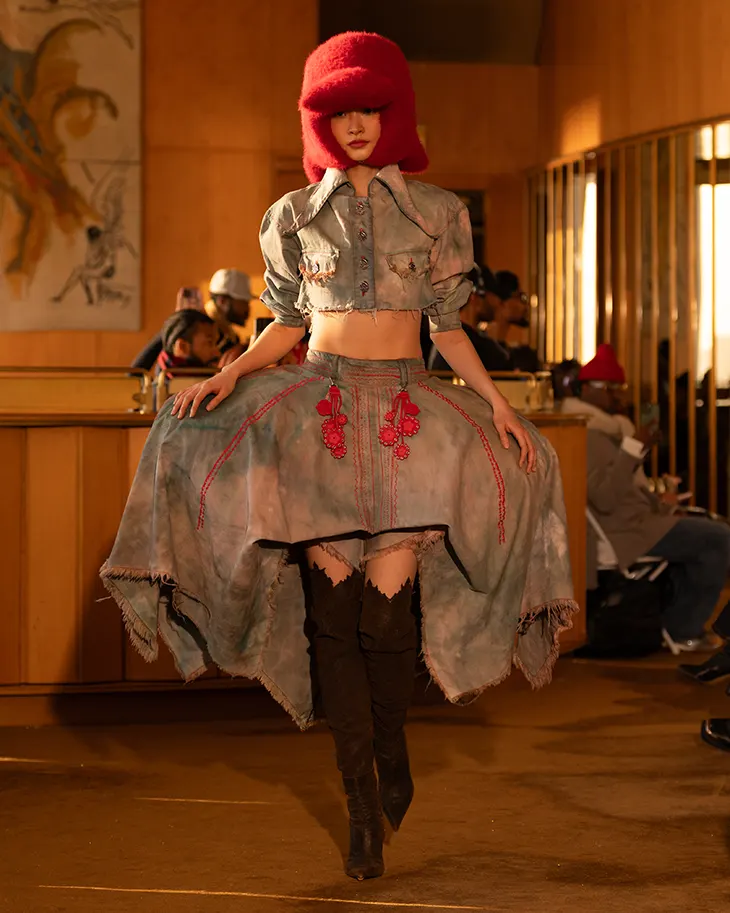
How has your knitting technique developed since 2024 to accommodate the increased complexity and weight of recent pieces? – The biggest development has been structural. As the pieces became heavier and more complex, I had to rethink how weight is distributed across the body. I’ve been experimenting with tension, layering, and internal supports so pieces can hold volume without collapsing or becoming unwearable. It’s a constant balance between sculpture and function.
This collection came from a very honest place: love, confusion, loneliness.
Previously, you spoke about drawing from family history and generational memory. This season turns toward your own relationships. What prompted that shift? – It felt inevitable. I spent so long understanding the women before me that eventually I had to confront my own experiences. This collection came from a very honest place: love, confusion, loneliness. It’s less about observing and more about admitting.
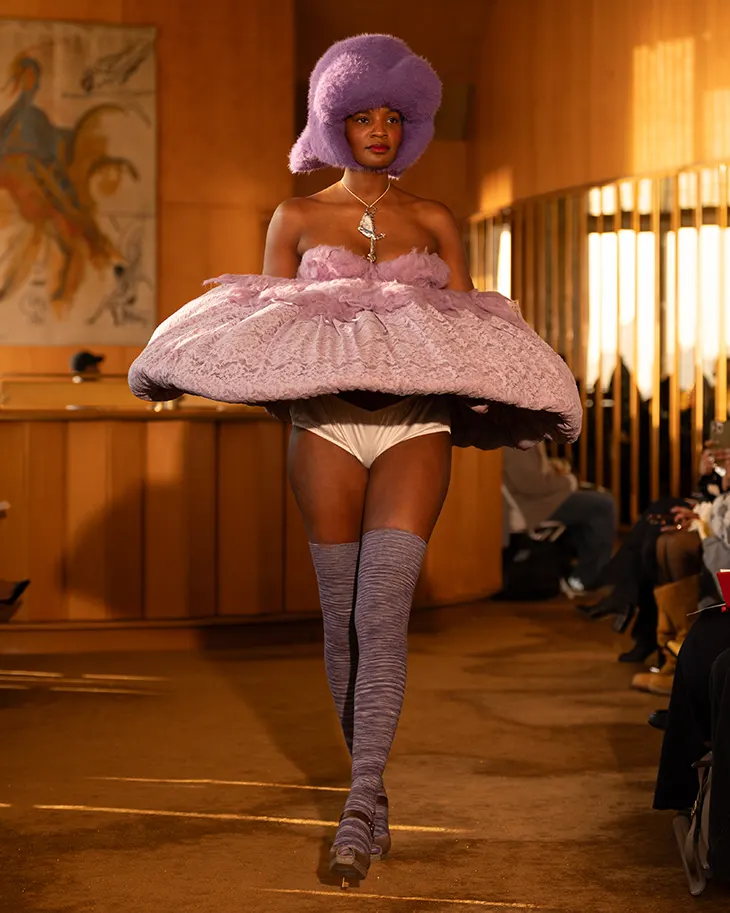
The collection brings together traditional Romanian symbolism and contemporary dating culture. How do these elements intersect? – Romanian embroidery historically tells stories about life stages, emotions, identity. Dating culture today also tells stories, just in a more fragmented and chaotic way. Bringing them together felt natural. One is slow and coded, the other is fast and disposable, but both are about trying to understand connection.
The “scrappy” nature is actually the core of the brand, so I don’t want to lose that.
What is the approach to formalizing a “scrappy” supply chain to meet international demand while continuing to rely on FABSCRAP and personal donations?– It’s something I’m still figuring out. The “scrappy” nature is actually the core of the brand, so I don’t want to lose that. The focus has been on building relationships with organizations like FABSCRAP while also organizing my own archive more carefully. It’s less about scaling traditionally and more about structuring what already exists.

How has the connection with the shoe repair shop evolved into your current collaboration with East Village cobblers on footwear? – It was actually a very short but meaningful collaboration. The first time, I came to them simply because I needed shoes made for my collection. Then we worked together again on a small collaboration. The team is Eastern European, so immediately it felt like home, there was a shared understanding in how we approached craft, problem-solving, and making things work with what we have.
Jumbo-knit proportions, especially the oversized caps, have become a brand signature. What has been the biggest technical challenge in engineering that level of volume so the pieces remain lightweight and balanced for someone to actually wear all day? – It’s really all about the internal structure. I’ve been using variations of the same techniques for the past four years, so at this point it feels quite natural to me. The challenge isn’t so much how to build the volume anymore, but how to keep up with orders while maintaining that level of craftsmanship.
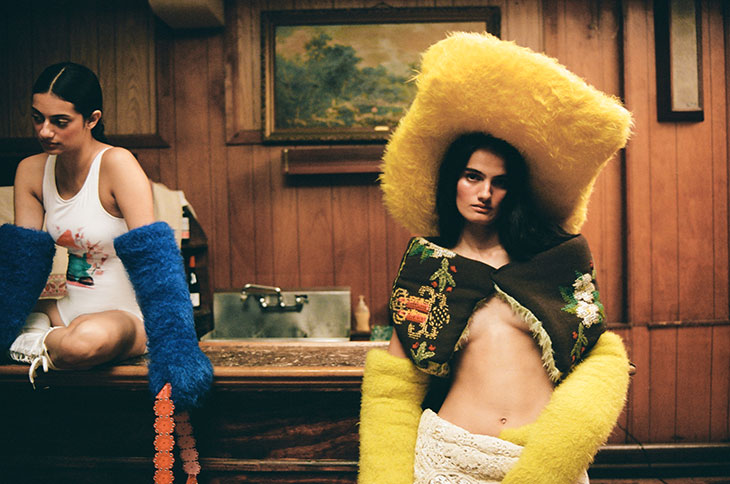
Lauryn Hill has supported the label on tour and attended the FW26 show. How did that relationship begin? – It began very naturally through the work itself. She wore one of my hats on tour, and then placed an order for multiple colors. Later, she showed up in person to my show, which felt completely surreal. To have someone I respect so deeply and admire so much engage with the work in that way made me question everything, in a good way, like, am I even worthy of this? It was a very emotional moment.
If your grandmother walked into the Brooklyn studio today, which piece would she connect with most, and which might feel unfamiliar to her? – Before anything, she would probably walk in, tell me to fix my life and start cleaning, and immediately begin organizing everything. That’s just who she is. But then she would connect with the pieces made from traditional fabrics, the ones that still carry the memory of where they came from. At the same time, she loves the crazy ones; she gets so excited and confused, always saying, “I’m crazy,” and asking how I even made that.
When we speak again in a few years, what is the one project or milestone you hope to be discussing? – I hope we’re talking about building something more permanent, maybe an atelier in Romania, working directly with artisans there. Something that not only grows the brand but gives back to the place that shaped it.



i love pipenco really hope this girl goes far, i am curious about the next collection. Those hats are simply the best and Romania needs to be super proud of this girl making such a great name for herself in New York city out of all the places. ! Congratulations Lorena i wish you all the best.