


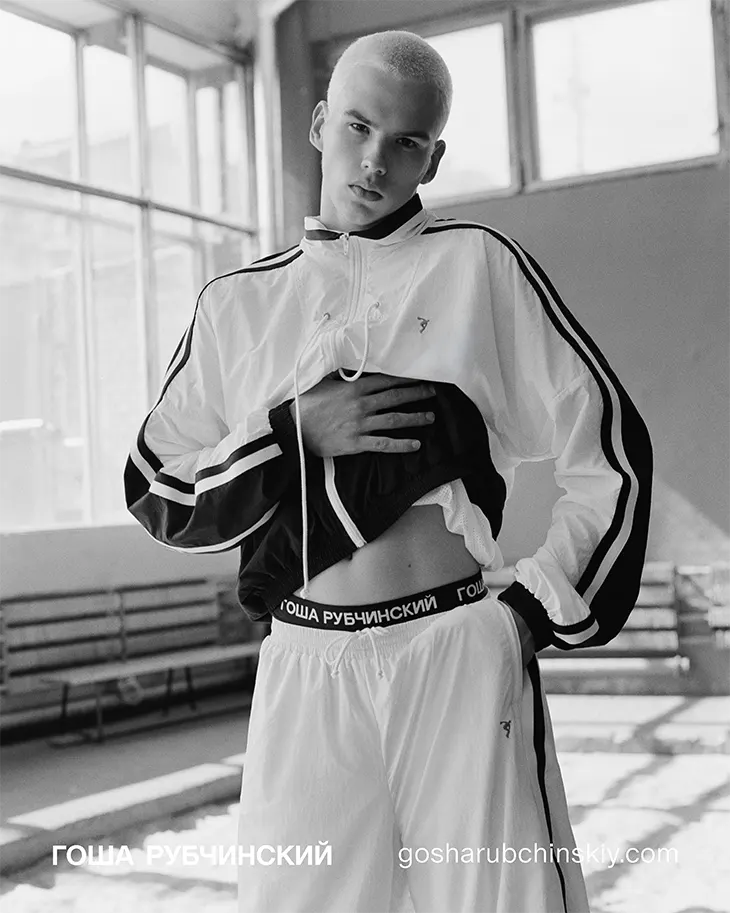
Gosha Rubchinskiy turns to collegiate culture for Fall 2026 with Forum Athletics, a release built around uniforms, athletic codes and the graphic systems associated with campus organizations. The collection brings these references into clothing through Greek lettering, classical imagery and details that suggest garments altered through repeated wear.
AD CAMPAIGNS
Three Greek letters provide the primary graphic language: Φ, Υ and Μ, or Phi, Upsilon and Mu. The symbols appear throughout the collection and give the pieces the visual character of collegiate emblems. Their use connects the clothing to the familiar lettering found on university apparel, where individual characters often communicate affiliation and group identity.
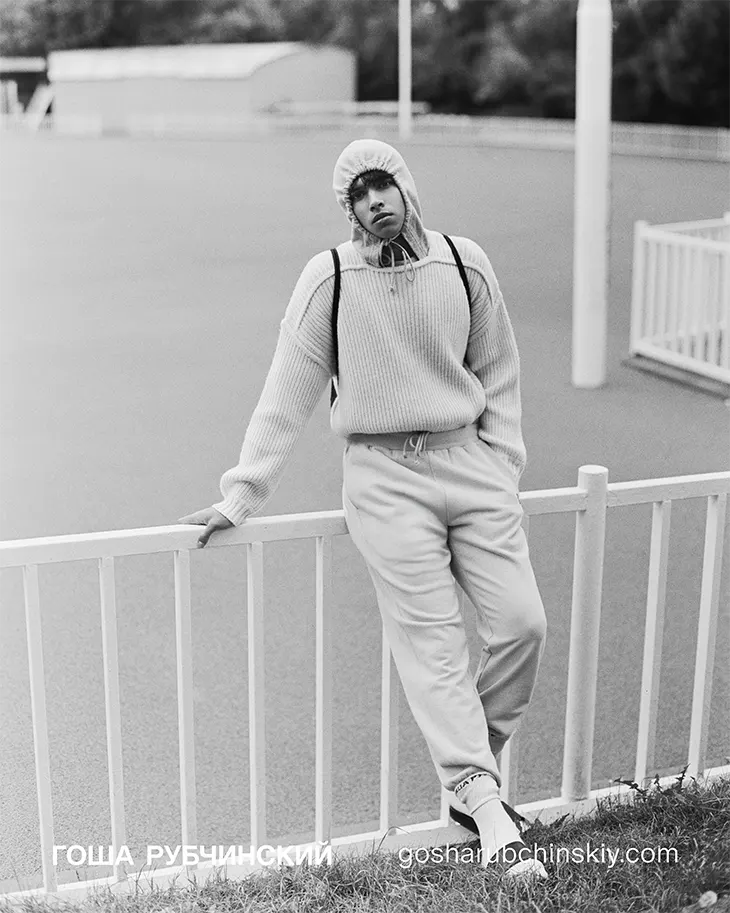
Rubchinskiy pairs the letters with the Discobolus, the ancient Greek image of an athlete preparing to throw a discus. The collection references the figure through its association with harmony between physical and intellectual development. Distressed prints, patches and embroidery reproduce the image across the garments, placing a classical athletic figure within the vocabulary of contemporary sportswear.
Athletic uniforms provide another source for the collection. Rubchinskiy takes elements from different sports and combines them with raw-cut edges and intentionally shortened sleeves. These treatments give the clothes an altered quality, as though their owners have cut, worn and adapted the pieces over time. The resulting details connect standardized team clothing with the individual changes that can develop through use.
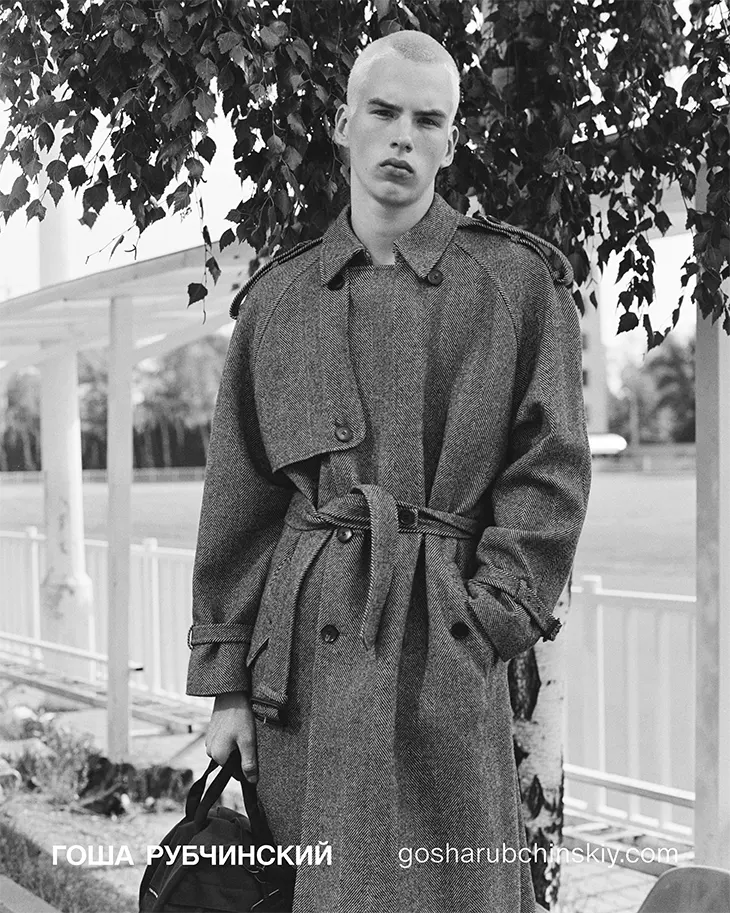
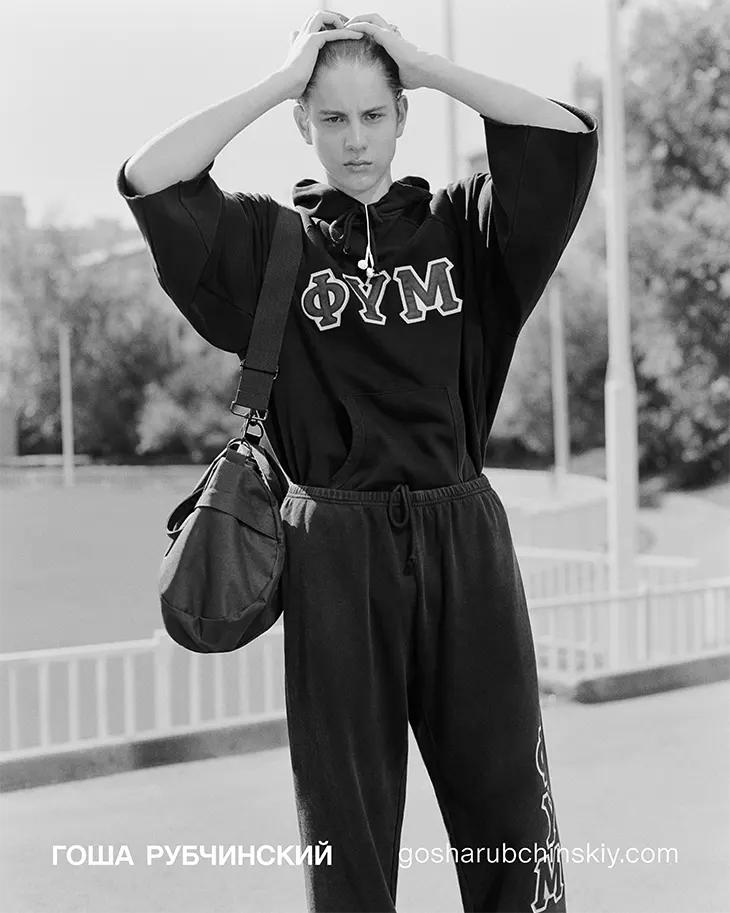
Forum Athletics includes hoodies, sports jackets, windbreakers and track pants, according to coverage of the release. Black, white and grey dominate the palette, while the accompanying imagery uses a black-and-white film treatment. The restrained colors keep attention on the lettering, Discobolus graphics, patches and altered proportions.
The relationship between ancient Greece and collegiate athletics runs through the collection without requiring literal historical reconstruction. The Discobolus introduces an older image of the trained body, while Greek letters connect that reference to the visual codes of university organizations. Rubchinskiy uses both within familiar sportswear categories, giving the collection a consistent graphic system.
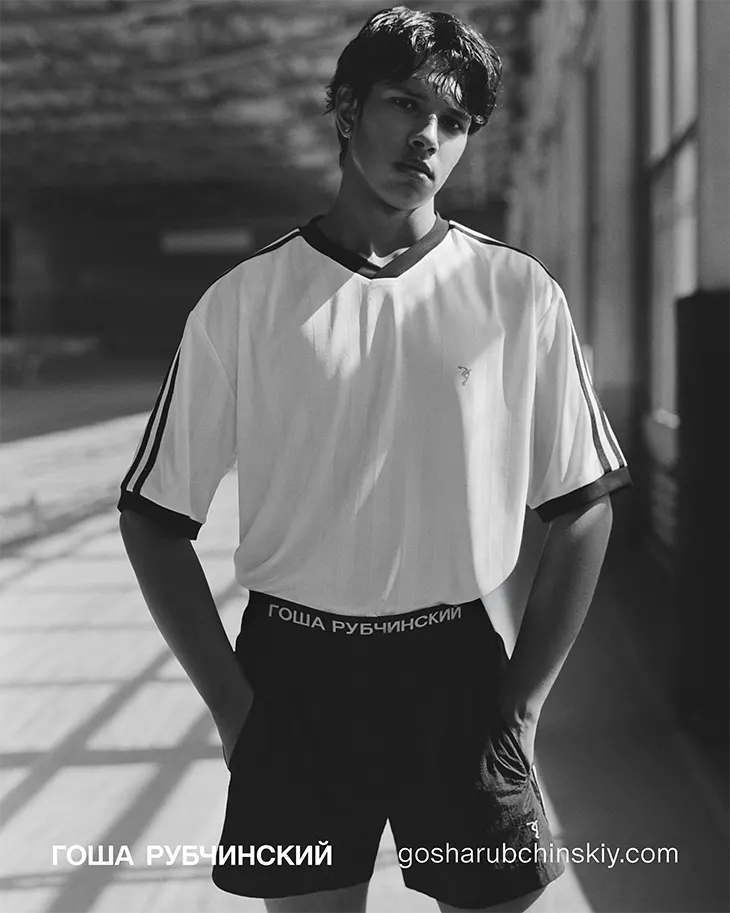
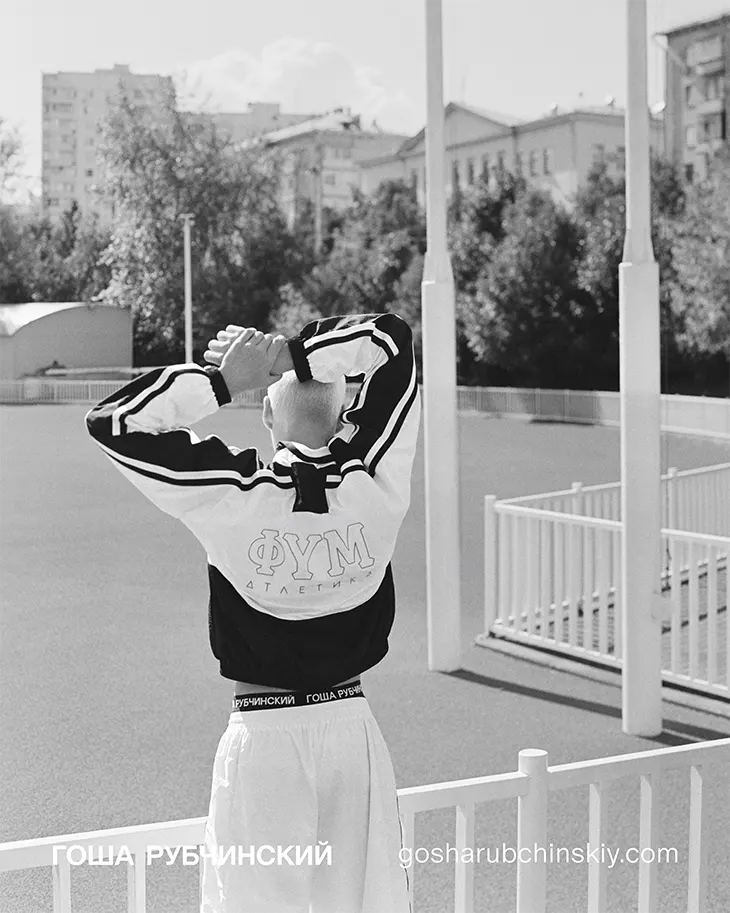
Distressing plays an important part in that system. Prints appear worn, edges remain unfinished and cropped sleeves interrupt the expected shape of athletic garments. Those decisions create the impression of a wardrobe that has changed through use instead of remaining uniform. The pieces retain references to organized sport while showing signs of personal alteration.
The Fall 2026 release continues Rubchinskiy’s interest in sportswear as a vehicle for graphic identity. Here, he works through collegiate imagery and classical references, using recognizable symbols to connect clothing with affiliation, athletics and the way uniforms acquire individual character over time