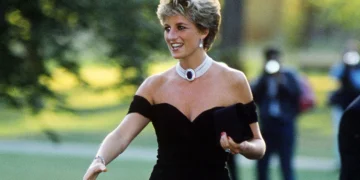



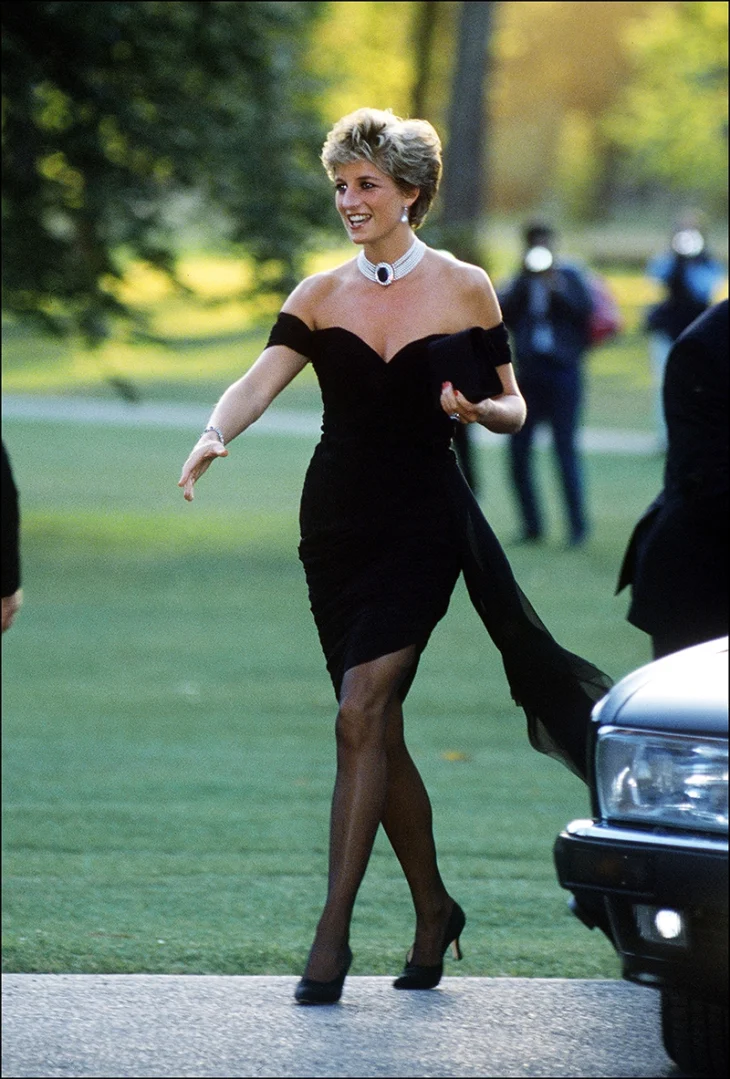
On June 29, 1994, Princess Diana arrived at the Serpentine Gallery in London wearing a black silk evening dress by Christina Stambolian. The dress exposed her shoulders, followed the body closely and finished with an asymmetric hem and chiffon train. Within hours, photographs of the look had circulated widely, fixing the moment in popular culture almost instantly.
FASHION
More than three decades later, the original dress is returning to public view before Sotheby’s offers it at auction in New York on December 9, 2026. The auction house estimates its value at $150,000 to $300,000. This will mark its first appearance at auction since 1997, when Diana sold 79 dresses to raise funds for cancer and AIDS charities. A numbered copy of the original catalogue, signed by Diana and Stambolian, will accompany the dress.
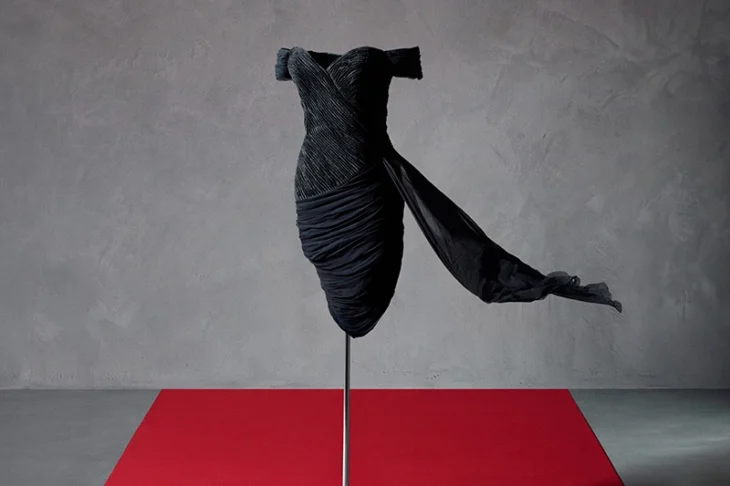
The timing of Diana’s 1994 appearance gave the dress its charge. That evening, Prince Charles was due to acknowledge his infidelity during a television interview. Diana had already separated from him nearly two years earlier, and news of the interview had reached the press before broadcast. She understood that photographers would read her appearance as part of the same public story.
She changed her wardrobe plans at the last minute. Diana set aside a Valentino gown and chose Stambolian’s black dress, which had remained unworn in her wardrobe for three years because she considered it too daring for a public appearance. Her stylist Anna Harvey later recalled that Diana simply wanted to “look a million dollars.”
That decision turned clothing into image control.
The phrase “Revenge Dress” arrived quickly, giving the public an easy explanation for the photograph. Yet the image has lasted because it says something larger about Diana’s understanding of visibility. She knew that the press could frame her, define her and interpret her. That night, she used fashion to redirect the frame.
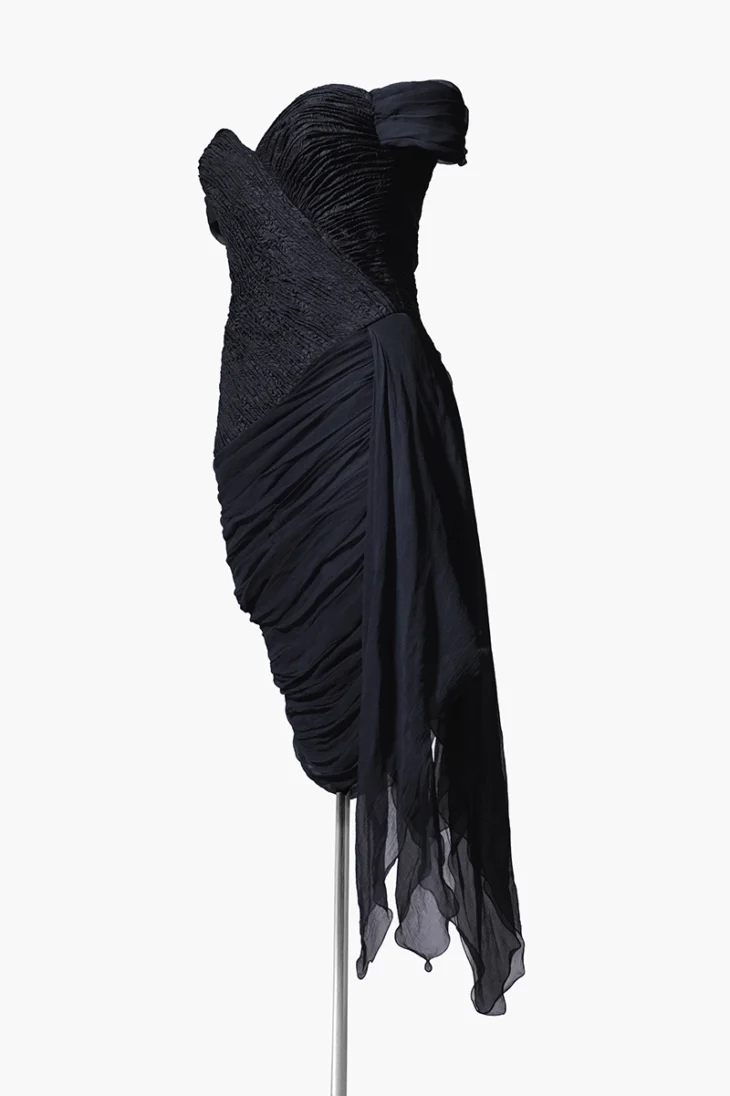
The styling intensified that effect. Diana wore black heels, red nail polish, a clutch and a sapphire-and-diamond choker created from a brooch that the Queen Mother had given her as a wedding gift. Every element contributed to an image that felt controlled and deliberate.
The dress later helped establish the modern idea of revenge dressing, a phrase used for clothes chosen to project confidence after a public personal rupture. The concept has repeated itself endlessly in celebrity culture, yet Diana’s example remains unusually powerful because the image came before social media gave public figures direct access to their audiences. She worked through the cameras already waiting for her.
Sotheby’s sale now introduces another question: what exactly is being valued when such a garment enters the market? The materials themselves cannot explain the estimate. Its value comes from the image attached to it, the public memory of Diana, the circumstances of that evening and the cultural meaning that accumulated afterward.
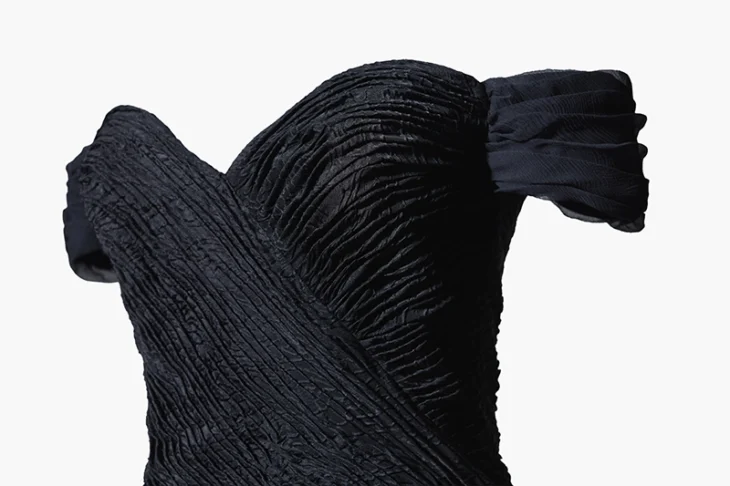
Before the auction, Sotheby’s will exhibit the dress in London from September 18 to 24, followed by Hong Kong from October 1 to 15 and Geneva from November 6 to 11. It will then appear in New York from December 2 to 8 ahead of the December 9 sale.
The return of the Revenge Dress confirms how little its power depends on the original scandal now. What remains is the image of Diana stepping into public view at a moment when much of her private life had already become public property. She answered that loss of control with a photograph the culture still remembers.