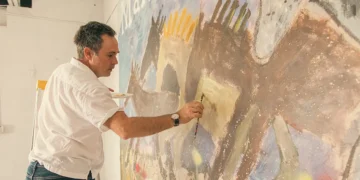



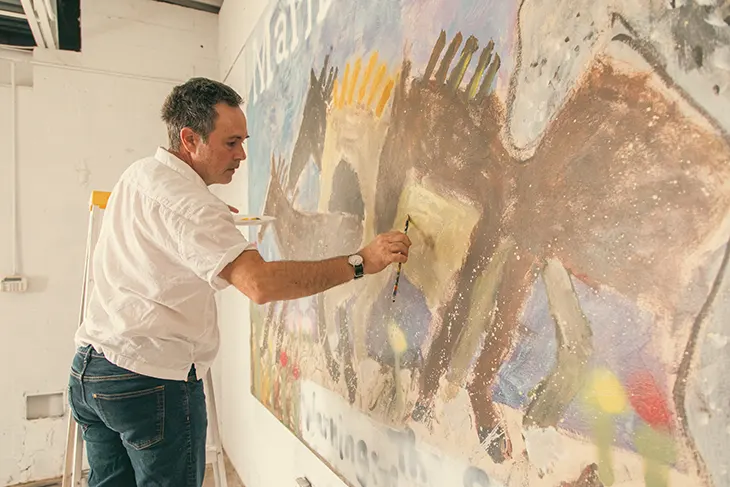
Tyler Casey never planned on becoming an artist. Today, Casey’s work can be found in galleries, private collections, & across the walls of one of Mexico City’s most visually impressive restaurants, Cursi, where I discovered Casey’s work for the first time.
INTERVIEWS
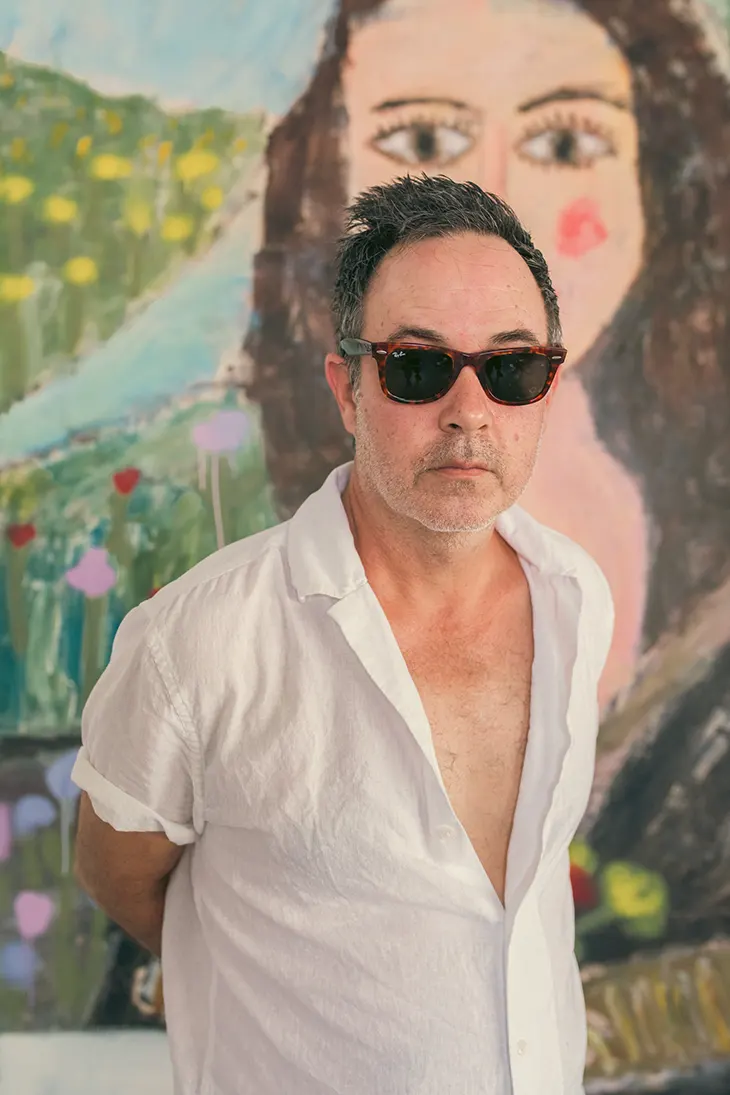
Casey remains surprisingly detached from many of the conventions of the art world. He is self-taught and completely uninterested in forcing meaning where there may simply just be a feeling. His work moves between humour and history, nostalgia and pop culture, imperfection and recognition.
When we spoke, our conversation moved from his project at Cursi in Mexico City to Van Gogh, AI, Kim Jong-un, memory, and the increasingly difficult search for authenticity in a world where everything seems to be documented, commercialised, and shared.
Star Burleigh: You have spent a lot of time in Mexico City over the years. What keeps bringing you back?
Tyler Casey: It’s my favorite city in the world. I think it’s the mixture of everything. You can get 13-peso tacos or you can have one of the most gourmet meals you’ve ever eaten. You have Polanco, La Roma Norte, Centro Histórico, and so many other neighbourhoods that have completely different personalities. I love the contrast. You can go to these old cantinas in Centro Histórico, places like La Dominica that have been around for more than a hundred and thirty years & then five minutes later you’re somewhere completely modern. That’s what I love about Mexico City. Everything exists together.
Star: What has it been like watching the city change so much?
Tyler: Roma Norte as it exists today really wasn’t there when I first started going. I used to spend a lot of time in Coyoacán and honestly it used to be so different. Every weekend there would be 5 to 10 musical groups playing. You’d hear Andean music, there were vendors from Chiapas and Oaxaca, food carts everywhere. There used to be these huge groups of 30 to 40 hand drummers playing for hours while everyone danced. That’s mostly gone now.
If the art is good, it’s just good. It’s not good because of who made it.
Star: I think that’s one of the complicated things about loving a city for a long time. You get to witness its growth but you also witness what disappears.
Tyler: Exactly. But there are definitely good parts to the changes. Mexico City has so many incredible new restaurants. There are all these interesting places that tourists can experience and a lot of them are genuinely unique. But there’s also a point where you start asking whether a place is becoming too accessible. In Roma Norte now, you can barely walk down a street without hearing English. Which is kind of weird.
Star: You’ve travelled extensively. What are you actually searching for when you travel?
Tyler: Probably the most different thing I can find. I’ve travelled to around 25 countries and almost every state in Mexico. My main passion in life is other cultures, other languages, and understanding why people do what they do. I’m always interested in finding something that hasn’t been commercialised yet. But that’s becoming harder and harder.
Years ago, before GPS and social media, I found this Mayan community deep in Chiapas. When I went back decades later, there were signs everywhere, cafés, and advertisements for “authentic” experiences. And I remember thinking, What happened?
Star: Do you think social media has made it harder for anything to remain mysterious?
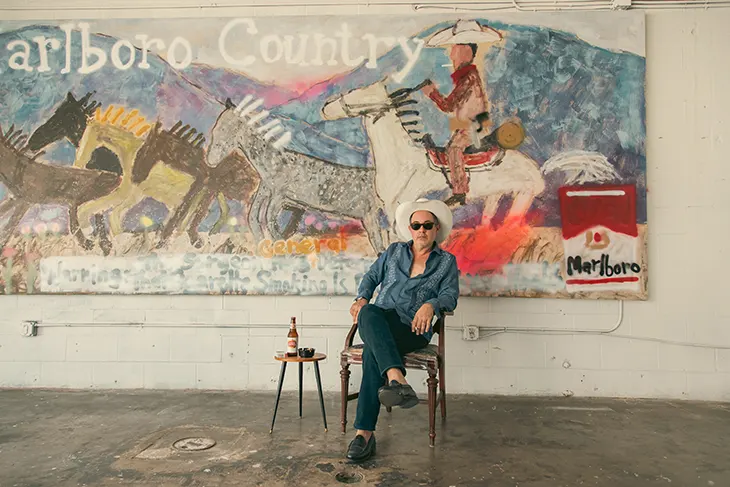
Tyler: Yeah. It’s everywhere now. You can’t really get away from it. And I think that’s part of what I’m trying to do with my art, in a way. Get away from the norm. It’s almost like remembering something. Remember when…?
Star: That idea of remembering seems really present in your work. Your paintings often feel like familiar images that have been slightly distorted, as if you’re remembering them rather than reproducing them.
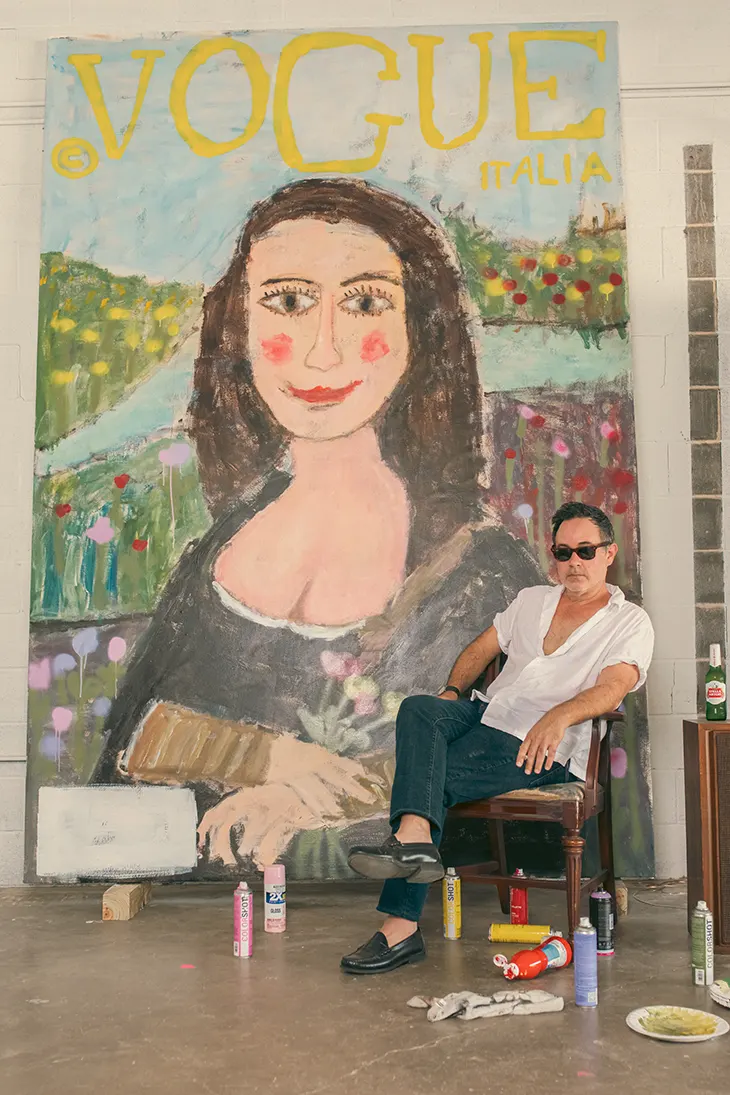
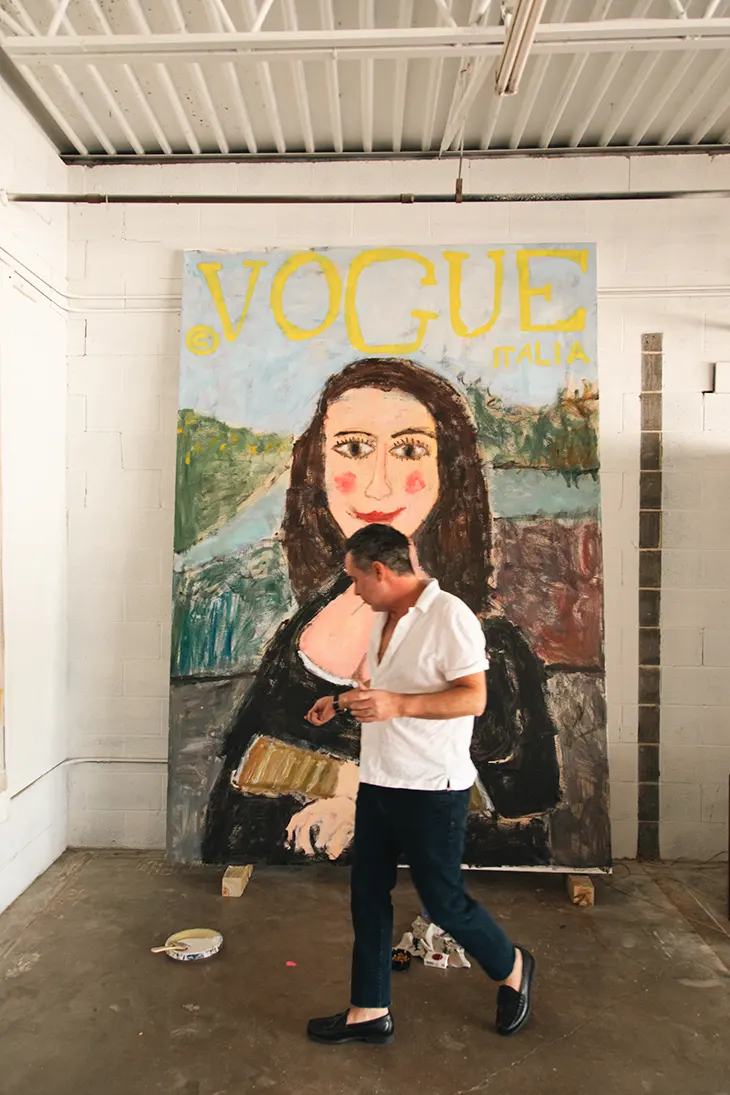
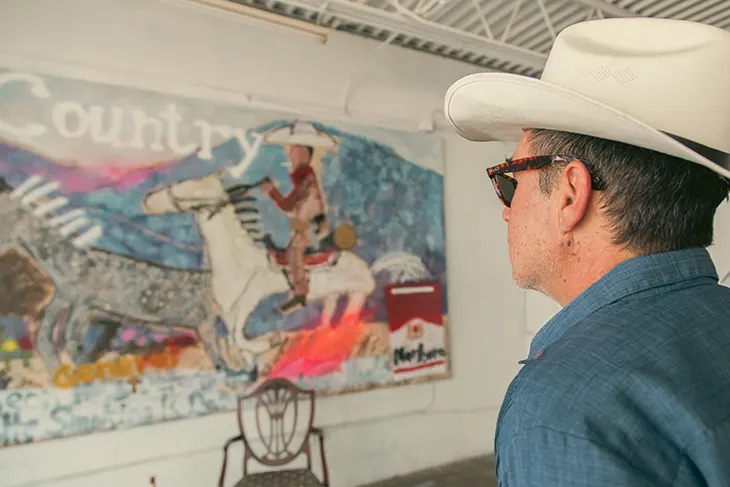
Tyler: That’s exactly how I think about it. I copy a lot of things that I like, such as Rothko, Warhol, old images, magazine covers, but I try to make it feel almost like a memory. Like maybe you thought you saw that painting once. Or maybe you saw it in a dream. Everything today is so fast and cheap and immediate because of Instagram and smartphones. Things from the past just feel more tangible to me. I like iconic things. Old magazine covers. Old telephones. Things like that. They feel real.
Star: Do you think we’ve lost something by moving away from physical objects and into a world where almost everything exists digitally?
Tyler: Yeah, I think so. I was thinking about Luis Miguel when I was working on the Cursi project in Mexico City. My first wife had a Luis Miguel poster in her bedroom when she was 15. Everybody used to have posters. Calendars. Things hanging on the wall. That’s gone. Those physical things were part of your life. Now everything is on a screen.
The Art of Not Planning
Star: Your work often feels spontaneous. Is that intentional?
Tyler: I would say I’m a spontaneous artist. I don’t really plan things the way I think people expect artists to.
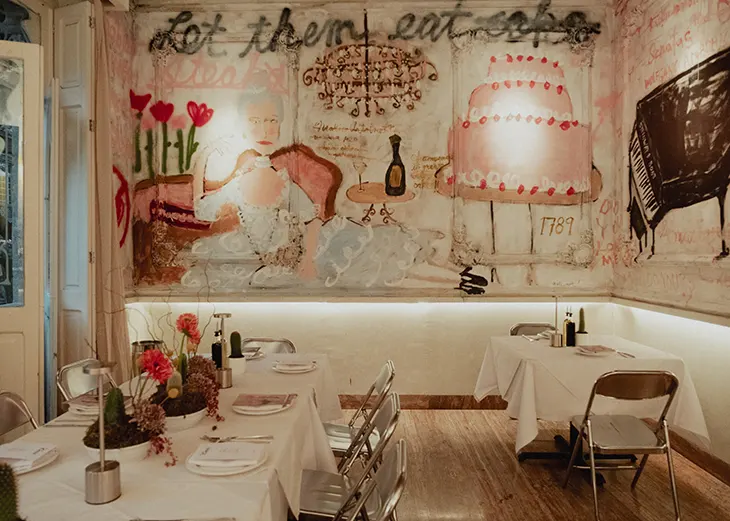
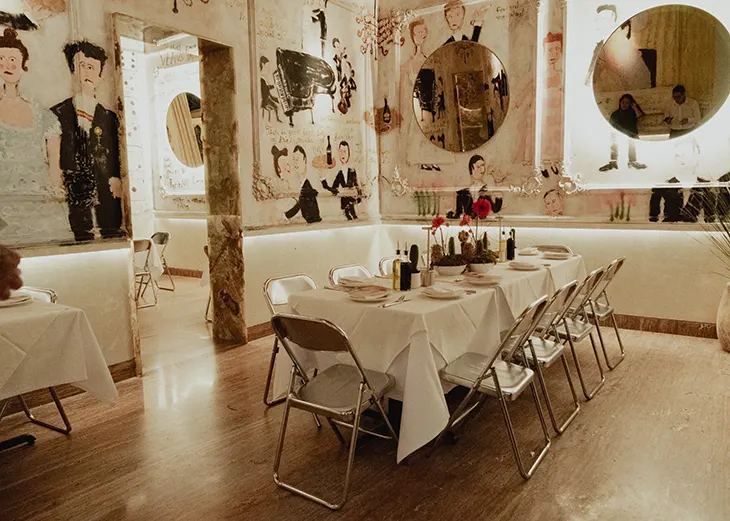
The project at Cursi is probably the best example of that. One of the owners is a friend of mine and he and I had thought about doing something together & one day he and his partner called me to ask if I would paint the walls of their new restaurant which was a lot bigger than I ever expected. But I said okay sounds cool. Then they told me they were opening in two weeks.
I said, “Do you mean you want me to start in two weeks?”
They said, “No. We’re opening in two weeks.”
So I flew to Mexico City the next morning, bought paints and met the team.
Star: And you finished the project in two weeks?
Tyler: Nine days to be exact. All I knew was the name, Cursi (which plays with the idea of romance and being intentionally cheesy). There was zero planning.
Star: When you walk into Cursi now, it feels incredibly intentional. There are references to Mexican history, Luis Miguel, French culture, Mickey Mouse; it feels like an entire world.
Tyler: I knew there would be both Mexican and international people coming through the restaurant, so I wanted to blend something that both English and Spanish speakers could relate to. I brought in Mexican history and cultural elements but also French influences because of the history of the house and France’s relationship with Mexico. I wanted some things to feel historical but then I wanted to completely destroy that seriousness with Mickey Mouse. That contrast is interesting to me.
My art is almost laughable in a way to begin with. You might as well smile with it.
Star: You also had another enormous project in Mexico – a mural for a public hospital outside of Mexico City. That project had a very different fate.
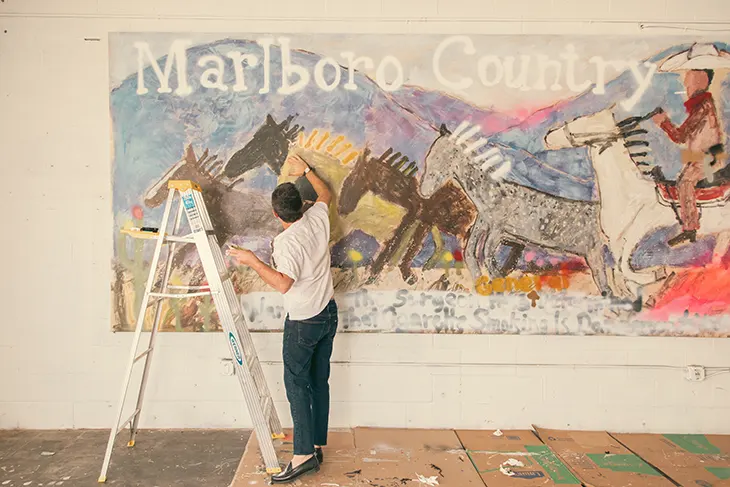
Tyler: Yeah, I was asked to do a big mural for a new public hospital in Jiutepec, Morelos, about an hour and a half outside of Mexico City. It was enormous, around 20,000 square feet. They offered to bring in other artists to help me but I ended up working with cement workers as assistants and I gave them the opportunity to actually help paint it which was really cool.
The actual painting time was just under a month. I didn’t really sketch anything beforehand. I used a laser and they would put dots where I pointed from hundreds of feet away. They were crawling all over the scaffolding following the laser and together we would connect everything and fill it in. It was pretty crazy.
Star: And then the entire mural was covered?
Tyler: The government sort of got involved in the contracting and once they finally opened the hospital they ended up covering the whole thing up. So it’s all gone. It was definitely disappointing, especially because of how big the project was. But I was able to find some images of it, and I have a few on my Instagram.
Before Painting
Star: Painting wasn’t actually your first creative career. You spent a long time making music before this.
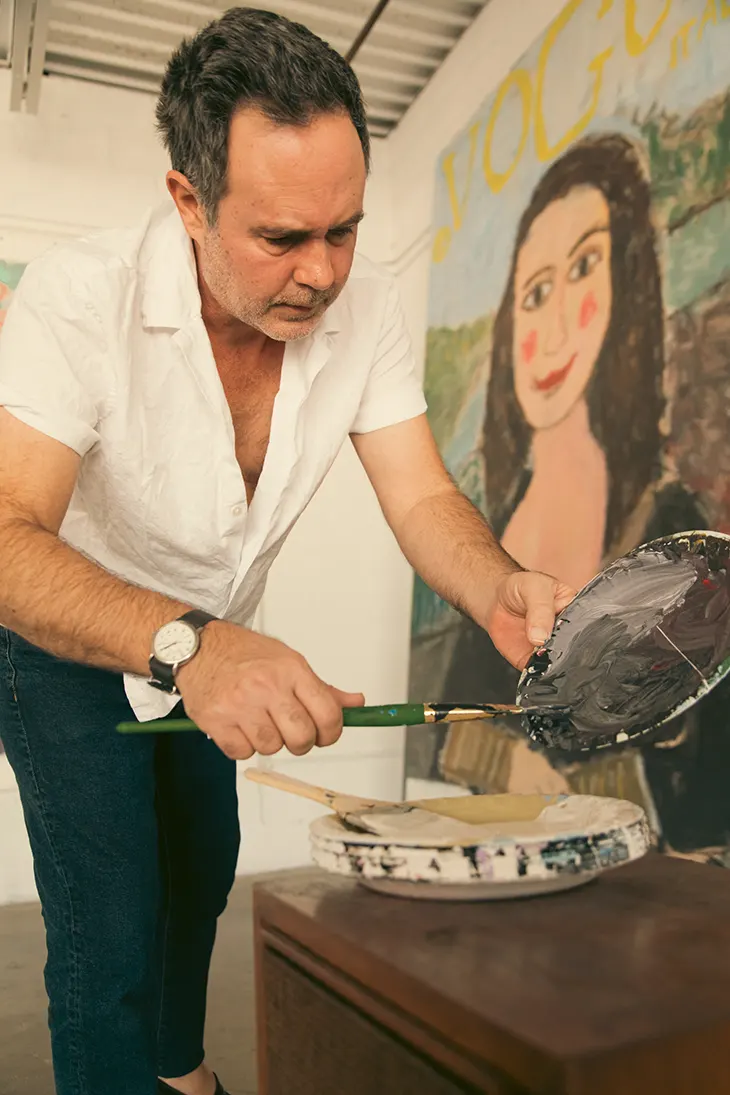
Tyler: Yeah. I did music for probably 15 years. Then I ended up having a couple of restaurants here in Fort Worth, restaurant and bar-type places. Then I wrote a movie. And then after that, the painting happened.
Star: So painting really was not part of some master plan.
Tyler: Not at all. A little over four years ago, I had a friend who owned a gallery here in Texas and he had seen that I painted a little bit in the past just for fun. He said, “Why don’t you do a show?”
I said, “Well, I don’t have any paintings.”
And he said, “Well, make some.”
So I did about 25 paintings in two months, and the show sold out. I thought, Well, wait a second. Maybe I’ll just keep doing this. And I haven’t stopped since.
Star: Do you still make music?
Tyler: I do it for myself. Here and there. I still think about it. But even with music I was in it for such a long time and now you look around and there are millions of bands doing every niche genre you could ever imagine. It’s just too much. There’s too much in the world. I don’t really follow pop culture anymore either. I don’t really know what’s popular. The last big band I remember was probably The Strokes. Which I still like but that was a long time ago.
Imperfection as a Language
Star: You’re self-taught and I think one of the things that makes your work interesting is that it doesn’t seem interested in perfection.
Tyler: I’m not technical at all. If somebody said, “Draw me,” I probably couldn’t do it. But I don’t feel like what I’m trying to do really has anything to do with that. It’s more about a feeling.
Star: People sometimes look at contemporary art and say, “My kid could do that.” How does that reaction make you feel?
Tyler: Yeah. I kind of want my paintings to look like anyone could have done them. That’s not an insult to me. I think the main thing for me is I really have fun with colour. I love playing with colour.
The Art vs. the Artist
Star: Do you think people spend too much time trying to understand art instead of simply experiencing it?
Tyler: One hundred percent. Personally, I don’t even like that much art. I know that sounds strange coming from someone who makes it but most of the time when I go see art, I don’t like most of what I see. I have a very short list of artists where I look at something and think, Wow. That’s amazing. One of them is Cy Twombly. But I don’t really study art. I’d rather not have all of that in my head when I’m making something.
Star: Do you consider yourself part of the art community or more of an outsider?
Tyler: Probably more of an outsider. Not because I’m trying to be an outsider. I’ve just never really gotten into the whole, “We’re artists, we’re creatives, we’re all part of this community” thing. I don’t necessarily want to spend time with someone just because they’re an artist. Some people get a lot out of that and that’s great. But maybe I haven’t been doing this long enough to need to do that.
Star: Do you think a painting is defined more by the person who made it or by the final image?
Tyler: The final image. If the art is good, it’s just good. It’s not good because of who made it. I think today there’s too much focus on the artist’s story. This artist suffered through something. This happened to them. And because of that, we should look at the art. But first of all – is the art good? Let’s start there.
Star: The story can add context but it shouldn’t have to rescue the work.
Tyler: Exactly. Take Van Gogh. His story is amazing. He barely sold anything. He cut off his ear. There was all this madness. It’s an incredible story. But first, somebody looked at the paintings and thought, Whoa. Who painted this? The art stood on its own.
Too Much of Everything
Star: You mentioned earlier that there’s simply too much now. Too much music, too much art, & too much content.
Tyler: Yeah. Everybody wants to do it now. Everybody wants to be famous. It’s not like there are 10,000 artists anymore. There are millions and millions of artists. How are you supposed to digest all of that?
Star: Do you think that makes it harder for great work to survive?
Tyler: I honestly don’t know what’s going to last from today. That’s the question, right? Why are we still looking at Van Gogh? Why are certain artists still important? I don’t know who from today will still matter hundreds of years from now. And even if someone is incredibly talented, I don’t see how one individual really has a chance of being someone like Picasso or da Vinci nowadays. I think a lot of importance is decided by groups of people saying, “Oh, we’re choosing this one to be important.”
And sometimes I think the artist’s story becomes more important than the art itself.
AI and the Question of What Is Real
Star: What do you think about AI-generated art?
Tyler: I hate it. I don’t even know anything about it. That’s probably on purpose. It’s not that I’m scared of it. I just think I would rather remember something real, even if it’s bad, than have something fake make something up.
Things from the past just feel more tangible to me. I like iconic things. Old magazine covers. Old telephones. Things like that. They feel real.
Star: Last October I discovered the AI art section at Art Basel Paris and I was surprised by how much space it had taken up. The argument is that the person creating the prompts is still an artist because they’re communicating an artistic intention to the machine.
Tyler: But what’s the medium? A computer?
Star: Haha. Essentially.
Tyler: I think it’s amazing that humans created AI. That part is incredible. But as far as appreciating an AI-generated image as art? I don’t know. What’s the point?
Humour, History and Kim Jong-un
Star: There’s also a lot of humour in your work. Your Kim Jong-un paintings are a great example.
Tyler: Yeah. I was invited to be part of a show in Brooklyn and I was excited because the guy who asked me was actually friends Andy Warhol and Basquiat. I didn’t even know what I was going to paint. The show was two days away. Then I remembered this photograph of Kim Jong-un riding a horse through the snow. To me, it was just hilarious. He looked like he was trying to be James Dean or something. And I remembered it was the Year of the Horse and imagined him on the cover of GQ.
Star: What’s interesting is that you paint so many people from history and pop culture but Kim Jong-un is still alive. He almost feels like a historical figure while simultaneously being someone who is actively shaping history right now.
Tyler: Yeah. I’ve painted a few others who are still alive such as Beyoncé. I once painted her Instagram. But Kim Jong-un is kind of the one that really stands out.
Star: He almost feels like the perfect subject for you because he already exists somewhere between history, propaganda, celebrity and absurdity.
Tyler: Exactly. I mean, I know he’s a serious guy. But the images are just funny to me. You see these photographs of him and they’re so carefully staged. He’s riding through the snow on a horse, looking incredibly serious, and you start thinking, Who is this for? Who is looking at this and thinking this is cool? And that’s what made me laugh.
Star: Your work often takes very serious people or historical figures and makes them slightly absurd.
Tyler: Yeah, I would say humour is definitely part of it. I’m not Van Gogh or Matisse. I can’t create something where people just stand there overwhelmed by technical brilliance. So my art is almost laughable in a way to begin with. You might as well smile with it.
Letting Things Happen
Star: Your career seems to have unfolded in a way you never expected. What has painting taught you about life?
Tyler: You can’t plan things as much as you think you can. Sometimes trying too hard at something actually makes it worse. There have been periods where nobody was buying anything and then suddenly something big would happen. With other things in my life, I felt like I was trying extremely hard even when it wasn’t working. Painting has been the opposite. So I’ve learned that you can’t control everything. You just have to let it happen.
Looking Forward
What are you working on now?
Tyler: I’m working on a solo show at Homme Gallery in Washington, D.C. The show is called Chinatown which is set to debut on October 9th.
This year, I spent time in New York and San Francisco and in both places I spent a lot of time in Chinatown. There’s a restaurant in Mexico City that I love called Canton Mexicali – the idea behind it comes from the history of Chinese migration to Mexicali during the construction of the railroads. There was a huge Chinese migration to that area and the restaurant explores Mexican-Chinese cuisine that came out of that history.
I thought that was fascinating. So the show is about Chinese influence on America. I’ve never done anything like it before, so we’ll see what happens.
Star: Your work seems to constantly return to history but not history in a textbook sense.
Tyler: Yeah, I think that’s probably true. I like things that people remember. Things that maybe aren’t around anymore. I think that’s part of what I’m doing.
Star: What do you hope someone feels when they look at your work?
Tyler: Maybe they think about something they’ve seen before in a different way. Or maybe they remember something. Something from their childhood. Something they forgot about. Anything like that.
Star: After spending time with your work, I think that’s exactly what happens. Your paintings feel like fragments of memory; sometimes funny, sometimes historical, sometimes completely absurd, but always familiar in some odd way.
Tyler: That’s good. I like that.
Tyler Casey’s work doesn’t demand to be decoded. It asks to be experienced. His work isn’t trying to be overly serious or pretentious.
And honestly, that might be what I like most about it. Nowadays everything seems to come with a backstory, an explanation, an algorithm, or a reason why you should care, but Casey is interested in something much simpler: the image that makes you stop, the memory you didn’t realise you still had, and the random thing that makes you giggle. And for Casey, that seems to be more than enough.
Words by Star Burleigh