


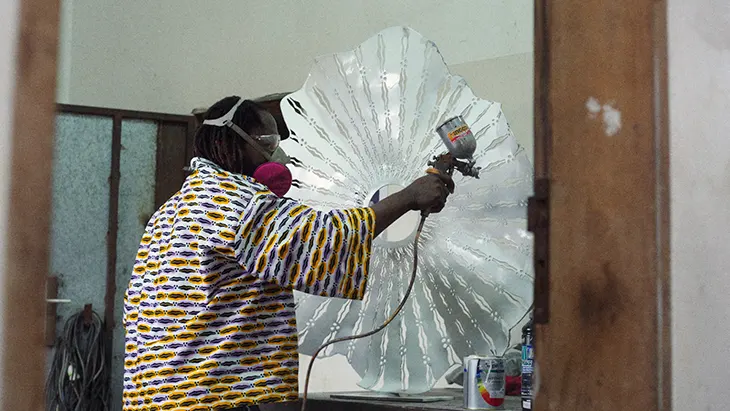
Vlisco marks its 180th anniversary with a multidisciplinary project featuring six contemporary African artists who each respond to a historic design from the company’s archive. The collaboration takes familiar prints beyond fabric as the artists interpret their symbolism, cultural associations and visual language through sculpture, recycled materials, woven textiles and mixed media.
ART
Vlisco began in 1846, and its printed fabrics have acquired new names and meanings through generations of people who wear them. For this project, each participating artist selected a print that held particular relevance to their practice or personal history, then developed an original work around its imagery and associations.
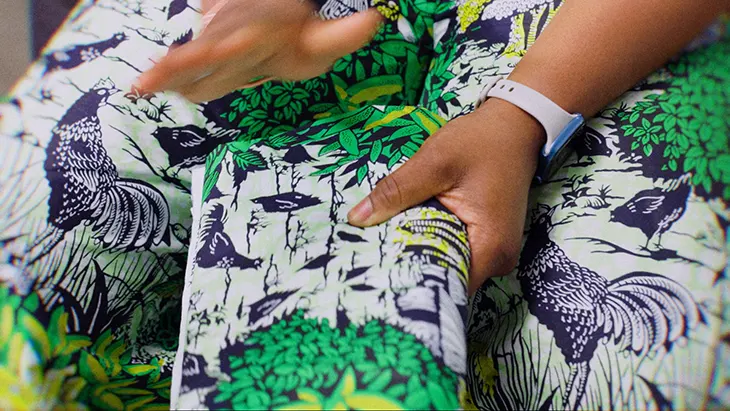
Beninese multidisciplinary artist Sébastien Boko created The World in Motion in response to the Mari Capable print. Boko connects the work with the Egungun masquerade tradition and transforms elements from the fabric into painted stainless steel. His personal connection runs through his family and Cotonou community, where his mother, sister and cousins have worn the design. The sculpture considers renewal, cultural exchange and the role textiles play in carrying shared histories.
Togolese sculptor Atisso Goha responds to the Mama Benz print with Mianô N’Dôkosu, meaning Our Mother Sun in Ewe. Goha uses salvaged car parts to construct a portrait dedicated to the Nana Benz of Togo, women whose independence, commercial success and influence shaped the region’s loincloth trade and its economic and social history.

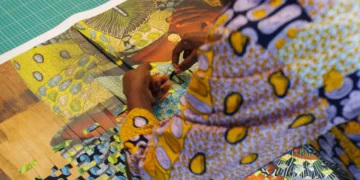
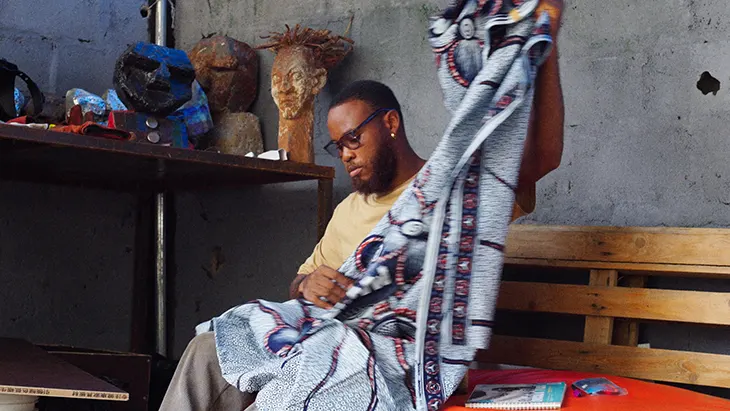
Nigerian artist Ayobami Ogungbe turns to weaving for Fertility, a portrait of a mother and daughter based on the Vlisco design of the same name and his own & Co series. He combines fabric and photography through Nigerian weaving traditions to examine kinship, continuity and shared identity.
Ghanaian artist Yaw Owusu uses thousands of low-denomination Ghanaian pesewa coins for Le Robinet. Taking the Le Robinet, or Money Tap, print as his source, Owusu examines abundance, exchange, interconnectedness and the changing value of currency through repeated forms and textured surfaces.
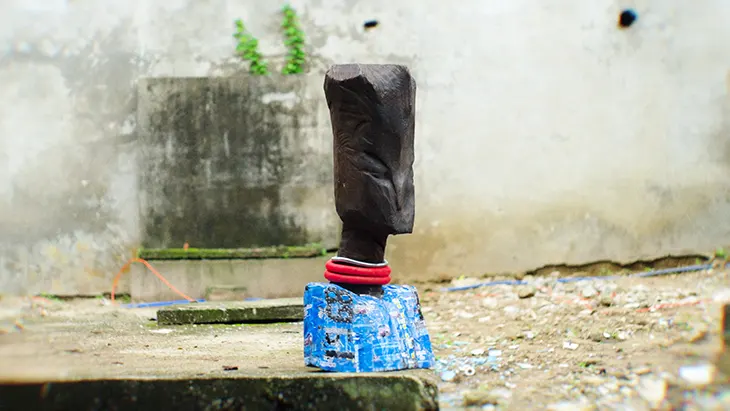
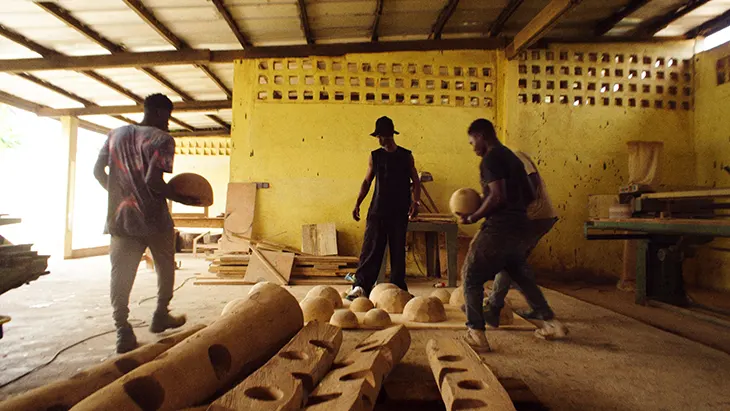
Ivorian designer and sculptor Jean Servais Somian created Standing Tree, Broken Tree from hand-carved coconut wood. The Fallen Tree print informs the work, where hollowed forms and wooden and bronze spheres suggest seeds emerging from a fallen tree. Somian uses the composition to address regeneration, renewal and natural cycles of growth.
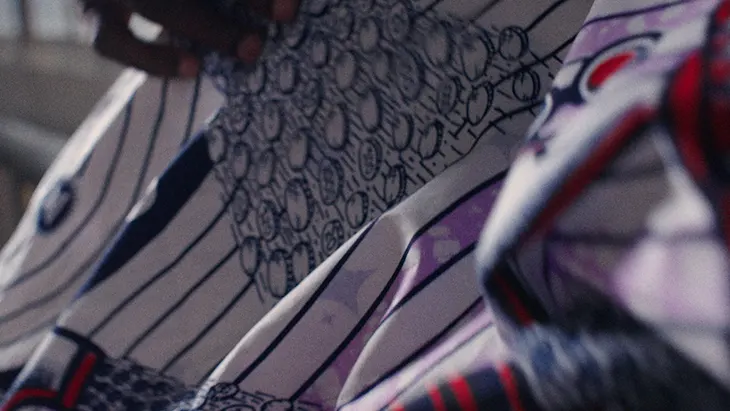
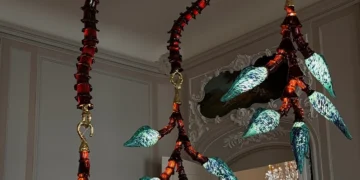
Kinshasa-based artist Prisca Tankwey responds to Village Molokai with Kaokoko Korobo. She references Congolese musician Papa Wemba and his connection to a place carrying the same name during political and social upheaval in the Democratic Republic of Congo. Tankwey constructs the installation from coloured transparent plastics and Village Molokai fabric, using a stained-glass approach to examine belonging, exclusion, power and collective identity in postcolonial societies.
The six designs are available exclusively through Vlisco retail locations and online. Vlisco will retain all six artworks in its permanent collection and may present them in future exhibitions.