


There’s something almost defiant about watching Paul Smith present a menswear collection in 2026. While the industry chases streetwear collaborations and logo-heavy drops, the 78-year-old designer staged an intimate salon show at his Milan headquarters that felt less like a fashion presentation and more like a quiet manifesto for the enduring power of the well-cut suit.
The move from Paris to Milan, after years showing in the French capital, marks more than a logistical shift. It’s a statement of intent, positioning the brand firmly within Italy’s tailoring heartland at a moment when few designers seem willing to champion the craft that built menswear’s foundation.
Paul Smith Dialogue Between Past & Present
What makes this Fall Winter 2026 collection particularly compelling is its refusal to treat heritage as museum artifact. Working alongside Sam Cotton, the newly appointed Head of Men’s Design whom Smith has mentored for years, the designer mined nearly five decades of his own archive, some 5,000 garments housed in Nottingham, not for nostalgia but for conversation.
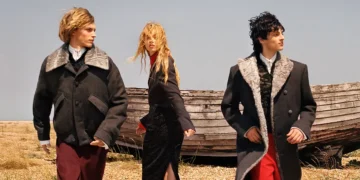
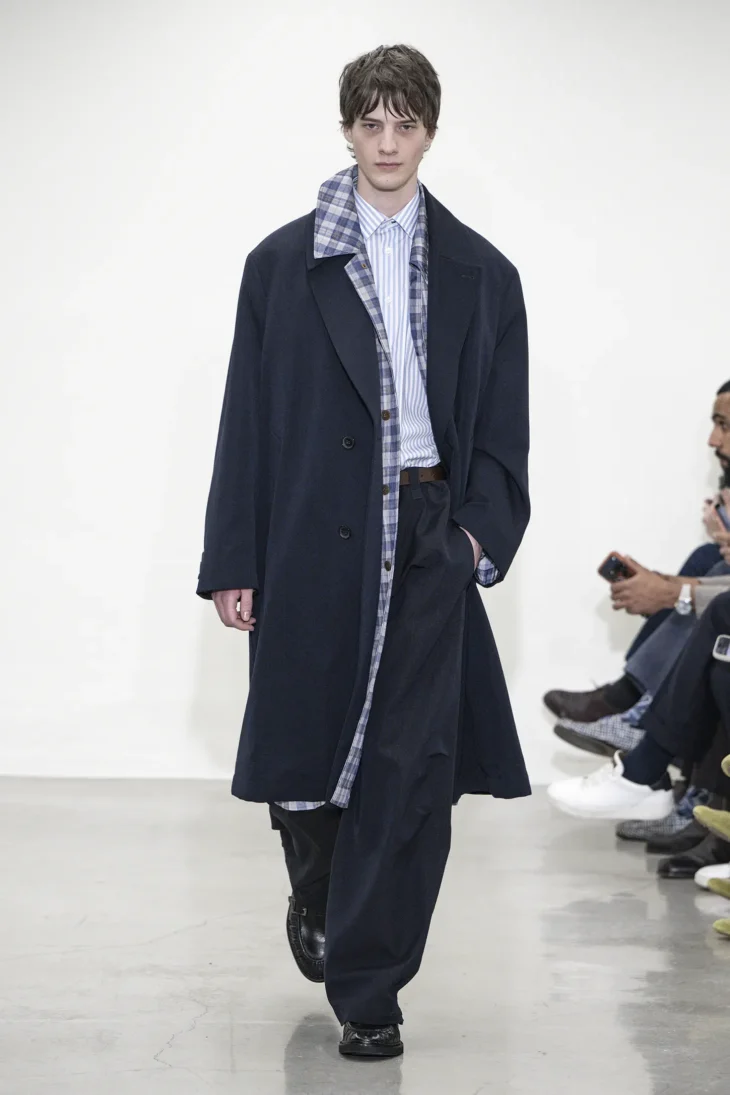
The results speak for themselves. Silhouettes from the late 1980s and early 1990s, periods when Paul Smith helped define what British tailoring could be, reappear here stripped of their period trappings and rebuilt for contemporary wear. Jackets arrive deconstructed, their inner workings exposed in what the brand calls “inside-out” detailing, a technique that transforms traditional construction into visual interest without sacrificing the precision that makes a Paul Smith suit worth owning.
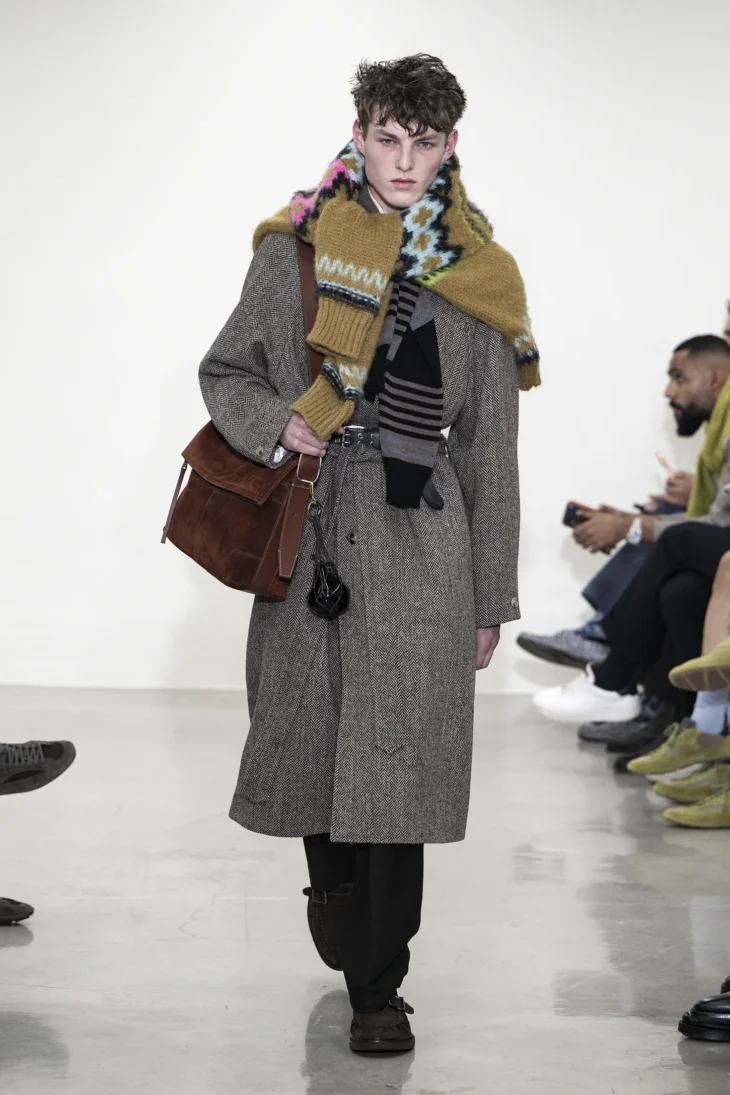
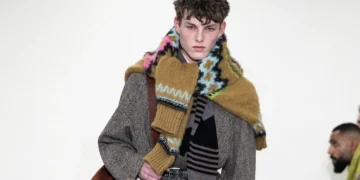
Harris Tweed and Donegal fabrics carry the weight of British textile tradition, but they’re deployed with the kind of irreverent wit that has always distinguished Smith from his Savile Row neighbors. These aren’t heritage pieces designed to impress; they’re clothes meant to be worn, creased, lived in.
The Cocteau Connection
The collection’s most intriguing thread runs through Jean Cocteau, the French artist and filmmaker who spent his life in a uniform of shirt and tie. It’s a fitting reference point for a designer who has worn a suit daily for decades, and the influence manifests in unexpected details: layered cuffs that suggest a man who dresses with intention, sheer fabrics that play with transparency, and button covers that feel both archaic and entirely modern.
This “magpie dressing” approach, gathering disparate elements into cohesive outfits, gives the collection its distinctive energy. Prints pulled from Paul Smith’s father’s photography archive appear on shirting. Polka dots, a recurring motif in the brand’s history, return in treatments that explore shadow and transparency. Hand-drawn pears, playful and slightly absurd, punctuate otherwise serious tailoring.
The color palette anchors everything in deep autumnal tones, burgundies, forest greens, rich browns, that serve as canvas for strategic bursts of the signature Paul Smith vibrancy. It’s a curated approach that feels mature without becoming staid.
Paul Smith Accessories Tell Their Own Story
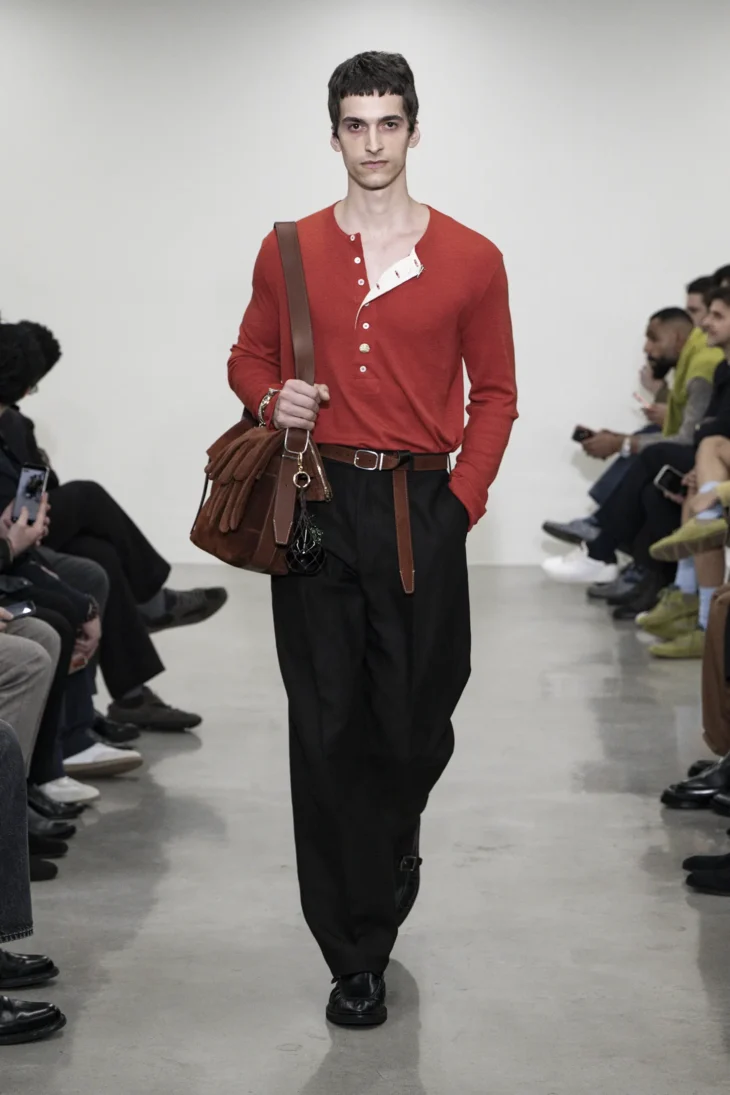
The runway’s leather goods arrived deliberately distressed, tumbled to suggest years of use before they’ve left the showroom. Bags, belts, and charms looked like objects with histories, continuing the collection’s broader meditation on accumulation and meaning. In an industry obsessed with pristine newness, there’s something refreshing about accessories designed to look already loved.
Setting the Stage
Smith’s Milan headquarters transformed for the occasion into something between gallery and living room. A mural by Colin Barnes, the artist who captured some of the earliest Paul Smith designs back in 1976, greeted guests, while Trompe L’oeil techniques created moments of visual surprise throughout the space. Wooden benches wore prints depicting collected objects: scissors, coffee cups, the everyday detritus that has always fueled Smith’s creative imagination.
The production, handled by Holmes Production with music by Andrew Hale and Peter Smith, maintained the intimate atmosphere that distinguished the presentation from Milan’s more theatrical offerings.
Why This Matters
In an era when menswear’s major players seem uncertain whether to chase trends or retreat into safe commercial formulas, Paul Smith’s Milan positioning offers a third path. This is a designer who understands that tailoring isn’t about rigid tradition, it’s about the ongoing conversation between craft and personality, between what clothes are supposed to look like and what they can actually do for the person wearing them.
The Fall Winter 2026 collection won’t generate the social media frenzy of a surprise collaboration or a celebrity-packed front row. What it will do is remind anyone paying attention that the suit, reimagined, deconstructed, made personal, remains one of fashion’s most powerful tools for self-expression.
Paul Smith has been making this argument for over fifty years. In Milan, surrounded by the world’s finest tailoring houses, he made it once again. And once again, it was worth hearing.
Discover more of the Paul Smith Fall Winter 2026 collection in our gallery:
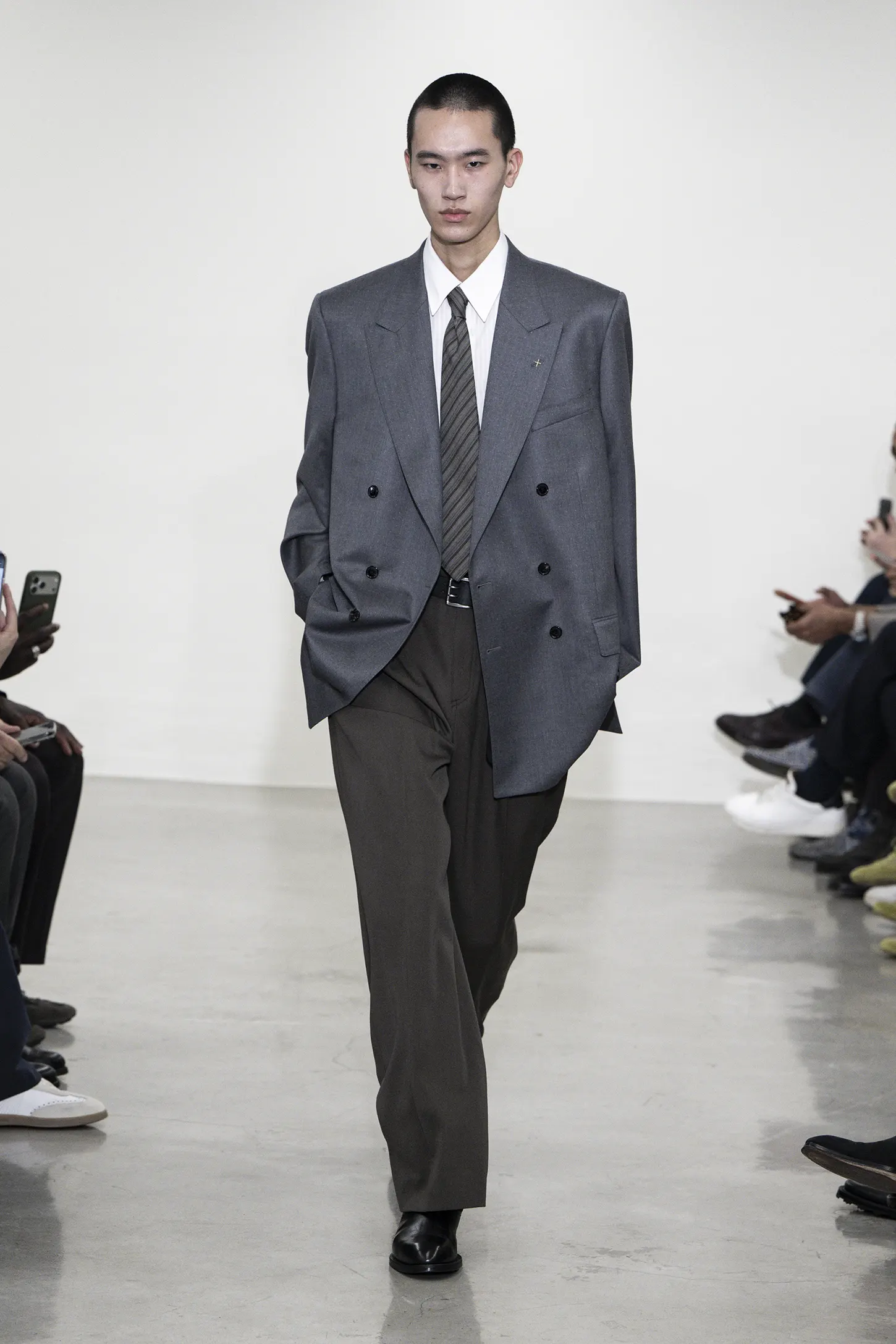
Styling by Ben Schofield | Casting by Ben Grimes | Hair & Make-up by Matt Mulhall | Production by Holmes Production | Music by Andrew Hale and Peter Smith