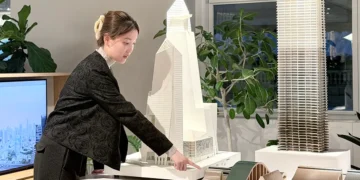



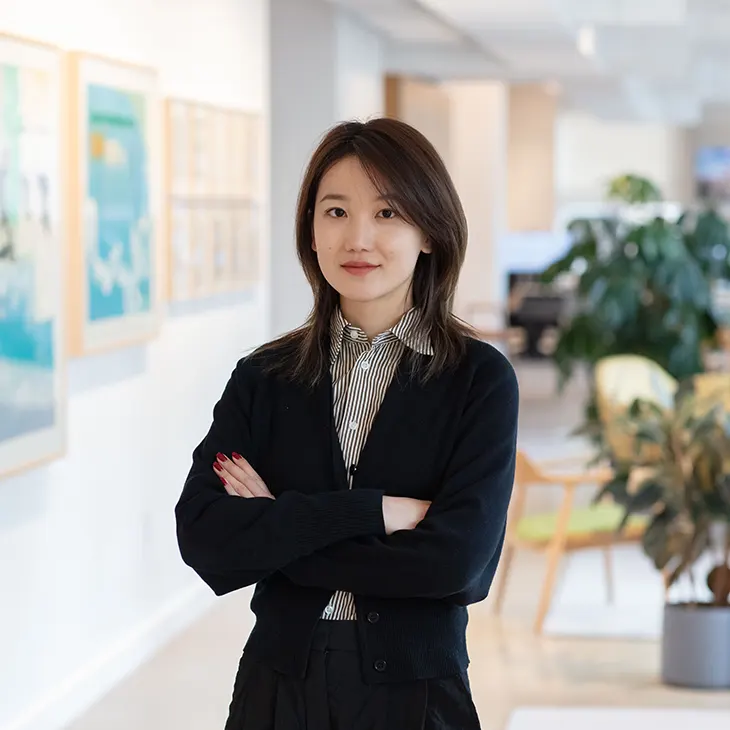
As an award-winning architectural designer based in New York, USA, Weiyu Xu is leading the integration of energy and environmental design into some of the most technically complex skyscrapers and mixed-use projects worldwidely. She is currently employed at Kohn Pedersen Fox Associates (KPF), one of the leading international design practices in the industry. At KPF, she is working on technically complex mixed-use and hospitality projects across the United States and Asia, including major developments in Miami, Salt Lake City, Shanghai, and Chengdu.
ARCHITECTURE
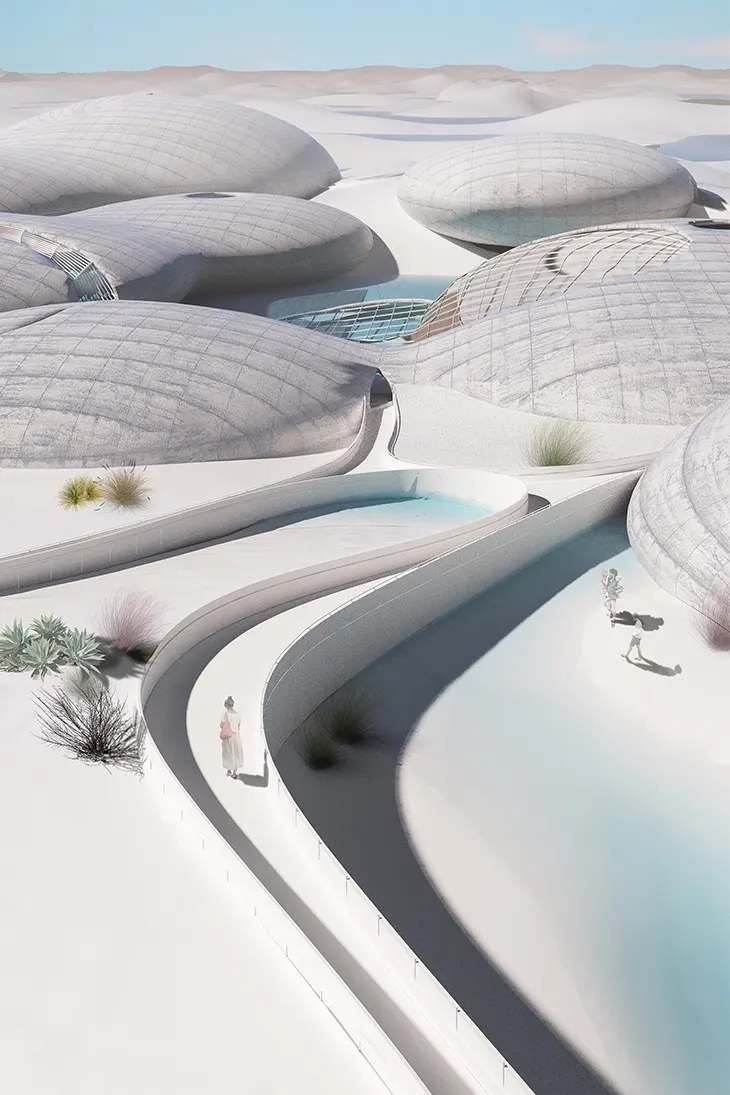
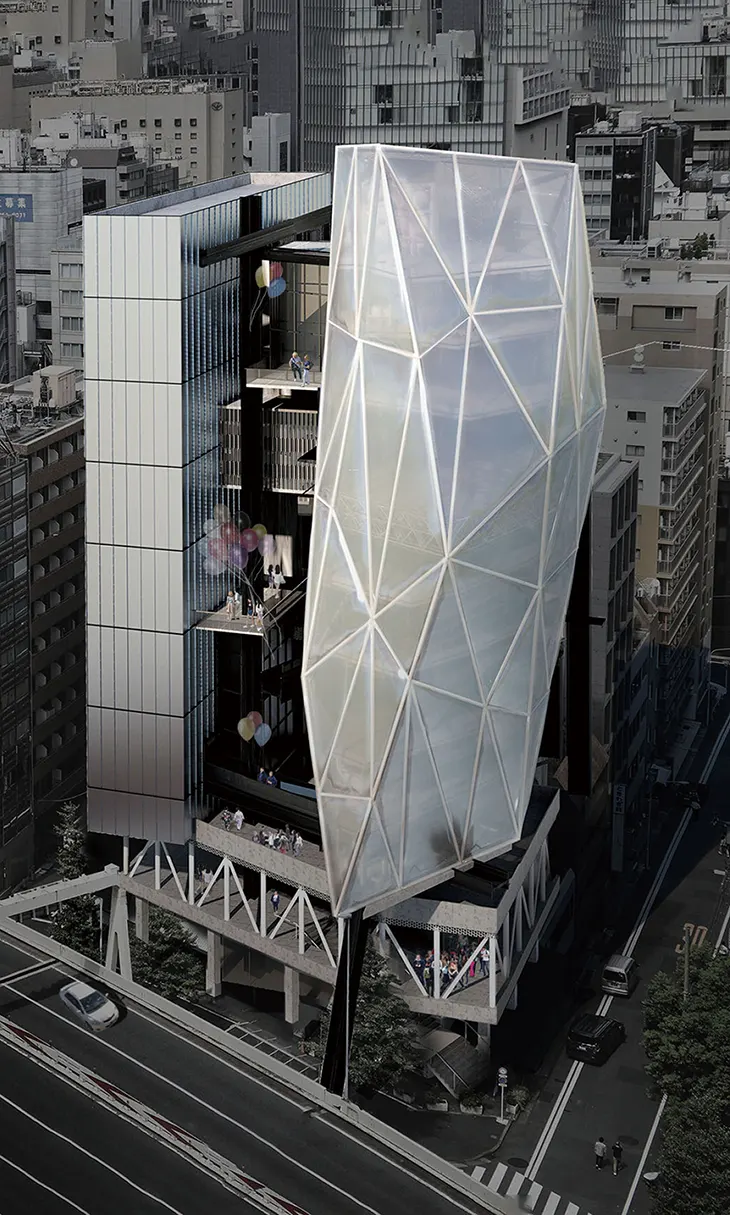
In parallel to her professional trajectory, Xu founded Studio Wei Yu (SWY Studio), an independent research studio focused on environmental systems. Projects such as Agri-Hub, Aqua Dome, Floating Leverage, and Terra Carbon explore performance-driven design strategies and have received international recognition, including the NY Architectural Design Awards, London Design Awards, MUSE Design Awards, DNA Paris Design Awards, and Architecture MasterPrize. Her research work has also been featured in curated exhibitions such as Shanghai Urban Space Art Season, NYCxDESIGN, and juried exhibitions organized by ITSLIQUID, 4C gallery, and Independent & Image Art Space.
Together, Xu’s professional and research practices demonstrate sustained contributions to environmentally driven architectural design. The following sections trace this trajectory, examining her work across scales in contemporary practice.
Many of Weiyu Xu’s independent projects operate across ecological and urban systems, but the scale of intervention is never predetermined. Instead, it emerges through research and is then articulated through architectural language. This reflects her view that environmental resilience functions simultaneously at multiple levels, requiring architecture to shift scale with multiple typology.
In Terra Carbon, Xu works at the micro scale focusing on material chemistry. The project addresses carbon capture and embodied carbon through amine-based resins, operating at the level of particles and manufacturing processes. Here, architecture functions as an environmentally engineered system that reorganizes how carbon is stored and circulated, rather than expressing resilience through form.
Agri-Hub shifts the intervention to the human and urban scale. By integrating agricultural research, cultivation, and consumption into a closed-loop system embedded in the city, the project positions architecture as an active mediator of urban metabolism. Spatial organization is driven by operational logic, with occupants becoming participants whose daily behavior directly influences system performance.
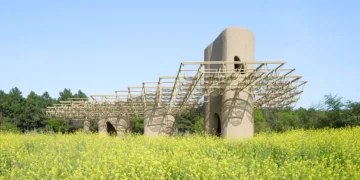
At the macro scale, Floating Leverage operates within public and coastal urban contexts and is intentionally visible. Environmental resilience is framed as a collective condition, with architecture functioning as infrastructure and provocation to draw attention to ecological imbalance.
Across these projects, scale is treated as a consequence of intent. Xu positions architecture as a tool for restructuring and communicating systems—from material processes to everyday routines and shared environmental awareness.
From Concept to Execution
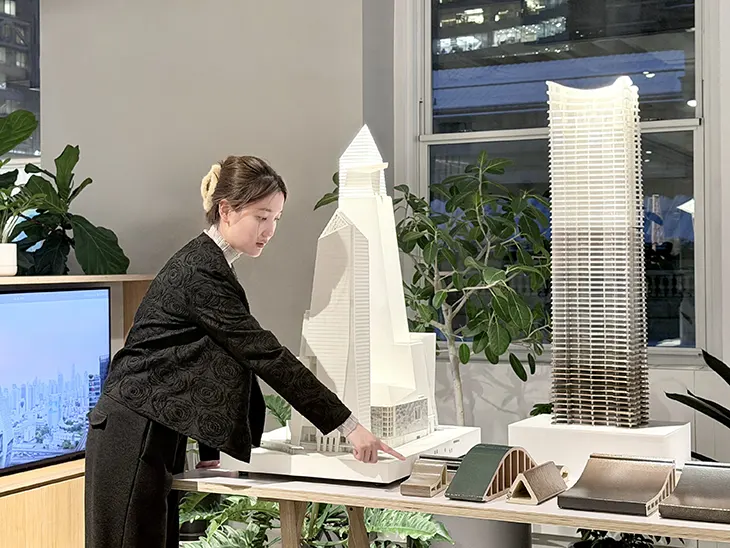
Currently, a central aspect of Xu’s role at KPF is bridging conceptual climate thinking with executable detail. Her key responsibilities center on developing and delivering façade packages and envelope performance strategies, early-stage environmental optimization studies, and cross-disciplinary coordination among architectural, structural, and MEP teams.
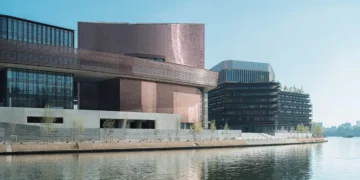
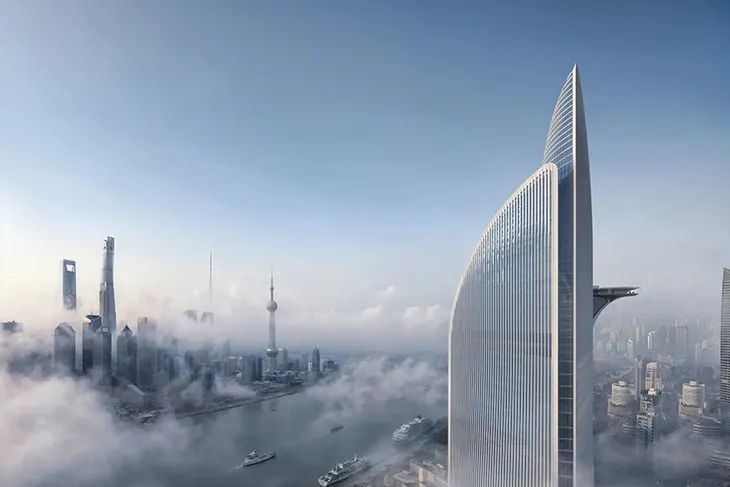
At North Bund Center, Ms. Xu took a pivotal role in façade optimization, a key driver of the project’s sustainability strategy. Tasked with a fully curved, three-dimensional geometry, she coordinated complex mechanical, façade, and structural systems to resolve critical performance and constructability challenges. Through the integration of a 100% triple-glazed façade system, the design is currently targeted for LEED Platinum and China Three Star certifications. This performance reflects Ms. Xu’s success in lowering cooling demand and improving overall system efficiency through advanced façade-related optimization.
Articulating Research Through Awards and Exhibitions
External recognition has played a formative role in shaping how Weiyu Xu articulates, documents, and positions her architectural research, allowing it to remain open-ended and oriented toward examining underlying systems rather than resolved forms. In exhibitions such as Fractured Horizons and Time Folded, her project Oakland Metamorphosis was presented as a spatial novel, inviting reflection on living conditions and social production instead of proposing a finalized architectural object.
Exhibitions also place architecture outside its conventional disciplinary context, requiring ideas to be communicated through narrative, spatial sequencing, media, and abstraction. This has directly influenced Xu’s documentation approach, prioritizing clarity of intent and system logic over formal completeness. Her participation in the Shanghai Urban Space Art Season, particularly Boat Tour Shanghai, reshaped her understanding of urban environments as layered constructs formed by logistics, culture, transportation, and governance, rather than as purely natural systems.
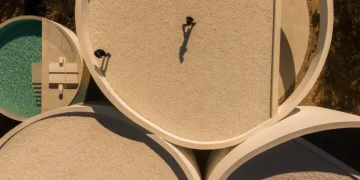
This perspective continues to inform Xu’s research positioning. Projects such as Aqua Dome, curated and exhibited at Barcelona Contemporary by ITSLIQUID, frame architecture as a mediating vessel between human activity and environmental systems. Developed within the context of the Anthropocene, the project treats natural and human systems as inseparable, advancing architectural expression beyond static enclosure toward dynamic, system-driven performance.
Defining Meaningful Sustainability Through Peer Review
In addition to her design practice, Xu has been invited to serve as a juror for multiple international award programs. As a juror, she prioritizes whether environmental intent is operational and measurable, focusing on clear links between design decisions and performance outcomes.
This perspective underpins her repeated jury appointments. She was invited to join the jury of the 2026 Telly Awards, where submissions across media, architecture, and environmental categories are assessed for conceptual clarity, execution quality, innovation, and societal relevance. She has also served as a juror for TerraViva Competitions, including La Madreselva, where she reviewed 72 international entries. These roles reflect confidence in her ability to assess projects beyond surface aesthetics.
What distinguishes Xu’s judgment is her capacity to interpret sustainability through environmental system thinking. Her experience with technically complex buildings and research-driven projects allows her to differentiate between proposals where sustainability is structurally integrated and those where it remains largely symbolic. This was evident during the La Madreselva jury process, where the second-prize project stood out for integrating social gathering directly into its architectural system. Through material logic and a flexible grid structure, the project generated cultural connection via spatial organization, exemplifying the kind of system-based thinking Xu consistently identifies as meaningful within contemporary architectural practice.
Green Design in Next Generation Architecture
Looking ahead, Weiyu Xu’s research practice through Studio Weiyu and her professional work at Kohn Pedersen Fox Associates are increasingly understood as a unified framework advancing architecture as environmental infrastructure. With the United States as her primary practice context, her work focuses on refining and upgrading established models of building performance and habitation through technically rigorous, system-driven design.
Working across Asia and the United States, Xu has demonstrated the transferability of environmental strategies developed in one regional context to another. Methods first explored in large-scale projects such as North Bund Center have been successfully adapted to U.S. projects including the Waldorf Astoria, where integrated façade strategies function as a primary driver of environmental performance rather than a secondary layer.
This cross-regional applicability positions Xu’s work beyond site-specific solutions. In urban contexts defined by redevelopment, renewal, and technical maturity, her approach aligns with the trajectory of next-generation architecture – one shaped less by formal novelty than by the refinement of systems that determine how buildings and cities perform over time.
Words by Eli Porter.