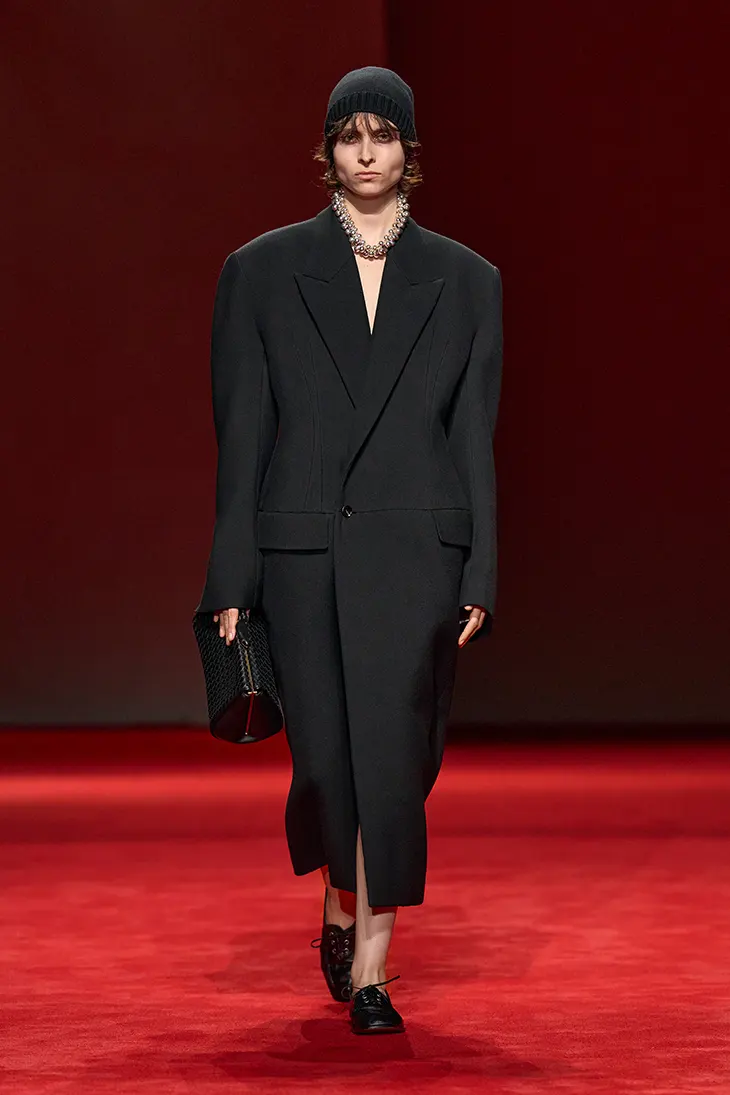



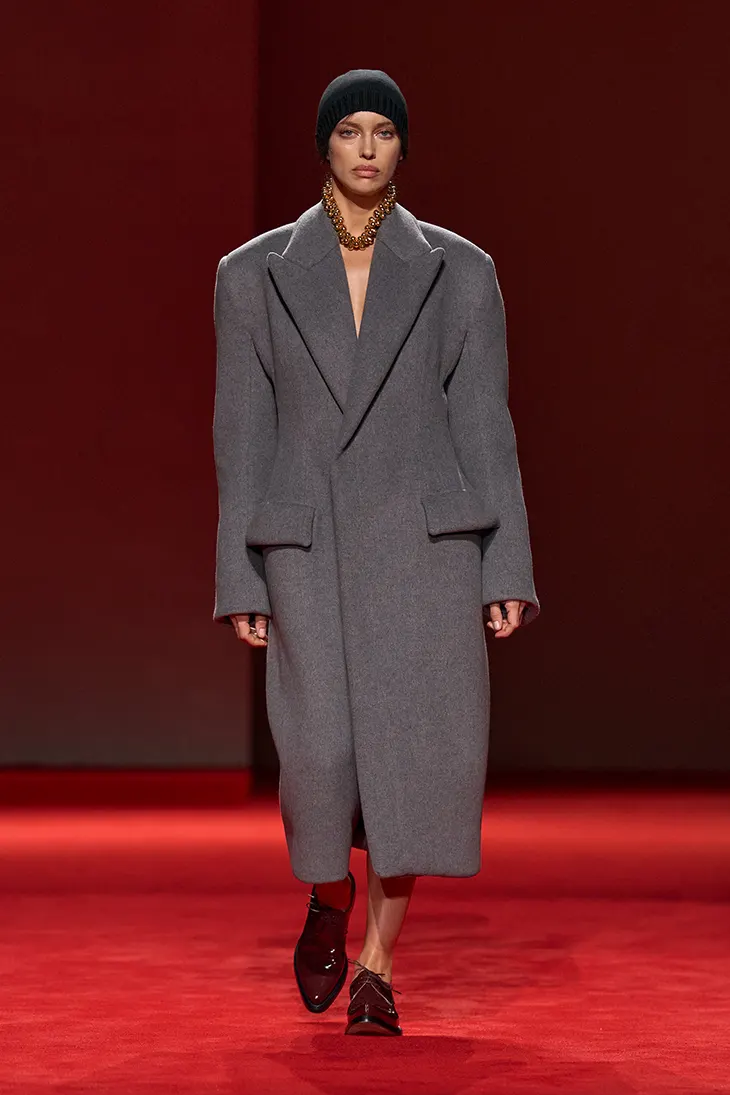
Bottega Veneta presents the Winter 2026 runway collection as a dialogue between structure and sensuality. The collection studies intimacy alongside protection, examining how garments shape the body while creating distance from the outside environment. Structured forms introduce clarity, while curved lines soften their presence.
FALL WINTER 2026
Silhouettes reinterpret familiar daywear archetypes through controlled proportion and subtle curvature. Precise lines establish a defined outline, while selective gestures introduce volume and movement. These forms maintain close alignment with the wearer, preserving physical connection between garment and body.
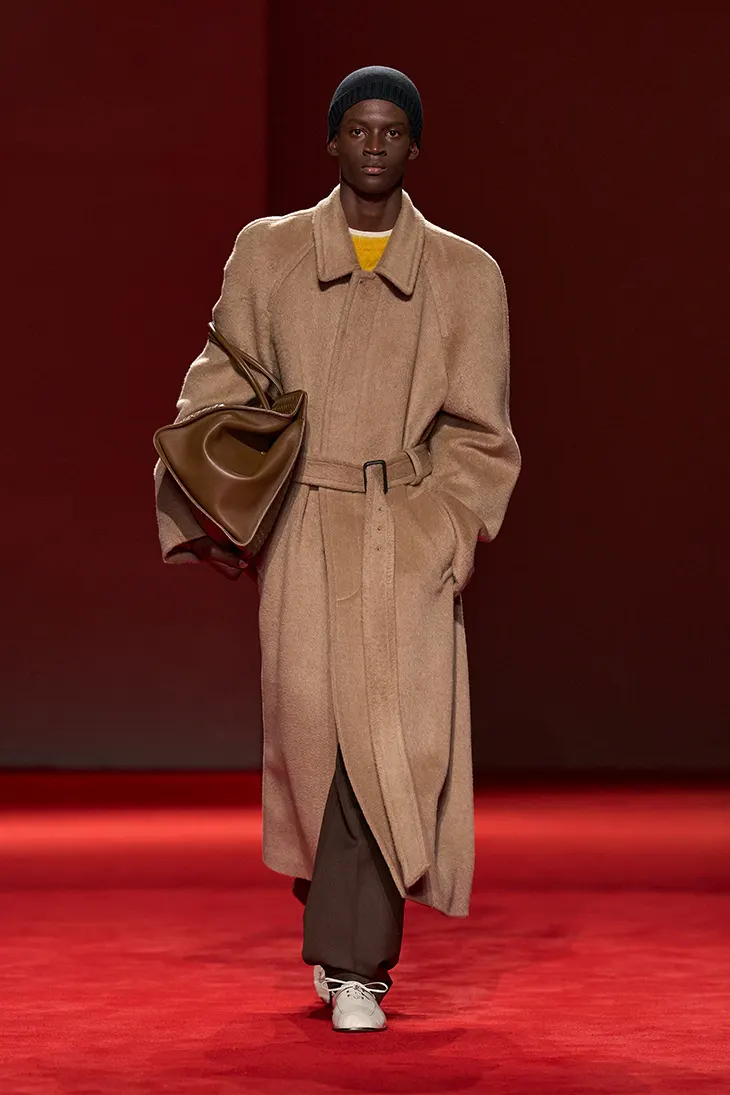
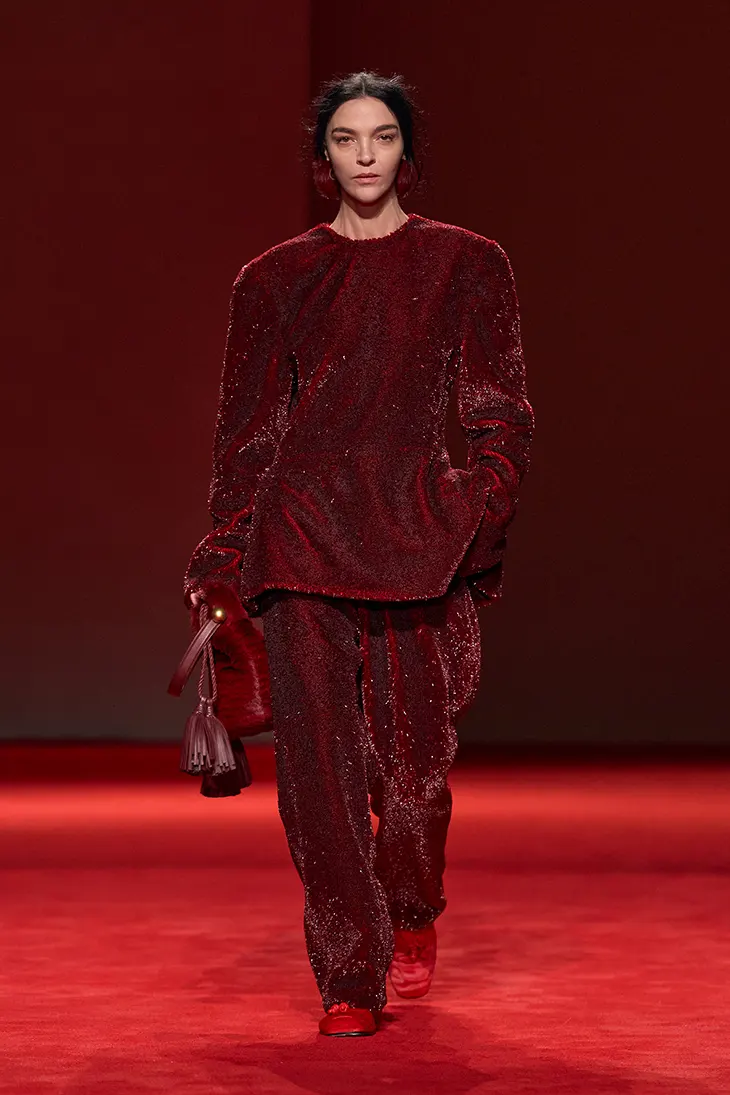
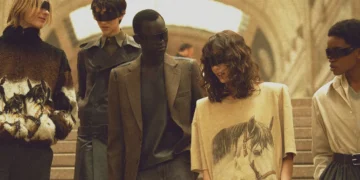
References to Milan shape the collection’s visual language. The city’s public spaces, including opera houses, theatres, and piazzas, inform the way garments address collective visibility. Dress operates as a form of participation in civic life, reflecting pride and awareness of appearance. Nostalgic references appear through details that evoke personal memory. Floral motifs recall domestic familiarity, while accessories reference objects passed through generations, including an evening purse associated with a grandmother and a worn shoe connected to paternal inheritance.
Bottega Veneta develops textures that imitate the appearance and tactile quality of fur through alternative construction methods. Silks, fil coupé, knitwear, and technical fibers create layered surfaces that resemble skin placed over skin. These materials extend across garments, jewelry, and footwear, establishing continuity between clothing and accessories.
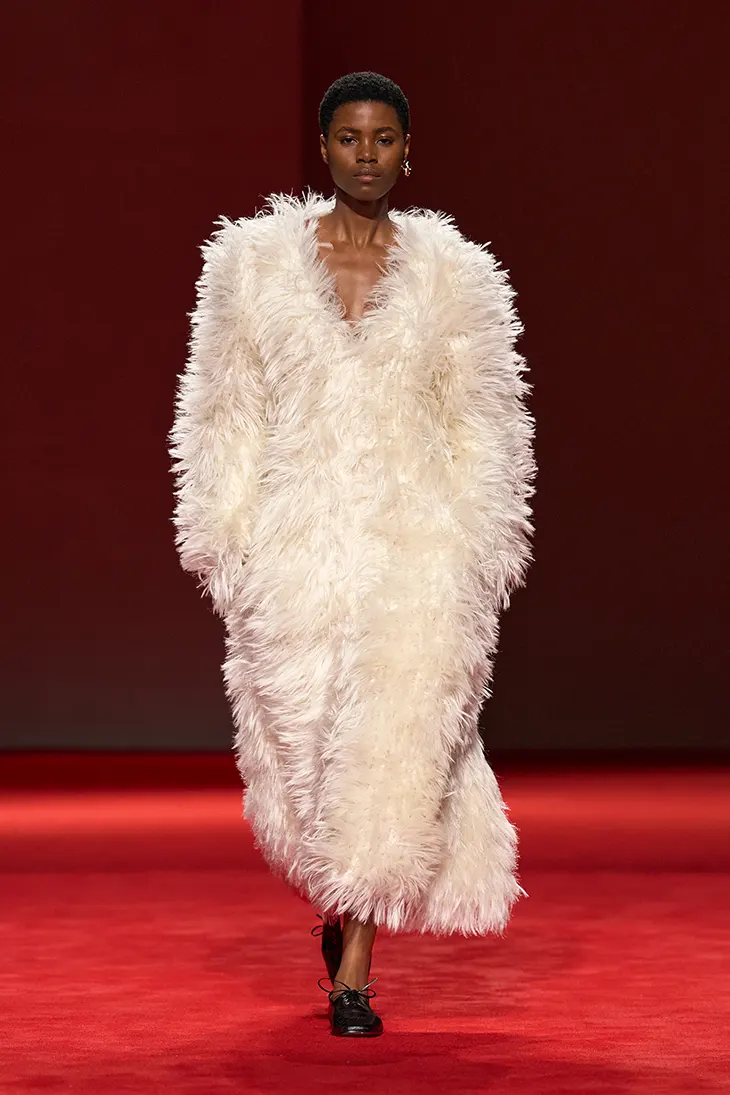
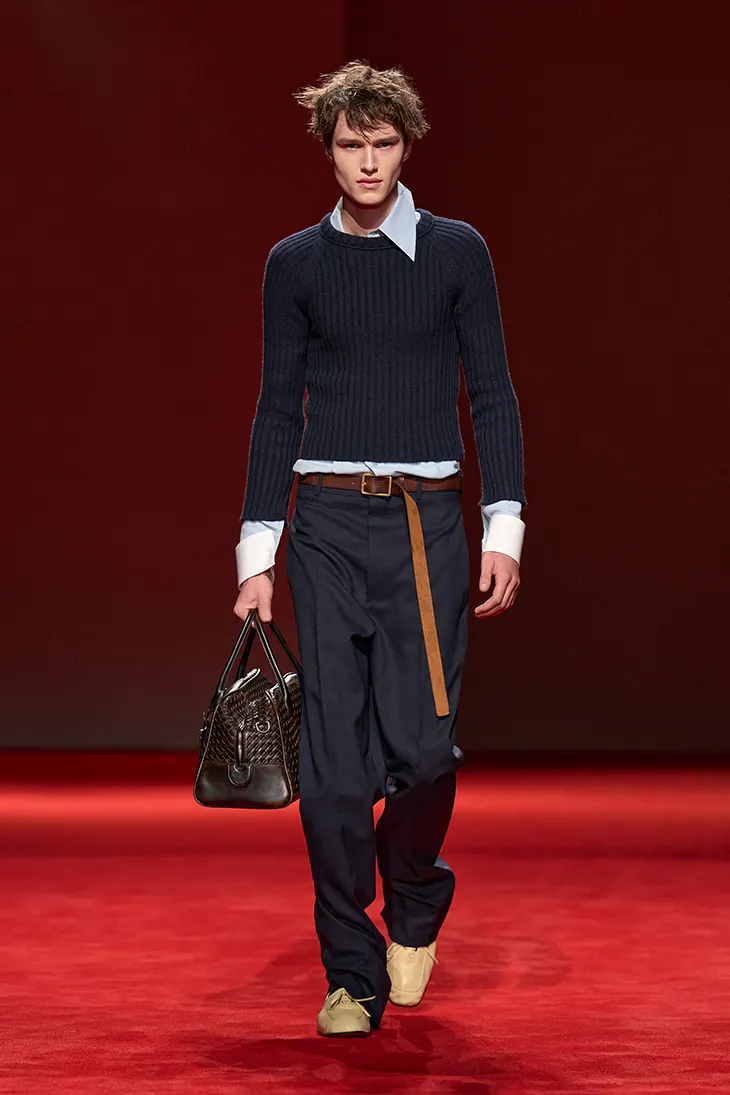
The collection expands in intensity as silhouettes shift from restrained forms toward more expressive gestures. This progression introduces theatrical references connected to Milan’s cultural history. The presence of figures such as Maria Callas and Pier Paolo Pasolini informs the emotional register of the collection.
Bottega Veneta Winter 2026 positions clothing within a shared cultural and social context. The collection develops through collaboration between conceptual direction, material development, and physical construction.