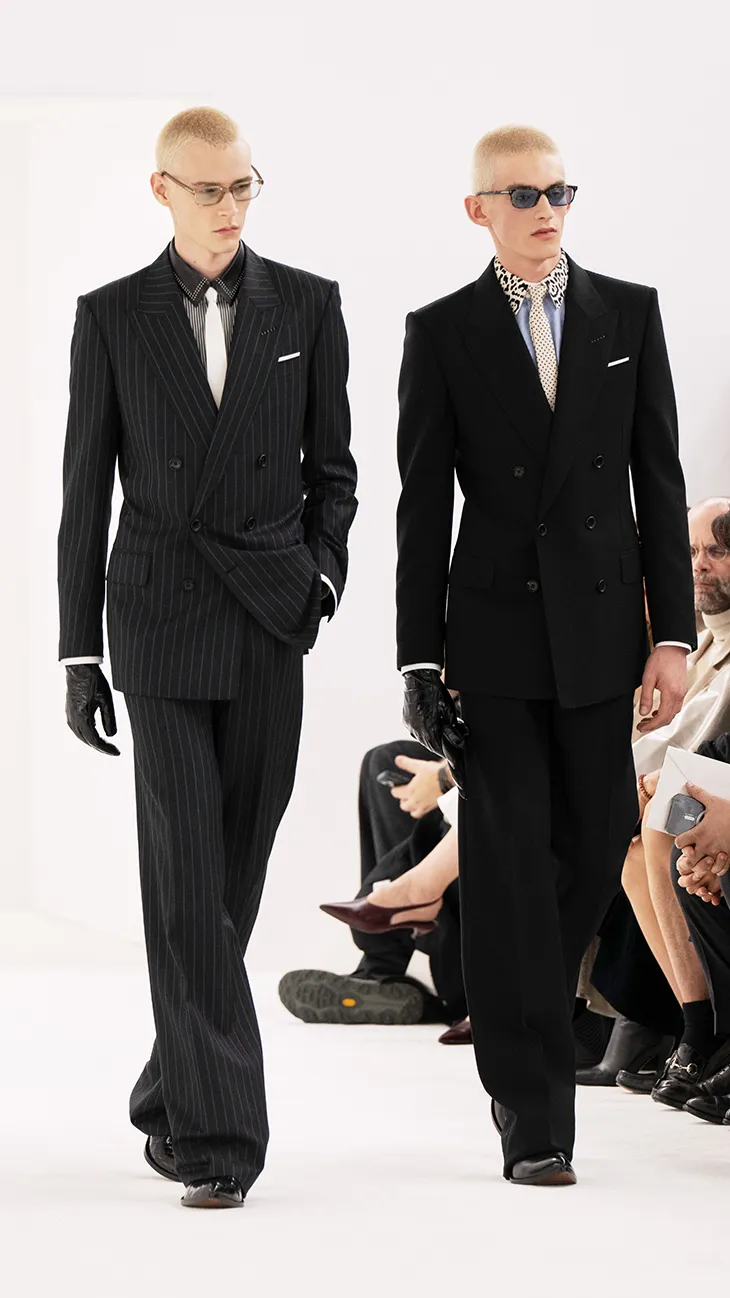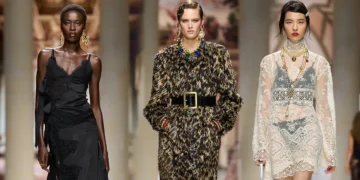



Tom Ford presented the Fall Winter 2026 ready-to-wear collection in Paris with a concept built around seduction expressed through tension between opposing qualities. The presentation approaches clothing through a language shaped by seduction and tension. Haider Ackermann frames the collection through encounters between opposing elements that draw close and interact. Hard surfaces meet soft volume. Sharp tailoring meets cocooning forms. These opposing qualities define the tone of the collection.
FALL WINTER 2026 WOMENSWEAR
Ackermann describes seduction as dialogue. Garments communicate through contrast and proximity. A suit holds formal discipline while subtle alterations shift the familiar structure. Tailoring carries a sense of distortion that pushes classic form into new territory. The designer treats the suit as a foundation and then twists its structure through proportion, texture, and surface. This treatment produces garments that reference familiar codes while introducing tension within them.
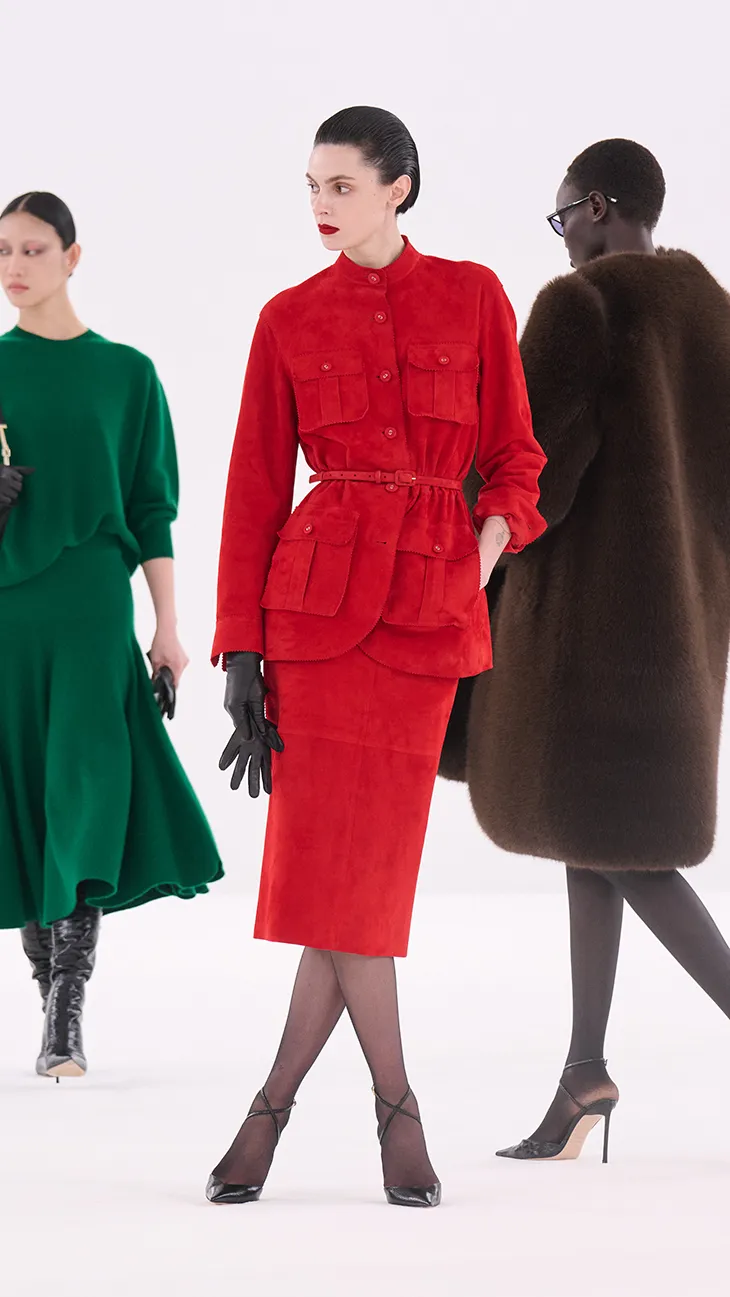
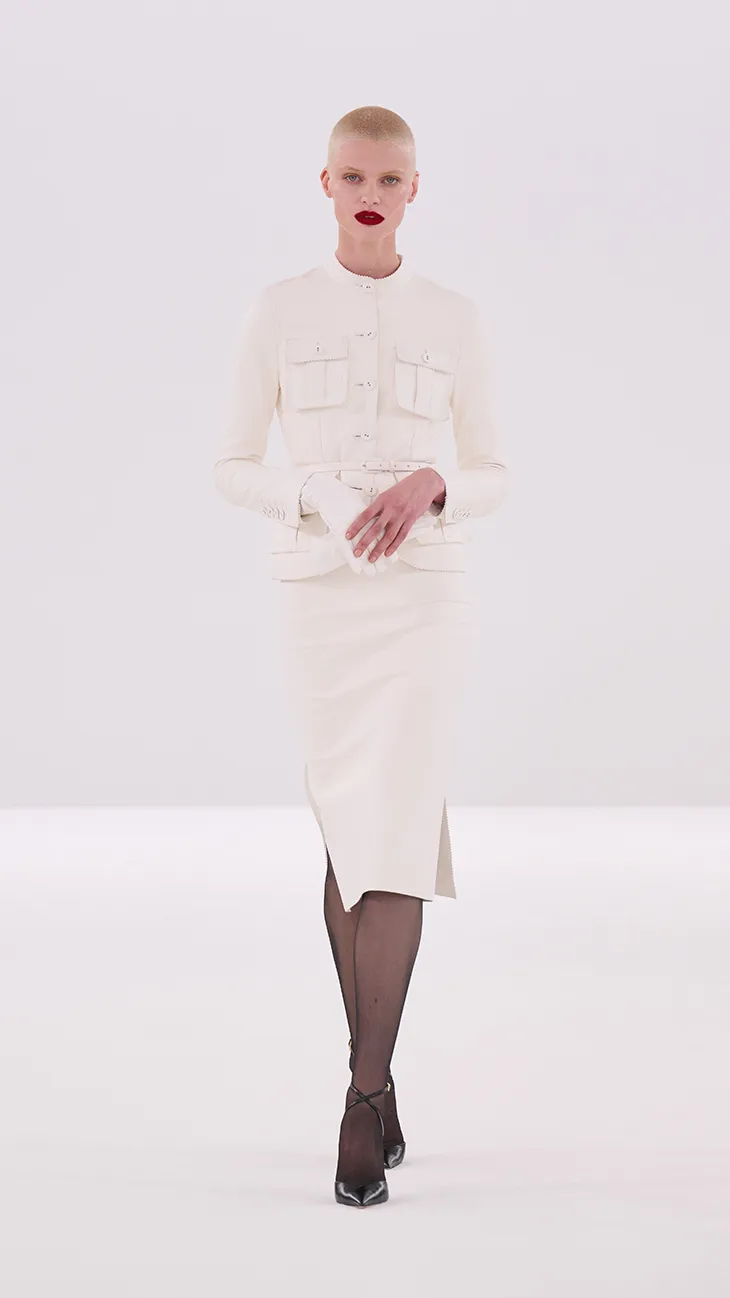
The collection explores purity through pressure. Ackermann constructs silhouettes that carry sharp lines alongside enveloping shapes. Structure and softness coexist in the same look. Coats wrap the body while suits present narrow clarity. Each garment develops through contrast between exterior form and internal sensation. Clothing approaches the body with both distance and closeness.
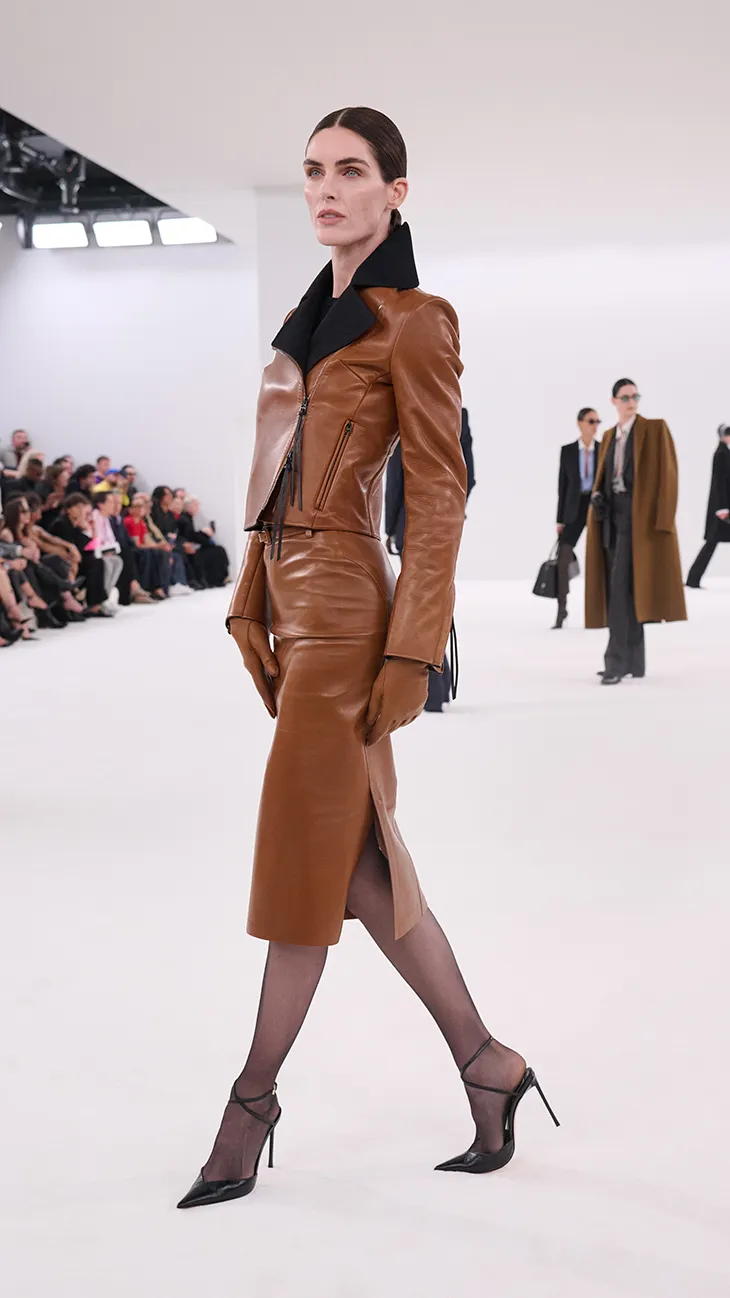
Daily life serves as another point of reference. Ackermann expands ordinary dressing through scale and material relationships. Cashmere appears alongside leather, creating friction between comfort and severity. The pairing generates tension within the garment itself. A tuxedo carries hints of prior experience, as if the fabric holds traces of earlier moments. Through this approach, garments express familiarity while carrying altered meaning.
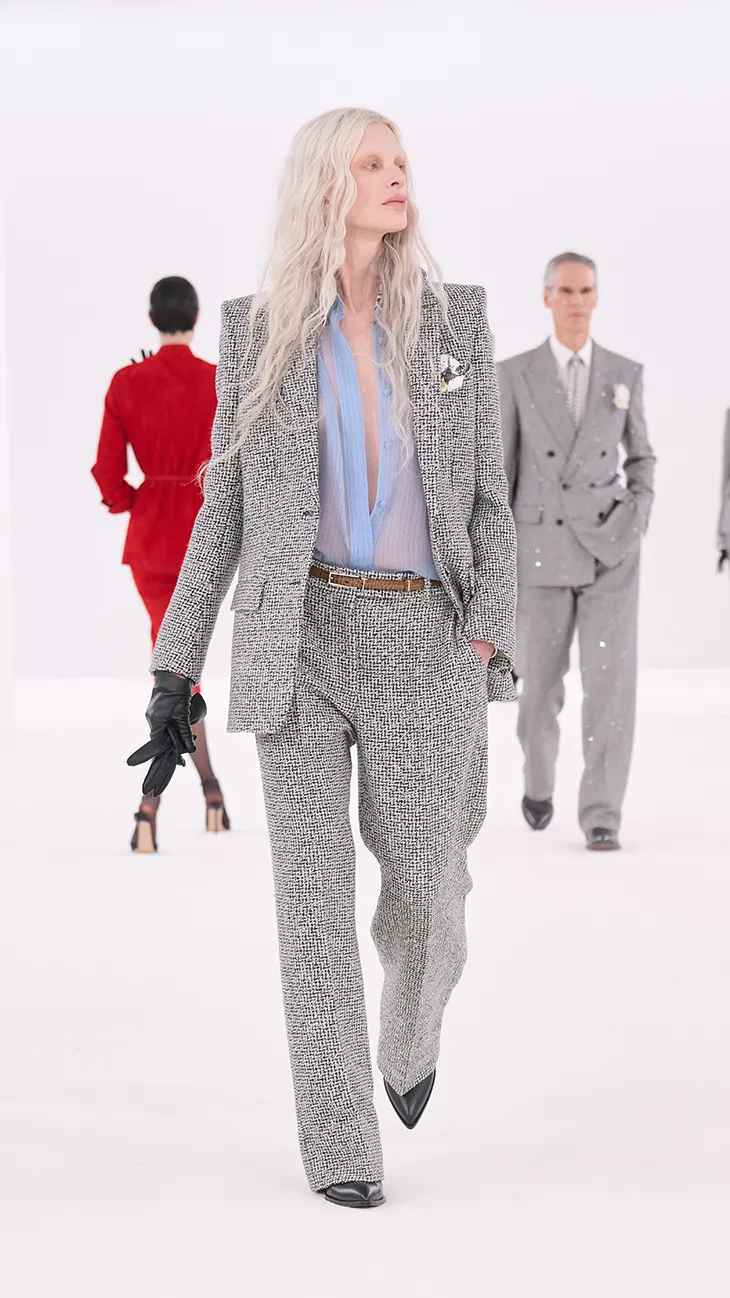
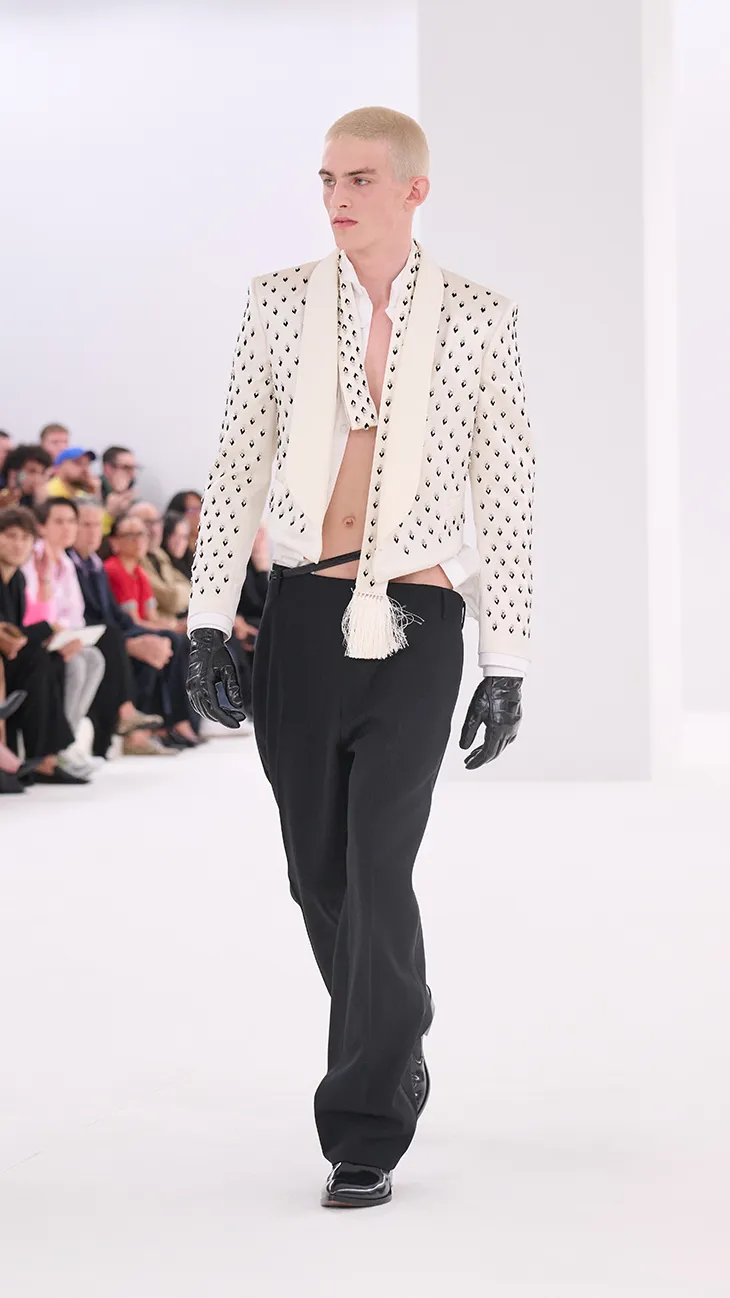
Ackermann describes this process as a transformation that follows abandon. Garments begin with energy and looseness before arriving at discipline. Structure appears after experimentation. The collection therefore balances restraint with lingering traces of excess. This shift produces clothing that oscillates between control and release.
Material combinations support this approach. Cashmere introduces softness and warmth. Leather introduces density and firmness. These surfaces interact throughout the collection, shaping silhouettes that alternate between protection and exposure. The tuxedo continues to appear as a central garment within this structure. Its formal structure remains visible while altered proportions and textures reshape its character.
Ackermann also frames the collection through proximity. The designer invites the viewer closer, encouraging attention to detail and surface. Fabric treatment, tailoring lines, and subtle distortions become visible through this closeness. Garments reveal tension through construction and material contrast.