



MCM marks its 50th anniversary with Disco on Mars, an immersive installation created with Atelier Biagetti for Milan Design Week 2026. Presented at the Rotonda del Pellegrini, the project continues the brand’s ongoing collaboration with the Milan-based studio, introducing a spatial narrative that moves through design, sound, and performance. The installation builds on MCM’s long-running concept “From Munich to Mars,” positioning the exhibition as a speculative extension of the brand’s identity into a constructed future.
DESIGN
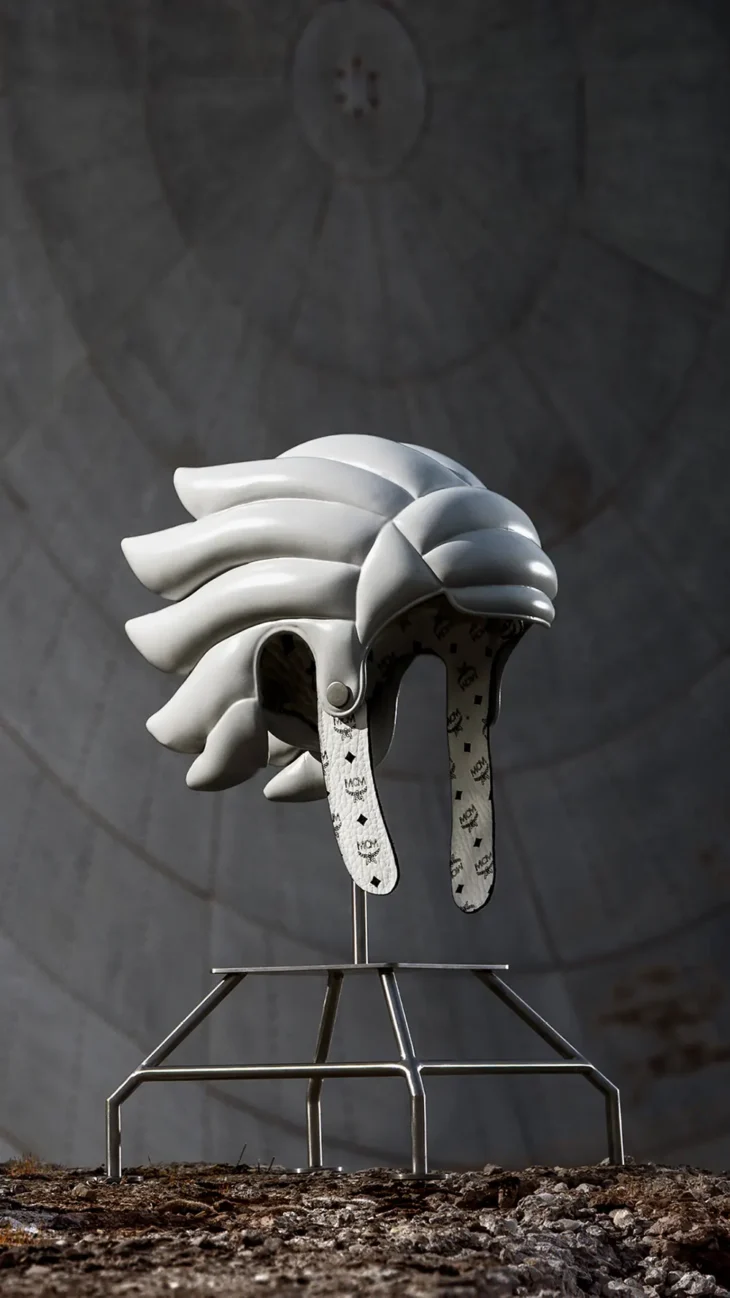
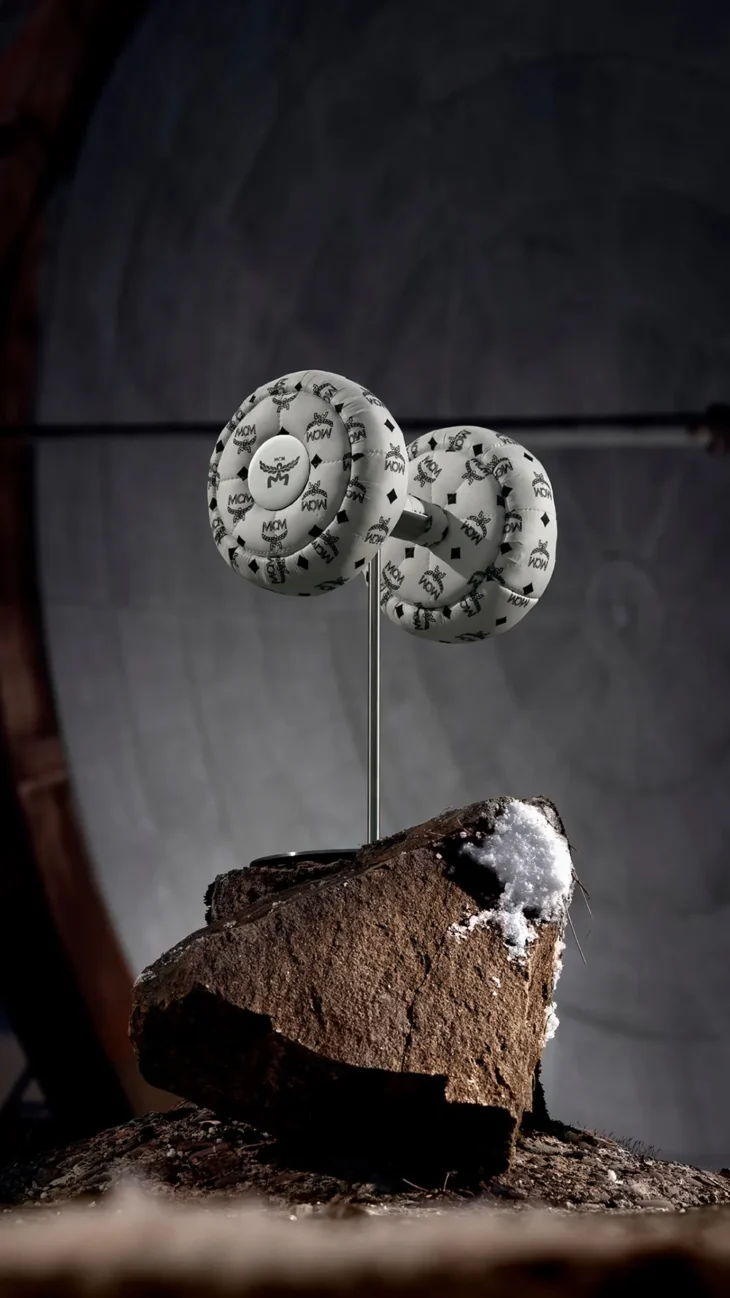
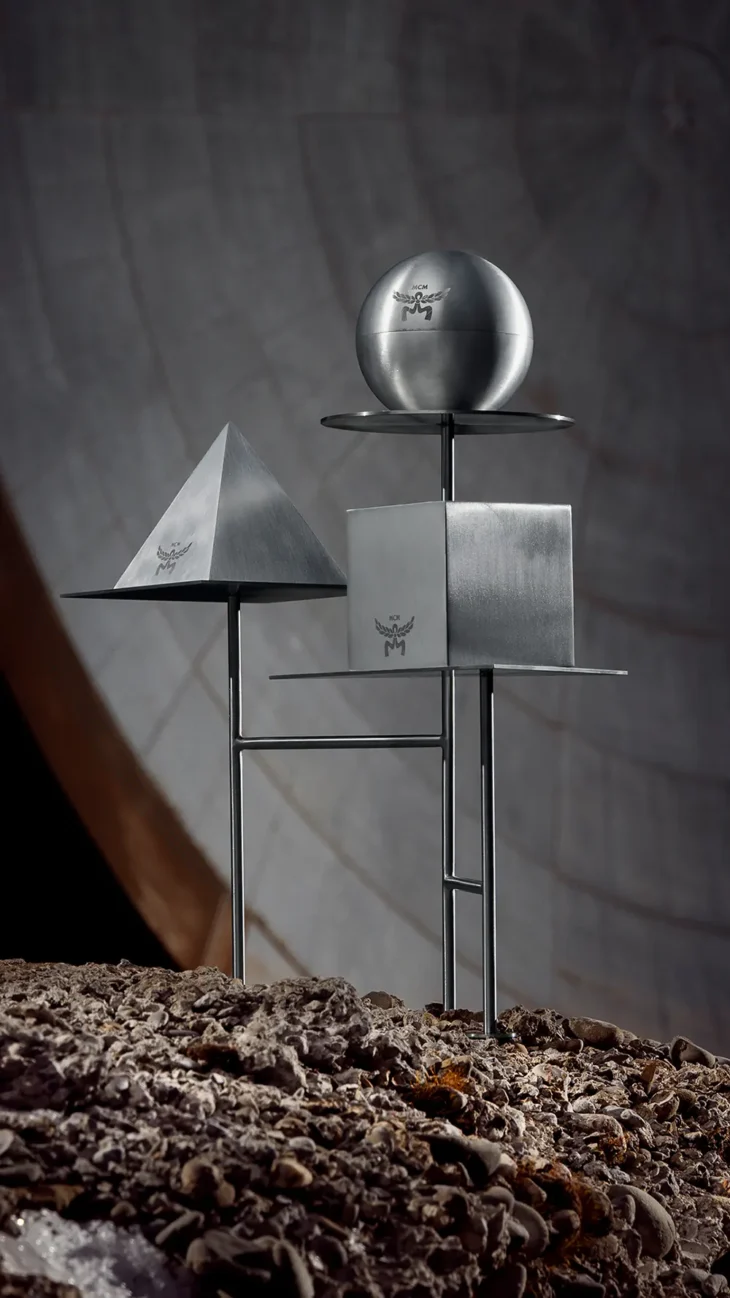
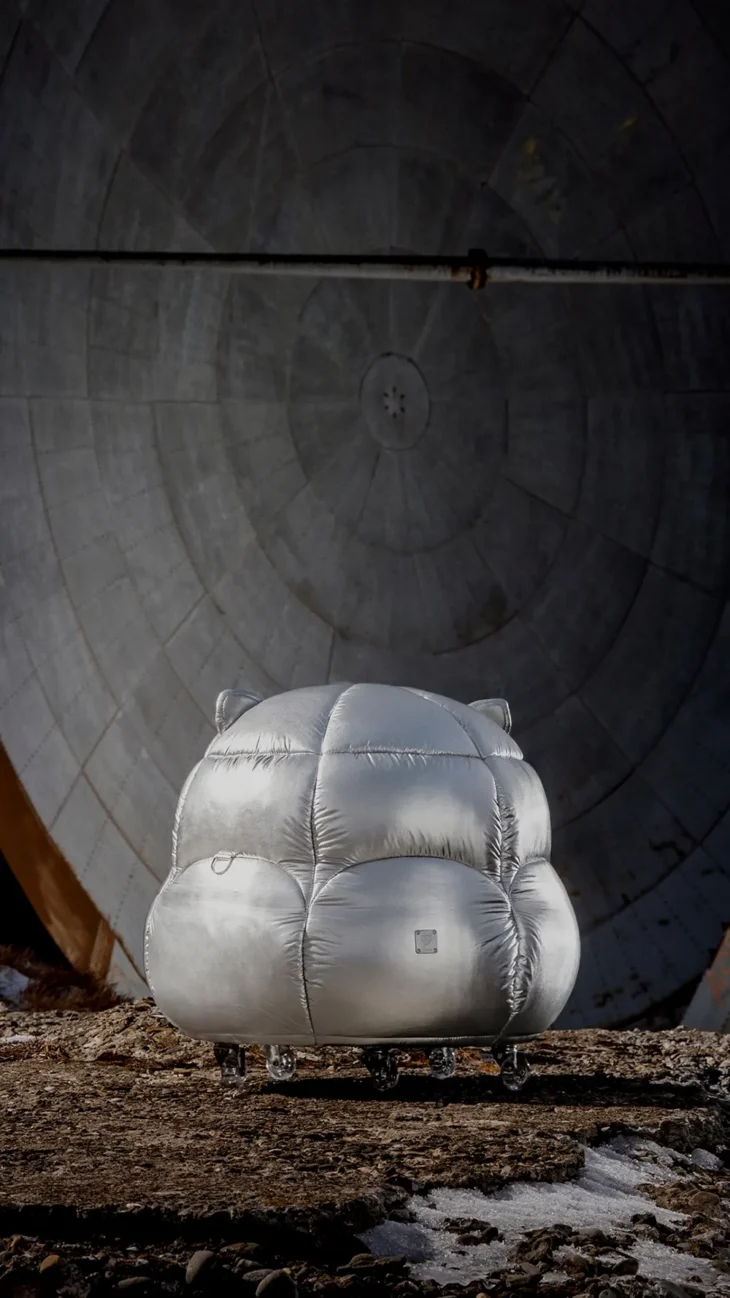
The structure unfolds across three levels, each defined by a distinct atmosphere and function. Visitors enter through Level 0, The Lab, where MCM’s past and future converge through a series of limited-edition objects. Designed by Atelier Biagetti and reworked using MCM’s Visetos monogram, these pieces include Orbit, a robot-inspired pouf, Gravity, a reinterpretation of a hand weight, Mach-1, a helmet referencing space travel, and Alphabet, a set of candles shaped through Bauhaus-influenced geometry. The presentation introduces these objects within a controlled environment shaped by a sound composition from Michele Tadini, where mechanical rhythms and layered signals suggest a suspended, zero-gravity condition.
From there, the experience shifts into Level 1, where the installation opens into a roller-skating rink configured as a central gathering point. A robot DJ, developed in partnership with ABB, controls the sonic direction of the space, playing a selection curated by Sound Metaphor DJs. The atmosphere changes here, moving away from the controlled environment of The Lab toward a more immediate, physical energy. The rink functions as a stage for movement, with visitors and performers occupying the same space, while choreographed interventions take place throughout the week. This section of the installation introduces a collision between references, where disco culture intersects with a speculative environment shaped by automation and artificial presence.
The final level, Diva Dome, shifts the focus again. Positioned under the dome of the Rotonda del Pellegrini, the space centers on voice as a primary medium. The operatic performance by Laura Baldassari reinterprets Casta Diva through a composition developed with Michele Tadini, altering its structure and context. The voice operates as both a historical reference and a constructed sound element, linking past and future within a single performance. At the center of the space, a sculptural figure titled Avatar anchors the environment, surrounded by controlled lighting that maintains a sense of suspension. Access to this level remains limited, reinforcing its position as a more contained and focused part of the installation.
Across all three levels, the project treats objects as active components rather than static displays. Each piece functions within a larger system that connects architecture, sound, and movement, creating a sequence that visitors move through rather than observe from a distance. This approach aligns with Atelier Biagetti’s ongoing interest in constructing environments where objects suggest new forms of interaction and perception, positioning design as a tool for shaping behavior as much as space.
Alongside the installation, MCM introduces a selection of products tied to the project. These include updated versions of the Ella Boston, Ottomar Weekender, and New Liz Shopper, produced in variations of Visetos, alongside the MCM x Nymphenburg Diamond Cup, a porcelain object defined by its clean geometry. Additional releases include the Cosmic Star fragrance and a Mars Mask developed in collaboration with Marcolin, extending the project into accessories and product design.
View this post on Instagram
The installation runs from April 21 to 26, 2026, with an opening preview on April 20 reserved for invited guests only, and remains accessible to the public through scheduled entry. Positioned within the broader context of Milan Design Week, Disco on Mars operates as both a standalone project and part of a larger network of exhibitions across the city, where brands and studios use spatial installations to communicate direction, identity, and future intent.
With Disco on Mars, MCM uses its anniversary to construct an environment that moves beyond product presentation, focusing instead on how design, sound, and spatial experience can operate together within a single framework.