


Issey Miyake presented its Fall Winter 2026 collection at the Carrousel du Louvre during Paris Fashion Week. Creative director Satoshi Kondo structured the collection around the idea of design as a balance between intervention and release. The presentation carried the title “Creating, Allowing,” reflecting a focus on how garments interact with the body once construction ends.
FALL WINTER 2026.27
The concept draws directly from the philosophy established by Issey Miyake in 1970. The founder approached clothing through the relationship between cloth and the human body, influenced by the Japanese idea of “ma,” which refers to the space that exists between elements. Kondo has continued to work within that framework since assuming creative direction in 2019. The Fall Winter 2026 collection examined how structure, material, and movement define a garment after it leaves the designer’s hands.
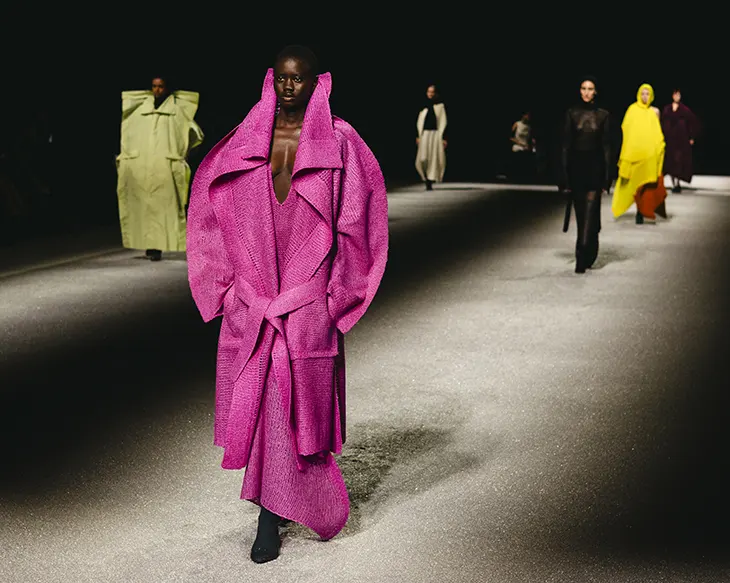
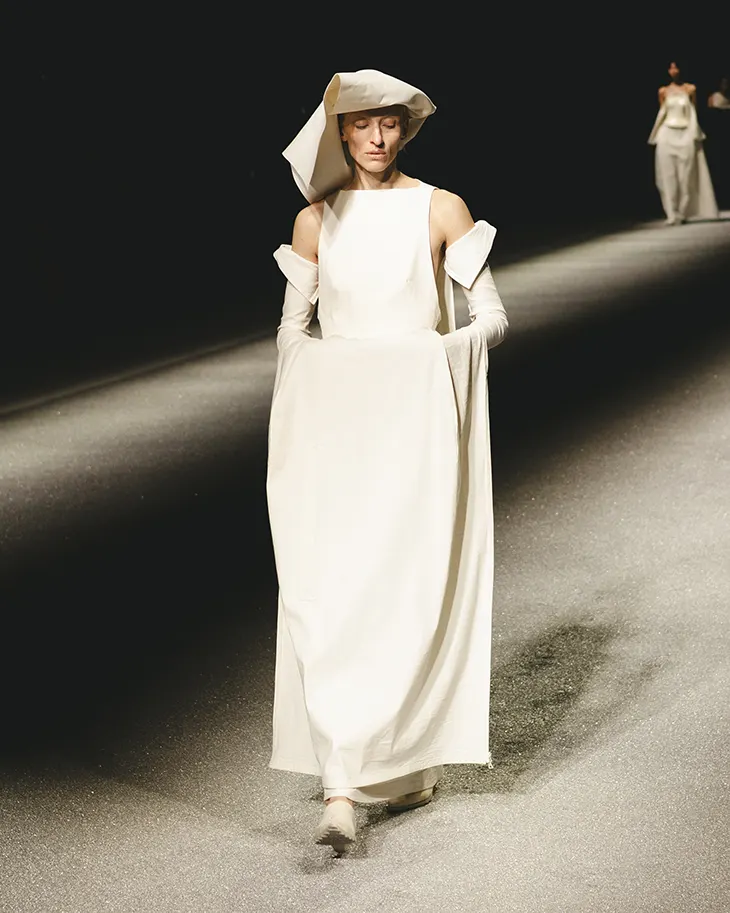
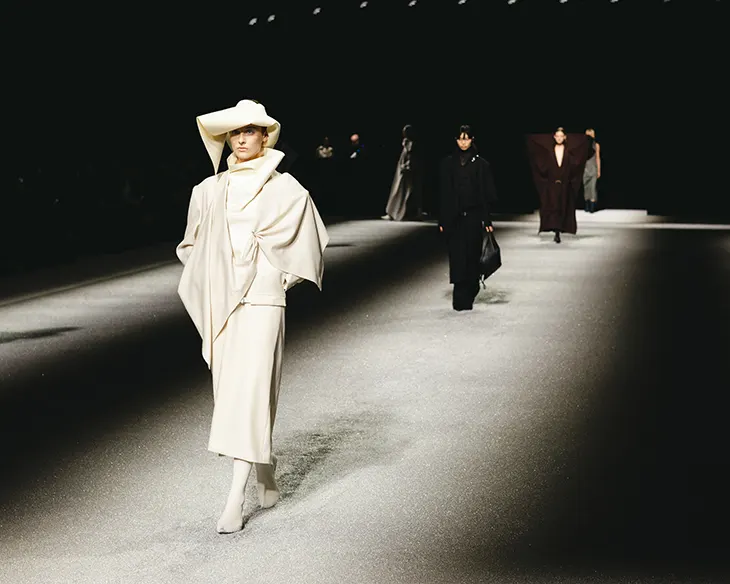
The runway opened with silhouettes built from oversized knitwear and tailored pieces in neutral tones. Off-white sweaters featured extended shoulders that sloped outward from the neckline. Long white shirt cuffs extended beyond the sleeves, creating a layered effect that altered the proportion of the garments. Tailored suits followed with asymmetrical front closures that crossed the torso diagonally.
Outerwear introduced more pronounced structure. Black trench coats appeared with wide belts tied at the waist, referencing the construction of martial arts uniforms. Square-shouldered suits layered over black parkas reinforced the architectural direction of the collection. Rounded skirts added volume to the lineup and retained their shape as models walked.
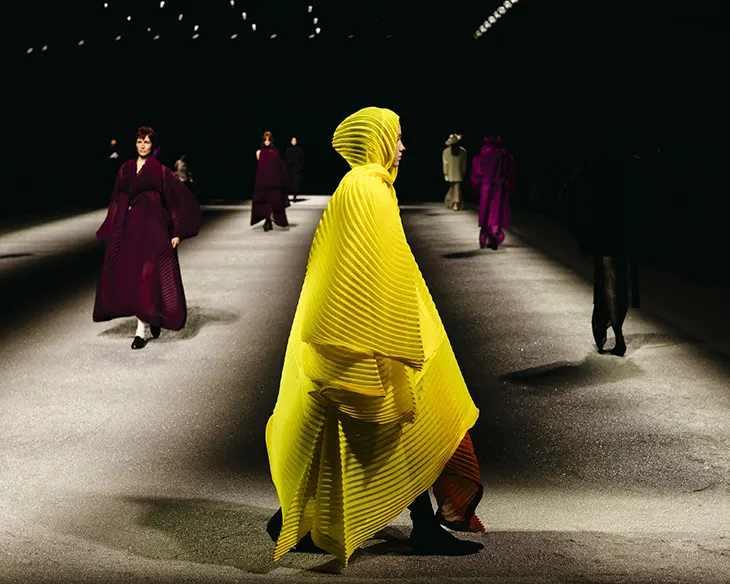
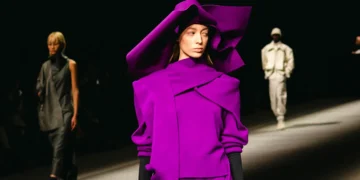
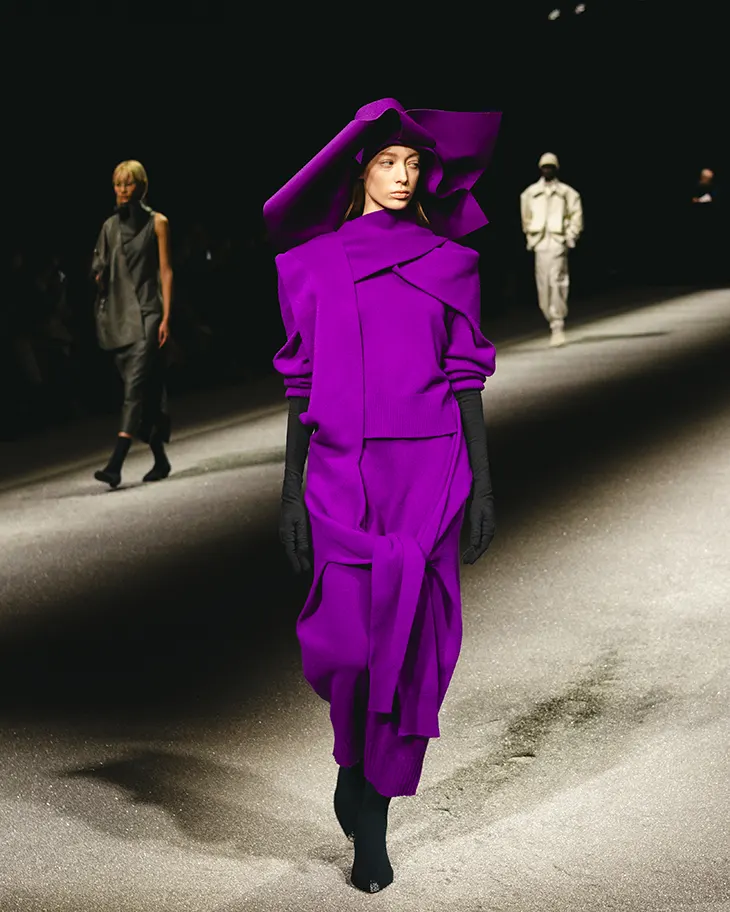
Headpieces constructed from fabric wrapped tightly around the head appeared throughout the presentation. The styling reduced visual distraction and directed attention toward silhouette and construction. The palette remained restrained through the first half of the show, relying largely on black, white, and neutral tones.
A shift in color emerged with the introduction of a bright yellow pleated wrap. The garment used a technique that combines hand-wringing with machine-setting to produce pleats that respond flexibly to movement. The textile process allows the material to maintain structure while reacting to the wearer’s motion.
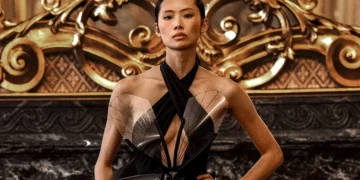
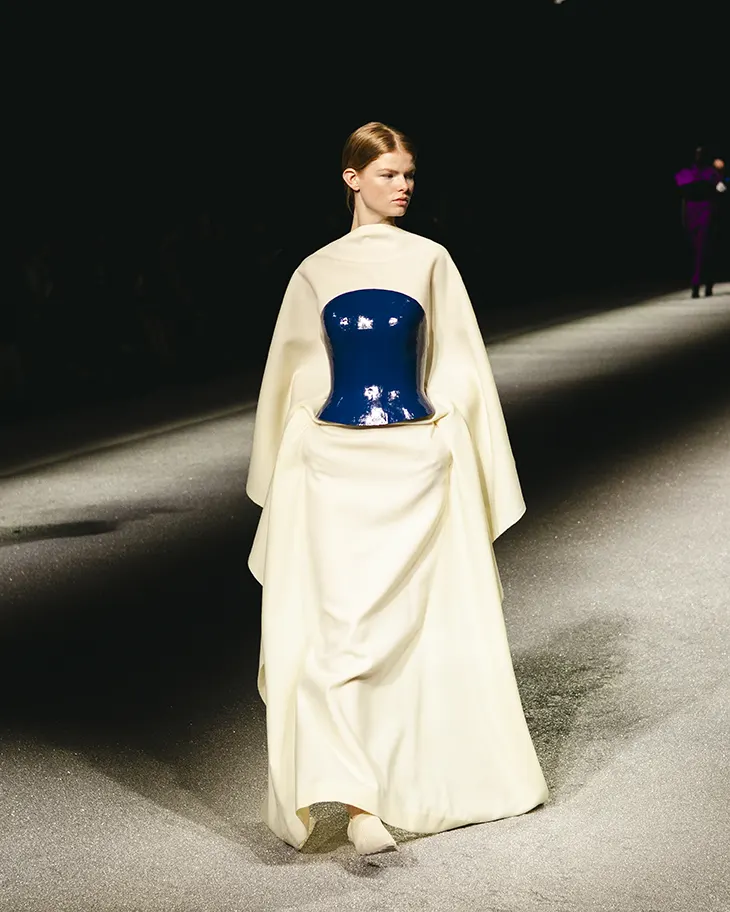
Several of the final looks featured sculptural bodices and peplums produced from lacquered washi paper. The material results from a multi-stage process developed through collaboration between artisans and digital fabrication methods. Craftspeople in Echizen layered hand-torn sheets of washi paper over 3D-printed molds before the pieces traveled to Kyoto, where lacquer specialists applied multiple layers of coating.
The house refers to this method as Urushi Body. The construction references the form of the obi sash and the bustier. The finished garments produced rigid surfaces that follow the body with defined structure.
Through the Fall Winter 2026 collection, Satoshi Kondo continued to explore the relationship between structure, material research, and movement. The presentation maintained a clear focus on silhouette and textile development while extending the design principles established by the house more than five decades ago.