


Two days after MATTER and SHAPE closed in the Jardin des Tuileries, the third edition reads as more than a successful run. It feels like a salon that has moved from promise to proof, tightening its identity while expanding its reach. The format is still hybrid by design, part business platform, part cultural program, but this year the balance landed with greater confidence and clarity.
What stands out in retrospect is not a single headline moment, but the sense of cohesion across the experience. The pavilions, the talks, the hospitality, the reading room, the citywide offsites all worked hand in hand. MATTER and SHAPE is learning how to behave like a Paris institution-in-the-making: not a fair you rush through, but a place you return to, a program you schedule around, a network you follow beyond the four days.
Paris Fashion Week As The Right Parallel
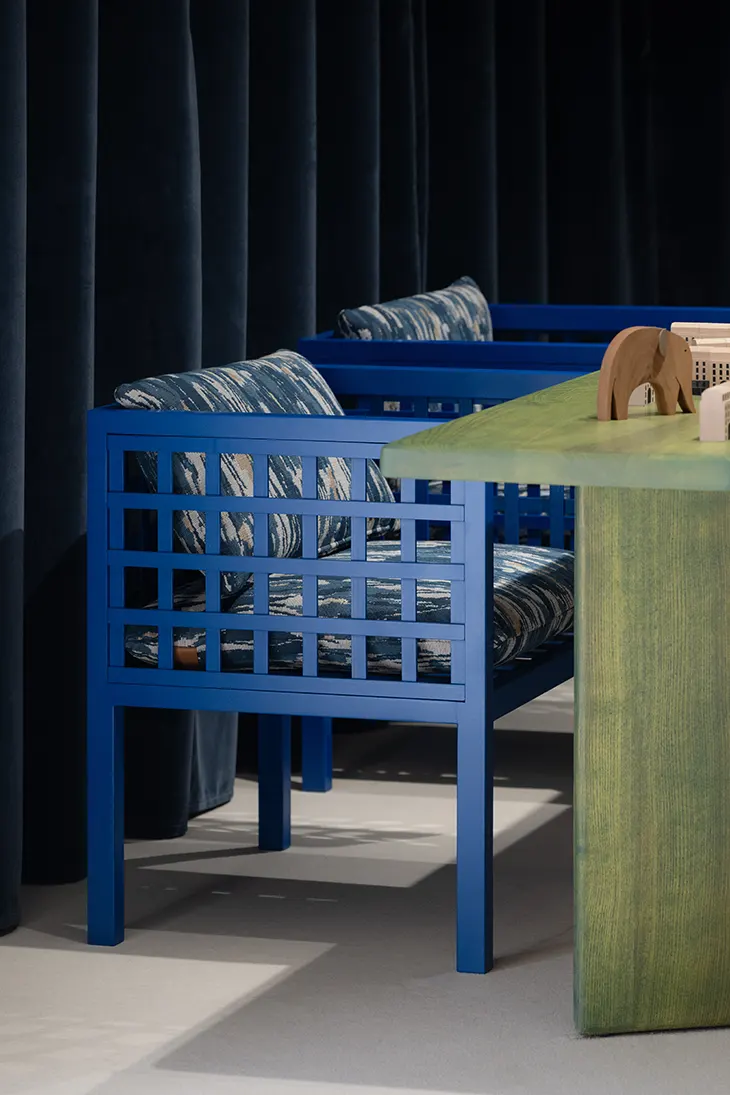
Holding MATTER and SHAPE during Paris Fashion Week continues to be a strategically smart decision, and this season made the case most convincingly. The timing drew in an international audience already in the city buyers, press, fashion executives, architects, and cultural insiders and the Tuileries location kept the salon central and easy to fold into the week’s natural rhythm. Rather than competing with the city’s calendar, it benefited from it.
That context matters because MATTER and SHAPE 2026 is not trying to be a parallel universe. It is deliberately porous, designed to absorb the energy of Paris and redirect it toward design. The proximity to Première Classe, the overlap with fashion houses and multibrand retailers, and the steady circulation of international press all reinforced the salon’s business logic. For exhibitors, the week functions as a multiplier: the right people are already in town, already in meetings, already in a discovery mindset.
From a visitor perspective, the salon’s placement also solved a practical problem. Paris Fashion Week is famously dense, with appointments scattered across the city and little time to spare. A central, walkable anchor in the Tuileries, with enough programming to justify a longer stay, made MATTER and SHAPE feel like a smart allocation of attention.
Growth that Shows Up In Quality, Not Only Scale
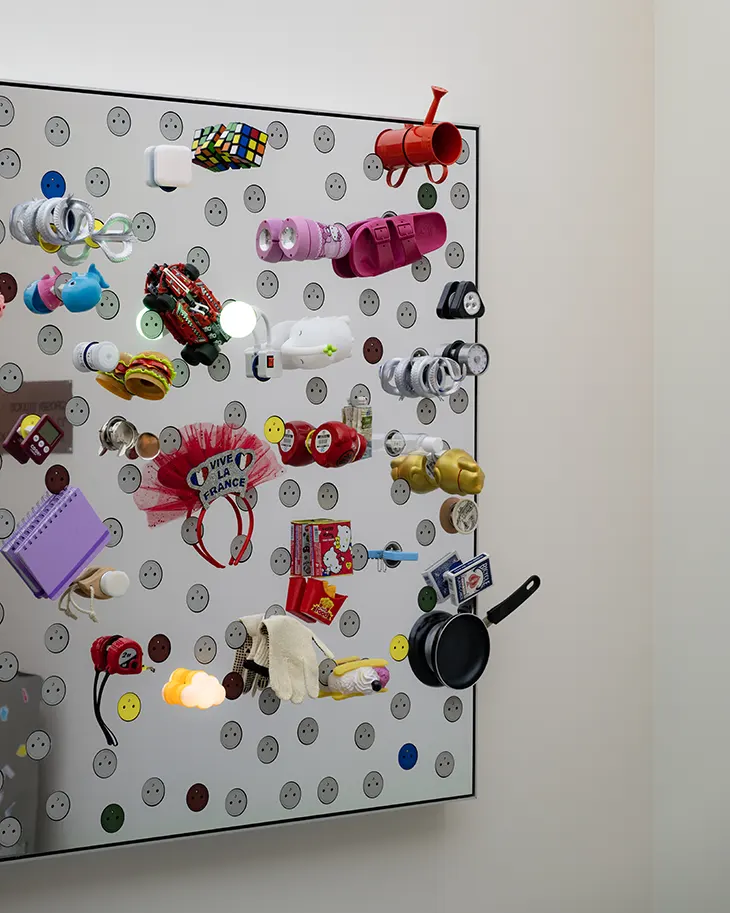
The headline numbers matter more than 70 exhibitors and an expanded program but the more meaningful growth from last season was qualitative. The exhibitor mix felt stronger and more coherent, with a clearer balance between collectible design, industrial production, and decorative arts. Returning participants provided continuity, while new names raised the overall standard and sharpened the salon’s curatorial signal.
In practice, that translated into a better experience on the ground. The stands carried more conviction, the narratives were easier to read, and the salon felt less like a promising newcomer and more like a platform that understands what it wants to champion. There was less filler, fewer gestures that felt purely decorative, and more work that could hold up under scrutiny.
The breadth of practices was also better articulated. The salon’s promise has always been pluralism, but pluralism can quickly become noise if it is not structured. This year, the range felt intentional: collectible pieces sat alongside industrial objects without collapsing into a single aesthetic, and decorative arts were not treated as secondary. That balance is difficult to achieve, and it is one of the clearest signs of maturation.
Scale Worked As A Lens
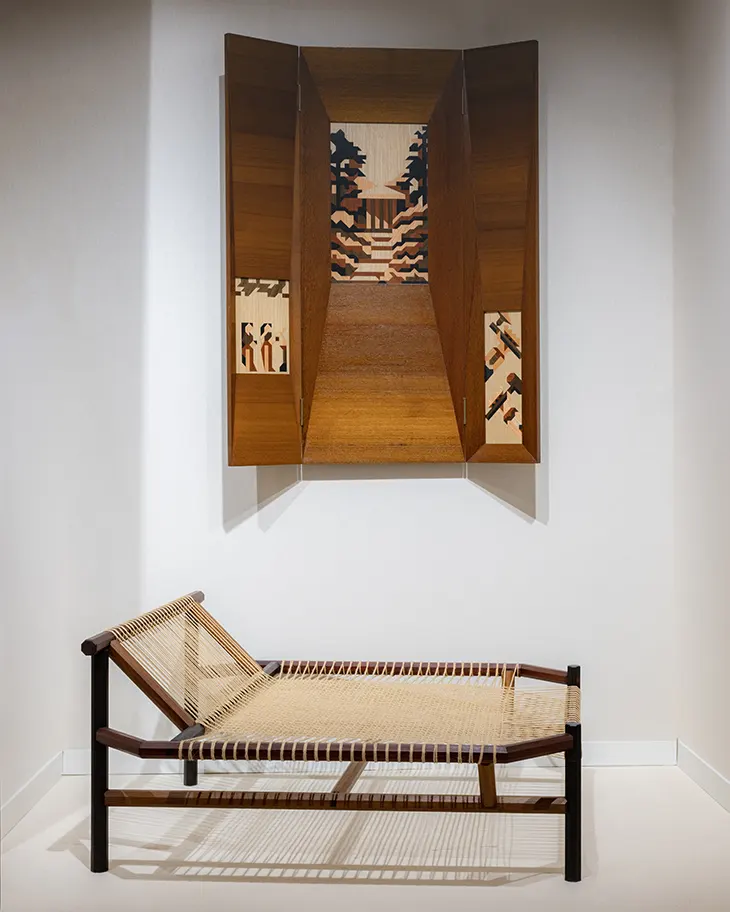
The 2026 theme, “scale,” proved to be more than a concept on paper. It offered a flexible lens for reading the program, from one-of-a-kind pieces to editions and industrial objects, and it also carried an ethical undertone through ideas of responsibility, traceability, and provenance. In a market where sustainability is often reduced to surface-level language, MATTER and SHAPE’s framing felt closer to a curatorial baseline than a marketing claim.
Scale also functioned as a way to connect disciplines. It linked object design to architecture, and production to culture, without forcing a single narrative. Visitors could move from the intimate to the monumental, from the artisanal to the industrial, and still feel the throughline. The theme’s reference to the “scales of justice” was not just rhetorical; it aligned with the salon’s broader interest in transparency and ethical practice, and it gave the program a seriousness that many fairs struggle to sustain.
Architecture That Encouraged Exchange
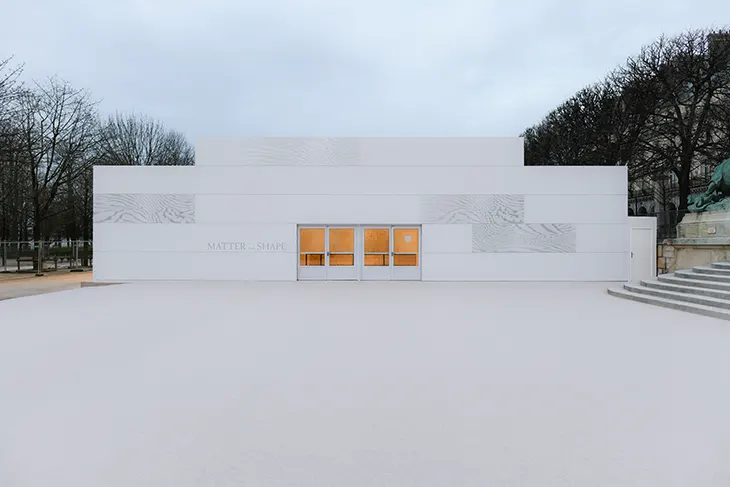
JA Projects’ pavilion concept, rooted in the cultural and geographic history of the Tuileries, helped the salon behave more like a civic environment than a conventional fair. The emphasis on gathering and conversation, alongside a design-for-reuse approach, reinforced the event’s ambition to extend its impact beyond a four-day window.
The architecture mattered because it shaped how people moved, paused, and interacted. Instead of treating circulation as a purely functional problem, the pavilions created conditions for exchange. Spaces for informal gathering, a sense of threshold between zones, and an auditorium-like setting for talks all supported the idea that MATTER and SHAPE is as much about dialogue as it is about display.
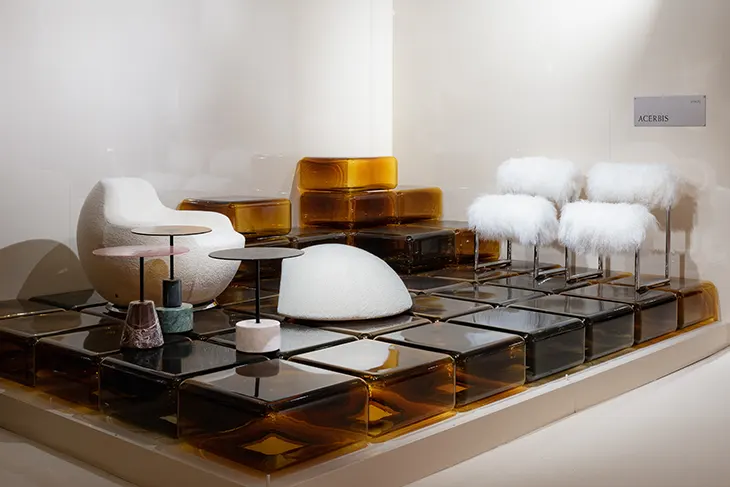
The reuse logic also felt timely. In an era when temporary structures can read as wasteful spectacle, the commitment to reclaiming and donating materials gave the pavilion concept a pragmatic credibility. It is not enough to speak about responsibility; the built environment has to participate in it.
A Program That Made The Salon Feel Lived-in
What lingered after closing was how complete the experience felt. The reading room, conceived with Villa Hegra and featuring USM furniture revisited by Saudi artist Badr Ali, added an editorial and intellectual layer that supported the salon’s positioning. It created a slower tempo within the fair, a place to sit, browse, and recalibrate, and it reinforced the salon’s claim to be more than a marketplace.
LATEST ART FEATURES ON DSCENE
The shop extended the narrative into retail without feeling like an afterthought. As an on-site environment, it contextualised the exhibitors’ work and offered a different entry point for visitors who might not be buying collectible pieces but still want to take something tangible away. The idea of the shop continuing online throughout the year also speaks to the salon’s longer-term ambition: to remain present beyond the calendar moment. The talks program, supported by Monocle, gave the weekend a stronger sense of discourse and context. The best talks did not simply celebrate design; they located it within broader concerns: production, authorship, institutions, and the shifting economics of the field. In a city saturated with events, that kind of intellectual framing is what separates a meaningful program from a social schedule.
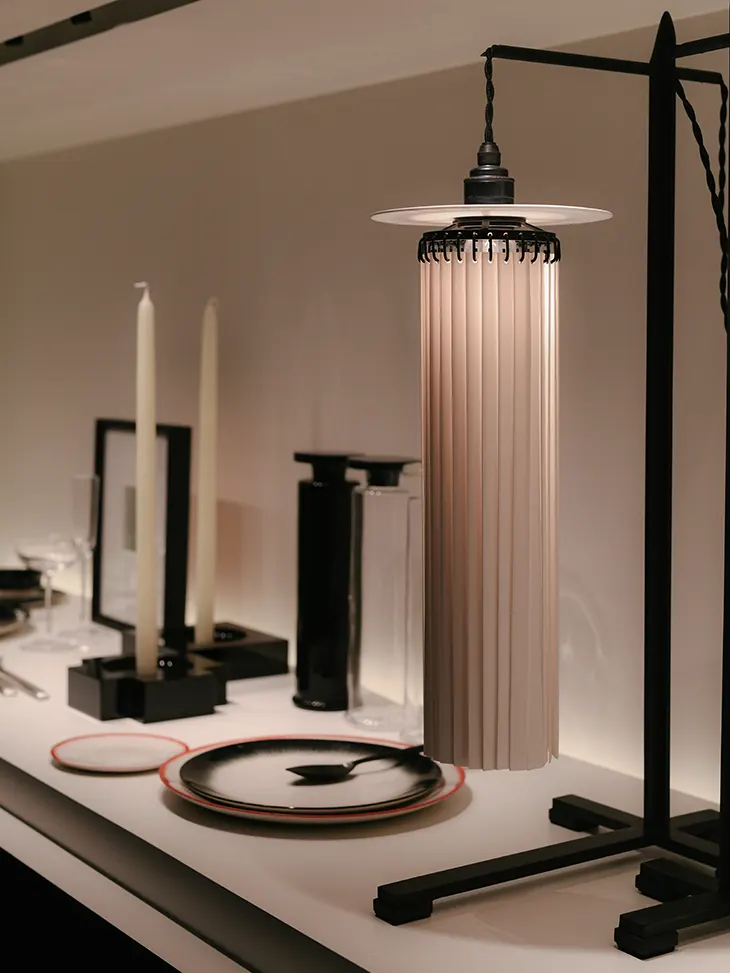
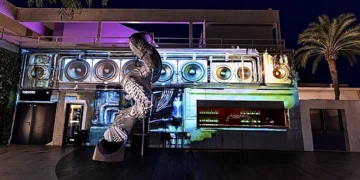
Hospitality played a real role in shaping the atmosphere. SCALE by Balbosté, the STEREO BAR by Bang & Olufsen, and the Zara Home x Dreamin’ Man café were not side attractions but part of the salon’s social rhythm, giving visitors reasons to stay, return, and treat the pavilions as a place to spend time rather than simply pass through. Food, sound, and coffee are not distractions in this context; they are infrastructure for community.
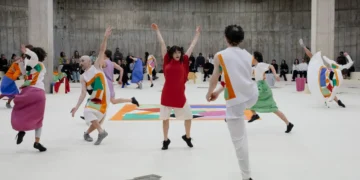
The hors les murs program further amplified that effect, turning MATTER and SHAPE 2026 into a broader Paris itinerary that continued beyond the Tuileries. The offsites did more than add volume; they extended the salon’s narrative into the city and encouraged visitors to experience design as a network of scenes rather than a single venue.
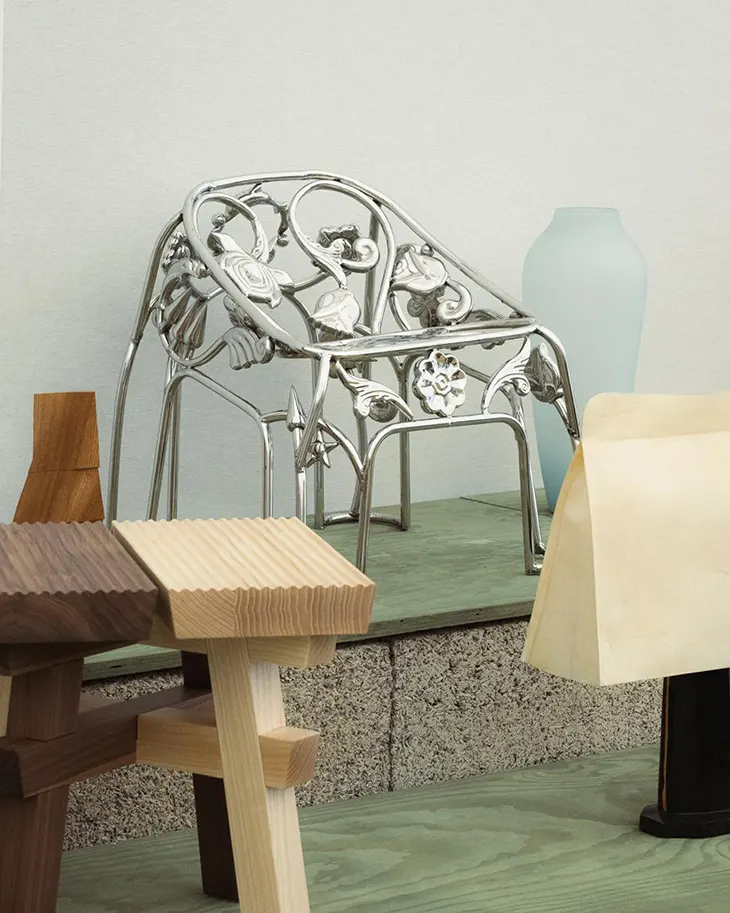
Discover more highlights in our gallery:
Stronger Signal For What Comes Next
Two days on, the takeaway is momentum. MATTER and SHAPE is clearly growing, but the more important point is that it is growing with definition. The third edition was larger in scope and, crucially, better in quality. If this season showed anything, it is that the salon’s placement during Paris Fashion Week is not just a scheduling convenience, it is a strategic multiplier.
The next challenge will be to protect what worked: the coherence of the exhibitor mix, the seriousness of the thematic framing, and the sense of a lived-in program that encourages return visits. Growth is easy to measure in numbers; harder to measure is the maintenance of standards as the platform expands. For now, two days after closing, MATTER and SHAPE feels like it has crossed a threshold. It is no longer simply arriving in Paris. It is beginning to belong to it.