


Architectural visualization is changing fast. Generative AI has pushed the field into a new phase, and expectations around speed, cost, and output volume have changed with it. For many studios, architecture rendering is no longer a slow, specialist task saved for the final presentation. It is now part of early concept testing, client approvals, and day-to-day design communication. That shift has happened quickly. Recent industry reporting suggests AI can shorten parts of the visualization workflow by roughly 20 to 35 percent, especially during ideation and material testing. Another market estimate valued architectural visualization rendering software at about $4.8 billion in 2025, with steady growth expected over the next several years.
The strongest criticism of AI imagery is not that it looks bad. It is that it often looks too good in the same way. Many generated images arrive with balanced light, glossy materials, and neat compositions, yet they also feel oddly interchangeable.
Those numbers matter because the pressure is real. Buyers, developers, and planning teams want more views, more options, and faster turnaround. In real estate, that demand is even sharper, since public reports tied to the housing market note that most buyers begin online and spend far more time looking at images than reading copy. But speed brings a harder question. If software can generate polished scenes in minutes, does that polish still carry meaning? The core tension in modern rendering workflows is not whether AI is useful. It clearly is. The real issue is whether efficiency is starting to replace judgment, atmosphere, and the quieter forms of design intelligence that give a space its human weight.
Homogenization Trap: Why Everything Looks The Same
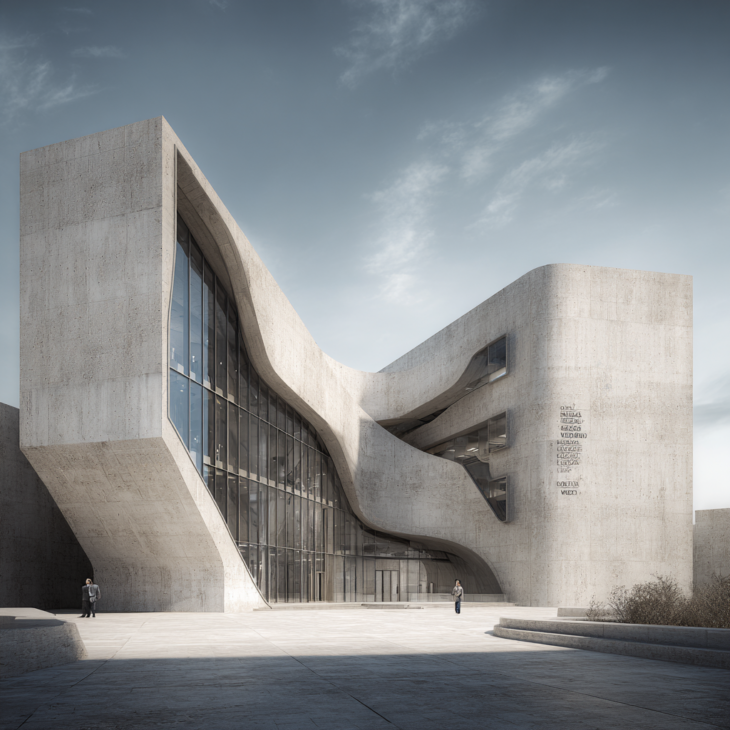
The strongest criticism of AI imagery is not that it looks bad. It is that it often looks too good in the same way. Many generated images arrive with balanced light, glossy materials, and neat compositions, yet they also feel oddly interchangeable. That is a data problem. Models are trained on huge libraries of successful images, so they tend to reproduce visual habits that are already common. The result is regression toward the middle: reliable, attractive, and increasingly generic.
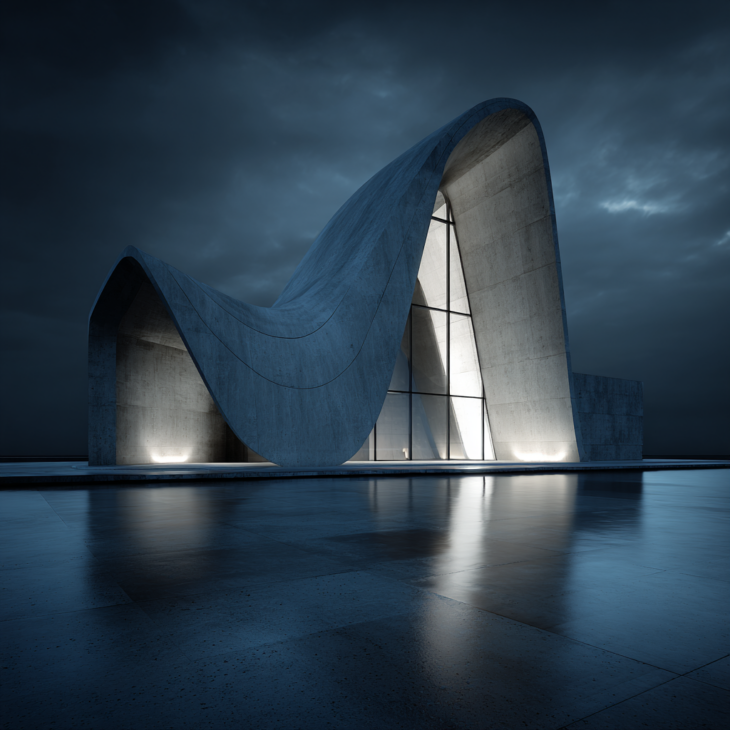
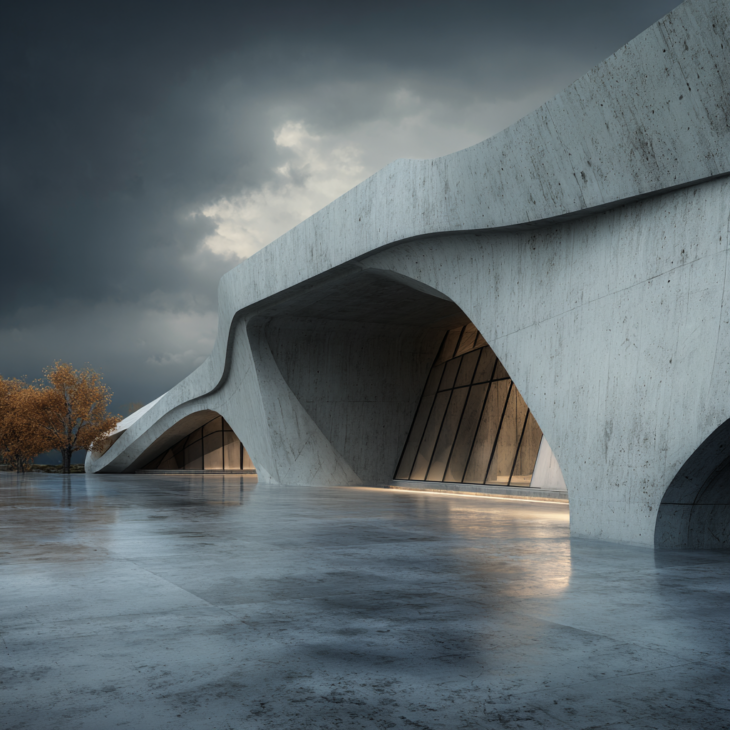
That creates a real trap for studios and clients. A residential project in Warsaw should not feel identical to a project in Austin or Osaka, yet automated imagery often smooths out local differences in climate, urban texture, and social habits. In 3d architecture rendering, that flattening effect can quietly damage the story of a project. A rendering may be flawless on first glance, but after a closer look it can feel sterile. There is no local memory in it. No odd detail. No cultural tension. Clients notice that even if they cannot name it. And when every proposal begins to share the same soft neutral palette, the same sun angle, and the same furniture logic, the visual market becomes crowded with images that are technically strong but emotionally thin.
Human Curatorial Edge: Nostalgia And Comfort
This is where human authorship still matters most. A skilled visualizer can read more than form. They can read mood, memory, and comfort. They know when a room needs a slight asymmetry, a cooler shadow near the floor, a chair that looks used instead of staged, or a hint of clutter that suggests life rather than perfection. Those choices are subtle, but they are often what make an image believable.
That is why 3d rendering for architects remains a creative discipline, not just a production service. Architecture is never only about geometry. It is also about emotional resonance. People respond to spaces that remind them of something they already know: a familiar morning light, a textured wall that feels honest, or a corridor that carries a quiet sense of routine. Human artists understand how to build those responses on purpose. AI can imitate warmth, but it still struggles to understand why warmth matters in one project and restraint matters in another. The artist becomes a filter. They stop the image from becoming cold, over-finished, or emotionally empty. In that sense, the human role is not shrinking. It is becoming more decisive.
Creative Director’s Perspective
A creative director at Cylind, described here as a fictional composite built from common industry opinions, would probably frame the issue in practical terms. AI is useful, they might say, when it serves a clear brief and a clear hierarchy of decisions. It should help the team move faster, not tell the team what the project means. That distinction matters most in the stages where taste and communication are central.
The first non-negotiable stage is concept framing. You can use software to test angles and moods, but the final choice still comes from people who understand story, audience, and design intent. The second is emotional tuning. Teams known for strong architectural renderings still rely on human judgment to decide how much atmosphere a project needs, what details should be softened, and what should remain sharp. The third is client communication. A serious rendering company does not simply deliver images. It translates uncertainty into visual decisions and explains those decisions in a way clients can trust. That sort of mediation is difficult to automate because it depends on sensitivity, timing, and confidence rather than speed alone.
Reimagining The Hybrid Workflow In Architecture Rendering
The most sensible future is a hybrid one when it comes to rendering workflows. Studios do not need to reject AI, and they do not need to hand over creative control either. What works best is a system that gives machines a defined role and keeps authorship in human hands. A mixed workflow can protect design integrity while still cutting repetitive labor, which is what many teams need most right now. The structure below shows one practical way to make that balance work without turning the process into guesswork.
- Initial conceptualization can start with AI, which is useful for generating dozens of variations for quick mood exploration. The human role starts right after that, because someone still has to choose which directions are worth refining and which are only visual noise.
- Technical modeling and base geometry should stay grounded in CAD and standard 3D rendering workflows. That keeps dimensions, materials, and structure reliable, while also giving the team a stable base for 3d architect rendering tasks.
- Post-production and artistic fine-tuning should remain human-led. Lighting warmth, texture depth, furniture choices, and background life all need manual adjustment when the goal is to create a specific emotional response rather than a generic polished image.
- Final delivery should use AI as an engine for draft iteration, while the architect or art director stays in charge of approval. That final check is what protects design quality, cultural relevance, and long-term trust with modern rendering workflows.
This model is already becoming normal. The 2025 CGarchitect rendering survey, published through Chaos, pointed to growing AI integration across the field, with 56 percent of respondents reporting some level of adoption. That does not mean the craft is disappearing. It means the craft is being reorganized. Studios that do well in the next phase will be the ones that use AI for range and speed, then apply human judgment where meaning, atmosphere, and accountability still matter most.
56 percent of respondents reporting some level of adoption. That does not mean the craft is disappearing. It means the craft is being reorganized. Studios that do well in the next phase will be the ones that use AI for range and speed.
Finally, architectural visualization is not moving toward a simple choice between humans and software in modern rendering workflows. It is moving toward a practice where both have to work together, but not on equal terms. AI can accelerate repetitive tasks, produce quick variations, and remove some of the drag from early-stage production. Those gains are real and worth keeping. But the best work still depends on choices that remain stubbornly human: where a viewer’s eye should settle, which imperfection makes a room feel honest, and how a space should carry local character rather than generic polish.
RELATED: Days of Oris 26 Returns to Zagreb This May
That is why the future belongs to the synthetic architect, not the fully automated one. The strongest studios will be the ones that know when to speed up and when to slow down. They will use computation to open possibilities, then use judgment to narrow those possibilities into something coherent and emotionally convincing. They will also understand that clients do not buy speed alone. They buy confidence, trust, and a sense that the image reflects the real ambition of the project. As tools keep evolving, the role of the visualizer becomes more editorial, more strategic, and in some ways more valuable. The point is not to defend the old workflow at all costs. It is to build a better one, where efficiency supports meaning instead of replacing it. That is the real promise of architecture rendering.