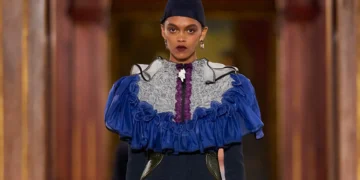



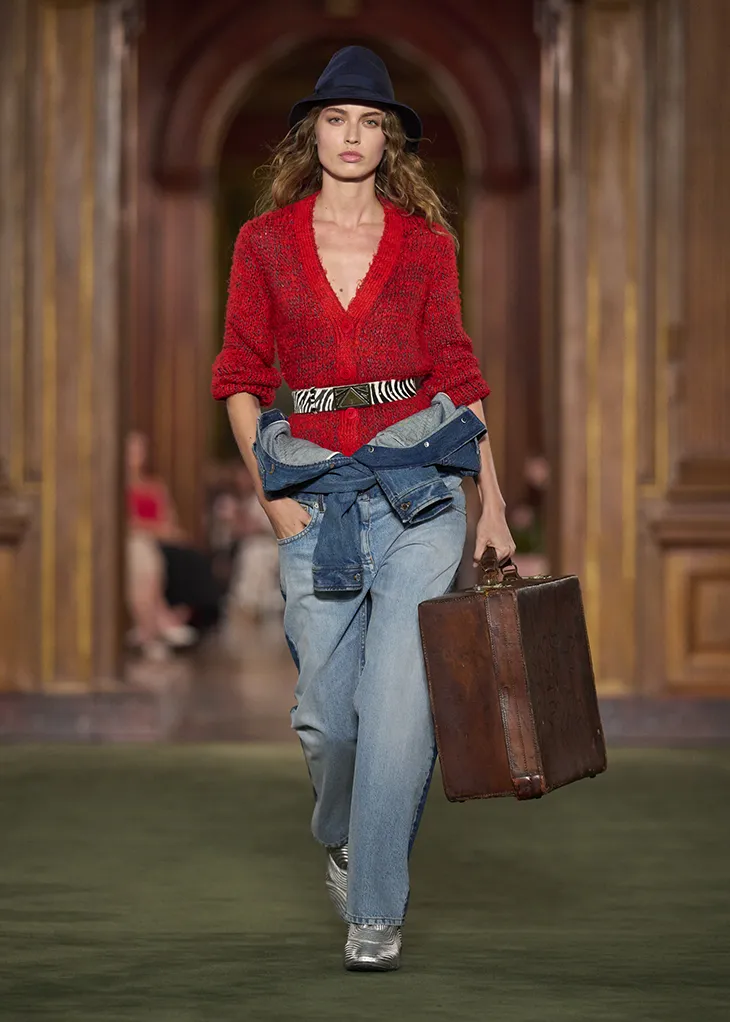
Louis Vuitton Cruise 2027 begins with a city that resists a single definition. For Nicolas Ghesquière, New York becomes the point of departure for a collection built around duality, movement, and cultural exchange. Titled Metropolitan Life, the season looks at the city through its contrasts, uptown and downtown, past and future, polish and disruption. Paris enters the conversation through Louis Vuitton’s own history, creating a dialogue between French savoir-faire and the many identities that shape New York.
CRUISE 2027
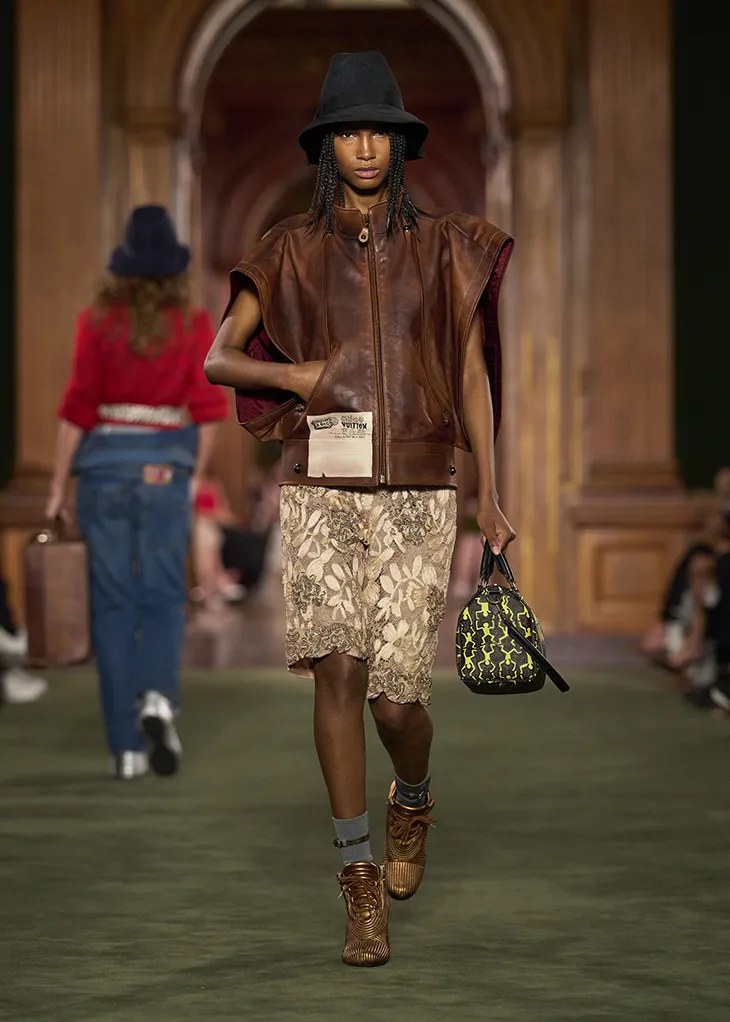
The Frick Collection gives the show its most charged setting. As a former private residence turned museum, the institution carries the weight of old New York, European decorative arts, and Gilded Age display. Ghesquière uses that environment as a frame for clothing that moves through time. The collection places modern figures inside rooms associated with history, allowing the clothes to challenge the space around them. This tension gives the show its structure. The past holds the frame, while the garments insist on motion.
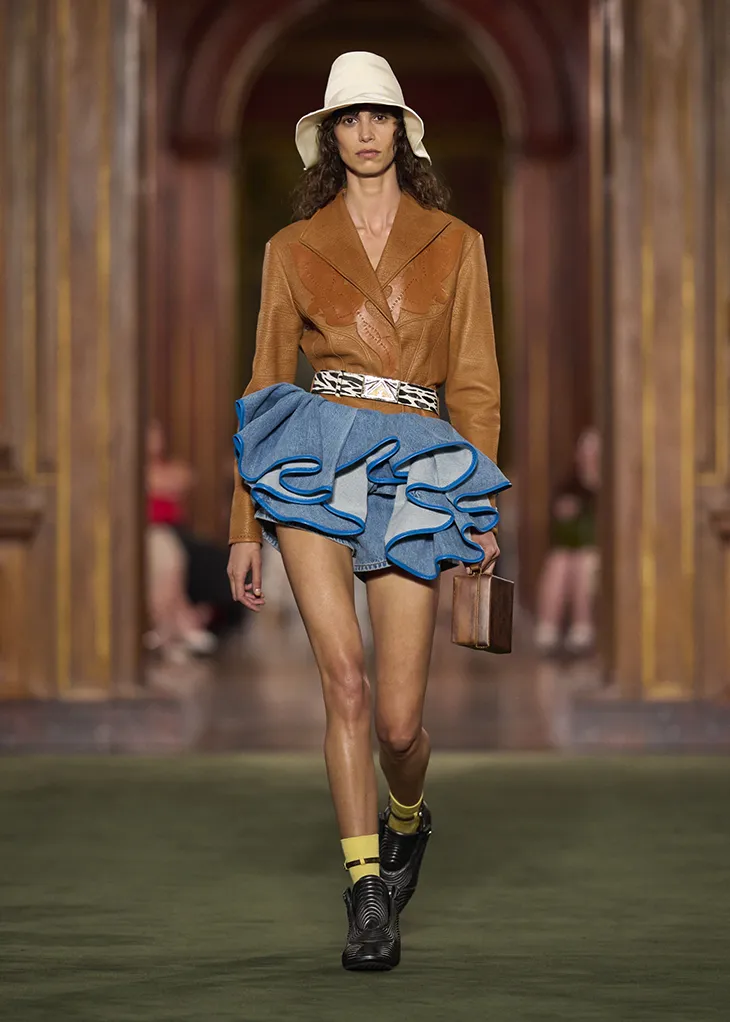
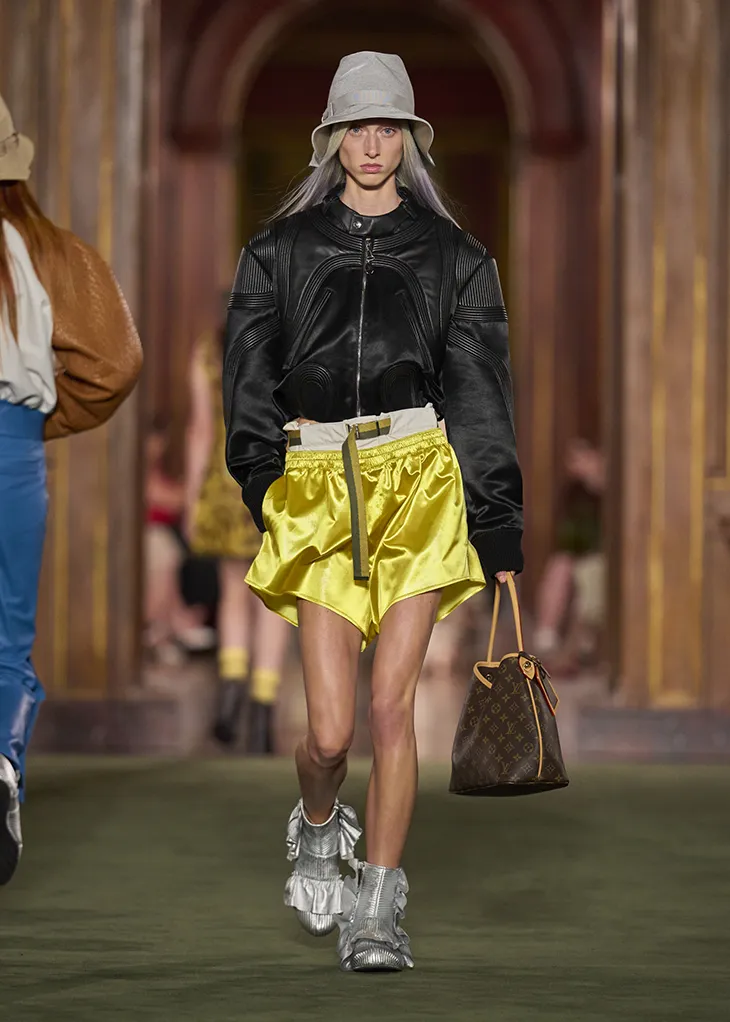
Keith Haring provides one of the collection’s clearest points of connection. Louis Vuitton discovered a 1930s leather suitcase in its archive, transformed by Haring into a personal canvas. That object becomes more than a reference. It links the house to New York’s pop art history and to the idea of luxury as something that can carry public language. Haring’s works appear across clothing and accessories, turning garments into surfaces for movement, rhythm, and graphic force. The reference feels especially direct because it connects the brand’s travel history with an artist who made the city itself part of his visual vocabulary.
Ghesquière builds the collection through American wardrobe codes. Blue jeans, jersey, and leather appear as familiar materials, yet the designer redirects them through Louis Vuitton construction. He treats these everyday pieces as objects worthy of precision, giving them new proportion, surface, and weight. The result avoids nostalgia. Instead, the collection studies how recognizable clothing can shift when placed under a luxury lens. A city wardrobe becomes something more complex, carrying traces of street culture, museum culture, and social performance.
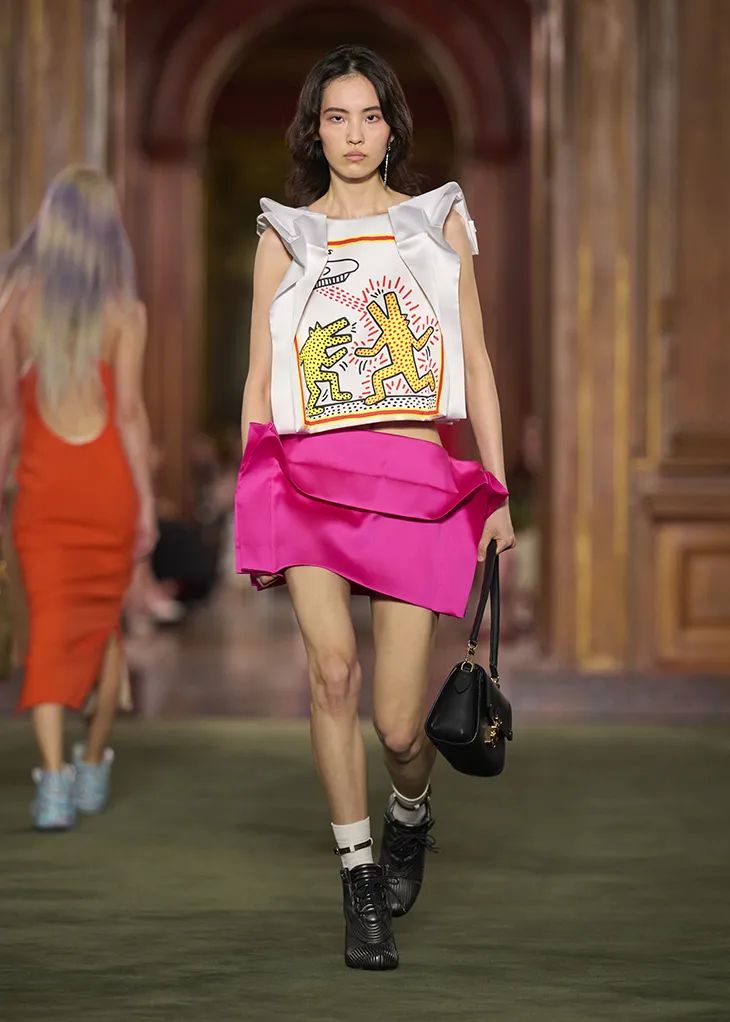
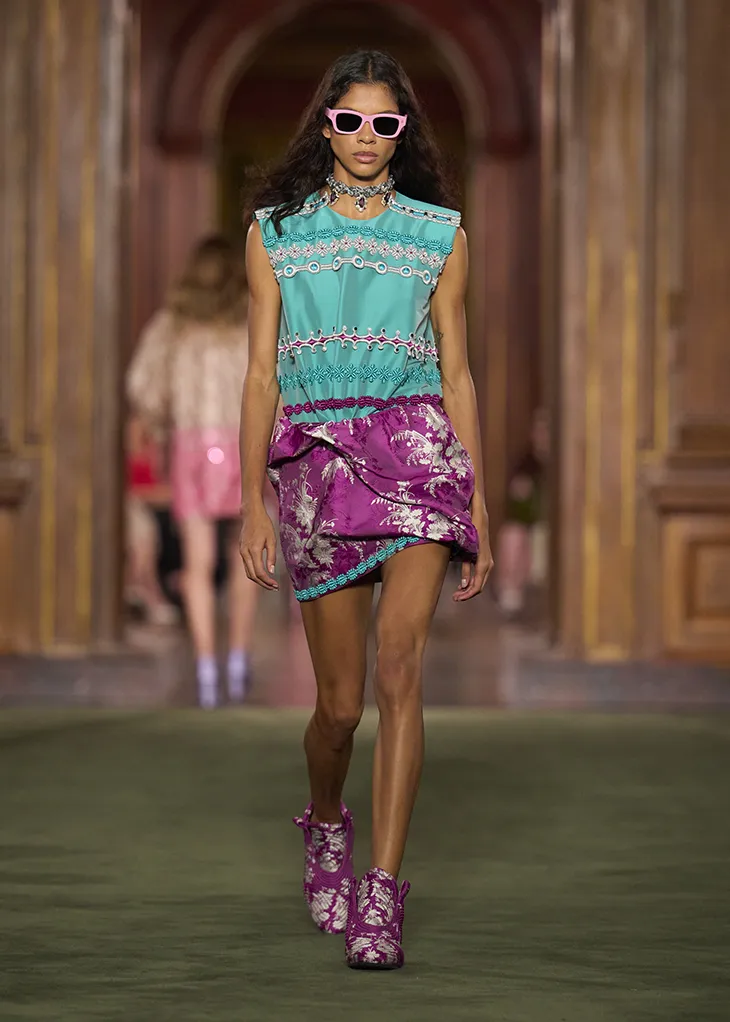
The strongest moments come from this friction between actual clothing and decorative excess. Slot machine motifs, automobile references, tooled leather, and Gilded Age echoes move through the collection as fragments of American life. Ghesquière places them into garments and accessories with a sense of play, but also with control. Color arrives bright and graphic, while passementerie and sequin embroidery create unexpected lace effects. These details allow the collection to move between ornament and attitude, surface and structure.
Cruise 2027 also studies the idea of American women through clothing. The collection presents them as dynamic, self-defined, and difficult to place within one category. That reading fits Ghesquière’s long-standing interest in characters who move between eras. Here, the Louis Vuitton woman appears as a figure crossing rooms, decades, and cities. She can wear denim with the confidence of eveningwear, carry pop art as luxury, and bring downtown energy into uptown architecture.
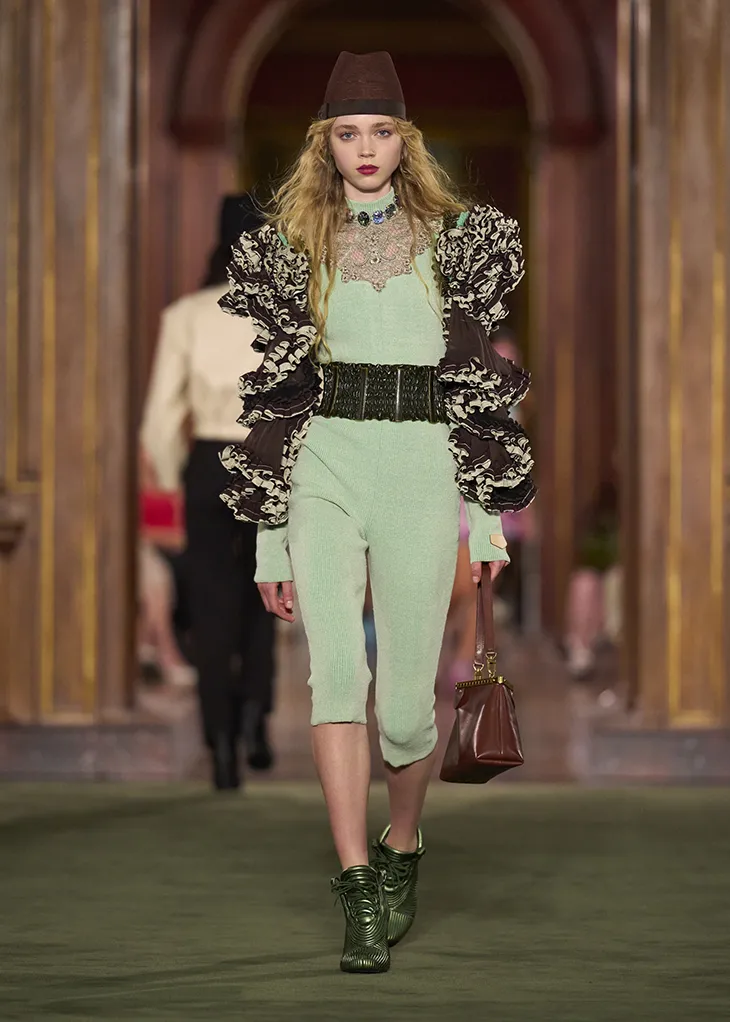
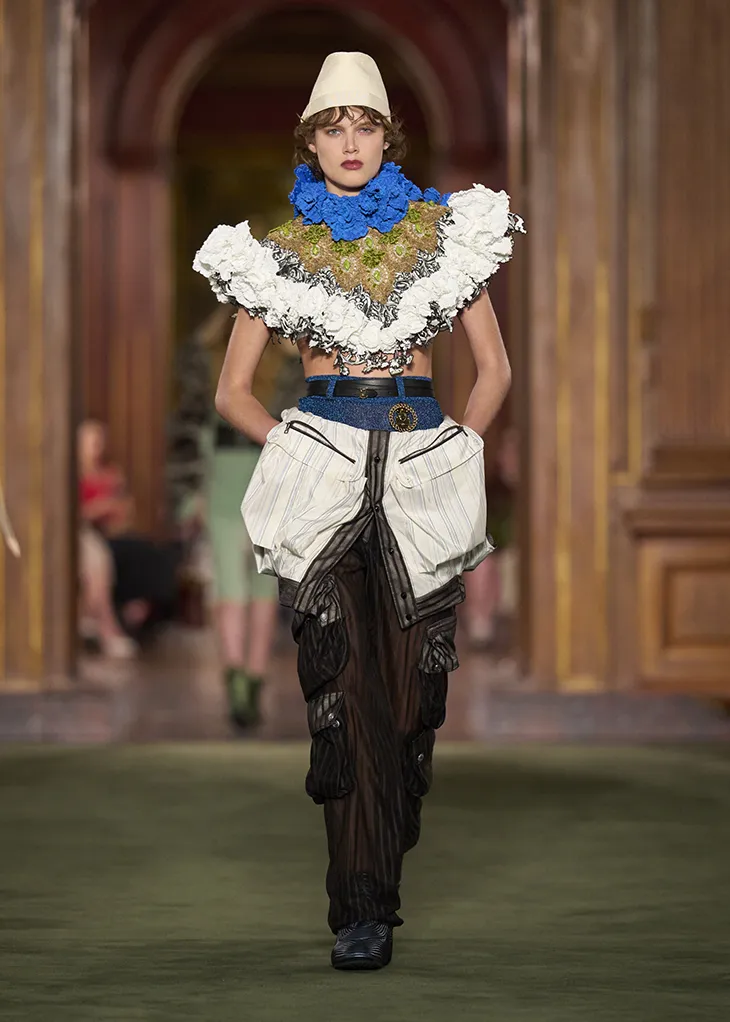
The Paris connection gives the collection its discipline. French workmanship transforms references that could easily become costume into pieces with structure and clarity. Ghesquière does not flatten New York into a moodboard. He builds from its contradictions, then filters them through Louis Vuitton’s codes of travel, leatherwork, and construction. The collection’s strength lies in this exchange. It allows American immediacy and French craft to share the same space without forcing them into a single language.
Louis Vuitton Cruise 2027 succeeds as a city portrait because it accepts contradiction as form. At The Frick, Ghesquière stages New York as a place of alternate identities, where pop art can sit beside grand masters, where denim can meet decorative craft, and where the archive can open into the present. The show frames movement as both literal and cultural, a passage between cities, eras, and selves. In the end, everything belongs because New York makes room for collision.
RELATED: Inside the Celebrity Front Row at Louis Vuitton Cruise 2027