


New York Art Week always begins with the promise of movement. Uptown, downtown, Chelsea, Hudson Yards, Park Avenue, Times Square, the Frick, the Shed, the Armory, the dinner, the cocktail, the auction preview, the museum opening, the gallery that everyone says you have to see before it gets too crowded. At first, the movement feels glamorous. You think, foolishly, that the city has arranged itself for you. That the week will offer revelation in sequence. That if you keep walking, you will eventually arrive at the one room where culture explains itself.
DORIC ORDER
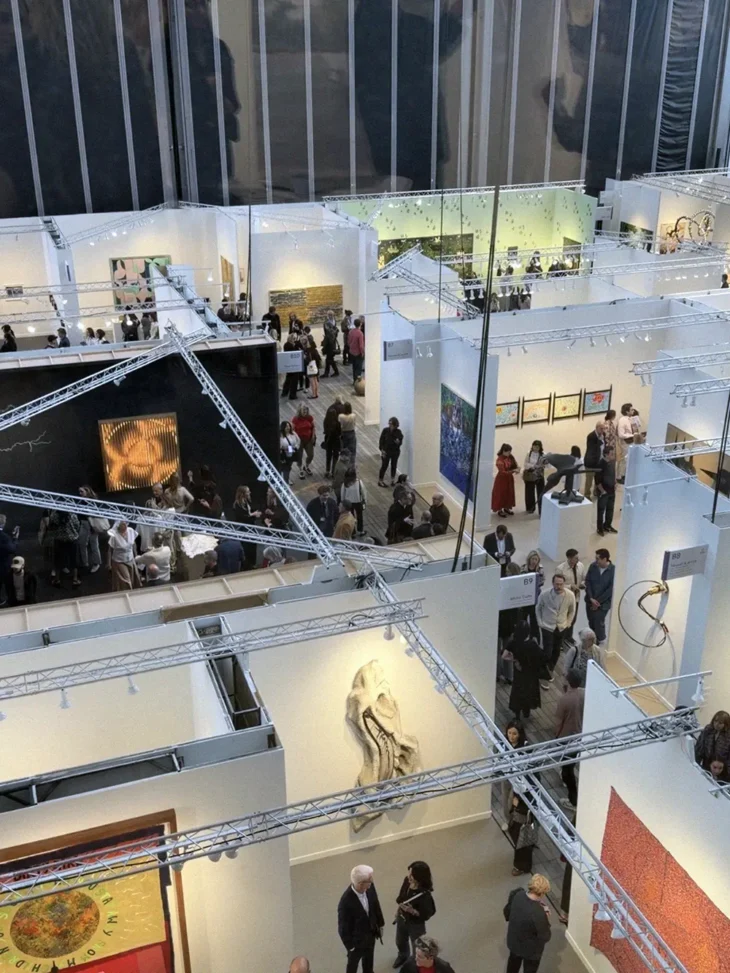
By the third day, the fantasy collapses. You have seen too much art. You have watched too many people look at art. You have stood in too many lines, held too many plastic cups, smiled at too many people who are also trying to remember where they are supposed to go next. You begin to feel a physical revulsion. The eye gets tired first, then the body. Eventually, the mind refuses to distinguish one installation from another. Painting becomes booth. Booth becomes carpet. Carpet becomes fair. Fair becomes market. Market becomes dinner. Dinner becomes content. Content becomes proof that you were there.
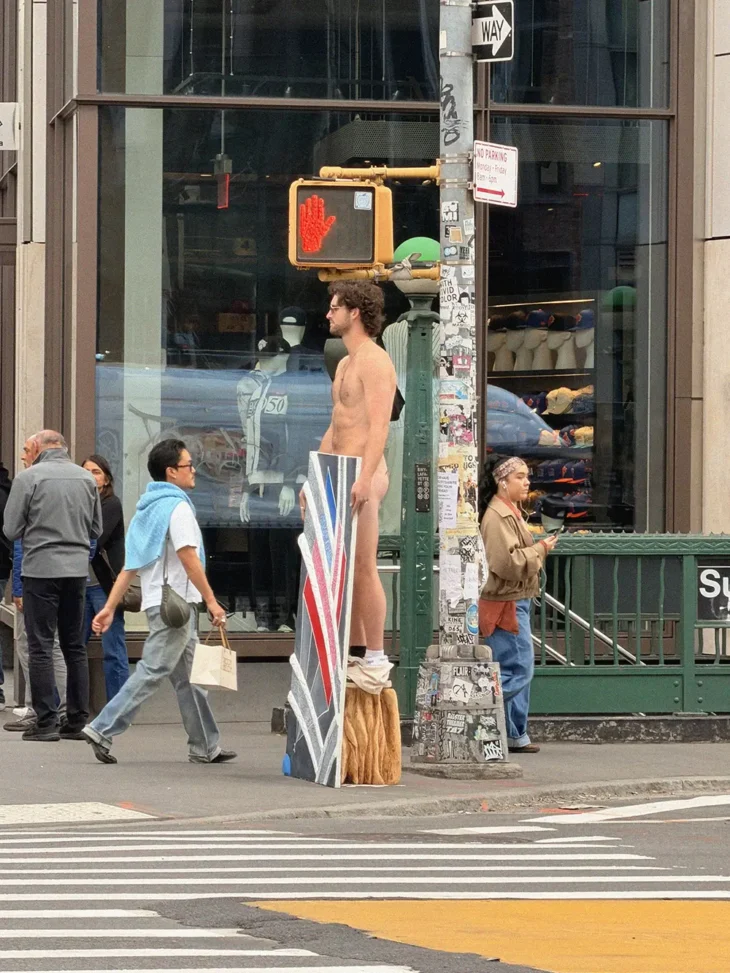
And still, you keep going. This is the illness of New York Art Week. It gives you culture in such density that culture starts to feel like pressure. You are not asked to look. You are asked to process. Seven fairs, endless openings, auctions, dinners, brand sponsorships, celebrity sightings, cultural partnerships, and enough art workers with dead eyes to populate an entire alternate city. Everyone is moving. Everyone is tired. Everyone pretends they are not tired because exhaustion would suggest that the system has won.
This is the illness of New York Art Week. It gives you culture in such density that culture starts to feel like pressure.
The old story of New York depends on geography. Uptown and downtown. The museum and the street. The collector and the artist. The townhouse and the loft. The serious institution and the improvised room. Art Week keeps this story alive because it flatters everyone involved. Uptown wants to believe it still protects value. Downtown wants to believe it still produces danger. Chelsea wants to believe it mediates between the two. Hudson Yards wants to believe scale can replace history. Tribeca wants to believe taste can survive real estate.
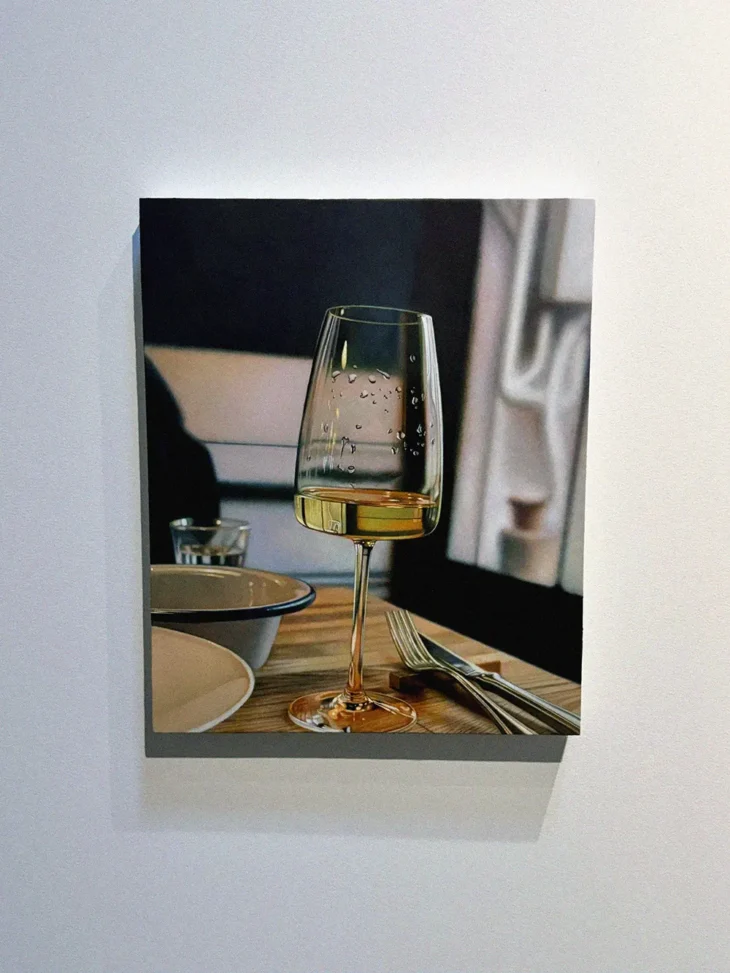
The truth is simpler and more humiliating. Everything now speaks to the same system. The uptown collector wants downtown credibility. The downtown gallery wants uptown money. The luxury house wants the museum. The museum wants the luxury house. The magazine wants the cocktail. The artist wants visibility without seeming to want it. The celebrity wants culture without explanation. The brand wants meaning without risk. Everyone wants access to feel like intimacy.
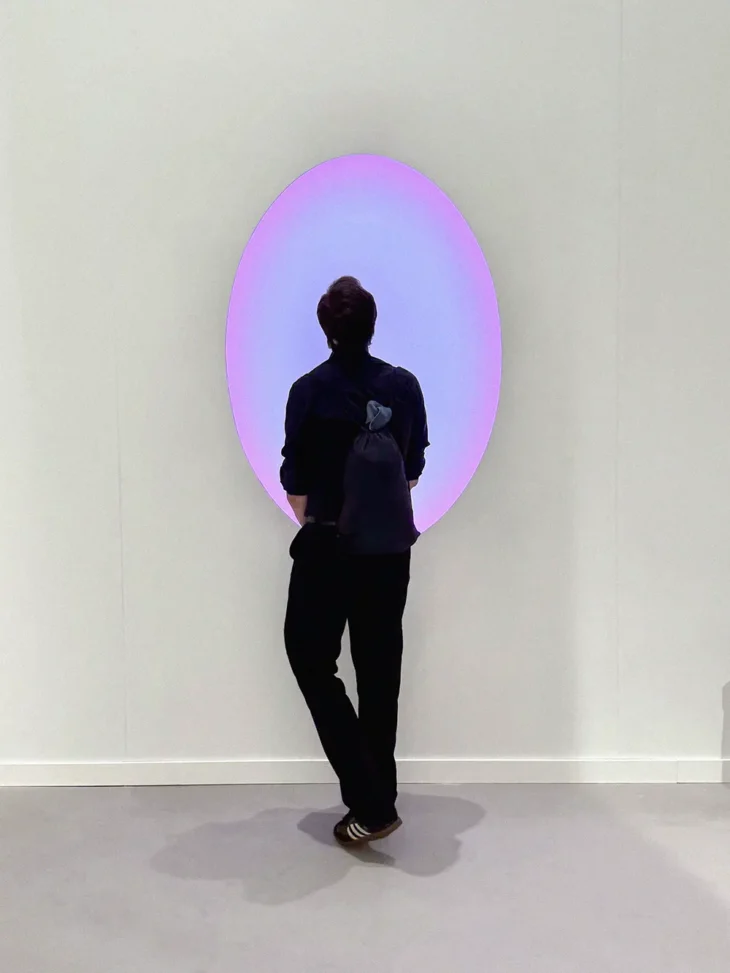
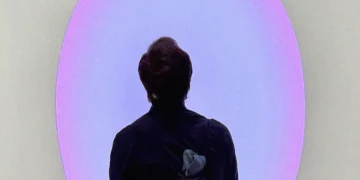
At Frieze, a woman stood in front of a James Turrell work and asked, angrily, “How do you buy this?” It was the most honest sentence I heard all week. She did not ask what it meant. She did not ask how it worked. She did not ask whether light could become architecture, or whether perception could become material, or whether the viewer’s body completes the work. She went straight to the hidden question underneath the entire week. How do you buy this?
At Frieze, a woman stood in front of the Turrell work and asked, angrily, ‘How do you buy this?’
How do you buy light? How do you buy atmosphere? How do you buy an experience that depends on the failure of the eye to settle? How do you acquire silence? How do you put perception into a collection, insure it, ship it, install it, lend it, resell it, place it in a room where guests will stand politely and feel improved? This is New York’s particular genius. It can turn anything into an asset before the feeling has finished happening.
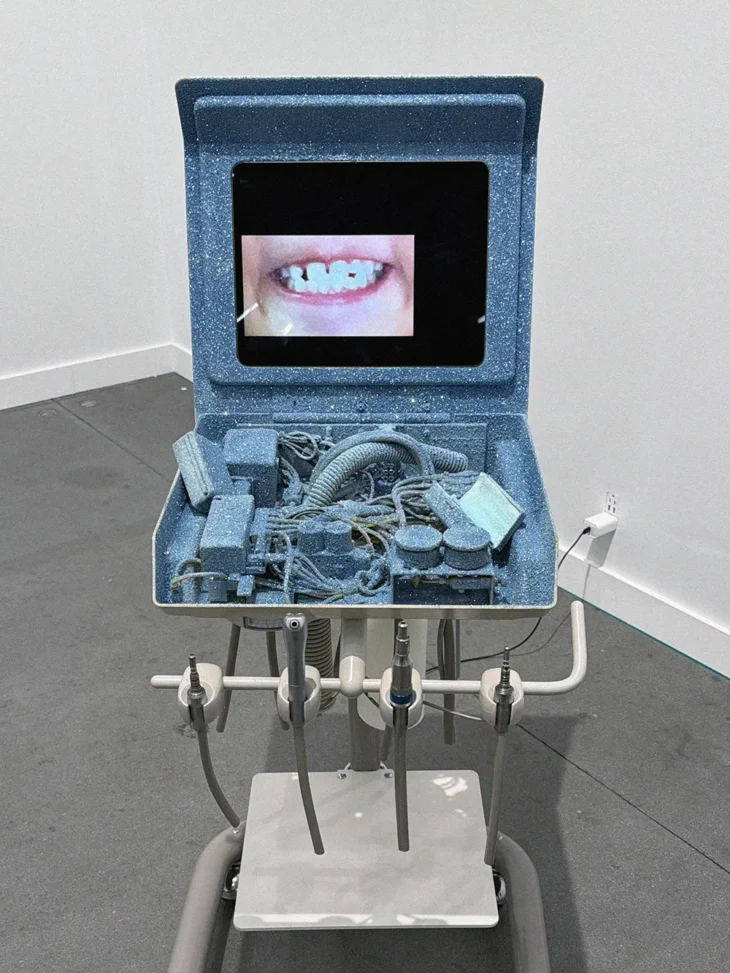
The woman sounded vulgar because she spoke the language out loud. Everyone else had learned to disguise it. They said “placement,” “institutional context,” “dialogue,” “legacy,” “material investigation,” “private viewing,” “museum-quality.” She said buy. She broke the spell by naming the transaction. The spell broke everywhere, if you knew where to look.
Independent and NADA offered a different frequency, even though no fair escapes the market. They felt like places where the week briefly remembered that art begins before the invoice. Independent had more air, more patience, more room for a strange idea to hold its shape. NADA carried the charge of the unresolved, the uneven, the thing still becoming itself.
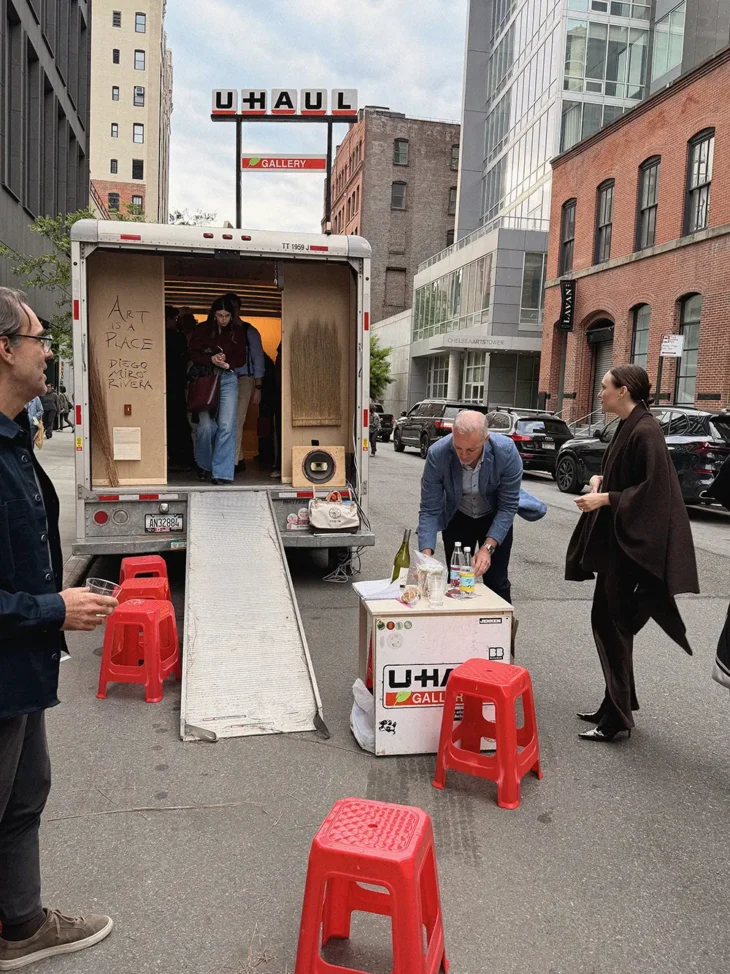
Outside Independent, U-Haul Gallery presented Diego Miró-Rivera’s work from natural materials gathered in Texas Hill Country, including a burlap canvas embedded with 2,000 cicada exoskeletons and a moving sculpture made from local bunchgrass. It was exactly the kind of project Art Week needs and almost crushes: serious intent, strange material, a temporary structure, no marble desk, no whispering associate director, no velvet choreography of acquisition.
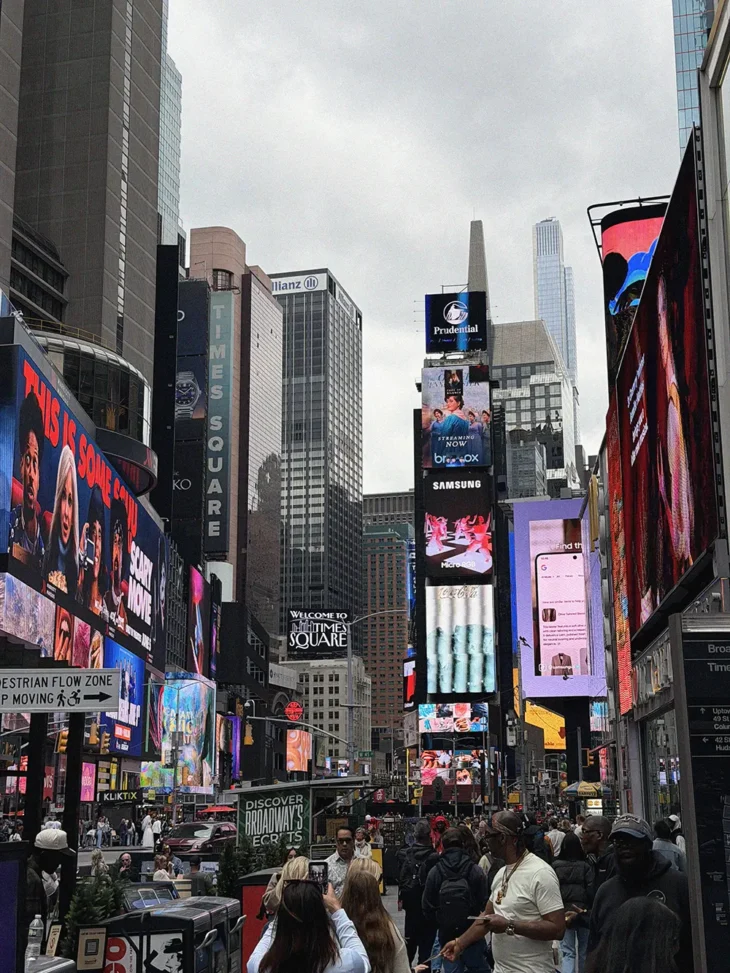
Gucci took over Times Square, which makes perfect sense because Times Square is already the most honest place in New York. It does not pretend to be refined. It does not pretend commerce has a soul. It screams. It sells. It lights up the body until the body becomes part of the ad. Demna understood this and used it. Screens, logos, staged absurdity, fashion as public hallucination. A brand does not have to enter the art conversation quietly anymore. It can occupy the city’s nervous system and call the occupation a cultural moment.
That is what New York does best. It absorbs contradiction, frames it, photographs it, and makes it useful.
Louis Vuitton chose another method and arrived at the same result. At The Frick Collection, Nicolas Ghesquière placed Cruise 2027 inside one of New York’s great rooms of inherited taste. Keith Haring entered through the Vuitton archive, through a suitcase, through fashion, through luxury choreography. Downtown marks appeared inside uptown architecture, protected by institutional gravity and brand power. It was elegant. It was intelligent. It was also a diagram of absorption.
That is what New York does best. It absorbs contradiction, frames it, photographs it, and makes it useful. Haring once belonged to subway walls, public language, urgency, speed, politics, bodies moving through the city. At The Frick, his line became part of a polished exchange between art history, fashion, sponsorship, and celebrity presence. This does not destroy the work. It does something more complicated. It proves that rebellion can survive as reference. It proves that public art can return as luxury memory. It proves that downtown can be invited uptown once it has become valuable enough.
View this post on Instagram
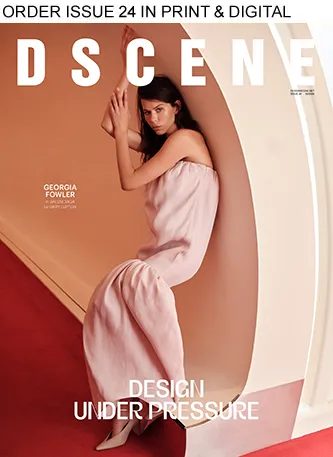
The city calls this dialogue. Sometimes it is dialogue. Sometimes it is digestion. I thought about this again at Villa Albertine, during DSCENE’s cocktail event celebrating the new design issue. A French cultural institution in New York. A magazine gathering people during Art Week. Design, fashion, architecture, art, publishing, conversation, all folded into one room. It felt necessary, and of course it was also part of the machine. There is no pure outside position. The critic attends the event. The editor hosts the event. The magazine needs the room. The room produces the image. The image produces the proof. The proof becomes circulation. It would be dishonest to pretend otherwise.
The problem with Art Week is not that commerce touches art. Commerce has always touched art. Patronage, collecting, commissions, museums, galleries, magazines, dinners, reputations, all of it has always been there. The problem is the speed and totality of the collapse. Everything now happens at once. A fair booth looks like a showroom. A showroom borrows the language of installation. A museum becomes a runway venue. A runway show becomes an art event. A dinner becomes soft power. A celebrity sighting becomes cultural coverage. A cocktail becomes strategy. A painting becomes a backdrop for someone’s private performance of discernment.
The real exhaustion comes from watching people manage themselves inside culture.
And everyone is very, very careful to look natural. This is the most exhausting part. Not the walking, though the walking is brutal. Not the openings, though they begin to feel punitive. Not even the art, though too much of it in one week can make you feel strangely hostile toward beauty. The real exhaustion comes from watching people manage themselves inside culture. The face of considered attention. The nod. The quiet photograph. The selective enthusiasm. The immediate recognition of who matters in the room. The ability to pivot from sincerity to networking in under five seconds.
After a while, you no longer know whether you are looking at art or looking at people looking valuable near art. This sounds cynical. It is also accurate. There were still moments that cut through it. There always are. A work you did not expect to stay with you. A small room away from the main traffic. A painting that refused to become content. A conversation with someone who forgot, briefly, to perform intelligence. A young artist standing near their work with that specific mixture of pride and terror. A museum hallway where the noise fell away. A flash of actual looking, before the phone came up.
These moments are why the week remains impossible to dismiss. New York still creates density better than any other city. It can gather more ambition, more contradiction, more money, more talent, more vanity, more hunger, more beauty, more fatigue into a few square miles than seems physically responsible. That density can produce real thought. It can also make thought impossible. By the end, I wanted less art. This felt like a moral failure until I realized it was the only sane response.
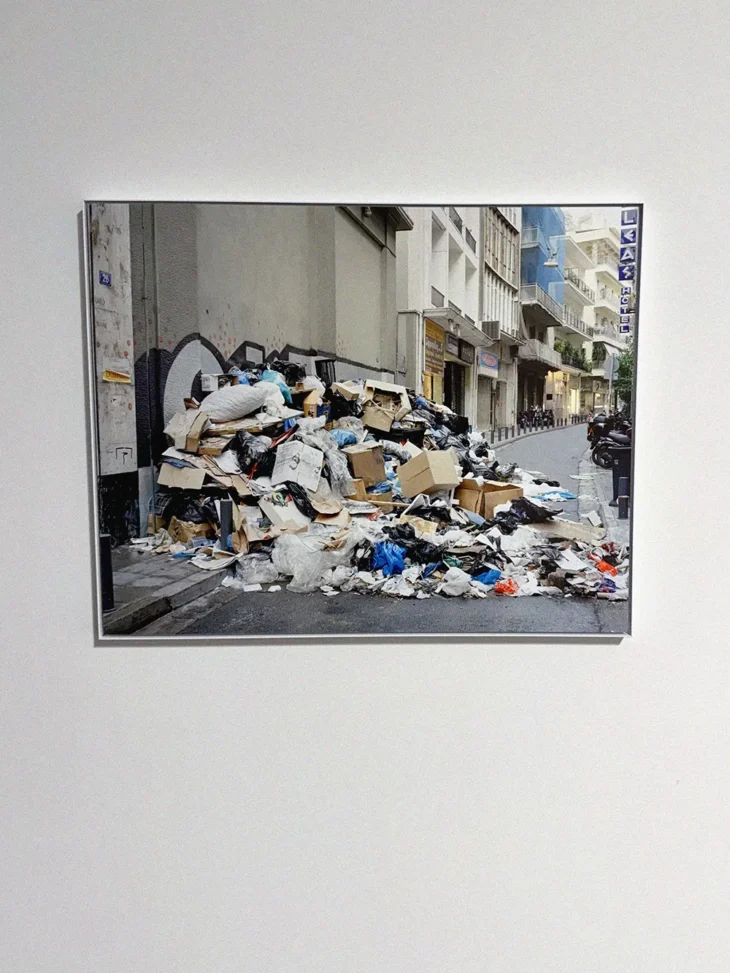
Too much art becomes anti-art. Too much access becomes claustrophobic. Too many invitations become a form of punishment. Too many fairs turn vision into labor. The eye begins to protect itself by refusing to care. New York Art Week pretends to offer culture in its purest concentration. What it really offers is a view of culture as infrastructure. Fairs, auctions, openings, hotels, restaurants, cars, sponsorships, institutions, collectors, advisors, magazines, brands, celebrities, assistants, photographers, publicists, interns, artists, dealers, curators, and the endless invisible labor that keeps the whole thing moving.
Too much art becomes anti-art.
No one stands outside it. Some people just get better lighting. The uptown and downtown story survives because we still want to believe in difference. We want to believe that one space holds money and the other holds truth. That one room sells and another risks. That one dinner flatters power and another produces culture. But Art Week makes the fiction impossible. The same people move through all of it. The same language follows them. The same desire circulates under different names.
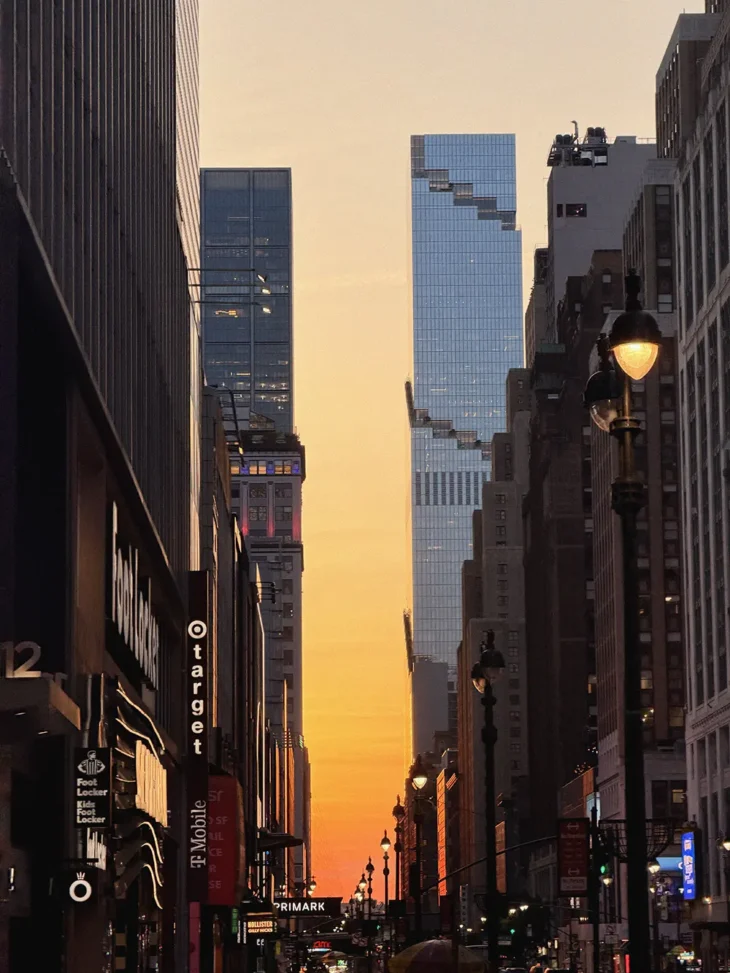
In the end, New York does not resolve contradiction. It gives contradiction a schedule. You go to the fair. You go to the museum. You go to the dinner. You go to the brand event. You go to the cocktail. You see the light. You hear the woman ask how to buy it. You laugh because she is awful and because she is right. You wake up the next morning with sore feet, too many images in your phone, and the faint suspicion that the most honest artwork of the week was the machinery around the art.
Then you go back out.