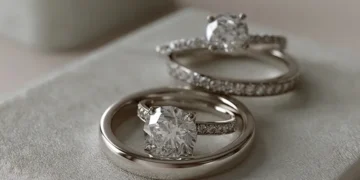



When choosing an engagement ring, many people start with the diamond. Its shape, size, and cut usually guide the first decision. The setting deserves the same attention because it changes the ring’s height, outline, level of detail, and daily wearability. A higher setting can make the diamond feel more visible, and a lower setting can feel easier for daily use. Extra stones can add brightness, and a cleaner setting can keep the focus on the main diamond.
Choosing the right engagement ring setting matters even more with certified loose lab-grown diamonds. Since buyers select the diamond separately, they can shape the ring around the stone, and decide how style, proportion, and budget come together.
What Is an Engagement Ring Setting?
An engagement ring setting refers to the structure that holds the diamond and shapes the design around it. It includes the prongs, metal frame, band, side stones, and height of the ring. Popular engagement ring settings include solitaire, halo, bezel, and three-stone designs, each changing how the diamond looks, how secure it feels, and how the ring works for daily wear.
Solitaire Settings
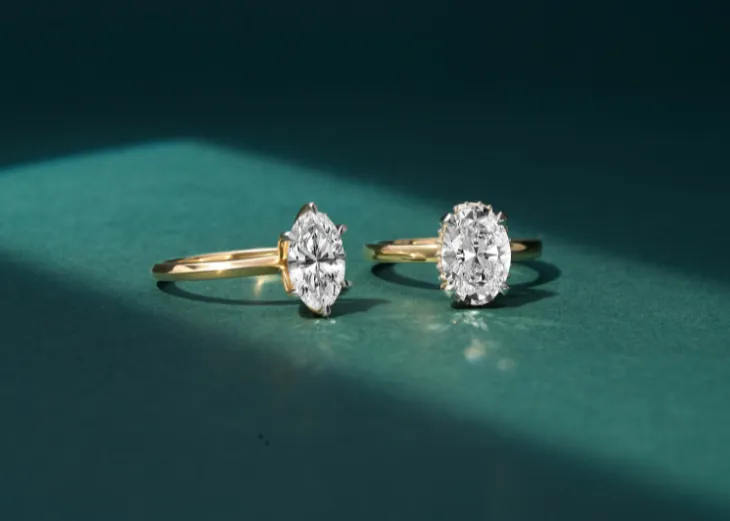
A solitaire setting works best when the diamond has enough presence to carry the ring on its own. With no side stones or extra framing, the shape of the stone, the height of the prongs, and the width of the band all become easier to notice. That simplicity can make the ring feel cleaner, but it also makes proportion harder to ignore.
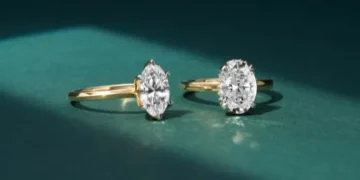
Round, oval, pear, and cushion-cut diamonds each change the effect of a solitaire. A round diamond gives the ring a familiar shape, and an oval can make the design feel longer on the hand. A pear cut brings direction through its pointed end, and a cushion cut gives the piece a softer outline. The setting should leave those differences visible.
Prongs also change the final look. Four prongs expose more of the diamond and can make the stone feel lighter. Six prongs give a round diamond a fuller frame and a more traditional finish. A lower solitaire setting can feel easier for daily wear, while a higher one gives the diamond more lift.
Halo Settings
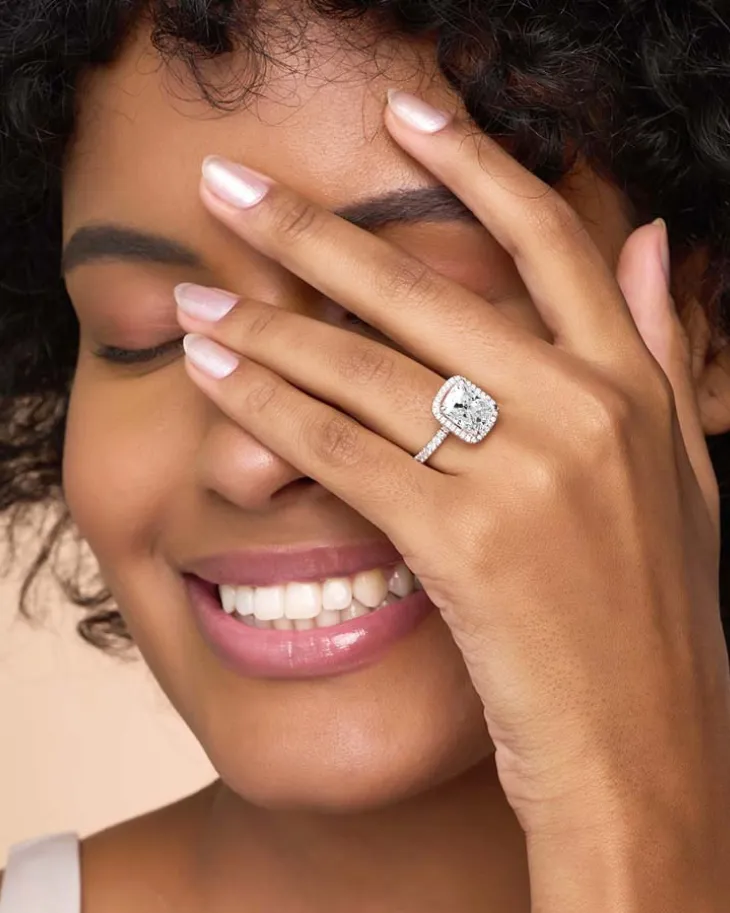
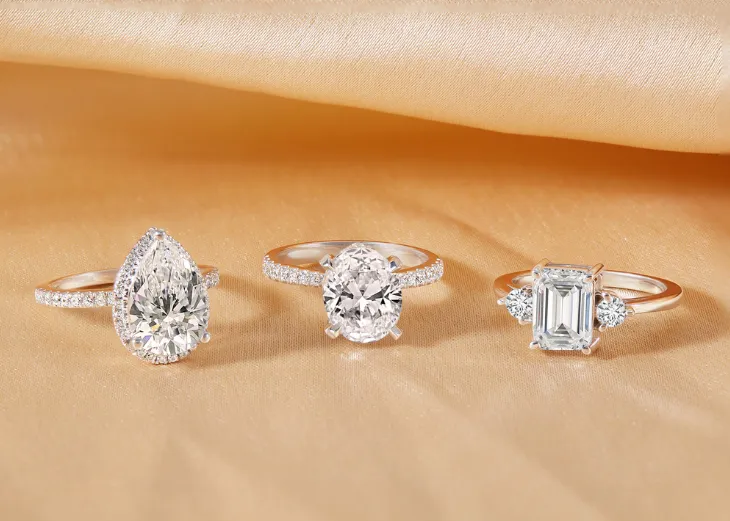
A halo setting places smaller stones around the main diamond, adding brightness and scale. The surrounding stones give the ring a fuller face and can make the main diamond appear larger from above. This works well for buyers who want a bigger visual effect while keeping the main stone within a specific budget.
A halo works best when the smaller stones support the main diamond instead of competing with it. A fine halo adds brightness while keeping attention on the main stone. A heavier halo makes the ring feel more decorative and can change the diamond’s outline.
This style works well with round, oval, cushion, radiant, and princess-cut diamonds. A cushion halo can soften the edge of a round or cushion stone, and a sharper halo can give radiant or princess cuts more structure. With lab-grown diamonds, buyers can use the setting to create brightness and scale without relying only on carat size.
Bezel Settings
A bezel setting gives the diamond a rim of metal instead of prongs. The stone appears more framed, the edge feels smoother, and the setting gives extra protection around the diamond. This makes the bezel a good option for buyers who want an engagement ring suited to daily wear.
The bezel changes different diamond shapes in specific ways. Around an oval or marquise diamond, it creates a clear elongated outline. Around an emerald cut, it sharpens the geometry of the stone. Around a round diamond, it gives the ring a cleaner profile. Since the metal surrounds the stone, the choice of metal becomes especially visible.
Yellow gold can make a bezel feel warmer and more graphic. White gold or platinum gives it a cooler, cleaner finish. A bezel may cover a small part of the diamond’s edge, but it gives the design structure and security that prong settings may lack.
Three-Stone Settings
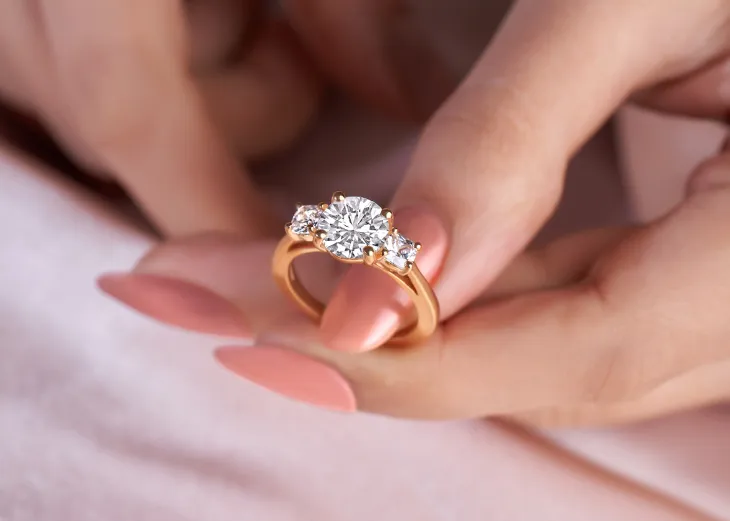
A three-stone setting builds the design outward with two side stones. This gives the ring greater width on the hand and creates a fuller overall shape.
In a three-stone setting, the side stones change the ring’s shape as much as its size. Pear-shaped side stones can lengthen the look of an oval main diamond. Tapered baguettes can make an emerald-cut diamond feel sharper and more architectural. Round side stones add brightness and soften the design. If the side stones sit too close in size to the main diamond, the ring can feel crowded.
Certified loose lab-grown diamonds make this setting easier to adjust before the final ring is made. Buyers can compare main and side stones together, then refine the scale, shape, and budget of the full design.
How Metal Choice Changes the Ring
A solitaire in white gold has a very different presence from the same ring in yellow gold. White gold keeps the metal visually close to the diamond, though its bright finish usually comes from rhodium plating that may need refreshing over time. Platinum gives a similar cool tone, but with natural whiteness and a denser feel on the hand.
Yellow gold makes the setting more visible, especially when the metal frames the stone closely in a bezel or three-stone design. Rose gold brings a softer pink tone that works well with vintage-inspired settings, halos, and decorative bands. The same bezel, halo, or solitaire can read differently once the metal changes.
The Lab-Grown Diamond Advantage
Certified loose lab-grown diamonds give buyers more room to shape the final design. Retailers such as Friendly Diamonds offer a useful starting point here, allowing customers to begin with a setting or select a certified diamond first, then build the ring around that choice. A smaller main stone may gain impact from a halo, and a larger stone may need only a simple solitaire or bezel. Lab-grown side stones can also add width and presence in a three-stone setting.
Instead of treating the setting as a final step, buyers can use it to decide where the ring should feel fuller, cleaner, brighter, or easier to wear.
Creating Balance in the Design
An engagement ring feels strongest when the diamond, band width, setting height, side stones, and metal color feel proportionate. A heavy setting can crowd the main stone, while a setting that feels too slight can make the diamond look unfinished. The full design needs balance, beyond the diamond alone.
Images courtesy of Friendly Diamonds.