



Yue “Yola” Wu’s work begins with a question that has become increasingly urgent in the age of AI: how can people make sense of technologies that are becoming more powerful, more automated, and harder to interpret?
As a product designer working across AI-powered products, enterprise platforms, and emerging technologies, Wu has built her practice around translating complex data, technical systems, and future-facing signals into experiences people can understand, trust, and act on. Her projects span youth development, enterprise software, future-facing service concepts, and immersive interaction, but they return to the same underlying challenge: turning complex technologies into clearer paths for understanding and action.
DESIGN
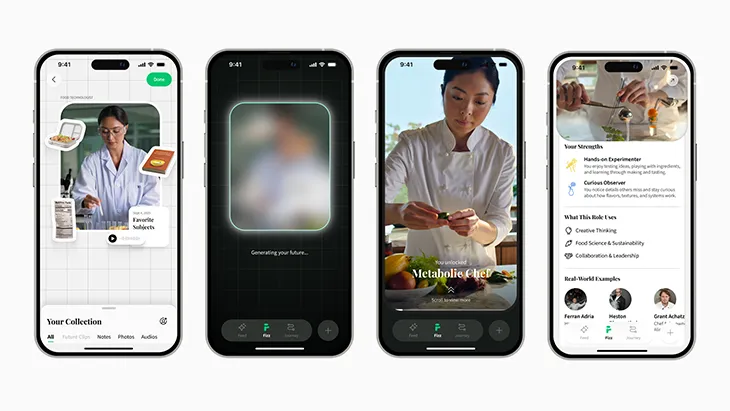
One of the clearest expressions of this approach is Future Fizz, an AI-powered mobile app design that helps young people navigate a rapidly changing world of work. The project begins with a contradiction in how young people are asked to plan their futures. They are often expected to choose from existing job titles while AI, automation, and emerging industries are reshaping what those titles mean. Wu approached this not as a problem of giving users more career information, but as a product experience challenge: how to design an AI-powered experience that helps young people explore uncertainty without forcing them into premature conclusions.
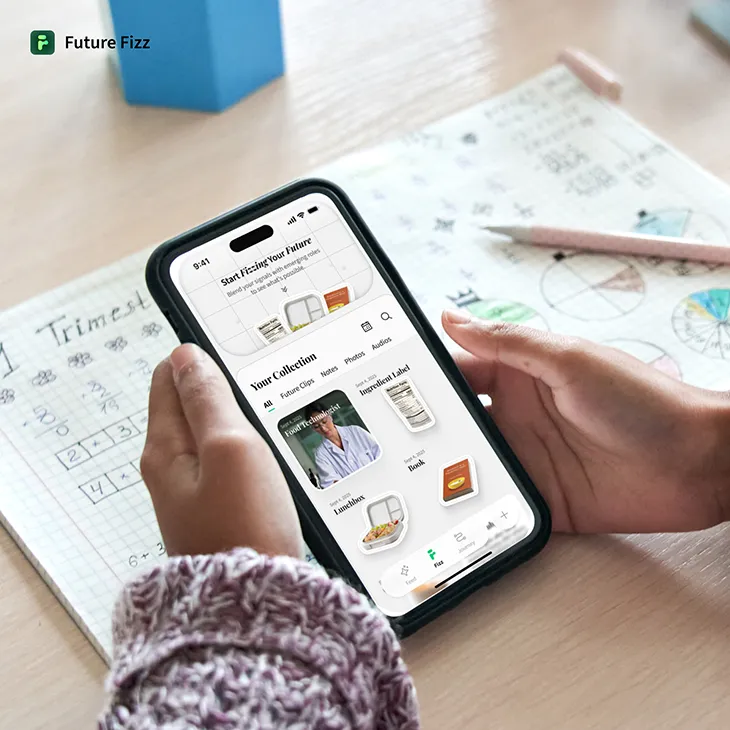
As the lead designer behind Future Fizz, Wu shaped the product vision, interaction model, and AI-driven exploration experience. The app shifts the starting point from “What job do you want?” to “What are you curious about?” It captures evolving personal signals, including interests, values, skills, behaviors, and reflections, then uses AI to remix them into future-facing role possibilities and guided learning paths. Instead of positioning AI as an authority that decides for the user, Future Fizz uses AI as a creative and interpretive tool, helping users recognize patterns, imagine directions, and build transferable skills over time.
Future Fizz won a Red Dot Award in 2026 in the Interaction, UI and User Experience category. Widely regarded as one of the most respected global design awards, Red Dot has recently recognized work in the same category from global technology leaders such as Google and IBM. The project also received the professional Winner honor in Apps and Platforms at the 2026 Core77 Design Awards, where each main category names a single Professional Winner. Together, these recognitions point to the strength of Future Fizz’s design approach: a new model for helping young people relate to the future of work through curiosity, adaptability, and agency.
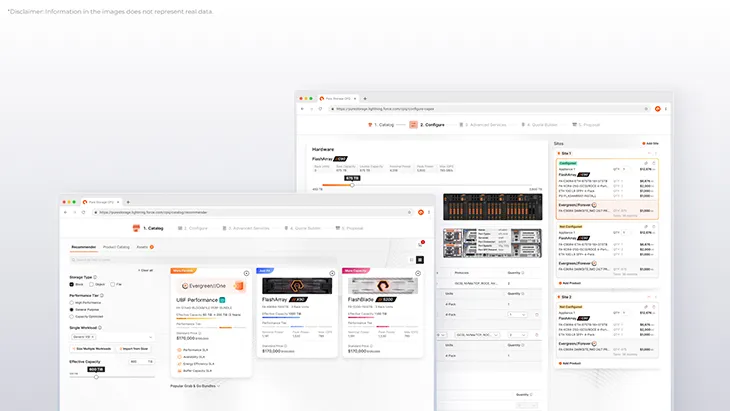
Wu brings the same ability to structure complexity into her professional work in enterprise technology. At Everpure, formerly Pure Storage, she leads design for enterprise digital transformation product experiences within her product scope, working across product configuration, pricing logic, customer requirements, profitability, system confidence, and technical feasibility. In this environment, design is not only about improving usability. It is about making dense business and technical information clear enough to support confident action.
Her work on Pure CPQ reflects this focus. Wu led design for the enterprise product experience, shaping how users move through configuration, pricing, customer requirements, and business logic. Deployed within enterprise product workflows, the product sits at the intersection of technical feasibility and commercial strategy, supporting business-critical configuration and pricing decisions in a large-scale enterprise technology context. Wu’s contribution helped organize these interdependent variables into a more navigable experience, supporting enterprise users as they evaluate technical feasibility, commercial trade-offs, and pricing decisions with greater confidence.
Pure CPQ was selected as a Nominee for the UX Design Awards in 2025 under Product, Enterprise Solutions. That year, the competition drew 430 participants representing 49 countries, and within the Product, Enterprise Solutions field, only 14 projects received recognition. The selected works included products from Amazon Web Services and Dell Technologies, placing Pure CPQ among a focused group of enterprise solutions recognized for their design quality. A related part of this enterprise product work also led to Wu being listed as an inventor on a published U.S. patent application related to intelligent capacity sizing and growth forecasting for storage systems. Her contribution focused on interaction and visualization frameworks for user-facing product experiences.
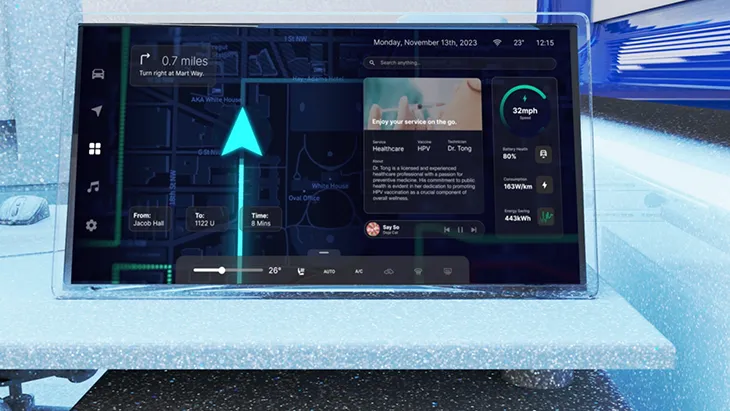
Wu’s broader practice also extends into future-facing service concepts such as ServGo, a project supported by the Jacobs Institute for Design Innovation and the BMW Group. Wu helped define the service experience, user journey, and incentive model for a concept that combines autonomous ride-hailing, on-the-go services, shared travel, and sustainability goals into a new commuting experience. Rather than treating transportation as a single trip, ServGo explores how complex services can be organized into a more intuitive experience. The project received Gold at the French Design Awards, with additional recognition from the NY Digital Awards and London Design Awards.
Across these projects, Wu’s work is less defined by a single medium than by a recurring design problem: how to make advanced technologies understandable without flattening their complexity. Future Fizz does this for young people facing an uncertain future of work. Pure CPQ does it for enterprise users navigating technical and commercial dependencies. ServGo applies the same approach to a service concept, showing how transportation, personal preferences, and sustainability goals can be structured into something people can understand and use.
As products become more automated, data-driven, and embedded in consequential parts of work and life, Wu’s practice points toward a more demanding role for product design. The task is not simply to make technology easier to use, but to make it clear enough to be trusted, questioned, and acted upon. Through this approach, Wu frames design as more than a finishing layer: it becomes a way of helping people and organizations stay oriented, make informed choices, and move with agency as technology changes around them.
To discover more of Yue “Yola” Wu’s work in product design, user experience and emerging services, explore her portfolio.
Words by DSCENE Editor Maya Lane.