


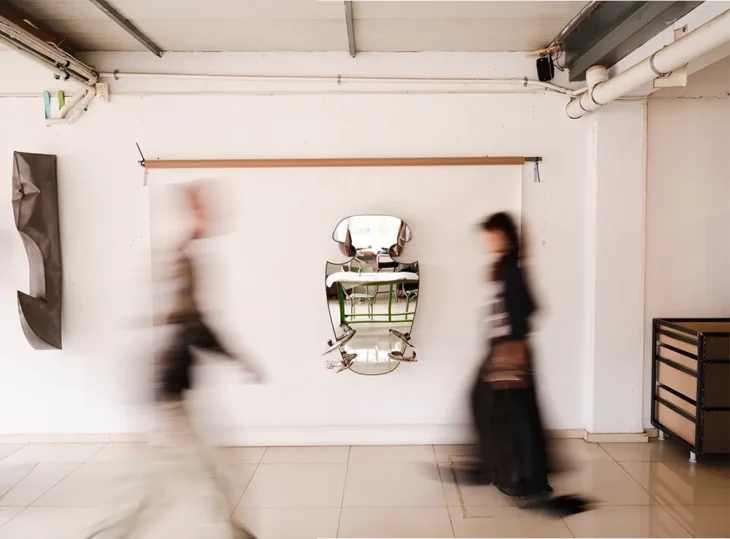
Athens-based studio Made by Astronauts operates at the intersection of material force and instinctive response. Founded in 2023 by Danae Dasyra and Joe Bradford, the practice brings together two distinct backgrounds into a shared direction rooted in making. Their work begins with process, where hydroforming, pressure and resistance shape the outcome, and design follows as a direct reaction instead of a fixed intention.
ORDER IN PRINT AND DIGITAL
Working primarily in-house, the studio treats fabrication as an active, evolving stage instead of a final step. Metal expands, folds and shifts under force, producing forms that resist predictability and carry traces of their own formation. The resulting objects sit between function and sculpture, defined by tension, surface and an ongoing negotiation with material limits.
Editor Jana Kostic speaks with Made by Astronauts about Hydromorph, their debut body of work, and the role of pressure across both process and thought.
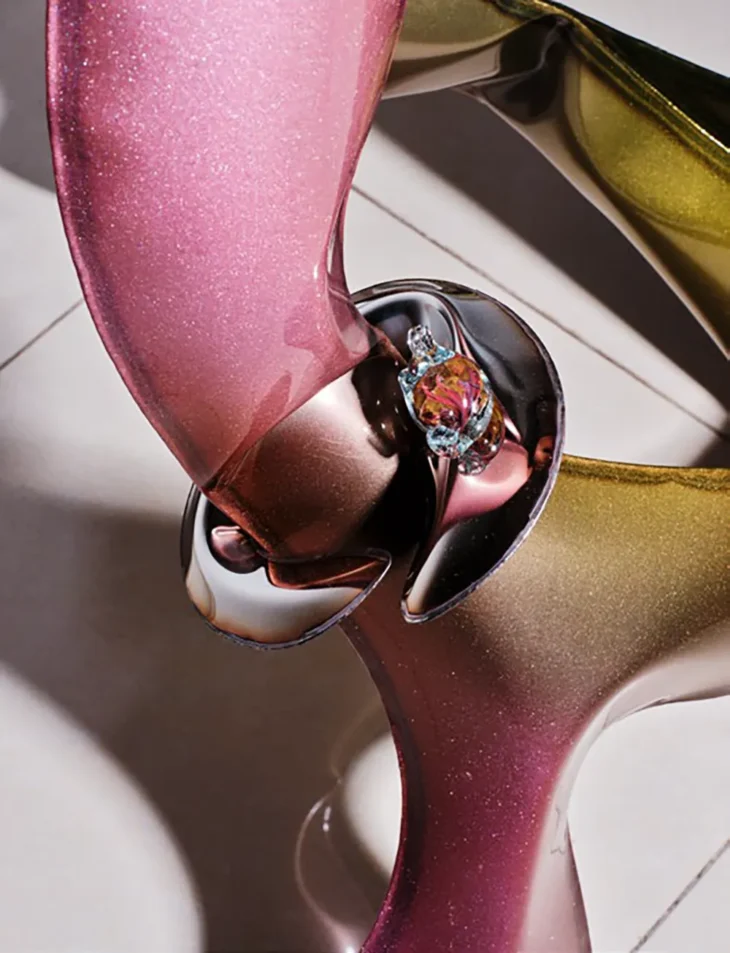
Your debut body of work, Hydromorph, centers on hydroforming and extreme force. At what point did pressure shift from being a technical condition to becoming your core design language? – I think this happened when Joe came across the hydroforming technique on YouTube and decided it was a great idea to try and replicate it within the restrictions of our workshop equipment. From that point onwards, pressurised water kind of became our ghost codesigner in the studio.
There is pressure to become more palatable; however, for now, that same pressure seems to provoke an anarchic reaction.
The theme of this issue is Design Under Pressure. How do you translate physical pressure into a broader reflection on creative or cultural pressure? – I would say that for us, practising design in the way we do is very much a form of escapism. The world we intentionally imagine, aim to create and share is one of optimism, one that accepts and normalises difference, while also challenging preconceptions and stagnant ideas of how things should be.
That approach leads us to a sense of conceptual freedom. Within our industry, this translates into what we choose to make, how we approach form, or even scale at times. We are aware that this positions us within a niche, and there is pressure to become more palatable; however, for now, that same pressure seems to provoke an anarchic reaction.
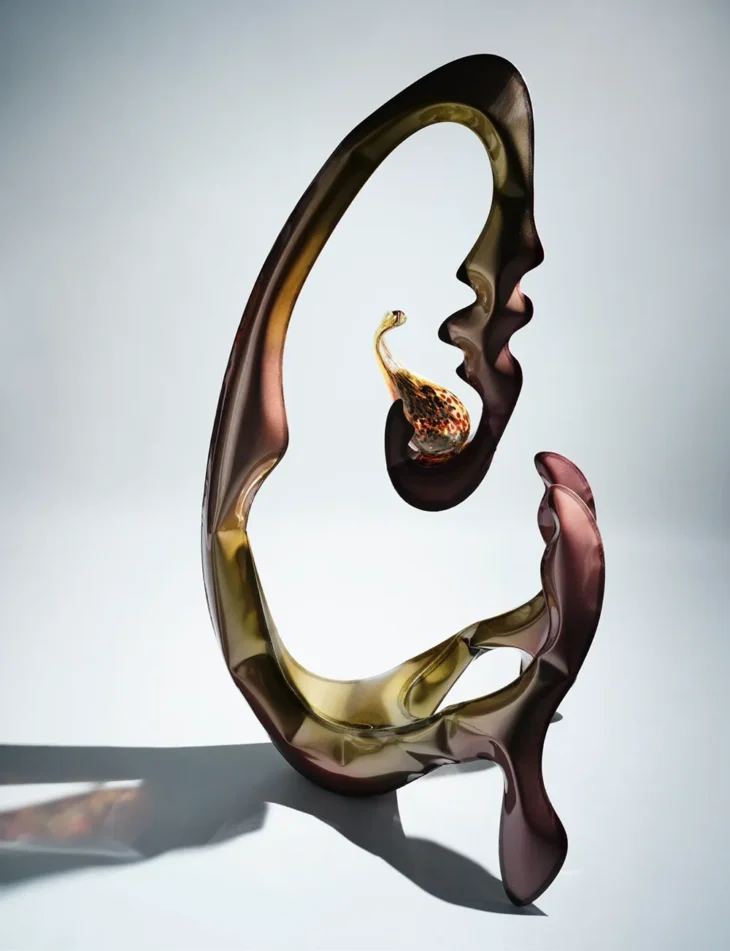
You describe design as a response to material and process. In Hydromorph, does the metal ultimately “win,” or do you? – The metal definitely wins, we would be delusional to think otherwise. But it’s more like a dance than a battle. (Danae) I like salsa, and you know, depending on how good you and your partner are, you can dance more fluently. If one of you slips, the other can cover, and it all looks good in the end.
So, to speak again about design and making, what we mean by design being the response is that our expectations never set impossible tasks for the material, our making know-how, or our workshop facilities. Instead, design becomes a tool to navigate problems intelligently while moving towards our creative vision.
View this post on Instagram
Hydro-bulging involves surrendering form to internal force. How much control do you actually retain during inflation? – Some is the answer. I don’t think we can say we have control, in fact, we enjoy the lack of it. We cannot accurately predict how vessels of different shapes will behave during inflation.
But over time, we have built a personalised library of shapes, starting from simple geometries that have now evolved into more complex forms directly connected to our studio’s visual language. We often use these as references and collage them into larger compositions. So, while we can’t fully control the outcome, we can now make quite informed guesses.
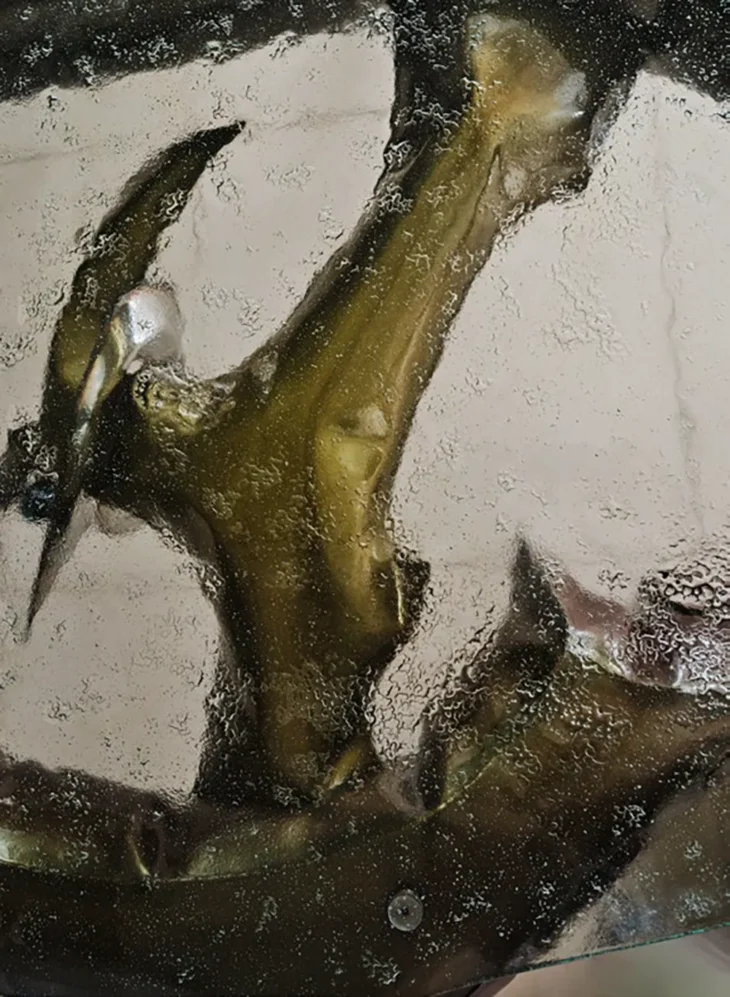
The folds and creases evoke fabric or plastic, yet the material is steel. Are you interested in destabilising how we read material identity? – We are interested in destabilising materiality, as well as people’s expectations of how domestic objects should look. We find it fascinating and exciting to exist within a world full of surprises, whether one expects to touch something warm that ends up being cold, or whether a chair looks like a gigantic claw yet is comfortable to sit on.
We enjoy finding beauty in the atypical, in a search for freedom, we suppose.
Your pieces resemble alien microorganisms or extraterrestrial forms. Does this aesthetic emerge naturally from the process, or is it a deliberate narrative direction? – Our work does have a consistent visual thread that emerges from the process of hydroforming. However, as it has evolved, we have also introduced a number of visual references from Art Nouveau, alongside decisions made to support the narratives we wish to tell through the work.
For example, in our latest body of works currently on show at Nina Johnson Gallery, we presented a floor lamp called Eros, Greek for Cupid. The overall form of the piece echoes a bow and arrow, with an illuminated hand-blown glass element symbolising love that is about to strike.
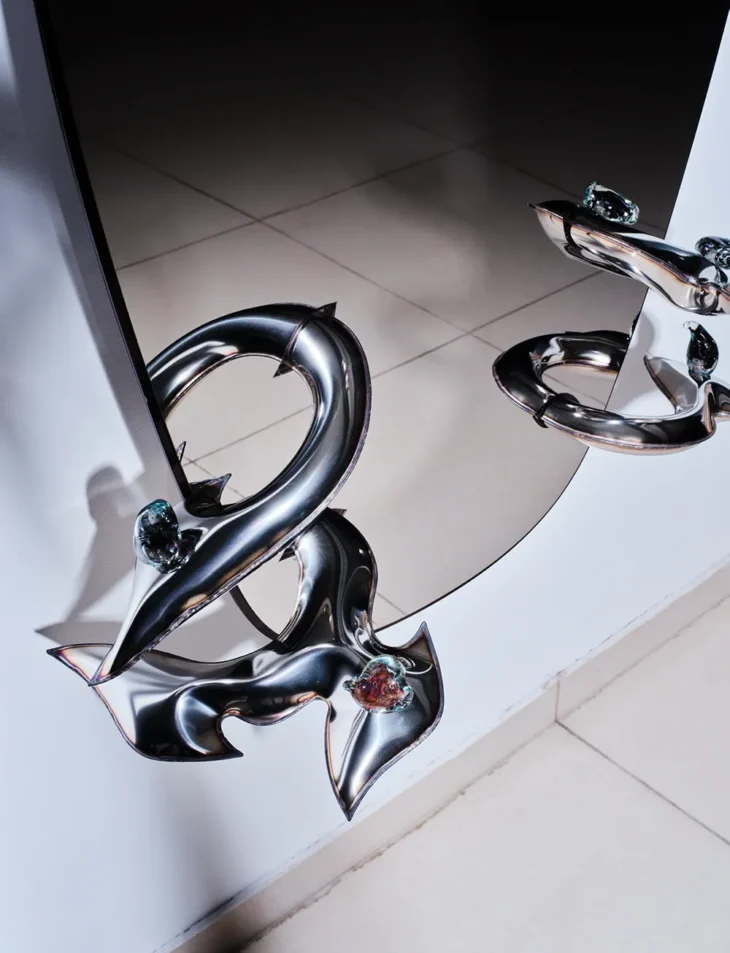
Intersecting parts lock together through swelling during inflation. How important is unpredictability to your practice? – Enabled by our proximity to the work, we are able to familiarise ourselves with all the stages the metal goes through, from a flat sheet to a 3D hydroformed piece. Because we were fascinated by the process and committed to expressing it through our design, we created a collection of works assembled from parts that undergo the same process at different moments in time.
We feel it is important to tell the story of making… revealing the raw reality of the material, scratches, surface imperfections, and welds.
You keep most fabrication in-house. What does hands-on production allow you that outsourcing would compromise? – Made by Astronauts is a collective built around the act of making. When outsourcing, especially in industries where the designer is kept outside the workshop and involved only up to the point of producing technical drawings, there is often a fixed, immovable image of the final object from the outset.
The way we work is much more fluid. We have a direction, but we remain open to shifting and redirecting if it feels right. This keeps us engaged and curious, leading to moments of learning and surprise throughout the process.
We have also discovered many “happy accidents,” mistakes we would never have been able to select or develop if we hadn’t been present at every step.
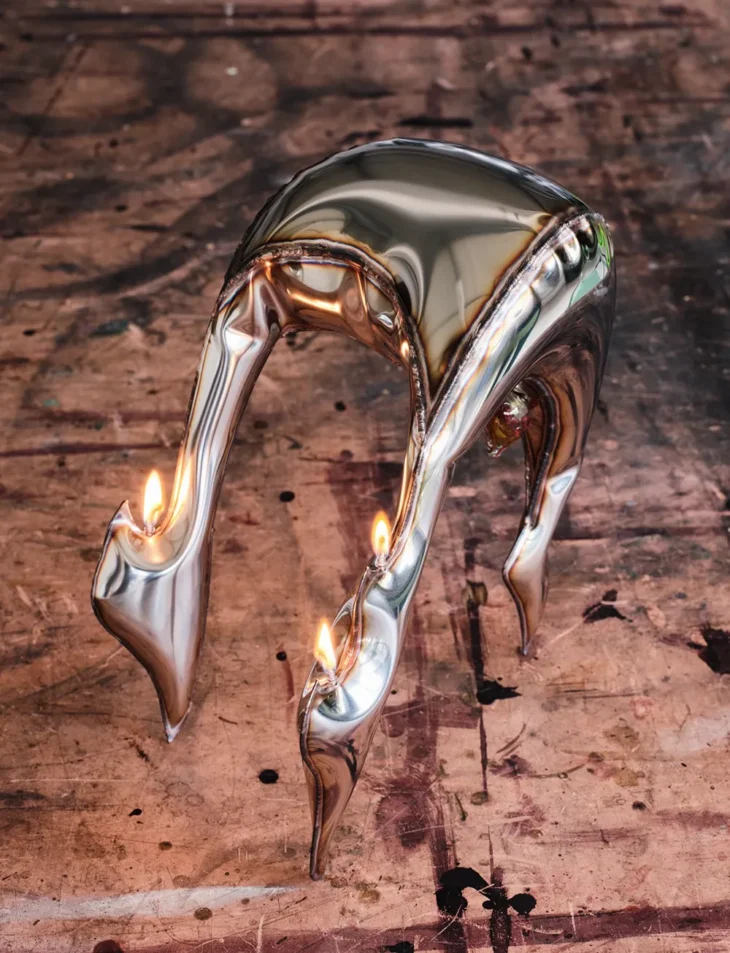
The translucent powder coat preserves heat blemishes from welding. Why was it important to reveal those marks instead of concealing them? – We feel it is important to tell the story of making, as this was the first narrative of our work. This includes revealing the raw reality of the material, scratches, surface imperfections and welds, encapsulated within a “vitrine-like” finish that facilitates its repositioning within the context of collectible design.
As our work progresses, we remain open to experimenting with different finishes, exploring interesting ways of working with accessible products from the metal industry.
Made by ASTRONAUTS suggests exploration and risk. Do you see your studio as operating more like a laboratory, a workshop, or a testing ground for material limits? – Joe: We are two very different people, so we have slightly different views on this.
Danae: I see the studio as a sculptural practice that creates magical, surrealist worlds for people to experience, applied within Joe’s fabrication workshop, which is very much a testing ground for materials, processes and his own abilities. Our roles in the studio are quite distinct, and that difference brings a unique richness to the work. But certainly not a laboratory, we are a metal shop.