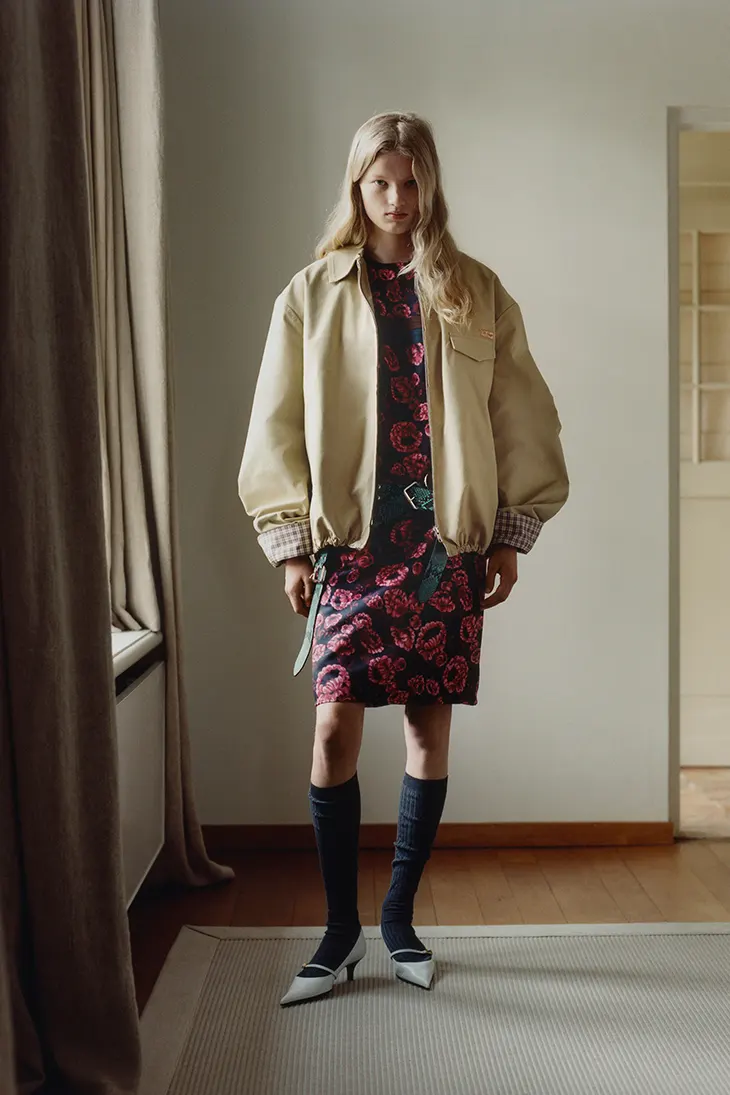



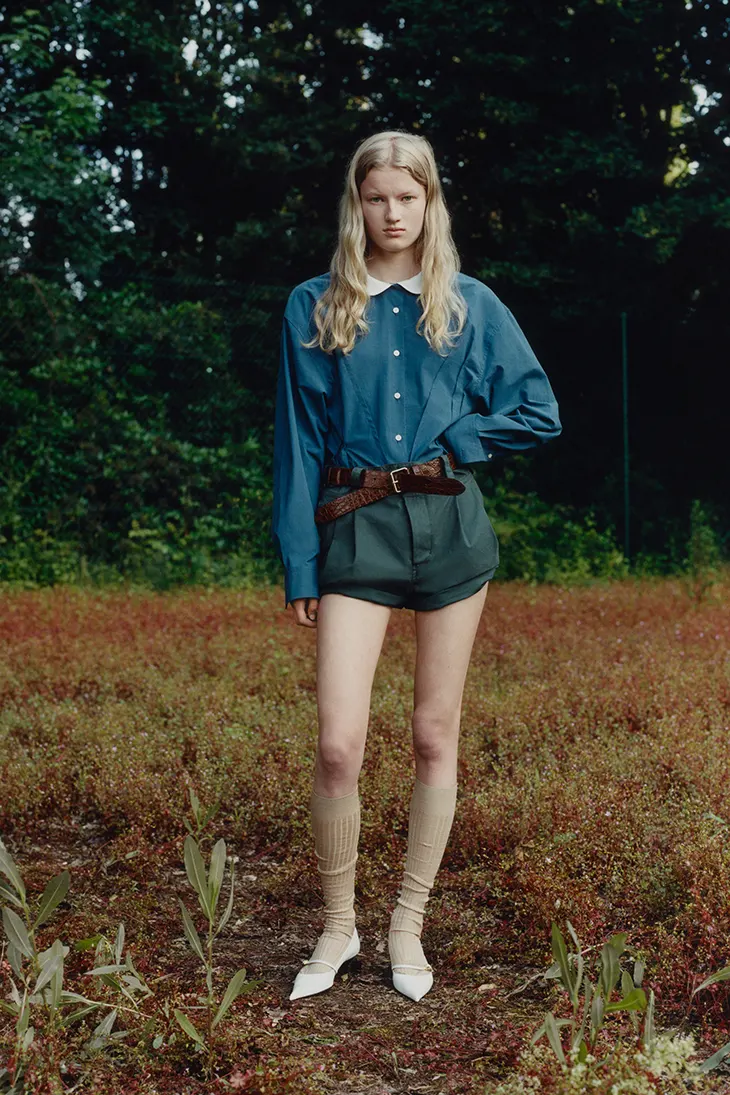
Meryll Rogge Spring Summer 2027 starts with a direct question: what makes a collection? The designer answers by looking closely at the garments her customers have chosen, worn and returned to since the label began. She shifts attention toward the wearer and treats personal selection as part of the design process. The collection grows from trust, memory and daily use, placing the customer inside the creative conversation.
SPRING SUMMER 2027
Rogge continues to develop her eponymous line while leading Marni as creative director, following her appointment in July 2025. Born in Ghent, Belgium, she studied Fashion Design at the Royal Academy of Antwerp before moving to New York, where she joined Marc Jacobs’ design team. After nearly seven years, she returned to Antwerp as Head of Women’s Design at Dries Van Noten, where she also developed and conceptualized the beauty line until 2025.
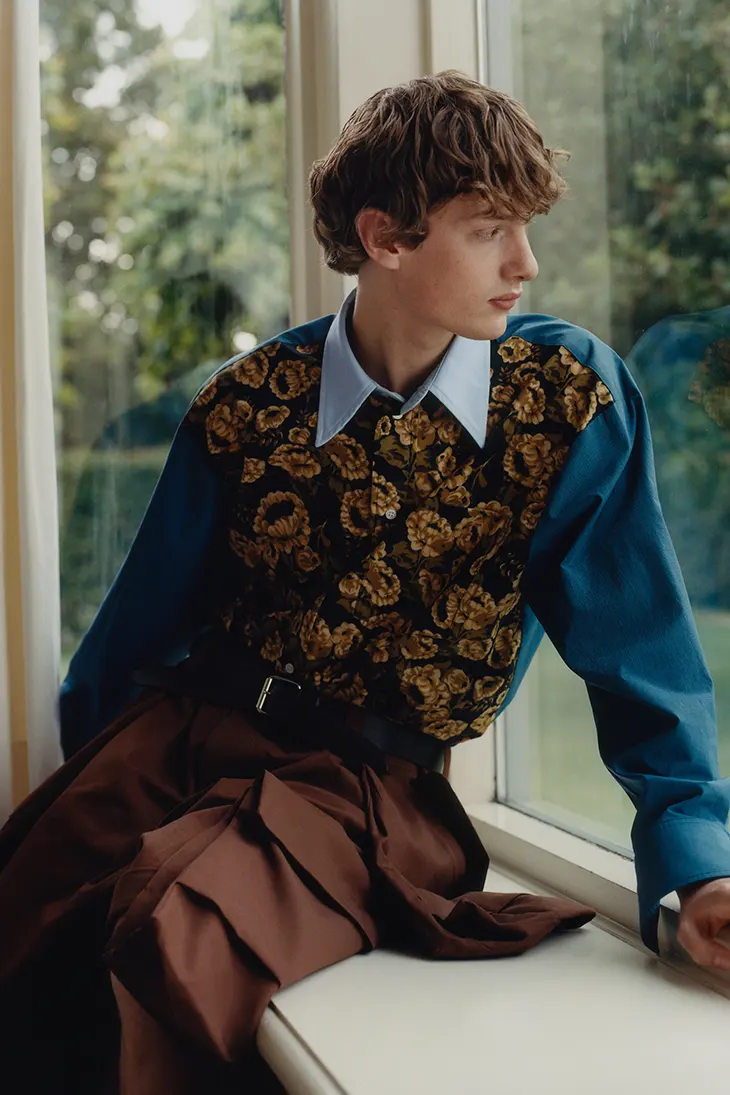
For Spring Summer 2027, Rogge builds the collection around the role of the end consumer, a choice that fits the launch of her online shop. Wardrobe staples return through favorite combinations of pattern, texture and silhouette. A monochromatic floral print appears in several color variations across classic shirts and pencil skirts. A line dresses, short dresses and tops use lace and appliquéd ribbons to create layered surfaces with a familiar touch.
Evening pieces bring another side of the label into focus. Rogge cuts draped and bi color looks in moiré silks, using their distinctive patterns to recall the couture like mood that has shaped many of the brand’s silhouettes. Sporty jackets and knit pieces appear with bloomer shorts in striped poplin, giving the collection a relaxed attitude. Oversized chino trousers, worn with double pronged leather belts.
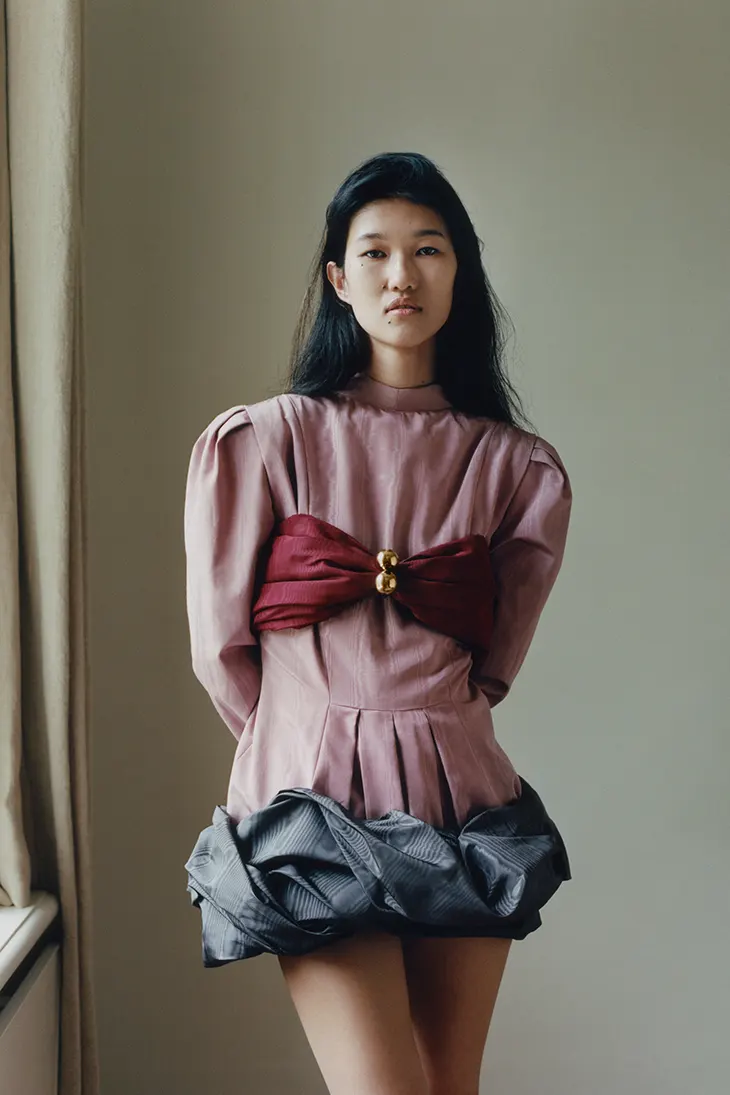
Bomber jackets and men’s tailored suits carry a layered feeling, as though past looks and future possibilities meet inside the same wardrobe. Rogge uses familiar pieces to create new combinations, allowing clothes and accessories to hold personal stories while staying open to different interpretations.
Rogge stages the collection at the official residence of the Belgian Ambassador in Paris through a site specific installation inspired by Claes Oldenburg. The installation references Mouse Museum from 1979, where everyday commodities appear as objects for display and reflection. Clothes, books, common objects and photographs of the collection by Julie Greve appear folded, piled and assembled, creating unexpected views of the garments.
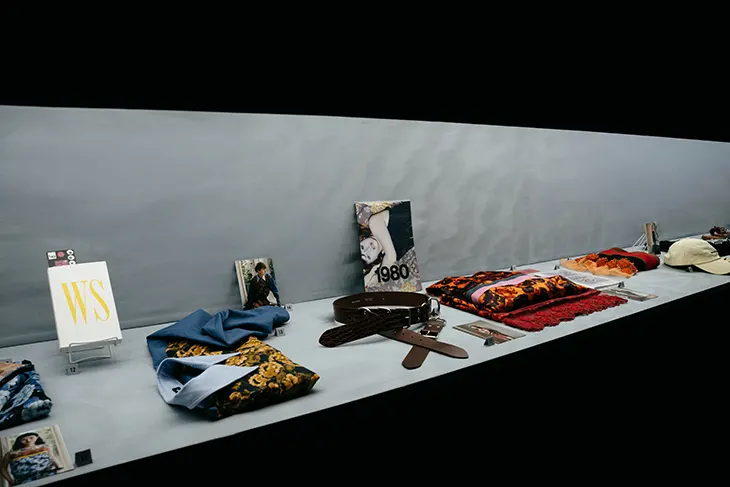
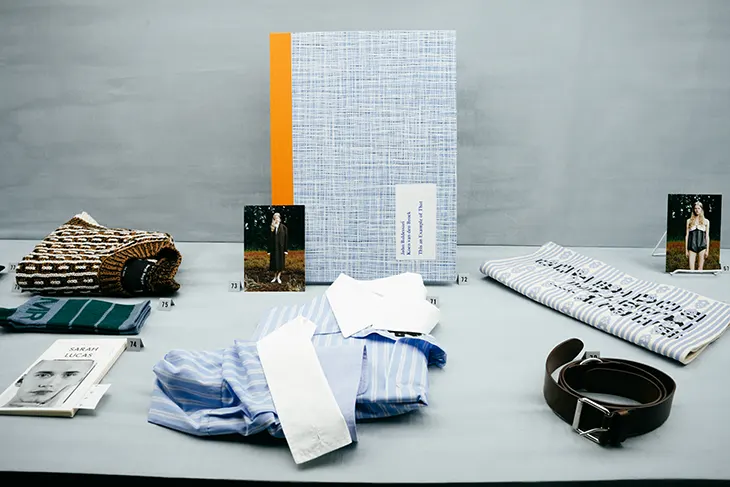
The curatorial idea continues through a collaboration with Brussels based Saint Martin Bookshop. Rogge shares her selection of artist books, photobooks and fashion publications online, placing them beside the clothes they inform.