


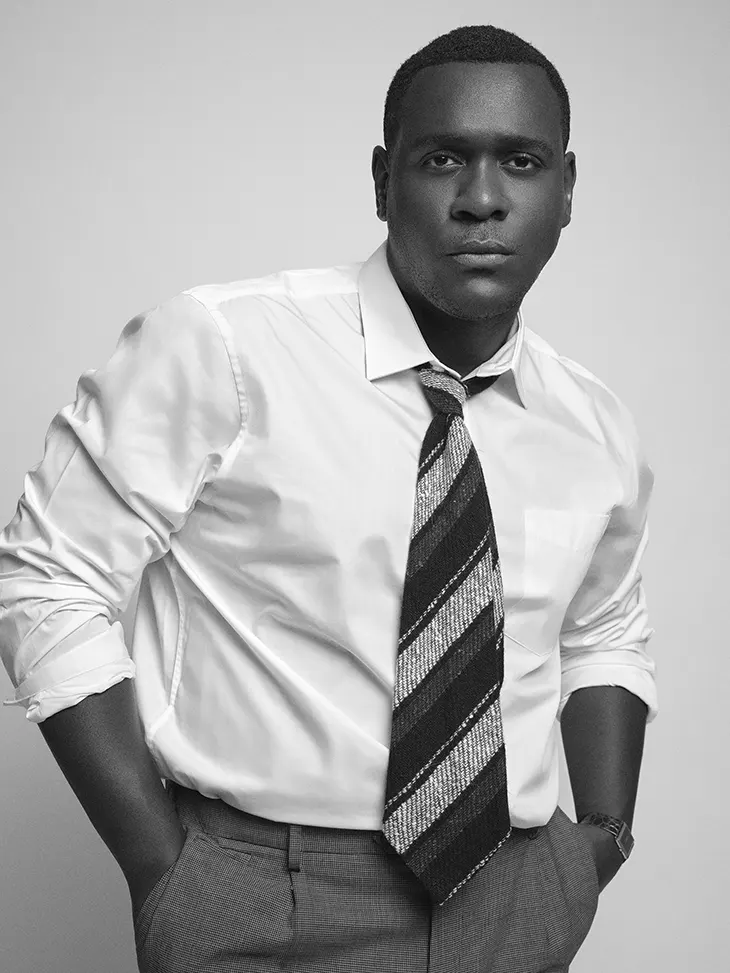
He won a BAFTA for a game about his father’s death. He’s worked with Ridley Scott, Sam Mendes, and Joe Wright. And this summer, he’s playing a bastard prince in one of television’s most ambitious series. But Abubakar Salim doesn’t see these as separate careers, he sees them as chapters in one continuous act of storytelling.
When we sit down with him, the British actor and game developer is between worlds. House of the Dragon Season 3 arrives tonight, and Alyn of Hull, his character, the pragmatic son of the Sea Snake, is positioned to reshape the entire Targaryen civil war. Meanwhile, his studio, Surgent Studios, continues to expand beyond Tales of Kenzera: Zau, the deeply personal debut that moved players and voters alike. It’s the work of someone who refuses to be contained by a single medium, or a single definition of what storytelling can be.
Salim grew up with Kingdom Hearts and a father into tech. He fell in love with acting through games, through the idea of stepping into different lives and making choices that mattered. That hunger has never left him. Whether he’s drowning himself in Fire and Blood to build Alyn’s inner life, or wrestling with grief through game design, or collaborating with some of the most ambitious directors in film, he’s chasing the same thread: how do you move people across mediums, across worlds, across the gaps between scenes?
We talked with Abubakar Salim about character, ambition, collaboration, and why no single form of storytelling has ever been enough.
Interview with Abubakar Salim was conducted by DSCENE Deputy Editor Ana Markovic.
Your work now stretches from acting to games, directing, writing, producing, and studio leadership. When did you first realize performance alone would never contain everything you wanted to build? – It’s all about storytelling for me. I think the realisation started when I was younger. Acting was fun, but I wanted to do more, be more. It comes from the truth that telling stories isn’t constrained by one medium. So as long as I fuel that desire, I can chase where it takes me, writing, directing, games, producing. It’s tiring, but it keeps things fresh, hah!
I didn’t watch much TV or films growing up, it didn’t really resonate with me back then, and my father was into tech, so I was lucky enough to have a console. The game was Kingdom Hearts. It was the fact that I was actively in this character’s shoes, making choices and going through their story, where the bug of “I want to be like that” kicked in. So the idea of stepping into different lives, telling stories and moving people started there!
Did gaming and acting enter your life separately at first, or did they always feel connected? – It was always connected. I first fell in love with acting through games. I didn’t watch much TV or films growing up, it didn’t really resonate with me back then, and my father was into tech, so I was lucky enough to have a console. The game was Kingdom Hearts. It was the fact that I was actively in this character’s shoes, making choices and going through their story, where the bug of “I want to be like that” kicked in. So the idea of stepping into different lives, telling stories and moving people started there!
House of the Dragon shares a lot with video games in its DNA, from the world-building to the visuals. Does that environment ever spark ideas for your own gaming work? – Too many! The world GRRM has conjured is so rich with possibility that I’m always inspired to tell his stories through the medium of games. What a wonderful opportunity that would be!
Did joining such a massive series make you more confident, more self-aware, or both? – It definitely gave me more confidence that I’m doing the right thing. Acting is tough, you’re faced with rejection, and then when you get the gig, you’re faced with scrutiny. The biggest challenge is yourself, and I’m always wrestling with the thought of “Am I doing enough?” So it’s this weird double-edged sword of making me feel more confident, but also more self-aware.
Alyn of Hull belongs to a high-fantasy series, yet he feels grounded, practical, and wary of the magic around him. Since much of his life exists between scenes, how did you build his inner life before the audience meets him? – Lots of reading. Lots of writing. Lots of listening to music. The biggest source material was obviously Fire and Blood itself, but what I like doing is drowning myself in knowledge, filling in gaps, how he laughs, what food he likes, the mundane stuff that won’t be answered in the book. I then build him a playlist, a soundtrack, and when it comes to filming, I throw it all away and trust that it’s innately in me.
Bethany has to be one of the most wonderful and intriguing people I’ve met. I’ve been lucky to get to know her more through this journey and, honestly, I could talk with her for days
Bethany Antonia is one of the cover stars of our latest issue, and book readers already have a lot of anticipation around how Baela and Alyn’s paths may cross. Within what you can share, did you and Bethany work together on Season 3, and how would you describe that experience? – Bethany has to be one of the most wonderful and intriguing people I’ve met. I’ve been lucky to get to know her more through this journey and, honestly, I could talk with her for days. She’s a force of nature, and every time we talk, I feel like I’m learning so much more about her. She’s class.
Fans still consider Bayek of Siwa one of the best protagonists in Assassin’s Creed. How does it feel to know that performance still means so much to players, and is there a line from Origins they still ask you to repeat? – “Will Siwa ever know peace?” is the line I’m always asked about. Honestly, it’s so wonderful to see and feel the love, because the franchise was going through such a make-or-break time before the game came out. I feel like Origins could have either killed the franchise or given it more juice, and I’m happy it was the latter!
What has leading Surgent Studios taught you about creative responsibility that acting alone never could? – It’s a team game. Everything is a team game. Listen, trust and respect others, as they hold knowledge you don’t have. That’s the biggest lesson I’ve learnt.
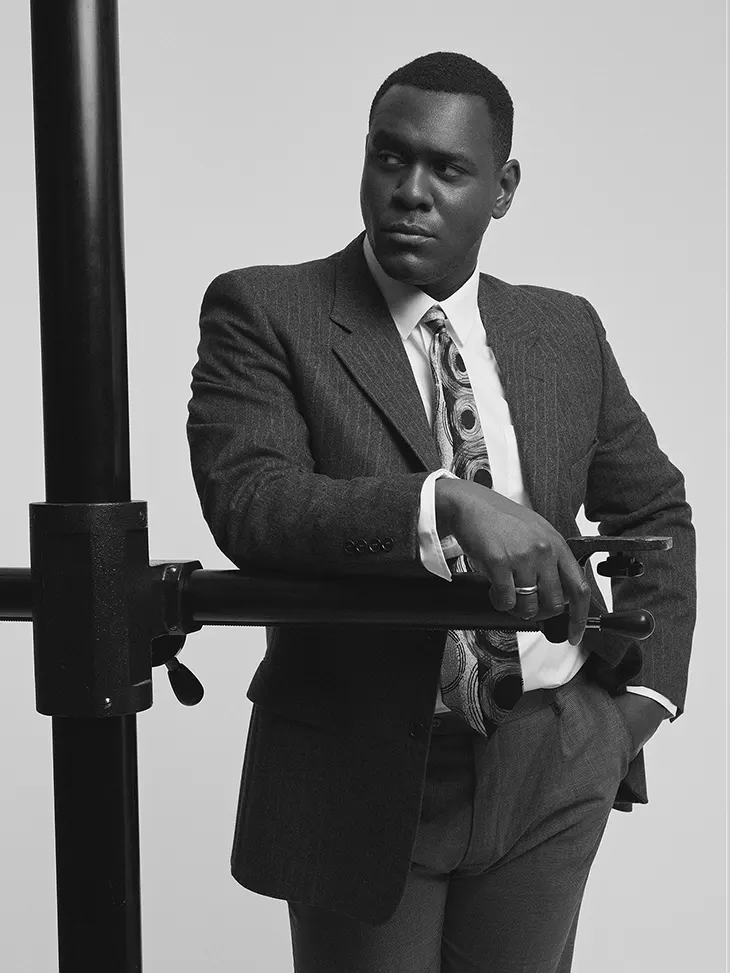
Tales of Kenzera: ZAU came from a deeply personal place, shaped by grief, your relationship with your father, Bantu cultures, and personal memory. How did you protect that emotional and cultural core while turning it into a game designed for players you would never meet? – The trick was to be as vulnerable and as raw as I could be. If I had approached making this game with a sense of defensiveness, or from a place that wasn’t genuine, I feel like players would have sniffed it out from a mile away and written it off. Ultimately, I knew that once this game was out there, it would be beyond my control. What is in my control, though, is how I feel about what I’ve made, and I knew that the only way of giving it full justice was to be as raw and open as possible.
I like the idea of forming new, weird and wacky worlds. Working on Raised by Wolves showed me that it’s okay to be bold in your storytelling ambitions. So I want to do more of that.
Surgent Studios has developed Tales of Kenzera: ZAU, Dead Take, and FixForce. How do these projects differ from one another, and what links them creatively? – I mean, they’re all incredibly different. One is about grief, another about the horrors of Hollywood, and then you have a game about silly robots fixing things! It’s a reflection of the fun and love we have for making games. If anything links them, I’d say it’s our passion for creating experiences that are fun and get you thinking.
What kind of stories did you miss seeing when you were younger, and how much does that absence still drive you now? – I don’t know if I missed seeing any kind of stories. The more I think about that question, the more I’m like, “Well, if I missed it, I’ll just tell it myself!” Stories are so personal, and I feel like it’s very human to want more. Greedy by nature, especially when it comes to storytelling. So with that, I’d say the hunger is ALWAYS there, and I’m always driven to keep feeding myself.
When you look at everything ahead, do you feel more drawn to building new worlds from the ground up or entering existing ones and changing them from within? – Oh, definitely both. I like the idea of forming new, weird and wacky worlds. Working on Raised by Wolves showed me that it’s okay to be bold in your storytelling ambitions. So I want to do more of that. At the same time, I know what a wonderful feeling it is to help bring other people’s worlds to life. So if there’s any way of doing that, be it through acting, writing, producing, directing, or even making it into a game, I’m ready for it.
House of the Dragon Season 3 Episode 2 airs tonight. Follow Abubakar Salim on Instagram @abubakarsalim