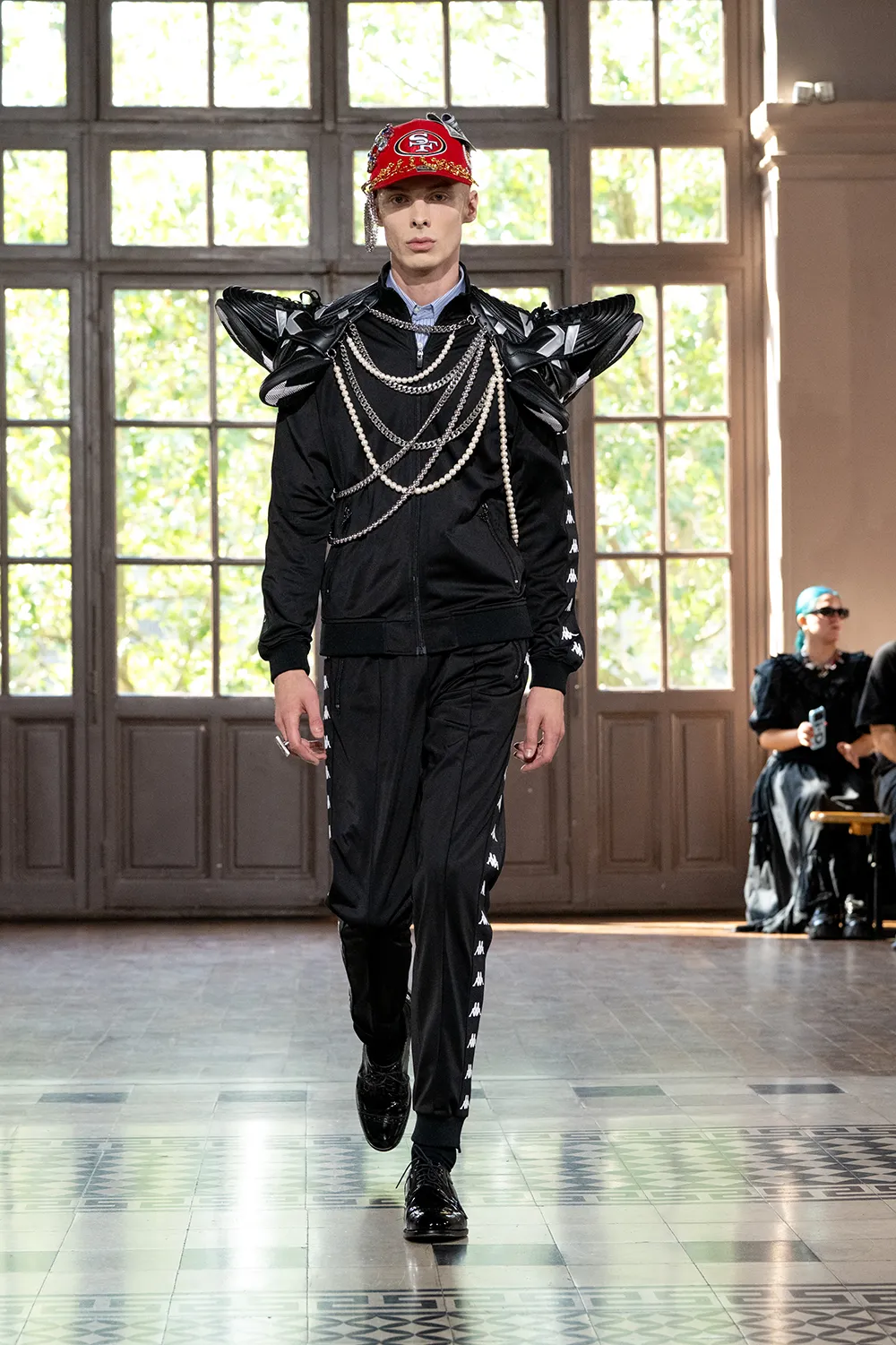



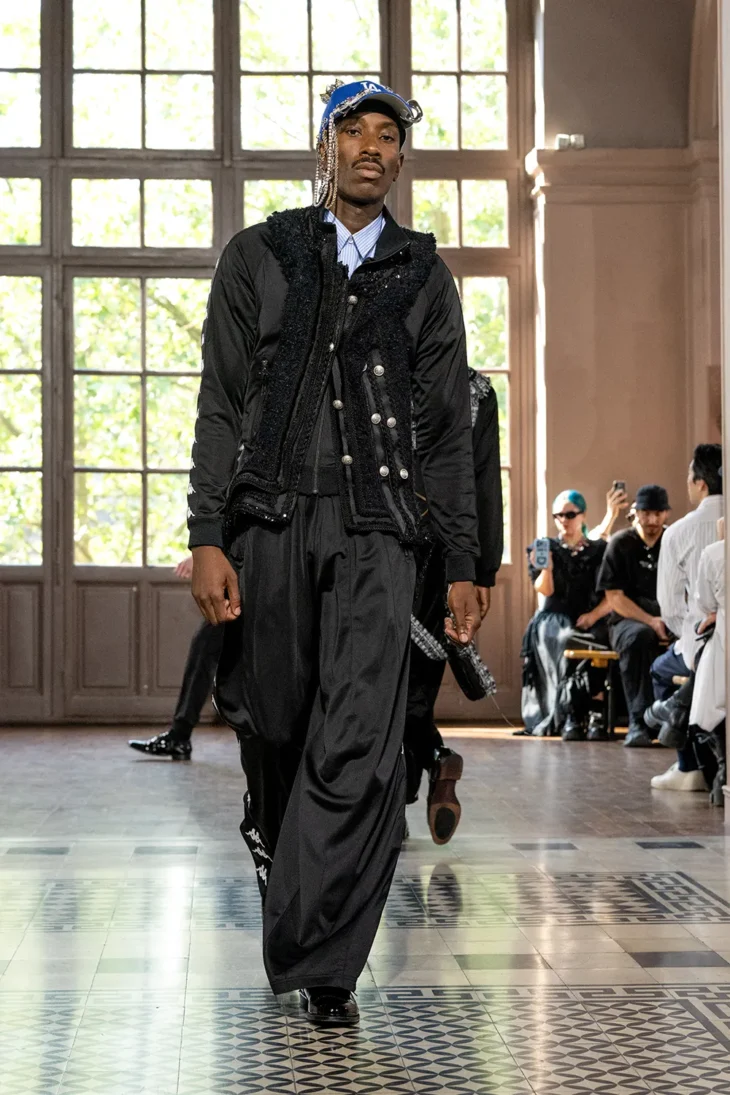
Junya Watanabe MAN Spring Summer 2027 arrived in Paris under the title “BLING BLING BLING,” a phrase that could have suggested excess, shine or spectacle. Watanabe approached it with his usual precision instead. The collection did not chase surface glamour in the obvious sense. It treated value as something built through construction, exchange and recognizable codes pulled apart and put back together.
SPRING SUMMER 2027
The show centered on collaboration at an unusually large scale. Sixteen partners shaped the collection across workwear, tailoring, footwear, streetwear and utility. Watanabe used that broad network as material, not decoration. Logos, uniforms, shirts, denim, shoes and industrial references entered his system, where he cut, spliced and reorganized them into a controlled study of contemporary menswear.
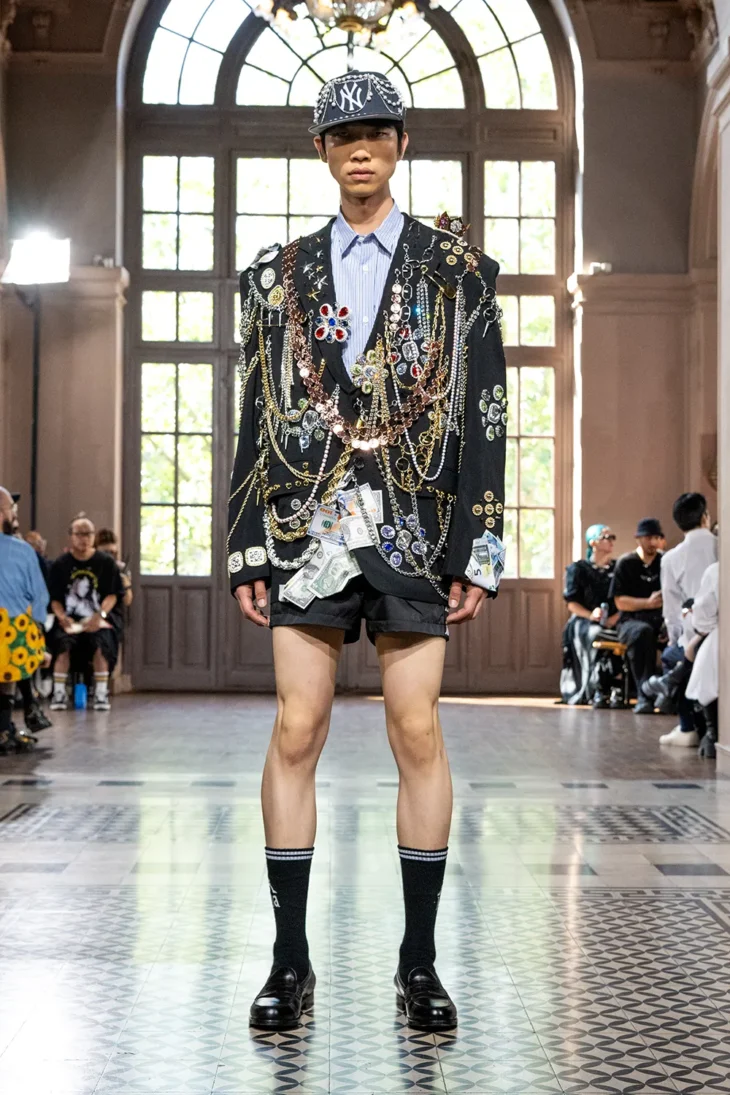
This method has long defined Watanabe’s work. He takes garments with clear cultural identities and changes their function through structure. In Spring Summer 2027, that process moved through several familiar menswear categories. Rugged workwear appeared through Levi’s and Carhartt, grounding the collection in denim, labor and durability. Those references gave the clothes a direct physical force, while patchwork and layered construction pulled them away from their original purpose.
Streetwear brought another register. Needles, Union LA and HIDDEN introduced a sharper subcultural rhythm, placing the collection closer to the systems through which men actually dress now. Watanabe did not simply borrow that language. He broke it open, then placed it beside tailoring and shirting with deliberate friction. The result felt built rather than styled, as if each look carried several histories stitched into one form.
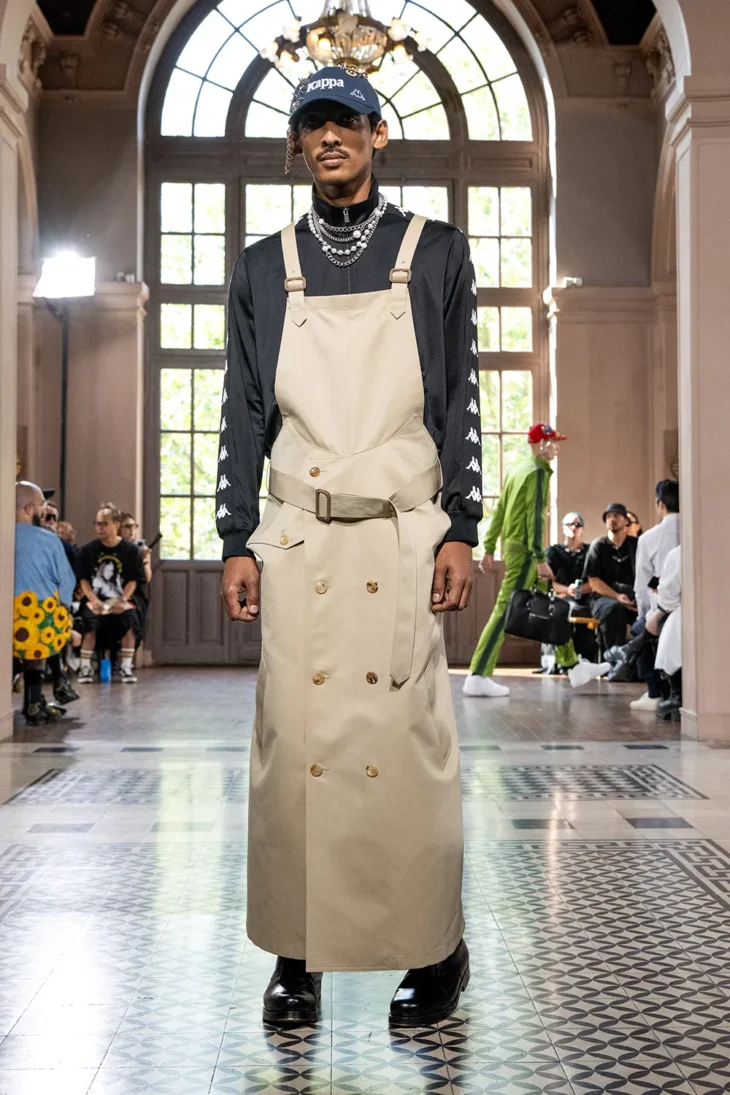
DHL offered one of the clearest disruptions. By bringing a global logistics company into the collection, Watanabe shifted attention toward movement, delivery and corporate visibility. The reference made sense within a show built on circulation: of brands, signs, functions and garments. Headwear from 47 and the hardware driven language of INNERRAUM extended that idea, adding utility and protection to the collection’s visual structure.
Tailoring softened and sharpened the proposal at the same time. Italian shirtmakers Luigi Borrelli, Guy Rover and Maria Santangelo brought a more refined layer to the collection. Their presence gave Watanabe a formal counterpoint to workwear and streetwear. Shirts appeared less like classic wardrobe items and more like components inside a larger machine. They added discipline without making the collection conventional.
Footwear completed the system. New Balance brought athletic familiarity, Flake added skate culture, while Heinrich Dinkelacker and Tricker’s introduced traditional shoemaking weight. These choices reflected the collection’s wider logic. Watanabe placed mass culture, craft, function and status on the same runway, then let their differences drive the clothes forward.
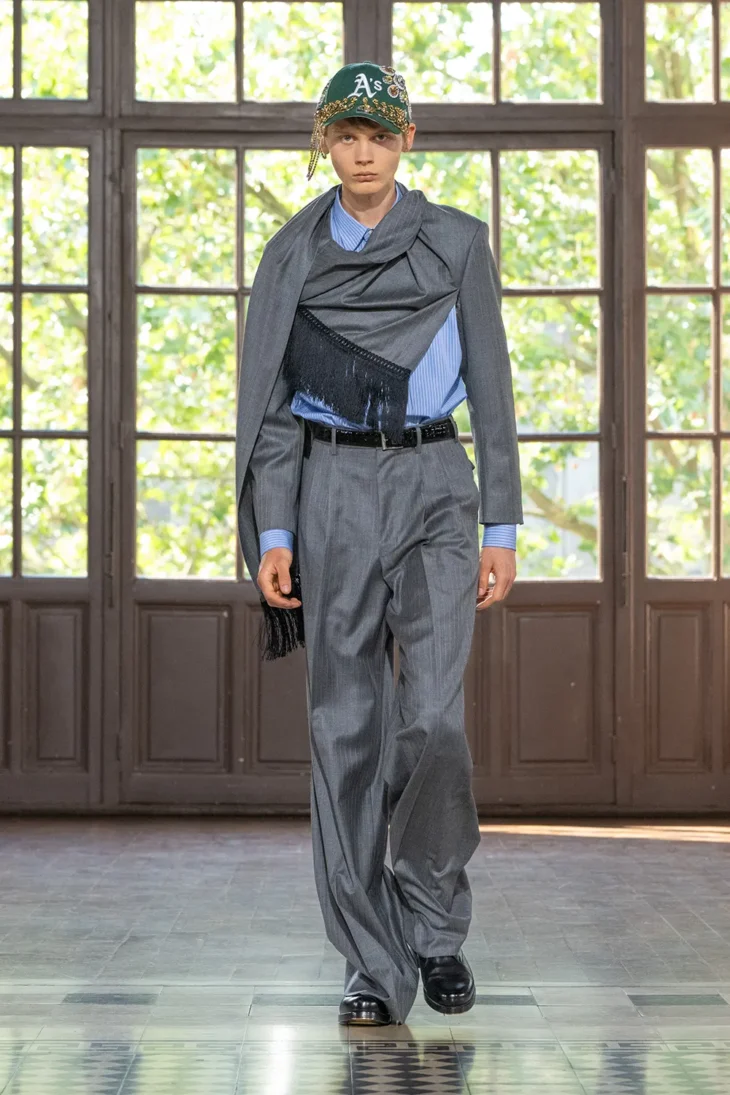
“BLING BLING BLING” resists a narrow definition of luxury. Watanabe proposed luxury as reconstruction, as access to many visual languages at once, as the ability to make a DHL reference sit beside Italian shirtmaking and heritage footwear without flattening either side. The collection showed a designer still deeply interested in systems: how men dress, how brands communicate, how utility becomes image and how collaboration can produce more than a logo swap.
Spring Summer 2027 did not need loud ornament to justify its title. Its shine came from the density of the work. Junya Watanabe turned partnership into structure and built a menswear collection that treated every brand code as something to question, cut and reassemble.