



There’s a particular challenge at the heart of modern tech creative: how do you make software feel? How do you take a product built on abstract infrastructure, feature flags, AI pipelines, developer workflows, and give it a visual pulse that resonates before anyone has read a single word? For Jingxuan Wang, Senior Motion Designer and Editor at LaunchDarkly, this is not a theoretical question. It’s Tuesday.
DESIGN
“Motion design in tech has to do two things at once,” she says. “It has to be honest to what the product actually does, developers will feel it immediately if you’re faking the complexity. But it also can’t be boring. The assumption that technical audiences want safe, serious, predictably dark content is wrong. These are some of the most curious, trend-aware people in the world. They notice when something breaks from what they expect, and they remember it.”
That dual conviction, technical credibility paired with genuine creative ambition, has defined Wang’s trajectory across some of the most rigorous creative environments in the industry. From a contract role inside Netflix’s product design organization, to shaping the motion language of global events and launches at one of the world’s leading developer platforms, to producing independent work recognized by two of design’s most prestigious international awards, her career traces a consistent line: motion that earns the audience’s attention instead of assuming it.
From Netflix to SaaS: A Training Ground Unlike Any Other
Few motion designers arrive at a senior creative role having already worked inside the product organization of a global streaming platform. Wang did, and she credits that experience with fundamentally reshaping how she thinks about the discipline.
As a contract motion designer embedded within Netflix’s Product Design team, Wang owned the full creative process, from interpreting vague conceptual briefs through storyboarding, motion animation, and final delivery, across a range of materials: sizzle reels, motion assets, product explainers, onboarding sequences, and pitch films developed for high-stakes technology partnership presentations. Her work wasn’t handed a finished visual and told to animate it; she was the one building the visual logic from the ground up. The resulting materials were used in internal stakeholder reviews, partner-facing meetings, and international conference presentations including major EMEA events.
“Working in a product environment teaches you economy,” she reflects. “Every second of motion has to carry weight. You can’t afford anything that’s just pretty.”
That discipline, full creative ownership from brief to delivery, exercised at the pace and standards of a product-driven organization, became her defining edge when she moved into the world of B2B SaaS.
Making Developer Tools Feel Alive at Scale
At LaunchDarkly, ranked #1 on G2 for feature management and trusted by enterprises including Dior, Paramount, and Savage X Fenty across its 5,000+ customer base, Wang serves as the senior motion designer on a two-person motion team, responsible for the company’s motion execution across its highest-visibility campaigns: AWS re:Invent activations, product launch films, company-wide kickoff introductions, social campaigns, developer interview series, and advertising. The motion templates she has developed serve as the foundation for the team’s output across all channels.
The scale of these productions is significant. AWS re:Invent, the global cloud computing conference where LaunchDarkly maintains a major presence, draws more than 60,000 in-person attendees annually across multiple Las Vegas venues, making it one of the largest tech gatherings in the world. Wang served as the lead motion animator for LaunchDarkly’s flagship booth presentation videos for both the 2024 and 2025 activations, creating the primary animated assets representing the company on the conference floor.
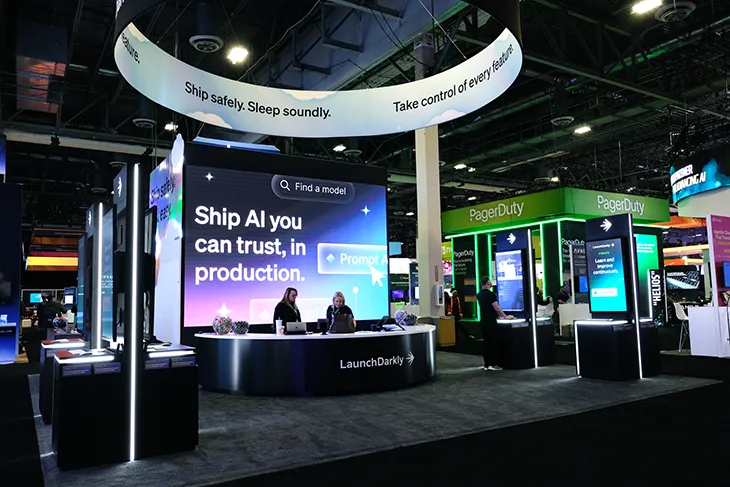
The challenge she navigates daily is one that trips up most designers in the space: how do you make developer infrastructure genuinely compelling without falling back on the visual clichés that have defined tech marketing for decades? Wang’s answer has been to reject the premise that “technical” and “visually interesting” are in tension — finding motion language that carries both precision and personality, and replacing the industry default of dark-themed, by-the-numbers content with work that actually stops the scroll.
Working closely with developers, interviewing them on camera, building the motion that represents their work to the world, Wang has arrived at an observation that runs against the industry default. “What I’ve found is that developers are actually the most receptive audience for work that breaks from the expected,” she says. “They’re early adopters by nature. They notice when something has a point of view, has color, has energy. The assumption that tech creative needs to default to dark themes and monospace fonts, that’s a habit, not a requirement. You can honor the reality of what a product does while still making something that genuinely surprises people.”
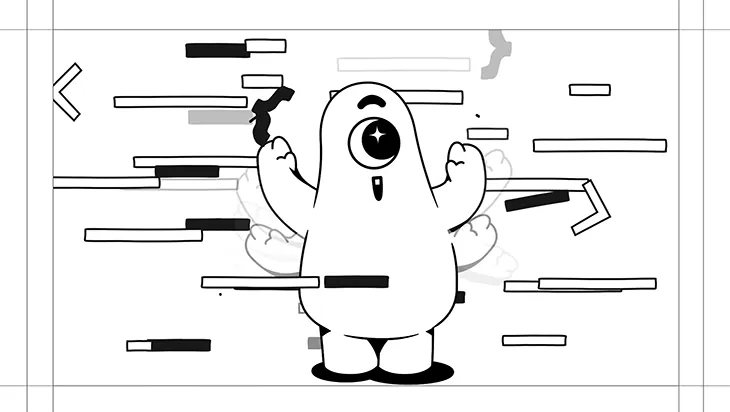
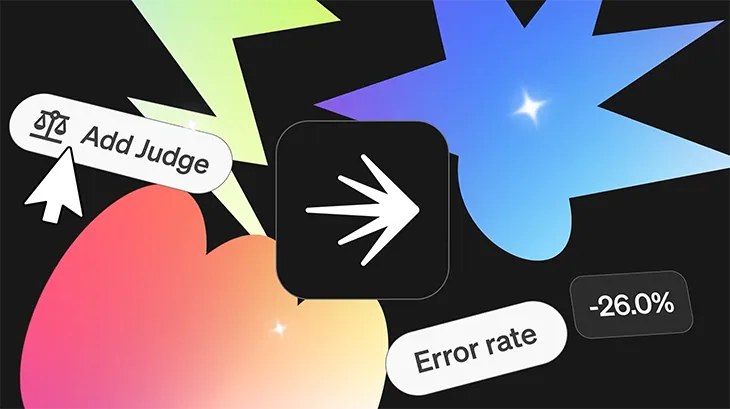
The numbers reflect this. Among LaunchDarkly’s library of more than 250 YouTube videos, two films for which Wang led the motion animation and visual sequencing, Runtime Control for the AI Era and The Future of Agent Configs, rank third and fourth in the channel’s all-time most-viewed content, having accumulated nearly 600,000 combined views within their first two months of release. In a category where most B2B brand video rarely breaks five figures, those figures speak to motion design that earns its audience rather than simply reaching them.
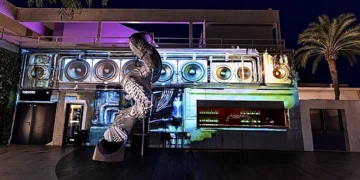
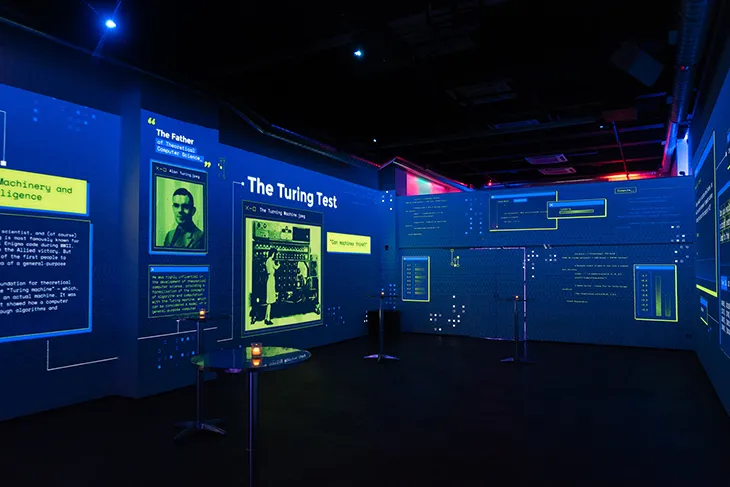
Across her career, Wang has also brought this approach to immersive and experiential work beyond the screen. Among the most ambitious: two large-scale motion animations created for The Light Stack, a sold-out immersive art and technology event hosted at The Lightbox during NYC TechWeek 2026, a 4,000-square-foot Manhattan venue built around 360-degree projection mapping technology. The animations were experienced by hundreds of developers and tech professionals from across the industry in a fully immersive environment, representing some of the most technically and spatially demanding motion work of her career.
Pipgro: Where Independent Vision Meets International Recognition
Outside her studio work, Wang has pursued independent creative projects that reflect a broader artistic vision, and the results have attracted recognition on the international stage.
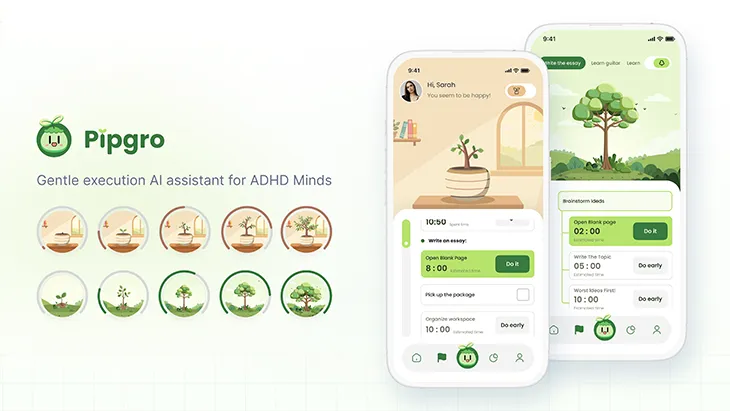
Pipgro, an AI-powered task management concept application designed for users with ADHD, became the vehicle for some of her most ambitious work. Within the collaborative two-person team, Wang led the visual design, illustration system, motion direction, and final explainer film, translating the ADHD-focused product concept into a clear and emotionally resonant animated story. The project received a Red Dot Award in the Design Concept category at the 2026 Red Dot Awards, one of the world’s oldest and most internationally recognized honors in design, adjudicated by a jury of 48 experts from 23 nations.
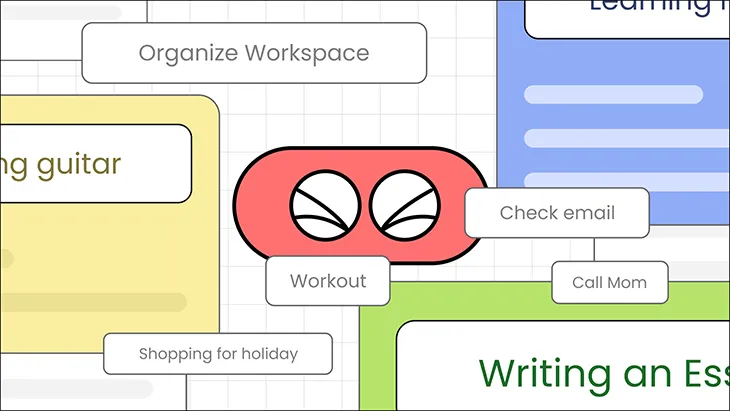
Wang then submitted the explainer film independently to the 2026 Telly Awards, where it received Telly Gold in the Non-Broadcast / Mental Health category, the award’s highest distinction. That year, the Telly Awards received nearly 14,000 submissions from 55 countries; fewer than 3% of all entries received Gold recognition.
Two separate international juries. Two top-tier recognitions. One independently submitted film.
“I wanted to prove that the kind of motion work I do for tech companies could hold its own in any creative context,” she says. “Not just functional, genuinely excellent.”
Motion Design as the Language of Technical Trust
What Wang’s career demonstrates is a more demanding role for motion design in the technology industry: not simply making products look dynamic, but helping technical audiences understand, trust, and remember them.
The industry she works in is changing rapidly. AI is reshaping every product category. SaaS companies are competing not just on features but on how their products feel. And a generation of developers, curious, visually literate, shaped as much by gaming and internet culture as by engineering, increasingly expects creative work that meets them where they are.
Wang’s output, whether a nearly 600,000-view product film for a developer platform, a Gold Telly-winning explainer for an AI accessibility app, or a 360-degree immersive installation at one of New York’s most technically sophisticated event venues, consistently points to the same possibility: that technical precision and genuine creative ambition are not in opposition. In technology’s most demanding creative contexts, they are exactly what the audience is waiting for.
Jingxuan Wang is a Senior Motion Designer and Editor based in Jersey City, NJ. She has worked with LaunchDarkly, Netflix, and technology companies across the SaaS and AI sectors. Her independent work has been recognized with a Red Dot Award in the Design Concept category and a Telly Gold Award in the Non-Broadcast / Mental Health category. For more visit jingxuanwang.website
Words by DSCENE Editor Maya Lane.