


A car exists with an expectation attached to it: it should go somewhere. For MOTOMORPHOSIS, MSCHF starts with that familiar object and removes the certainty of what its form should allow it to do.
ART
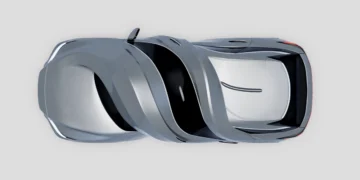
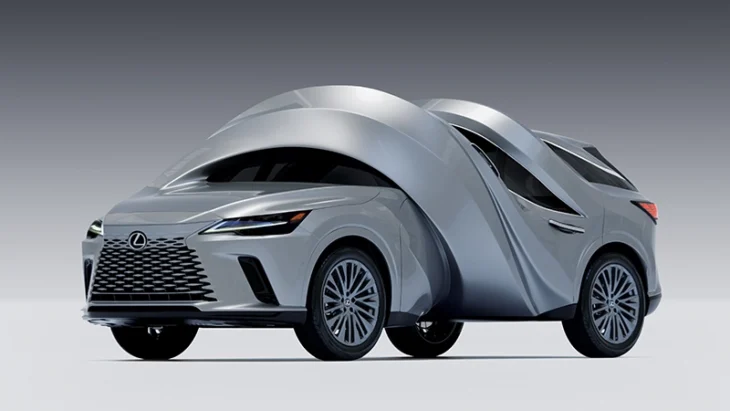
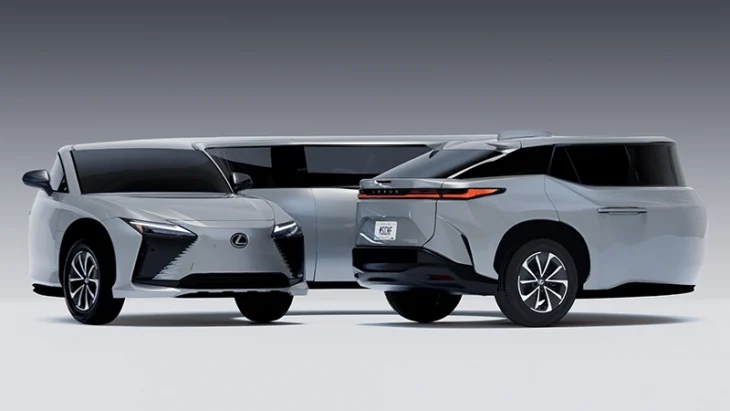
Commissioned by Lexus, the new exhibition presents two production electrified vehicles alongside sculptural doubles created by the Brooklyn-based conceptual collective. A Lexus RZ450e becomes Circle Car, its body looped nose-to-tail into a continuous ring. A Lexus RX450h+ becomes Twisted Car, subjected to extreme longitudinal torsion until its recognizable automotive lines spiral around themselves.
The works debut at Chelsea Industrial in New York during Armory Week, where MOTOMORPHOSIS runs from September 24 through 26. Yet MSCHF approaches the project from a direction that deliberately avoids the usual automotive exercise of proposing what comes next.
Speaking exclusively with DSCENE’s Katarina Doric, MSCHF Chief Creative Officer Kevin Wiesner describes the starting point as an inversion of the concept car.
“Within the automotive industry you have a recognizable format of the Concept Car, sometimes quite far from reality, as futurecasting or exploration,” Wiesner explains. “We had this idea of inverting the format of a Concept Car and taking a purely Formalist approach to the object.”
MSCHF calls the resulting sculptures “Form Cars.” The distinction is important. These objects don’t propose future transportation, test an engineering solution or imagine how people might drive. MSCHF treats the automobile itself as material.
We had this idea of inverting the format of a Concept Car and taking a purely Formalist approach to the object.
There is precedent. Wiesner points to the history of car-based artworks in the United States and specifically cites Pippa Garner’s Backwards Car as one of the project’s references. MOTOMORPHOSIS enters that history through a distinctly contemporary visual vocabulary: the manipulation tools of digital software.
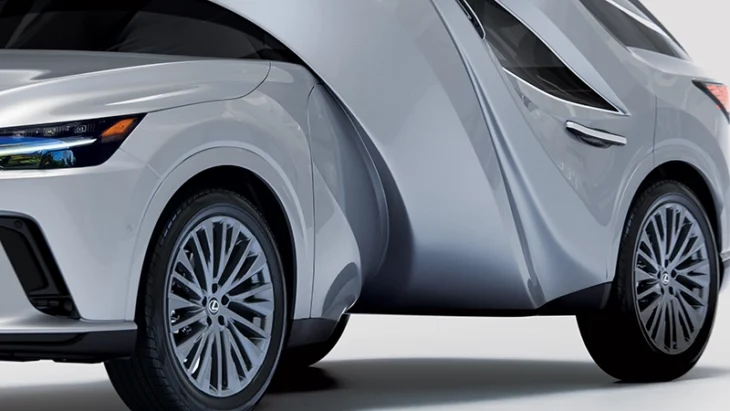
Twisting, stretching and bending an object have become completely ordinary actions on a computer screen. Physical matter refuses to cooperate so easily.
“Realizing the formal vernacular of shapes and transformations that are native to digital processes is a recurring motif in MSCHF’s work,” Wiesner says. “Operations like twisting, stretching, and bending are part of a standard 3D program language that results in impossible objects; native digitally, but absurd physically.”
Circle Car also taps into a specifically implied absurdity of movement; no matter how much it drives it remains in one place chasing its own tail.
That absurdity becomes particularly clear in Twisted Car. The sculpture takes an operation familiar from 3D modeling and applies its logic to an object whose construction normally demands exact engineering. Wiesner describes the extreme twist as the type of transformation that can emerge in software as “a visually compelling mistake.”
Circle Car begins somewhere different: with driving itself.
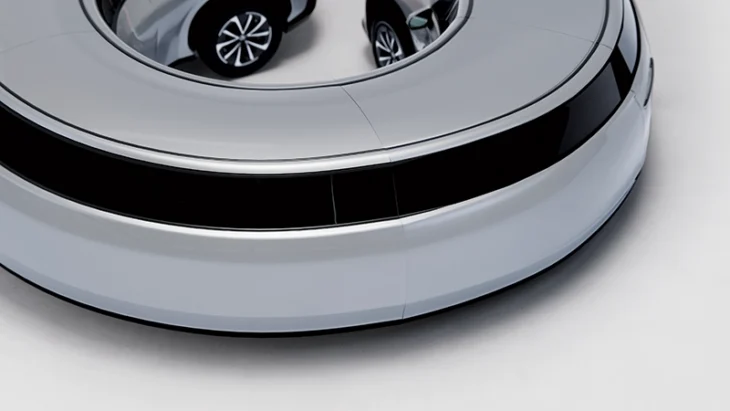
“The circle derives most clearly from the motions of a vehicle, a car doing donuts implies this shape,” Wiesner explains. The sculpture takes the trace left by that action and transfers it onto the body responsible for producing it. The result creates its own joke. “No matter how much it drives it remains in one place chasing its own tail.”
“As much as possible!” Wiesner says when asked how much of the original Lexus needed to remain. “One of the convenient things about cars as base material is that they are made to be assembled/disassembled and so elements from the front and back of the car can be attached to the frames of the sculptural bodies.”
Twist Car is one of those shapes that is taken directly from 3D software operations, though this degree of twist usually shows up as a visually compelling mistake.
The result creates an unusual encounter between original and double. MOTOMORPHOSIS displays each sculpture beside its production counterpart, allowing the viewer to read the transformation immediately. One represents an engineered object capable of physical travel; the other produces an image of travel while remaining static.
For Wiesner, this apparent contradiction connects back to animation. Digital forms can squash, stretch and deform according to action, particularly through the exaggerated geometry of smear frames. MSCHF translates that visual logic into objects with automotive scale and material weight.
“These transformations recall the plasticity of geometry found in 3D animation, where shapes need not be static or fixed, but squash and stretch through smear frames according to action,” he says.
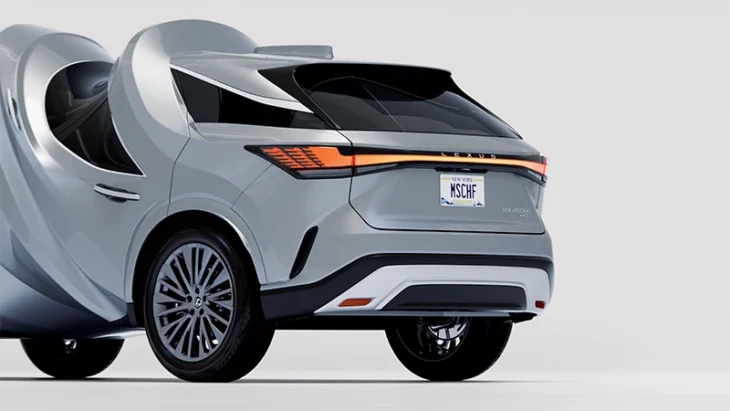
Placed beside the original Lexus vehicles, Circle Car and Twisted Car begin to complicate the relationship between an object and what we know it can do. “They speak to the fluid nature of our mind’s representation of objects, never separated from our understanding of the car’s dynamic capacity for movement,” Wiesner explains.
The Lexus commission gave MSCHF two electrified production vehicles as the starting point, but MOTOMORPHOSIS quickly leaves conventional automotive questions behind. The project concentrates on the car as an object: its recognizable geometry, its association with speed and the visual expectation of movement built into its form.
Twisted Car and Circle Car speak to the fluid nature of our mind’s representation of objects, never separated from our understanding of the car’s dynamic capacity for movement.
That question finds a particularly appropriate collaborator in MSCHF. The collective has repeatedly taken objects with firmly established cultural meanings and altered their logic until something familiar begins to feel strange again. Here, the automobile provides an especially potent subject because function has dictated so much of its recognizable form.
MOTOMORPHOSIS removes that requirement.
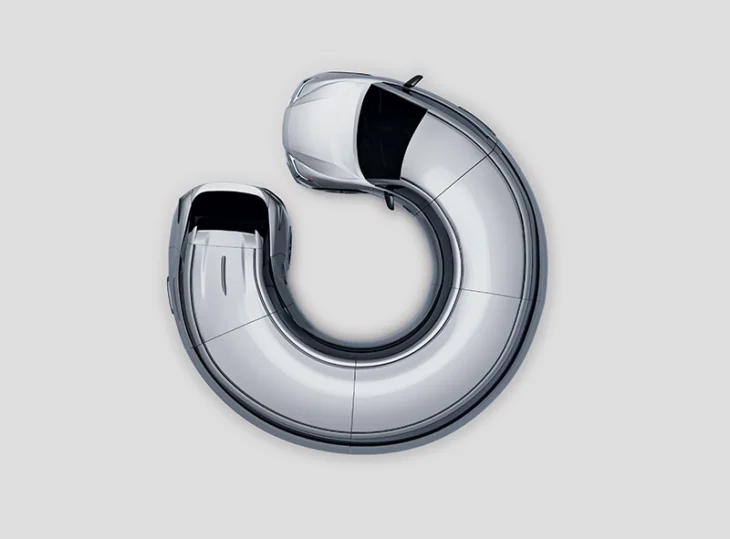
The cars no longer need to arrive anywhere. Circle Car converts driving into an endless loop. Twisted Car freezes deformation into a permanent object. Both retain the visual information necessary to tell us exactly what they once were.
They cannot travel, yet they remain consumed by the idea of movement.
MOTOMORPHOSIS runs September 24–26, 2026, at Chelsea Industrial, 545 W. 28th Street, New York. The exhibition presents MSCHF’s Circle Car and Twisted Car alongside the Lexus RZ450e and RX450h+ that inspired them.