


In a culinary landscape dominated by speed, spectacle, and innovation for its own sake, Chef Domingo Schingaro has chosen a different path, one defined by patience, presence, and the quiet intelligence of the land. At Due Camini, the fine dining restaurant at Borgo Egnazia in Puglia, Schingaro has rewritten the rules through restraint. His shift away from trend-driven cooking toward a dialogue with seeds, soil, and seasonality is less a retreat and more an act of radical clarity. We sit down with the chef to explore what it means to resist the industry’s pressure to accelerate, and instead align with nature’s pace.
ORDER IN PRINT AND DIGITAL
Under Schingaro’s direction, Due Camini now operates as a kind of living system, one where vegetables speak louder than technique, and where every ingredient has a name, a place, and a memory. The restaurant’s work with hand-preserved seeds, forgotten varieties, and regenerative farming is grounded in the belief that real progress starts with looking back. In conversation with DSCENE editor Katarina Doric, Schingaro reflects on humility as innovation, the politics of preservation, and how a single carrot can carry an entire philosophy.
Your recent shift at Due Camini feels like a quiet act of defiance, turning inward to embrace nature’s pace rather than the rush of culinary trends. What sparked this need to slow down and return to the land? – Over time, I felt the need to get closer to what really matters in cooking — the land, the ingredient, the people behind them. There’s a moment when you realize that constant speed, constant innovation for its own sake, starts to disconnect you from the essence of things. This change wasn’t about making a statement — it was about going back to something more human, more honest. I wanted to work in a way that respects time, the soil, the seasons. That’s what brought us here: the need to reconnect, to slow down, and to let nature guide the pace.
You’ve spoken about “accompanying” the ingredient rather than imposing on it. How do you stay attuned to the natural rhythms of your produce in the day-to-day of running a fine dining kitchen? – It starts with listening. Every day, we observe what the land gives us — not what we expect, but what’s actually growing, what’s ready, what surprises us. We talk with our farmers, we taste, we adjust. It’s a flexible process. We don’t force a dish to happen; we let it evolve around the ingredient. Some days you have abundance, others you don’t — and that’s okay. The key is to stay connected and humble. It’s a slower way of working, but it brings you closer to the truth of the ingredient.
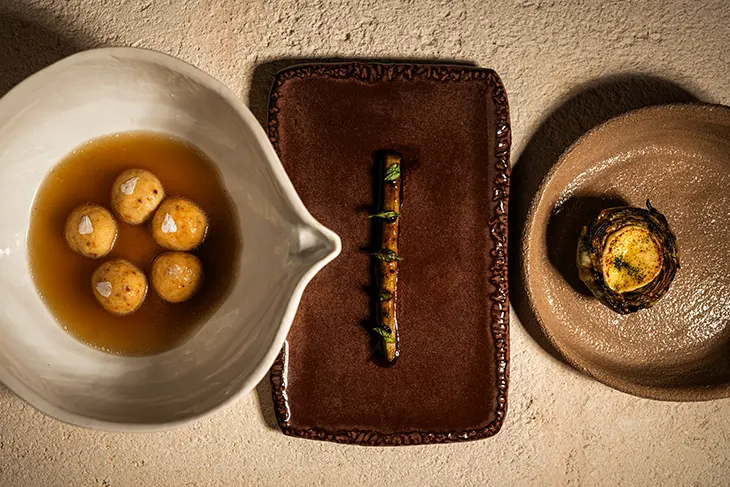
The Polignano carrot has become something of a symbol in your cuisine — imperfect, fleeting, and deeply local. What can a single ingredient like that teach us about transformation and restraint? – The Polignano carrot is a great teacher. It’s not perfect to look at — it comes in all shapes and colors — and it’s only around for a short time each year. But that’s what makes it special. It reminds us to value what’s here, now. In the kitchen, we use every part of it — the peel becomes a juice, the flesh is cooked gently, the leaves wrap a nod to old peasant dishes. It’s about finding richness in simplicity, and about not wasting anything. The carrot doesn’t need to be transformed into something else to be meaningful. It’salready enough, if we treat it with care.
I wanted to work in a way that respects time, the soil, the seasons. That’s what brought us here: the need to reconnect, to slow down, and to let nature guide the pace.
From hand-preserved seeds to regenerative agriculture, this project reconnects cooking with memory and continuity. How did the idea of the “Seed House” come into play, and what role does it serve in your broader vision? – The Seed House came from a desire to protect what we’re at risk of losing. These ancient seeds — they carry stories, flavors, identities that belong to the land. If we don’t take care of them, they disappear. The Seed House is where we start that care. It’s not about planting and harvesting right away. Sometimes we just hold the seeds, keep them safe until the time is right. It’s long work, quiet work — but it’s work that connects us to memory, and to the future too. It’s one of the most meaningful parts of what we do.
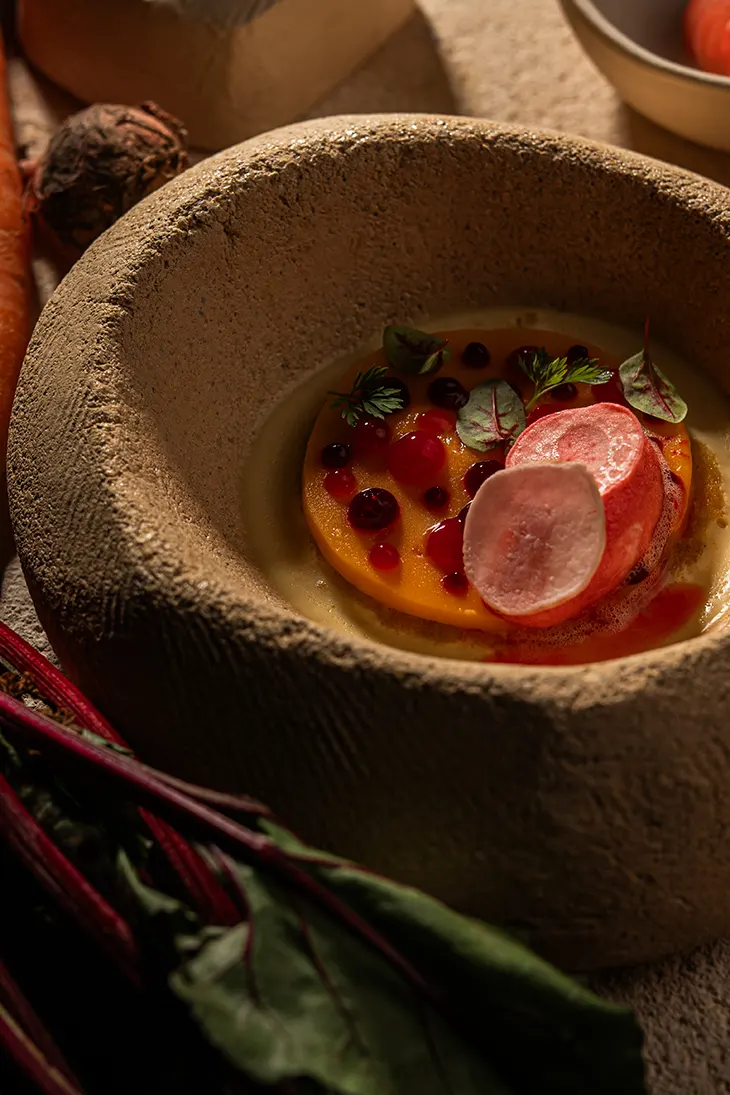
There’s something deeply political in the act of recovering lost varieties and giving them new life on the plate. Do you see your kitchen as a form of cultural resistance? – Yes, in a way. Choosing to work with these forgotten varieties, to bring them back, is a way of protecting identity — and resisting the pressure to make everything fast, standard, global. We’re not just cooking; we’re telling stories through ingredients that almost disappeared. It’s a quiet kind of resistance, but an important one. It says: there is value in slowness, in memory, in difference. And we can celebrate that on the plate.
Many chefs speak about innovation through technique. But your work now seems to focus on innovating through humility — listening, waiting, letting go of control. Was that a difficult shift? – At first, yes. In a fine dining context, you’re trained to be in control, to perfect every detail. But over time, I started to see that true innovation doesn’t always come from doing more — sometimes it comes from doing less, and from listening. Letting go of that control opens up space for ingredients to speak, for the team to contribute in new ways, and for me to grow in directions I hadn’t imagined. It’s a different kind of creativity — slower, deeper, and more connected to what really matters.
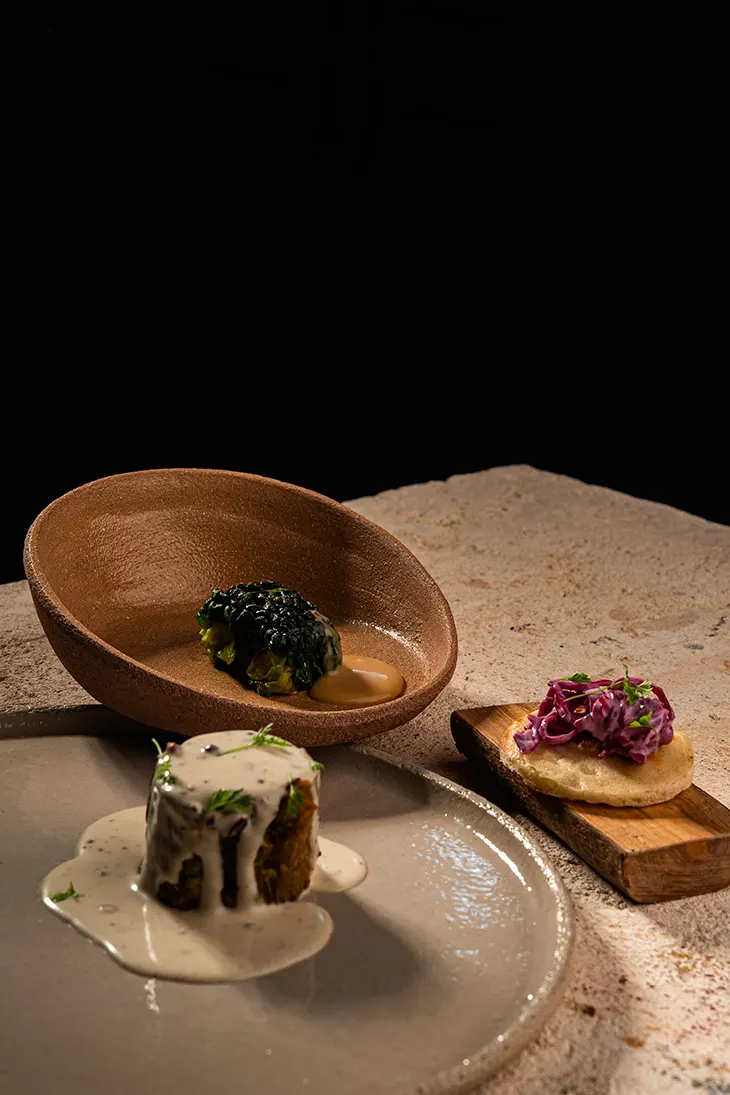
Due Camini now exists in dialogue with farmers, bees, worms, and the soil itself. How do these non-human collaborators shape your thinking as a chef? – They’ve taught me to take things more slowly and with more respect. When you understand how much effort — even from nature itself — goes into producing an ingredient, your whole approach changes. You stop rushing. You waste less. You treat everything with more care, and you work at the right pace, not the fast one. It’s a different mindset, one that brings more awareness into the kitchen every day.
There is value in slowness, in memory, in difference. And we can celebrate that on the plate.
You’ve said “standing still means stopping growth.” In a moment when so many chefs are clinging to safety, what gaveyou the courage to rewrite your entire approach to food? – Honestly, it came from a personal need. I felt like I was reaching the edge of something — and if I didn’t take a risk, I’d stop evolving. I didn’t want to stay in a place that felt comfortable but static. The courage came slowly, through conversations with guests, with farmers, with my team. And also through the emotional response we saw when people tried our plant-based dishes. That told me we were on the right path — even if it meant starting over in many ways. But that’s part of the journey. You grow by letting go.
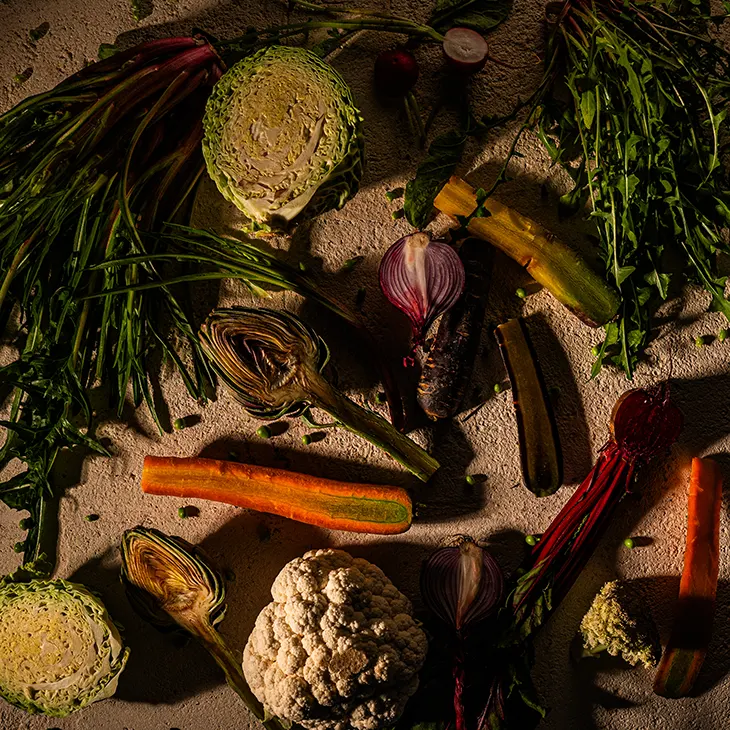
And finally, for our readers who won’t make it to Borgo Egnazia anytime soon, could you share a simple, seasonal recipe they can try at home?
Polignano Carrot Tubetti
Ingredients:
• 60g tubetti pasta
• 90g orange carrot juice
• 90g purple carrot juice
• 10g Parmigiano Reggiano
• 10g acidulated butter
• 15g Normandy butter
• Bergamot peel powder, to garnish
• Sea fennel, to garnish
Method:
1. Peel approximately 400g each of purple and orange Polignano carrots. Juice them separately, keeping the two extracts apart — they will serve as the cooking base for the pasta.
2. In two small saucepans, cook 30g of tubetti in each carrot juice (orange in one, purple in the other), as if making a risotto. Stir gently and cook for about 12 minutes, allowing the pasta to absorb the color and flavor of the juice.
3. Once al dente, finish each batch by stirring in the Normandy butter, acidulated butter, and grated Parmigiano Reggiano until creamy.
4. Plate the two colored pastas side by side for visual contrast. Garnish with a dusting of bergamot peel powder and a few sprigs of sea fennel.
This dish captures the soul of Due Camini: no excess, no distraction — just nature, respected and gently elevated.








He is so inspirational 🫶
I absolutely love his work! So cool you got to spotlight Domingo!