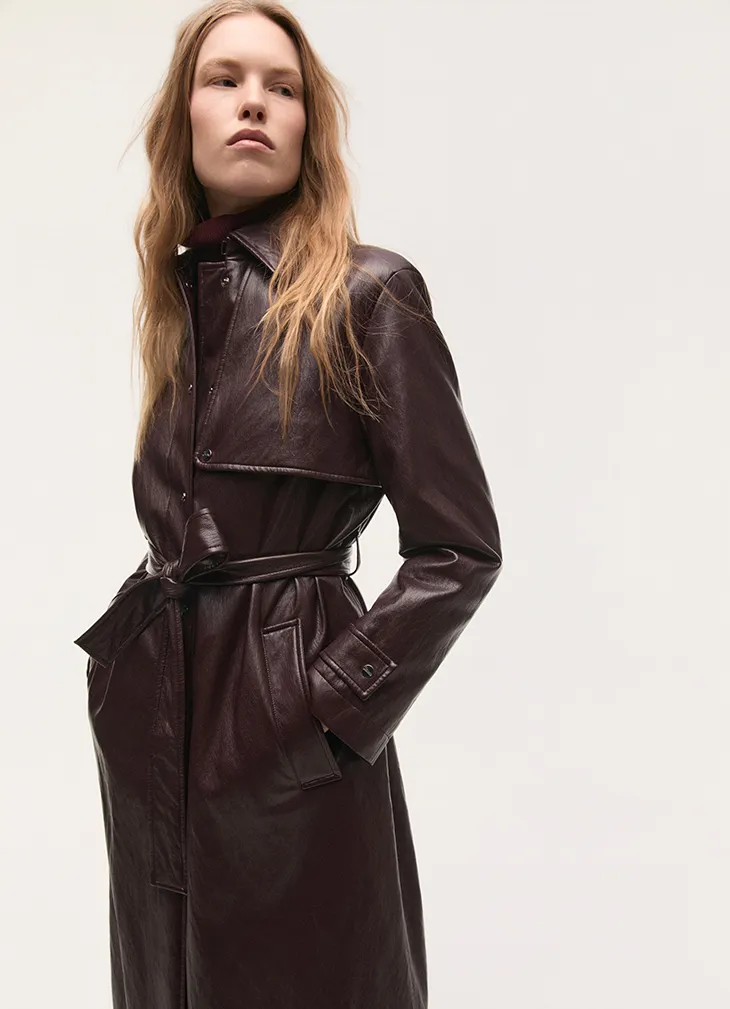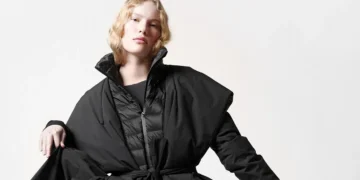



Herno unveiled its Fall Winter 2026 collection for women who live on their own terms. The season follows a wardrobe shaped by self-awareness, daily use, and a clear exchange between function and style. Outerwear plays a major role throughout, setting the tone for a collection that responds to changing situations, different environments, and the shifting demands of winter dressing.
FALL WINTER 2026 WOMENSWEAR
The collection develops through three directions: Origin, Excellence, and Advanced. Each one introduces its own visual language, material focus, and approach to silhouette, while still contributing to a broader idea of dressing. Herno uses these three parts to build a wardrobe that feels modular, where pieces relate to one another through use, proportion, and texture.
Origin forms the starting point and expresses Herno’s language in its most direct form. It begins with the meeting of two complementary attitudes. One draws from feminine sportswear, using prints, fluid fabrics, unexpected lightness, and shimmering embroidery, combined with more structured elements such as washed textiles. The other turns toward an urban business wardrobe designed for metropolitan life, where work and daily routines overlap. Shirts, pinstripes, casual tailoring, and washed denim appear alongside faux patent leather, creating a proposal that stays practical while keeping a strong visual identity.
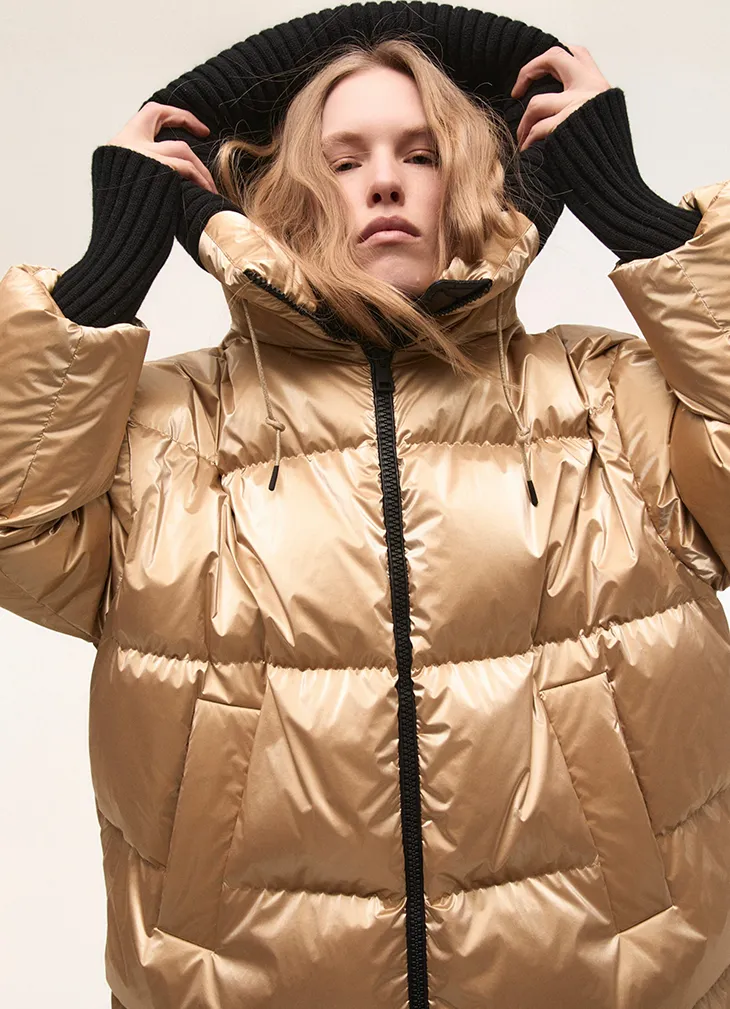
That same section expands through Alpine Circle, a theme inspired by chalet and après-ski references. Here, the collection splits into two moods. One takes a dynamic and chic route, working with oversized silhouettes and substantial padding. The other pushes further through stronger volume, premium materials, metallic effects, and golden animal prints. Together, these ideas reshape winter dressing through contrast, shifting from functional alpine references to a more heightened and visibly expressive proposal.
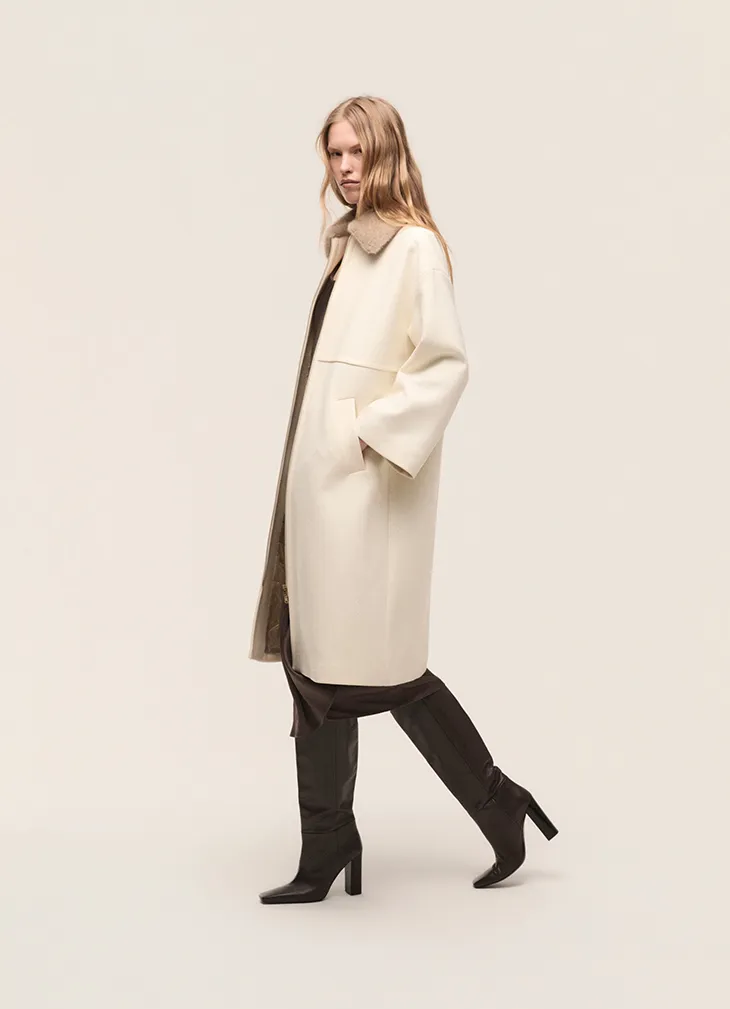
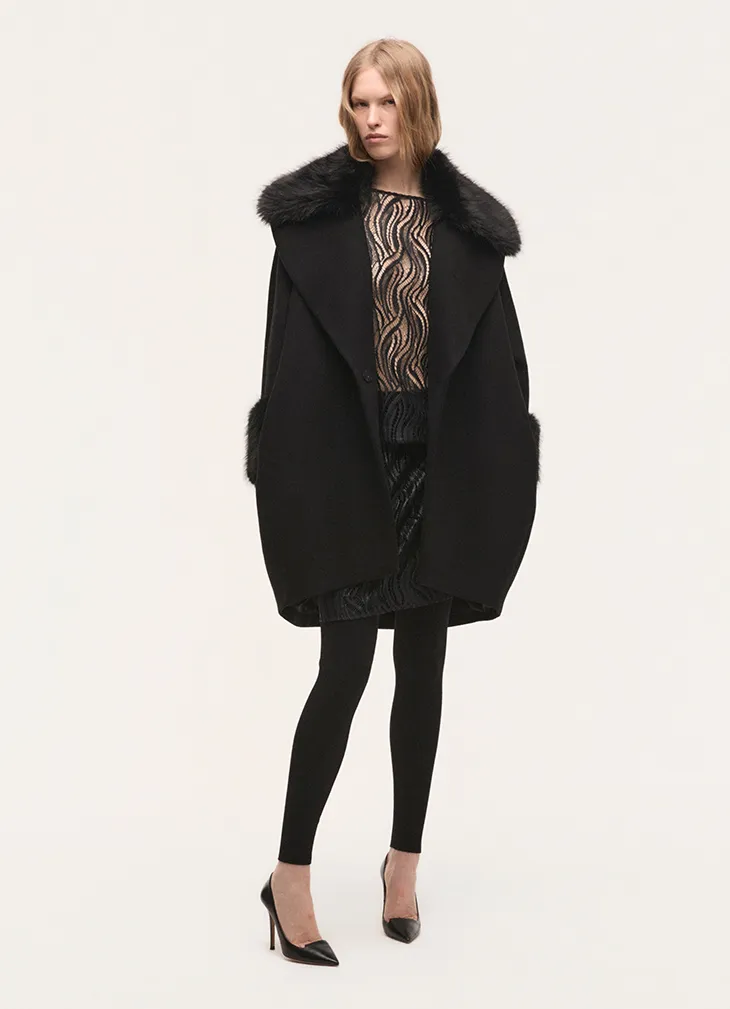
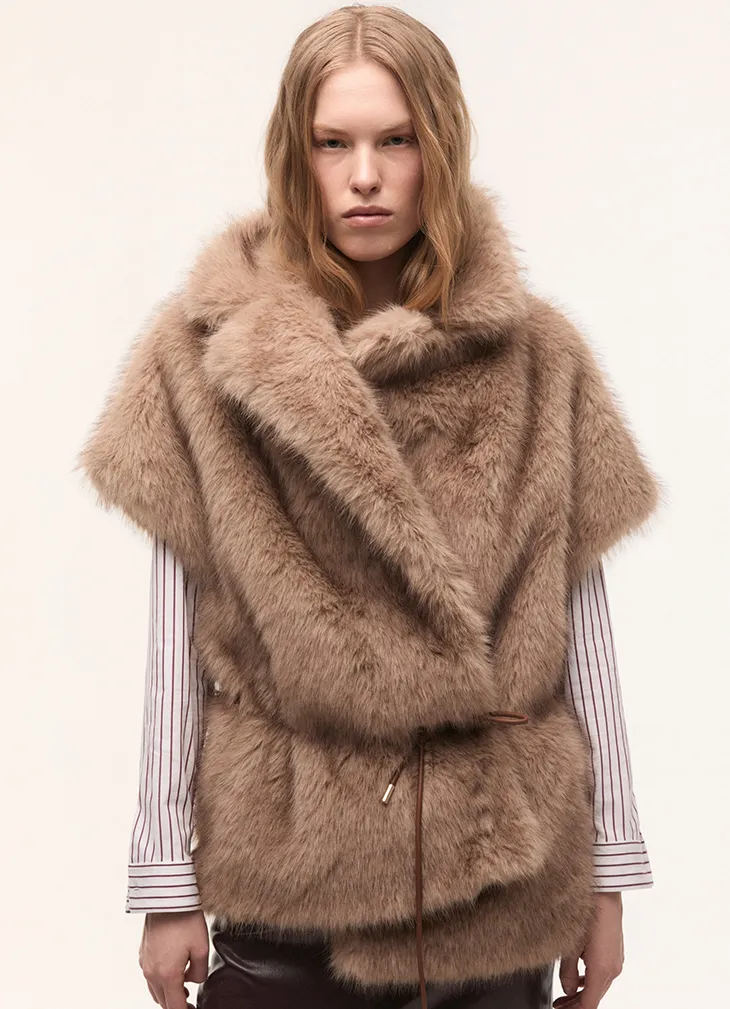
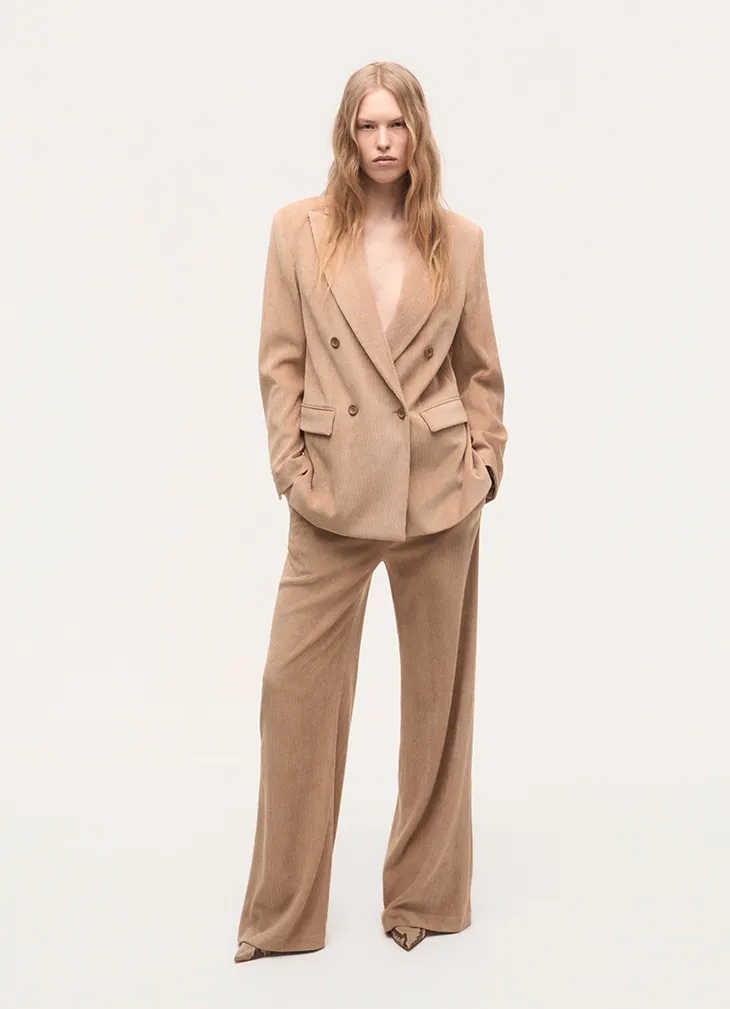
Excellence introduces the most elevated materials in the collection. Cashmere, cashmere-silk, and baby camel define the silhouettes and bring a different register to the season. Herno uses these fabrics to create clean, elegant shapes, then interrupts them with details such as golden brooches, pearl buttons, leather inserts, fringes, and the house hook reworked across suits and shirts. Outerwear in this part of the collection feels enveloping and soft, with the fabric itself shaping how each garment is read.
Advanced takes the collection in a sharper direction. Here the reference shifts toward architecture. Lines become cleaner, shapes more structured, and shoulders more geometric and pronounced. Fabrics gain weight and substance, reinforcing the firmness of the silhouette. Interior construction also becomes visible, as satin linings, padding, and quilting appear through openings and cuts that expose what usually remains inside. This relationship between inner and outer construction gives the garments a different kind of visual tension. Accessories stay entirely black, reinforcing the minimal and coherent tone of this section.
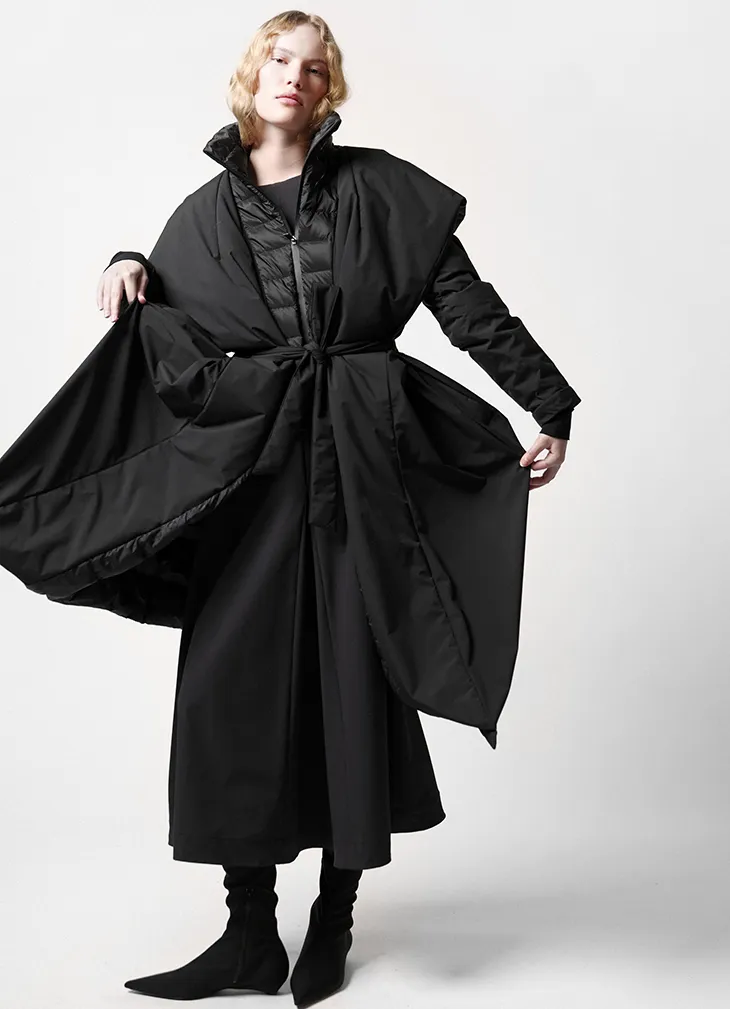
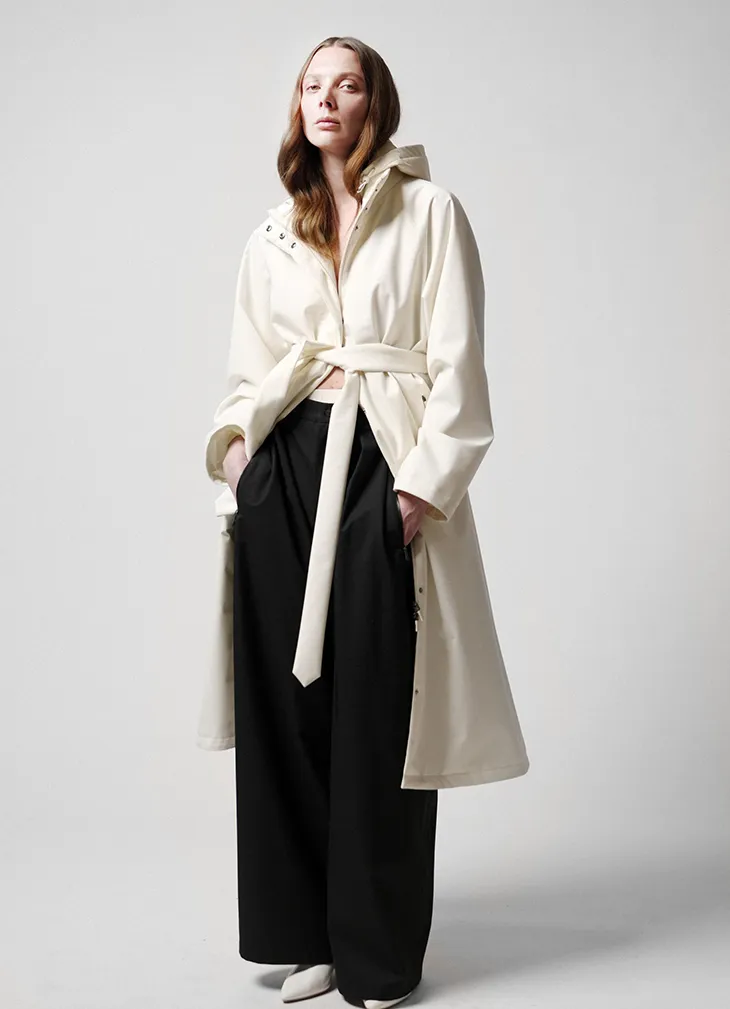
Across all three directions, Herno keeps the focus on clothing that adapts to changing conditions without losing definition. The collection treats winter as a season for research, variation, and personal expression, using outerwear, tailoring, and material choices to shape a wardrobe that can shift from city life to alpine references and from softer luxury to a more architectural edge.
Herno Fall Winter 2026 builds its identity through this layered structure. Origin, Excellence, and Advanced work together, creating a wardrobe where different attitudes, fabrics, and silhouettes remain connected through use. The result is a season that gives outerwear a leading role while opening the collection to a broader range of moods, textures, and ways of dressing.