Not long ago, the most talked-about looks in fashion were often the simplest ones. A perfectly tailored coat. A minimal dress in an expensive-looking shade of beige. Clean lines, fine fabrics and restrained styling.
For a while, that approach made sense. After years of visible logos and constant trend cycles, people wanted something calmer and understated. Fabric, cut and construction defined the look.
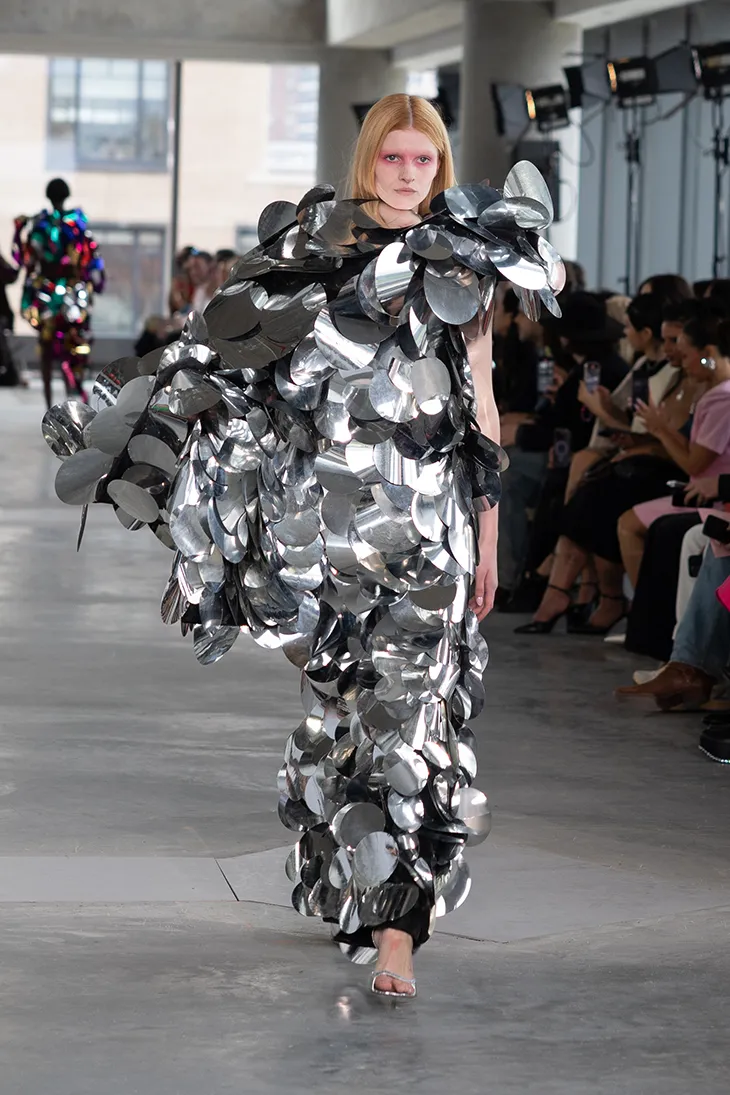
But fashion never stays in one place for long. Over the past few seasons, designers have returned to shine, texture, volume and embellishment. Spring Summer 2026 brought sequins, reflective materials and sculptural shapes back into focus. Strong construction still shaped the collections, while richer surfaces and sharper silhouettes gave the clothes greater personality.
Louise Trotter set the tone with her first collection for Bottega Veneta. Structured knitwear, relaxed tailoring, Intrecciato leather and unusual materials gave familiar wardrobe pieces fresh energy.
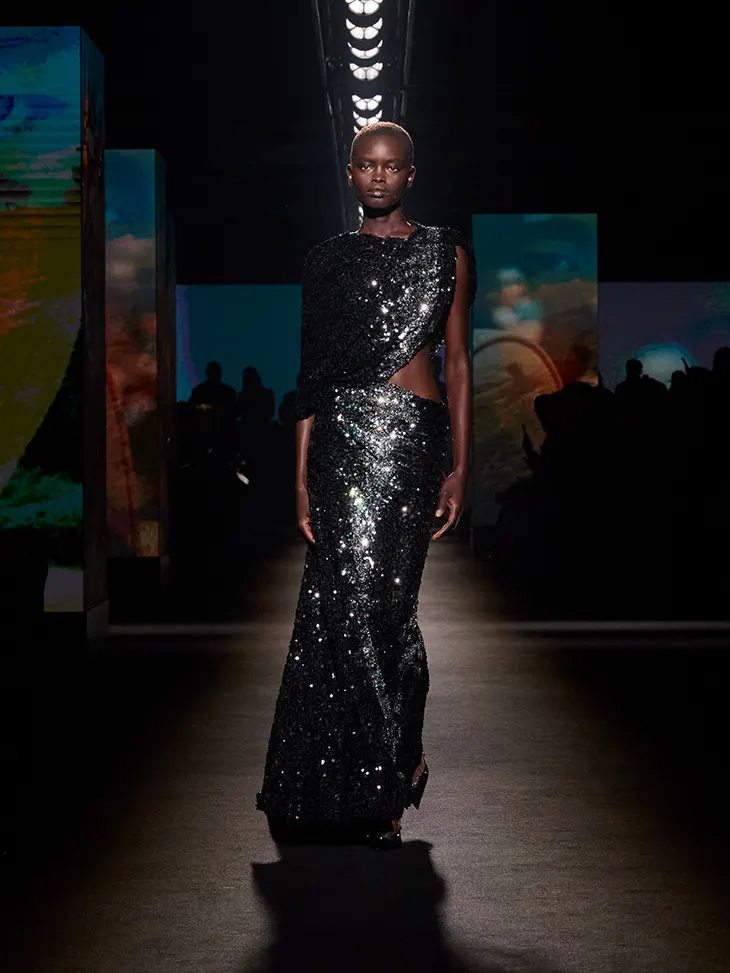
At Valentino, Alessandro Michele filled the Fireflies collection with rich fabrics, dark tailoring, flashes of colour and decorated eveningwear. Sequins, embroidery, lace and feathers gave the clothes depth, while long dresses and one-shoulder gowns created strong silhouettes.
Gucci’s La Famiglia collection also embraced dressing up. Demna introduced his vision for the house through a cast of distinct characters, each defined through clothes, styling and attitude. Sequin dresses, feather details, sharp tailoring and saturated colour brought glamour back into the Gucci vocabulary.
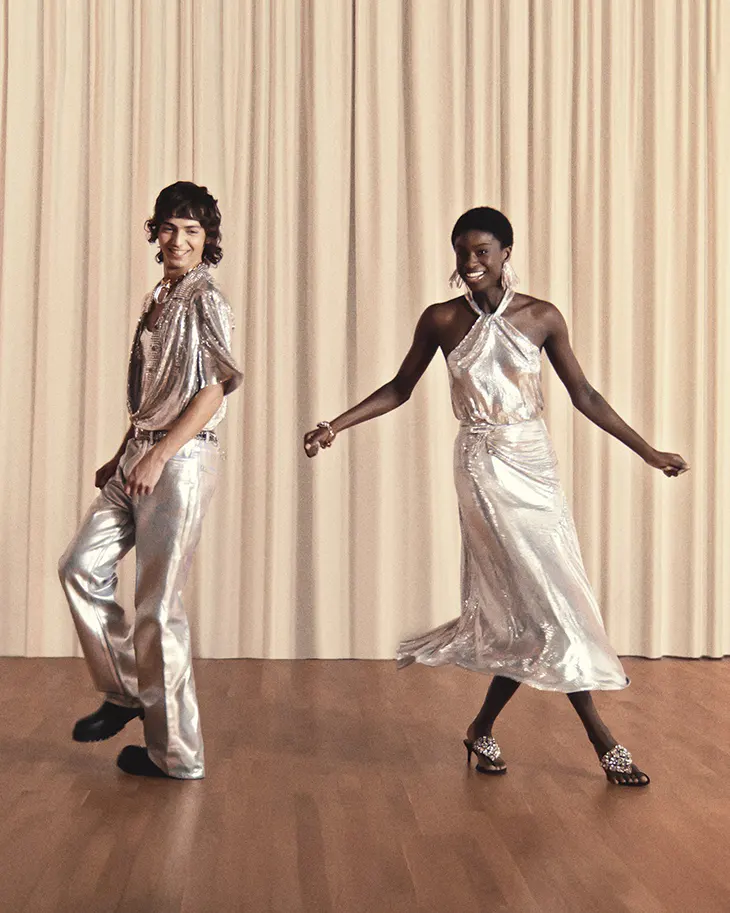
The growing popularity of sequin dresses offers one of the clearest signs of this shift. Once reserved almost entirely for holiday parties and New Year’s Eve celebrations, they are now appearing in a much wider range of collections, with brands like Emprada offering fresh, modern takes on the look. The styling feels different too. Cleaner. More modern. Less predictable.
Fashion Returns to Dressing Up
Fashion trends often develop through reaction. When minimalism takes over, people start looking for personality. When fashion becomes overloaded, simplicity starts to feel fresh again. The industry keeps going back and forth, often before anyone fully notices the change.
Spring Summer 2026 answered that need through clothes designed for visibility. A reflective dress changes under camera flash. A wide sleeve alters the outline of the body. A sculpted skirt creates a recognisable form from several angles. These details give clothing a stronger presence in photographs, video and real life.
Social media also shapes this shift. People often see a look online before they see it in person. A garment needs to communicate quickly through an image, yet the best designs still reveal texture, construction and detail at close range.
That balance gives current eveningwear its strength. The first impression draws attention. The cut and material keep it there.
Why Sequins Feel Current Again
Sequins once belonged mainly to holiday parties, formal events and New Year’s Eve. Today’s fashion gave them a wider role.
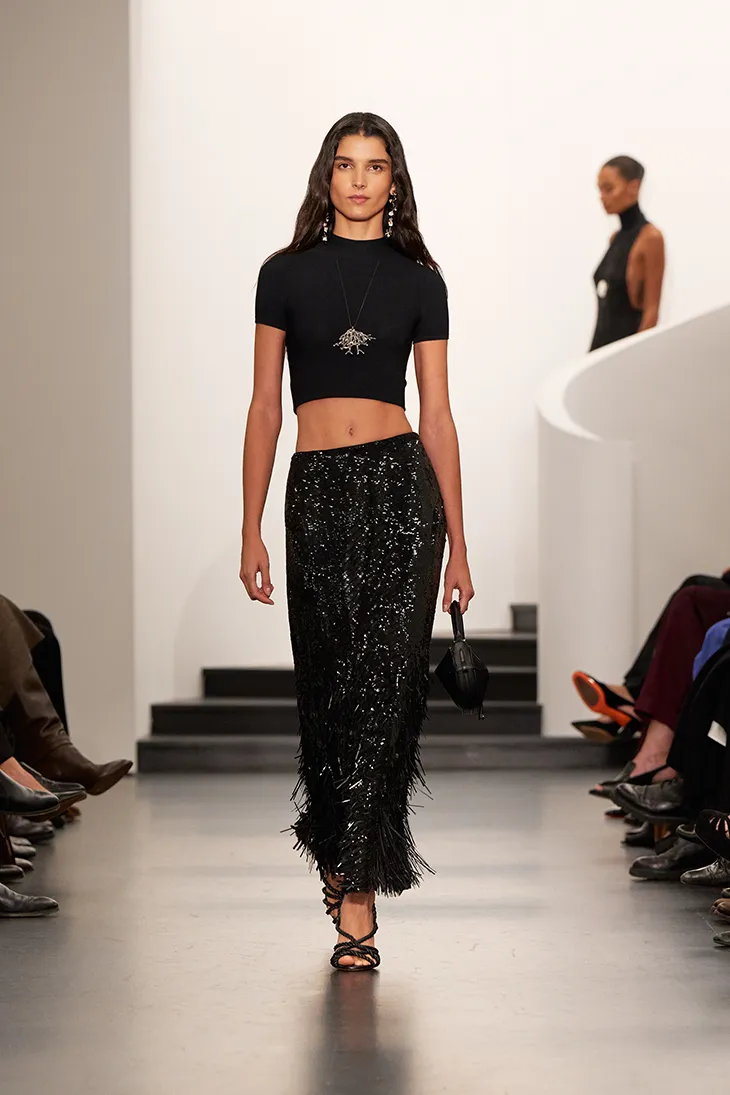
Designers placed sequins on column dresses, short dresses, tailored pieces and simple gowns. Clean shapes gave the reflective surfaces a sharper feel. Styling also changed the result. Simple shoes, restrained accessories and direct beauty looks allowed each garment to carry the full image.
Gucci used sequins to define character. Valentino used decorated surfaces to create richness and visual depth. Both houses treated shine as part of the garment from the first stage of design.
Scale and colour also changed the effect. Dark sequins created depth. Silver surfaces caught light quickly. Smaller areas of embroidery drew attention to necklines, sleeves and waists. Full sequin dresses strengthened the line of the body and gave simple shapes greater impact.
The strongest examples started with the cut. The surface supported the shape and gave it energy. That approach gives sequins a wider range. They can suit a dinner, an event, a performance or a red carpet. Styling determines the final tone.
The Importance of Movement
Some clothes only show their full effect once someone wears them. A photograph can capture the silhouette, but a runway reveals how fabric reacts to each step. Light hits the surface from new angles. Texture shifts. Details appear, disappear and return as the body turns.
Louise Trotter explored that idea in Bottega Veneta’s latest collection. She used recycled fibreglass for skirts and fringed pieces with a soft, fur-like surface. As the models walked, the fibres changed direction and caught the light differently. Each angle revealed another part of the design.
That kind of detail separates a good dress from one people remember. Good design rarely reveals everything at once.
The same idea applies to eveningwear. A great dress should catch your attention from the other side of the room and offer something new when you look closer. Texture. Embroidery. An unexpected cut. Small details that only appear under certain light or from a particular angle.
The best pieces create curiosity. You notice the dress first. Then you start to understand why it works.
Silhouettes Are Doing More of the Work
It’s easy to focus entirely on embellishment, but shape is playing an equally important role in the return of statement dressing.
Pierpaolo Piccioli explored volume in his first collection for Balenciaga. He drew from Cristóbal Balenciaga’s work with fabric and form, then introduced neo gazar, a new material inspired by the house founder’s original gazar textile. The fabric allowed Piccioli to create wide shapes through cut. Cocoon forms, sack dresses, large tunics and full gowns held space around the body. The clothes gained impact through proportion and construction.
One-shoulder gowns also appeared throughout the Spring Summer 2026 season. The diagonal neckline gave evening dresses a direct graphic quality. Column dresses offered another strong form, especially when designers paired them with sequins, feathers or reflective finishes.
A sleeve can change the body’s outline. A skirt can create volume through fabric alone. A neckline can define an entire dress. These choices give clothes character before colour or embellishment enters the picture.
Some of the strongest looks seem simple at first. A closer view reveals an unusual curve, a textured surface or an unexpected cut. That gradual discovery gives the clothes lasting impact.
Getting Dressed Should Feel Exciting
The rise of understated luxury made fashion conversations increasingly practical. People discussed investment value, versatility and longevity. Every purchase needed a clear reason.
Those things matter, but fashion also depends on emotion. Sometimes a dress changes the way someone carries themselves. Their posture shifts. Their mood lifts. For a few hours, they see a different version of themselves in the mirror. That feeling gives fashion its power.
Sequins, metallic finishes and sculptural silhouettes make that change visible. The deeper shift comes from people wanting clothes that feel personal again. Clothes that bring excitement back to getting ready and give an ordinary night a different energy.
People want to be remembered. They want clothes that feel special.
And judging by fashion’s direction in 2026, designers seem ready to give them exactly that.