


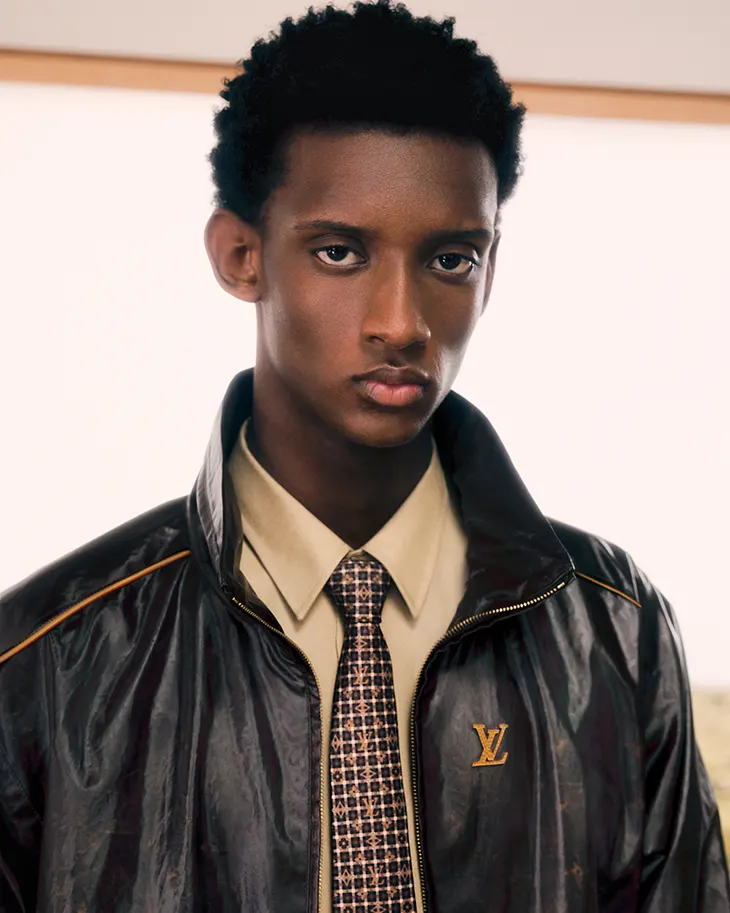
There is something quietly revelatory about pre-collections. They sit between runway seasons as a form of conversation, a moment where a creative director can test ideas without the full ceremonial weight of a fashion show. For Pharrell Williams at Louis Vuitton, they have become something more intentional: a calibration tool that reveals not what the designer is experimenting with, but what actually works.
The Fall 2027 Men’s Capsule, arriving in late September, is proof of this philosophy. Conceived around the romantic notion of an English countryside picnic, the collection distills the brand’s travel heritage into something more intimate and immediate than the runway pieces that will follow. It is the amuse-bouche before the feast, and it tastes deliberate. This marks one of the first brands to reveal its pre-fall 2027 collection, and DSCENE is among the first to review it.
Utility Dressed in Restraint
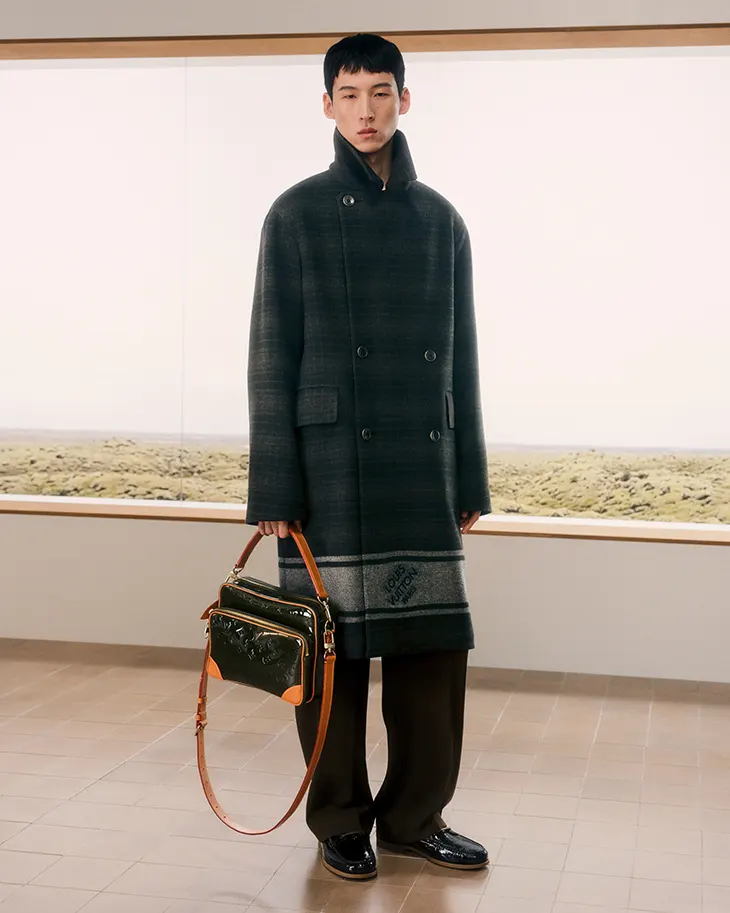
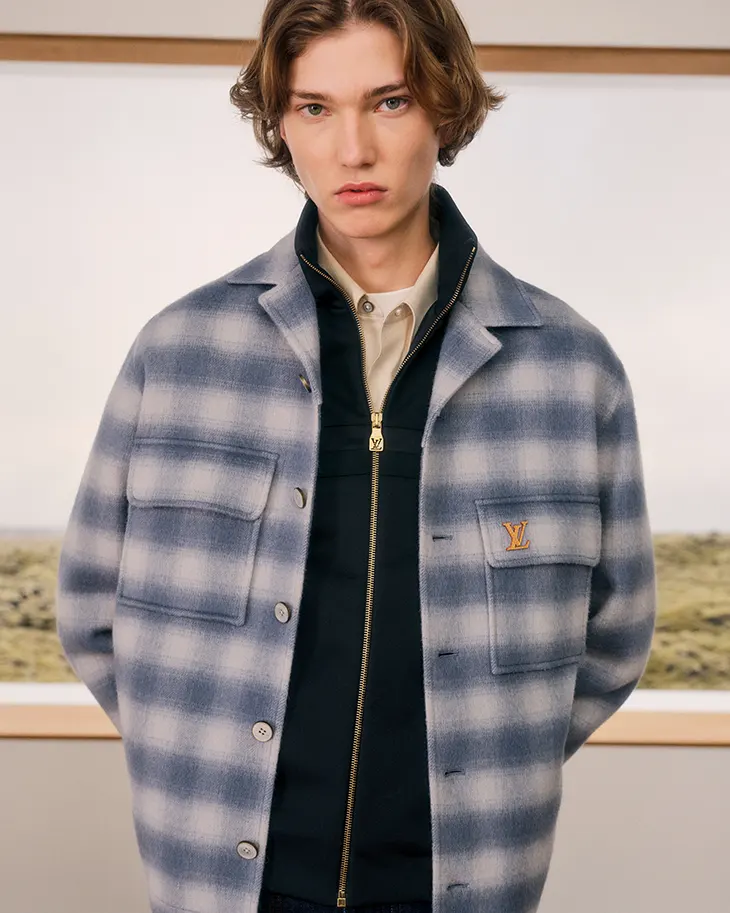
What strikes immediately is the restraint. The color palette drifts from mist-softened grays through cloud-dampened tones to deep forest and black. There are no loud gestures here. Instead, Williams and his design team have committed to a visual language built on texture, layering, and the kind of detail work that rewards proximity. A padded nylon liner becomes a design statement. A reversible wool-cashmere-silk jacket offers two monogram interpretations depending on how you wear it. Carpenter pants carry buttoned turn-up cuffs that function as both modifier and styling option.
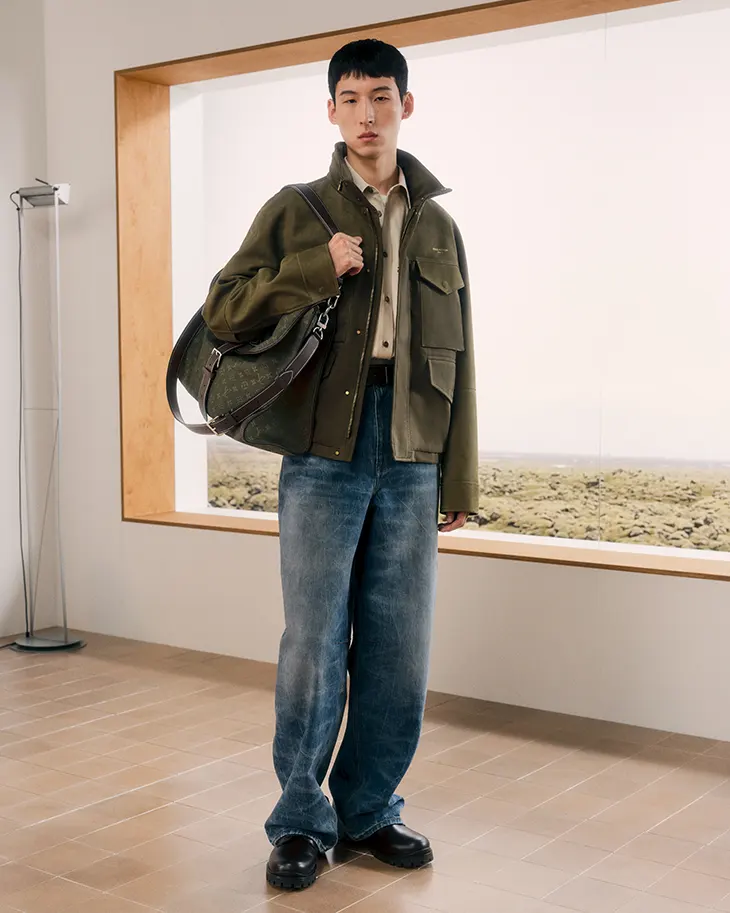
This is workwear given élan. The silhouettes themselves borrow from utilitarian tradition, but they are rendered in materials that signal luxury without announcing it. A mink fur gilet is modernized with gradient intarsia based on the iconic Damier Check. Flannels are sharp-edged. Wool overcoats are staunch. The formula is consistent: pragmatism weighted against a fundamentally British sensibility, where elegance emerges not from ornamentation but from proportion and craft.
Monogram as Patina
The handling of Louis Vuitton‘s most recognizable codes here is particularly sophisticated. Rather than showcase them prominently, Williams has chosen to age them, minimize them, embed them. The iconic Monogram appears as if worn gradually into a favorite jacket. It surfaces as the Nanogram in silk linings, woven into tablecloth references, unobtrusively embossed. On the mohair and leather landscapes, it integrates so subtly you have to look twice to find it.
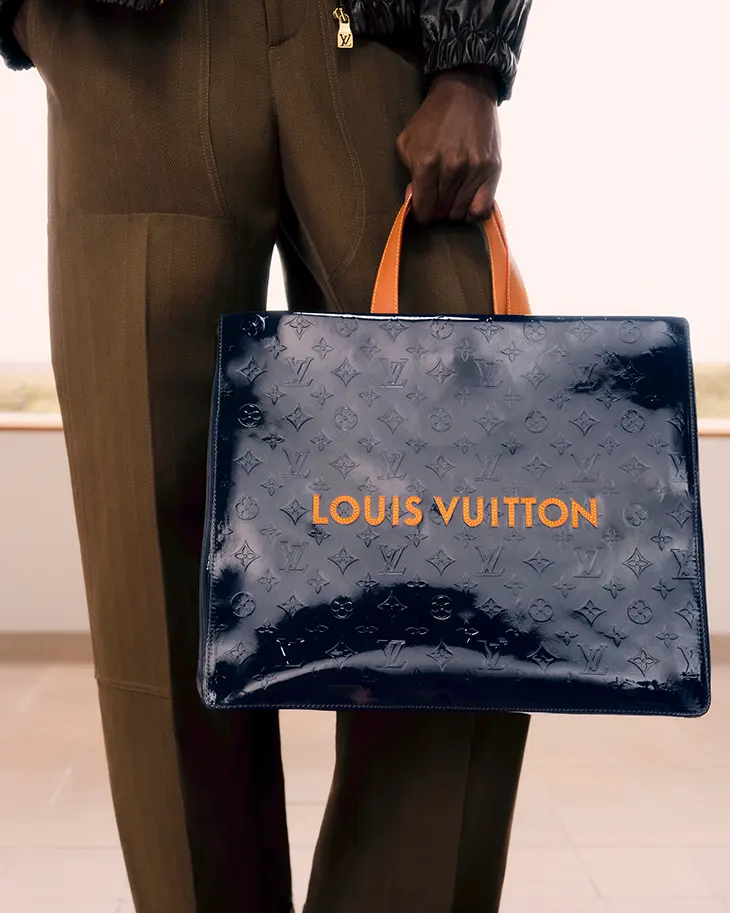
This approach serves the collection’s central tension: between heritage and immediacy, between what Louis Vuitton is and what it needs to become for contemporary menswear. The brand’s travel trunk history is present in every piece, but it never feels like pastiche or nostalgia. Instead, it feels like muscle memory. A Picnic Keepall 45 arrives with a basket-woven trompe-l’oeil finish and side pockets, practical enough for actual use. The new LV Louis Bear bag charm comes complete with a tiny Monogram canvas-lined basket, a detail that would be saccharine if it weren’t so technically accomplished.
Layering as Narrative
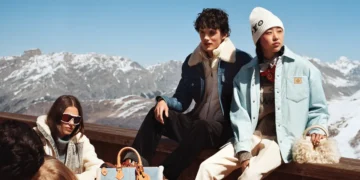
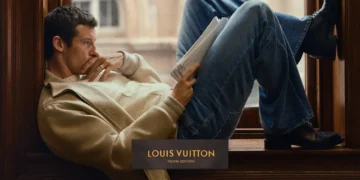
The real sophistication emerges in how Williams has structured versatility into each piece. A leather zip-up hoodie and light suede overshirt layer, line, or stand alone. Japanese denim shirting with pearl buttons answers to both workwear mixing and evening dressing. Bombers reverse between cotton wool knit and nylon printed fleece. This is not trend-chasing flexibility, the kind that tries to serve every market at once. This is intentional adaptatibility, the idea that a modern man’s wardrobe should move between contexts without requiring an entirely different set of clothes.
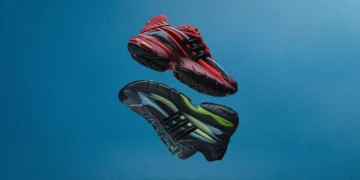
Footwear extends this language. The LV City Ranger reimagines the outdoorsman boot in fine calf or suede, detailed with embossed leather ankle collars and Monogram Flower-shaped lacing hooks. The LV Remix Ranger Boot leans heavier with its bulky rubber lug outsole and Transversal Monogram cotton panels. The LV Tilted returns in gingham with its signature Damier-embossed rubber toe. Each shoe solves a specific problem, but they cohere as a lineup because they speak the same design language.
The Pre-Collection as Strength
What emerges from this capsule is not just a collection of clothes, but evidence of a design practice that has found its footing. Pharrell Williams arrived at Louis Vuitton tasked with modernizing menswear for a house rooted in heritage. The risk was always that modernity would flatten the archive, or that heritage would become costume. Instead, he has found a third path: treating the brand’s codes as living things, capable of evolution precisely because they are understood so deeply.
Pre-collections, by their nature, don’t require the conceptual grandeur of runway presentations. They can be quieter, more focused, more about craft than narrative. This one proves that sometimes that’s exactly when a designer’s vision becomes clearest. The English countryside picnic is a conceit, but it’s a useful one, a lens through which to view a wardrobe built for men who value competence and discretion in equal measure. In a moment when luxury menswear often reaches for spectacle, Williams has chosen something more durable: restraint, utility, and the kind of elegance that improves with wear.
Discover more of the collection in our gallery: