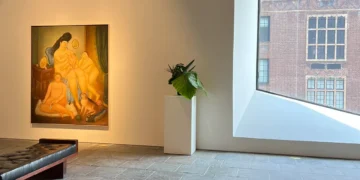



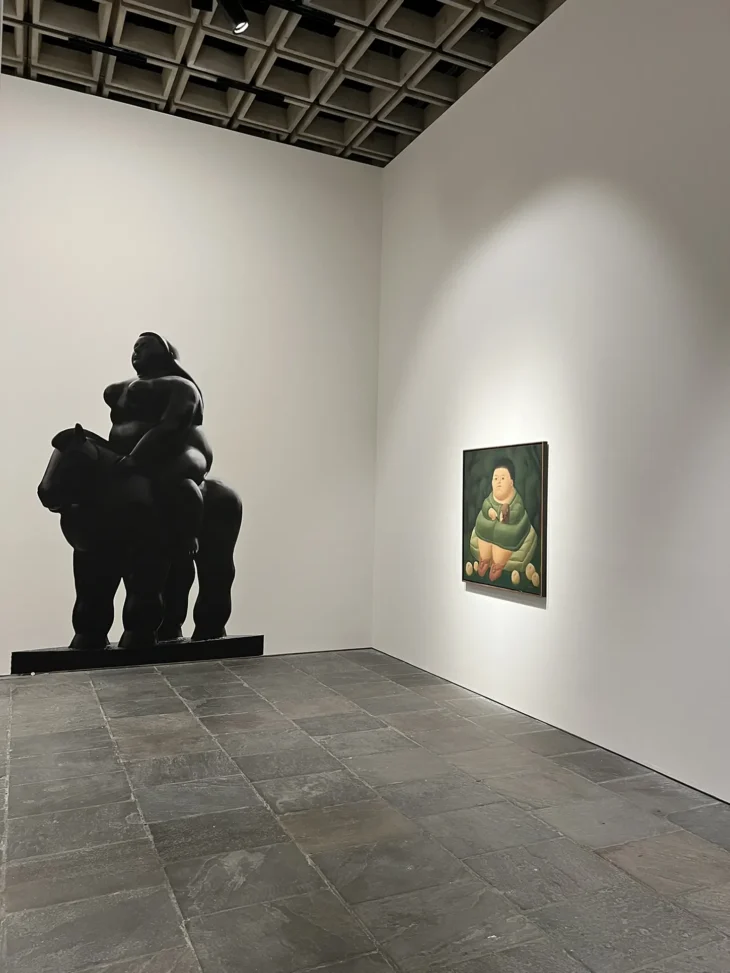
Fernando Botero arrived in New York in 1960 with $200 in his pocket and no gallery representation. He was 28 years old, a Colombian figurative painter stepping into a city entirely consumed by abstraction, and he would spend the next thirteen years there crafting one of the twentieth century’s most distinctive and stubbornly unfashionable artistic languages. Sotheby’s exhibition at the Breuer building charts this pivotal period through 37 works that document both his artistic emergence and the cold shoulder he received from a critical establishment that had little patience for someone working against the prevailing grain.
Botero described the period as living under the “dictatorship of abstract art.” New York in the 1960s was dominated by Abstract Expressionism and the emerging vocabularies of Pop, yet Botero’s insistence on figuration, on monumentality, on the body as a site of meaning, positioned him as fundamentally out of step. He was not rejected outright so much as rendered invisible, a Colombian outsider who refused to assimilate into the dominant aesthetic conversation. Galleries passed. Critics largely ignored him. The art world’s machinery, geared entirely toward abstraction, had no framework for what he was doing.
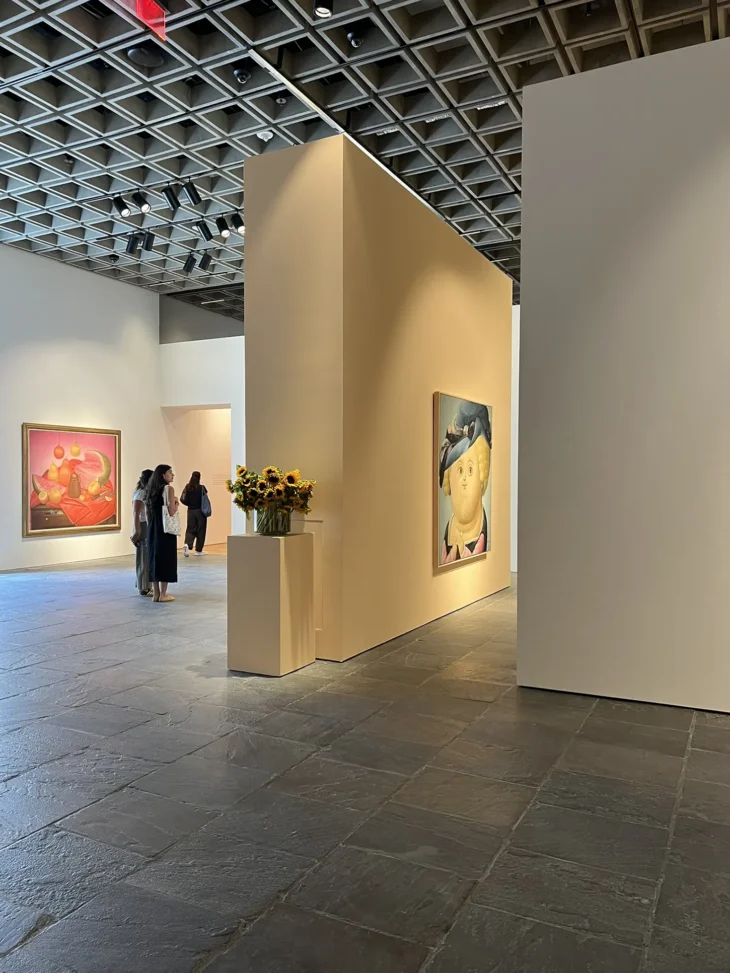
Yet this very isolation proved creatively generative. Working in deliberate contrast to prevailing trends, Botero began refining the volumetric distortion that would become his signature. His figures grew rounder, more compressed, imbued with a peculiar combination of pathos and dark humor that distinguished them sharply from his contemporaries. Where Francis Bacon twisted the figure toward existential anguish and Willem de Kooning channeled gestural energy into abstraction, Botero expanded space itself, filling canvases with corpulent bishops, rotund dancers, swollen horses, and inflated bourgeois families that functioned simultaneously as portraiture, satire, and formal experiment. Works like Pope Leo X (After Raphael) from 1964 and The Presidential Family from 1967 demonstrated his method: mining art history while subverting it, engaging canonical traditions while weaponizing them against contemporary pretension.
The New York years marked his transition from expressive brushwork toward the flattened, crystalline clarity that defined his mature practice. His engagement with the function of images in cultural memory tracked closely with Pop Art’s expansion through the Americas, yet Botero remained fundamentally distinct. Where Pop embraced mass culture’s vernacular, Botero returned obsessively to old masters, to ecclesiastical iconography, to the social hierarchies embedded in Renaissance portraiture. He was neither avant-garde nor traditional, neither fully American nor content to remain provincial. He occupied an uncomfortable middle ground, which was precisely where his power lay.
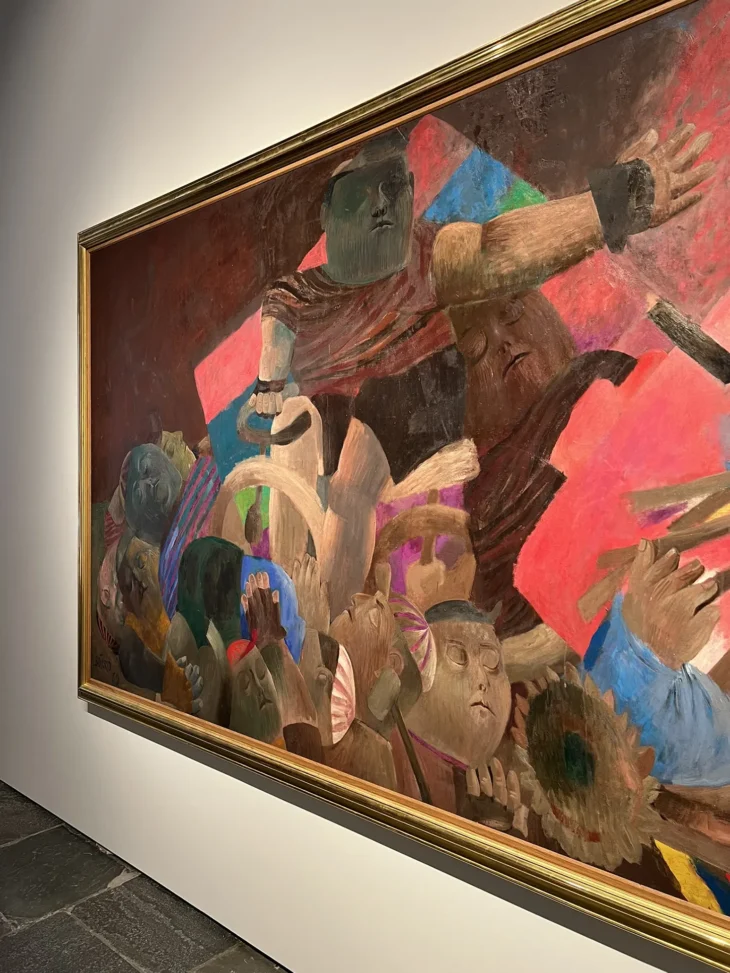
What the New York establishment failed to recognize during his residence was that Botero’s refusal of abstraction would eventually validate figuration itself. By the time he left the city in 1973, the critical consensus had begun shifting. His work, once dismissed as retrogressive or camp, would eventually be recognized as prophetic, an early argument for the enduring relevance of the human form at a moment when it seemed culturally exhausted. He would become, by his own lifetime, the most recognized artist from Latin America, his volumetric bodies reproduced across the globe, hailed by some as the Picasso of Latin America.
This exhibition arrives as a rare acknowledgment of that overlooked chapter, a critical reassessment of those years when Botero was most vulnerable and most creative. Many of these works have not been publicly exhibited in years, and some will enter private collections after the run closes. The galleries at Sotheby’s on Madison Avenue are free to enter, a fact lost on most visitors, making this window into how artistic conviction operates outside fashion genuinely unmissable.
For more on contemporary art and the New York scene, see our art coverage and New York Scene archive. For more of the Botero in New York exhibition see more in our gallery:
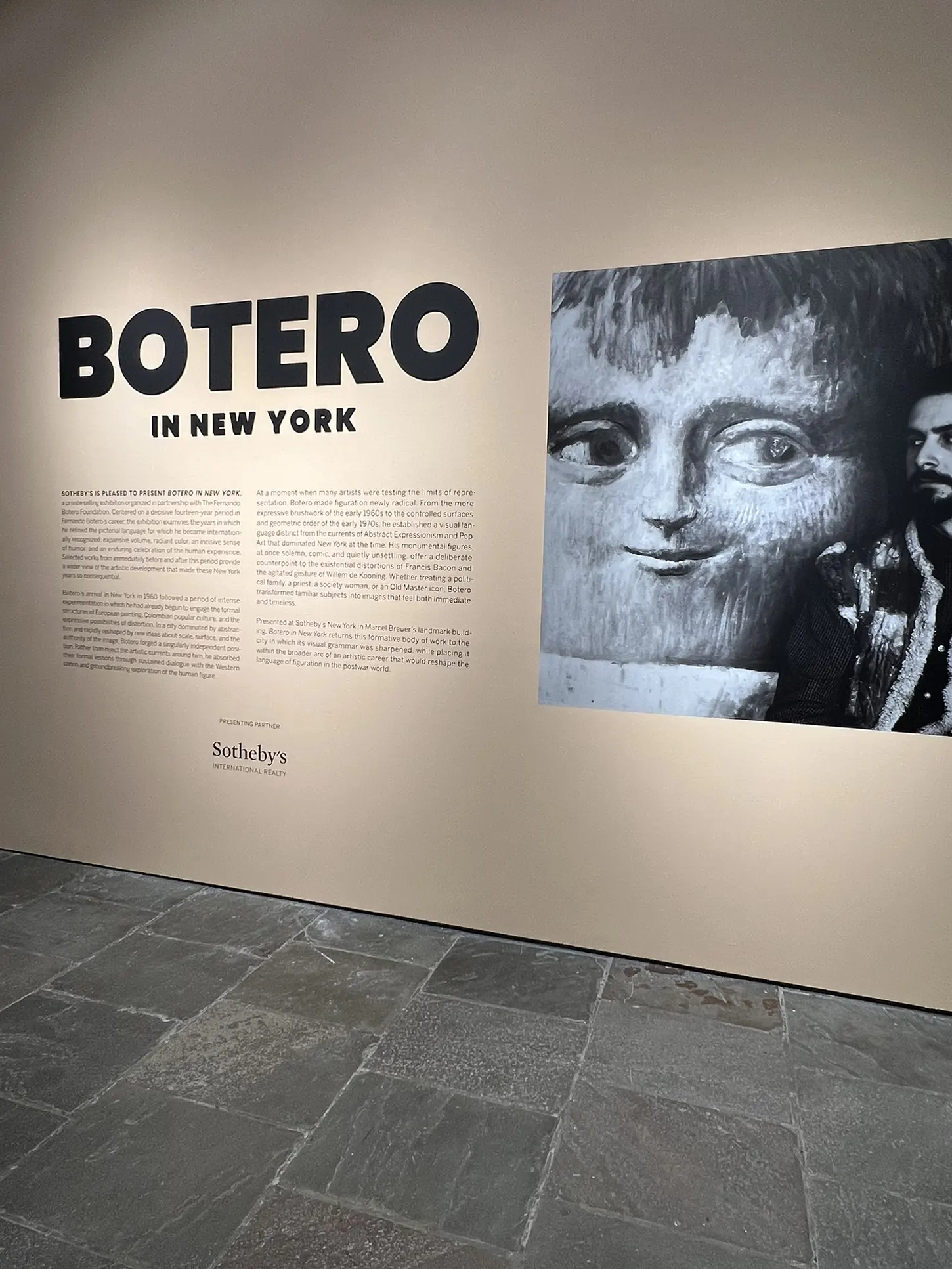
Botero in New York is on view through September 7th at Sotheby’s, 1334 York Avenue, New York, NY 10021.