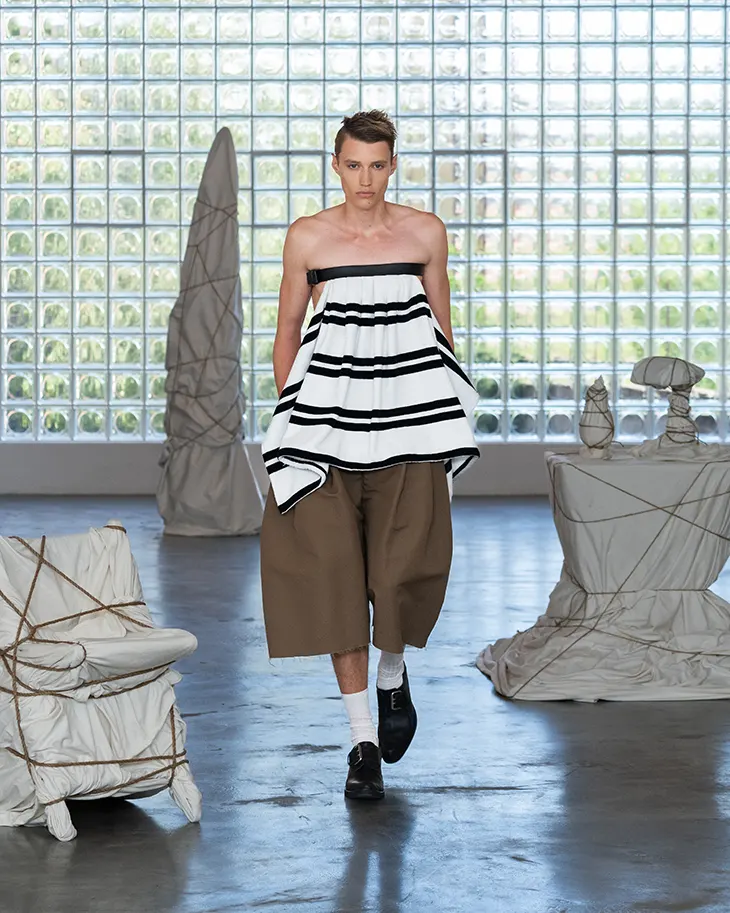



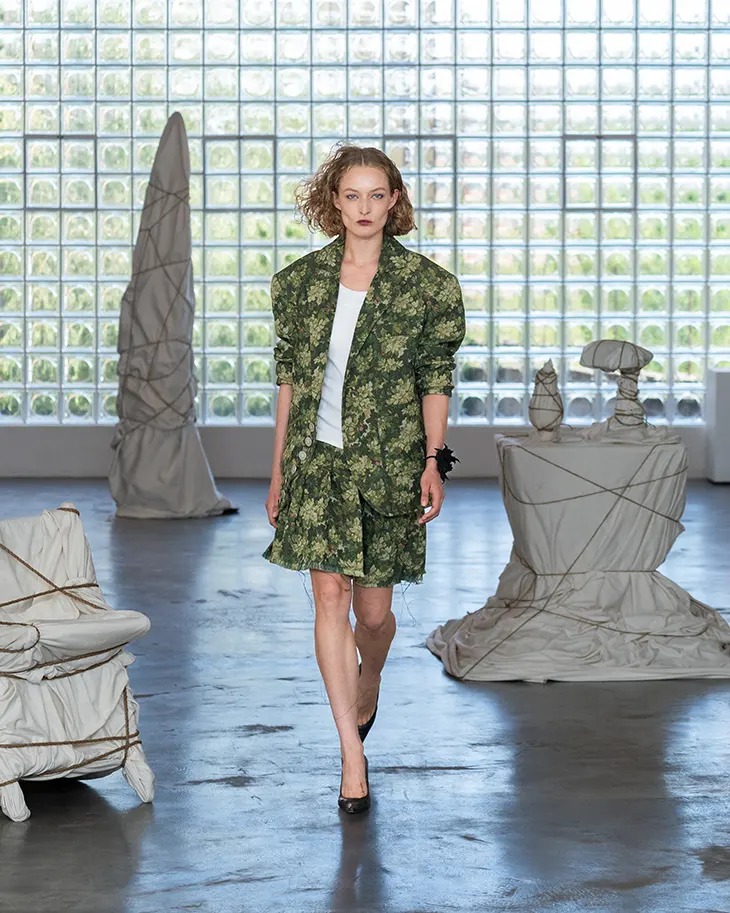
Domenico Orefice Spring Summer 2027 enters the house and begins to live inside it. Titled Habitat, the collection develops from a simple definition: a person’s preferred surroundings, an organism’s environment, a designer’s atelier. After four years of building a clear visual language through familiar silhouettes and signature codes, Orefice moves the project into a more intimate phase. A house needs people, objects, habits, and memory before it can become a home.
SPRING SUMMER 2027
Habitat asks how structure turns into experience. The collection keeps the architecture of the brand in place, then fills it with signs of life. Spaces gain presence. Objects gain meaning. Garments become part of a daily rhythm. Orefice no longer focuses on defining the house. He begins to inhabit it.
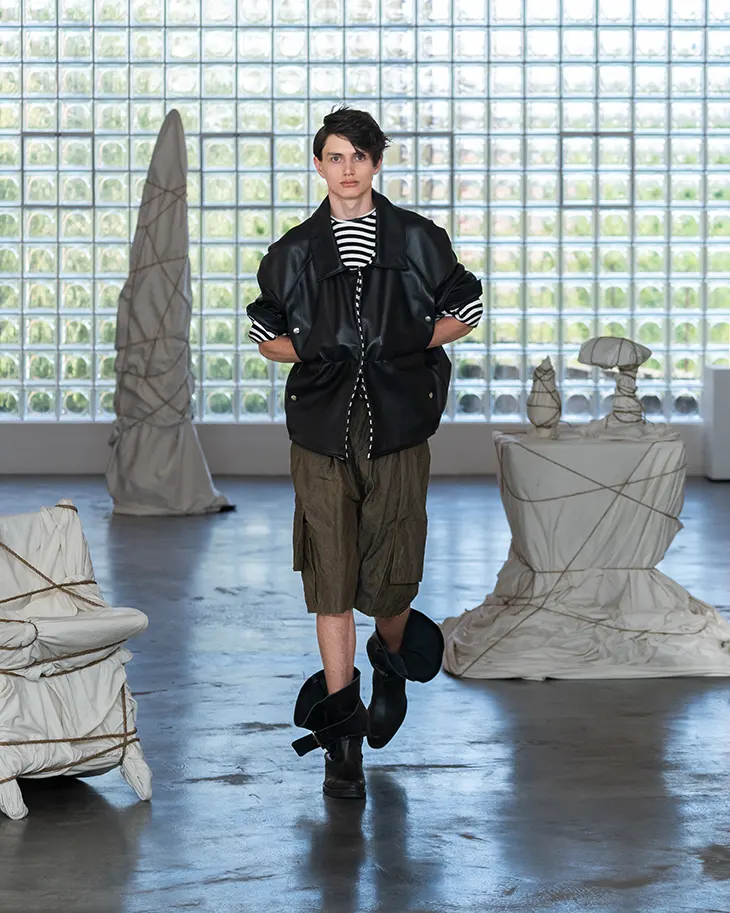
The first chapter, Habit vs Habitat, looks at clothing and the home as connected forms of shelter. Clothing holds the body, while the body exists inside the house. Both speak about comfort, privacy, and individuality. The body and the building reveal nature rather than aspiration. Clothes suggest who someone wants to be, while objects in the home suggest what someone believes in. Orefice uses recurring patterns to mark the brand’s core, then expands the season through new fabrics and cuts.
Habitude turns dressing into ritual. The collection looks at gestures repeated inside a home: keys dropped into the same bowl, a jacket thrown onto the same rack, archive pieces hanging in the room. These actions make the space feel occupied. Orefice brings his protective and primitive instinct into the collection through garments cut from the same patterned fabric as the couches in his childhood Neapolitan home. His signature coat pattern appears in terrycloth, giving the impression of a bathrobe worn through the house.
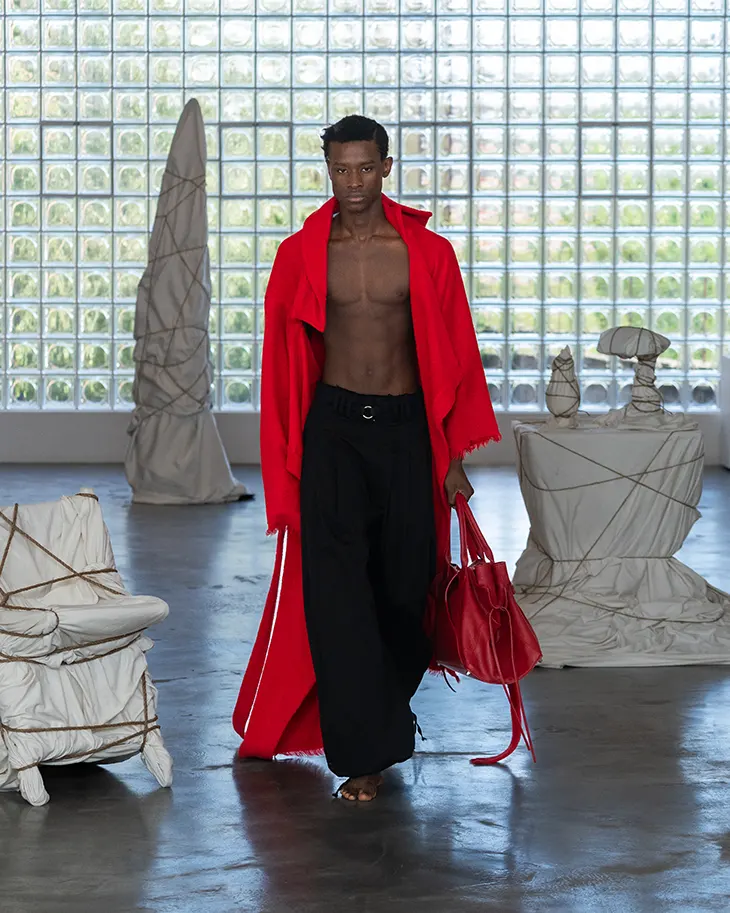
Habitat Naturel moves deeper into openness. Slip dresses become transparent. Basics unravel. Linings spill outward. These details extend the story of a home where habits become visible. The collection suggests that development can happen through small shifts rather than radical change. Leather bags lose some of their structure. Kilts appear in new fabrics. Shirts gain more modularity. As the collection opens, it softens.
Inhabiter, the fourth chapter, completes the movement into the house. To inhabit means to fill the space, wear in the couch, pull back the curtains, polish the table, drape the garment, and write down the idea. Floral patterns, stripes, and bright red bring a new conversation into Orefice’s work. Buckles loosen. Collars stay open. Shirts tuck under belts and over visually active kilts.
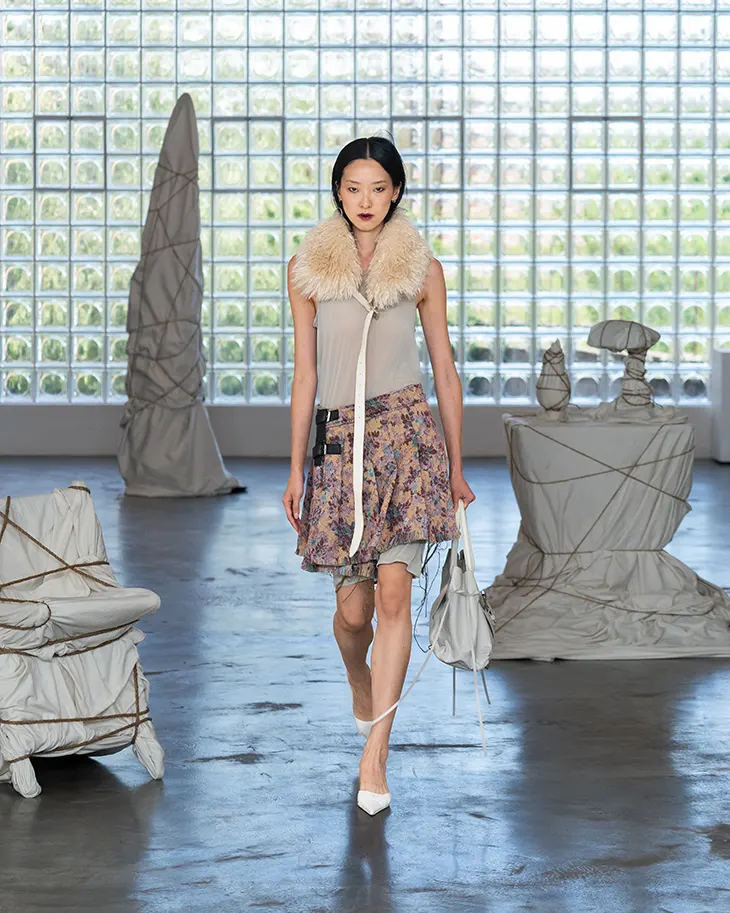
The show follows the same idea through a set that recalls a house in transition, with covered furniture and empty props. As the presentation unfolds, the vase, table, pockets, and coat hanger find purpose.
Milan based DJ and producer Niio created the soundtrack, with original compositions and voice overs by Dan Thawley and Pirrie Wright. Their texts draw from Luther Van Dross, Valentine Schlegel, and Yukihito Kono, each connected to ideas of habitat, home, and belonging.