


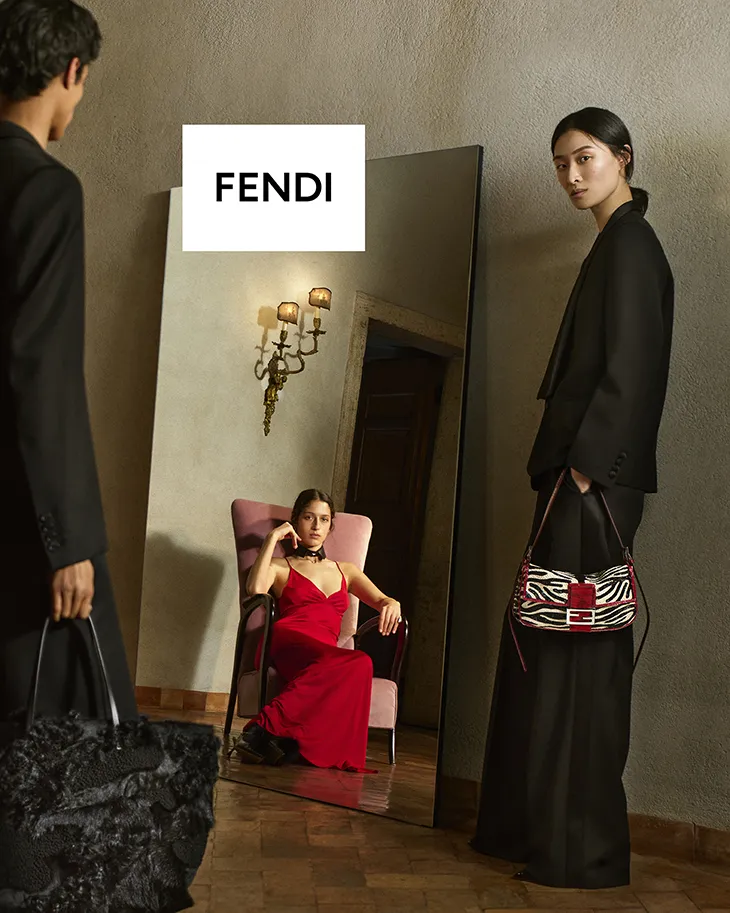
FENDI presents its Fall Winter 2026.27 campaign, featuring Maria Grazia Chiuri‘s debut collection for the house, photographed in Rome by Jo Ann Callis. The images examine the pull between human closeness and emotional distance. They focus on the need for connection, the fear of vulnerability and the limits that prevent one person from fully understanding another.
CAMPAIGNS
The campaign starts from a basic human need. People seek contact because isolation diminishes them, yet they also protect the most vulnerable parts of themselves. Callis explores that tension through pairs of figures who share a room while maintaining emotional and physical distance. Each image asks how much people can offer one another and how much they expect in return.
Callis developed the project through a sketchbook. She used drawings to map the themes, gestures and exchanges that guide the photographs. Many images study the relationship between two people, often a man and a woman. Their hands, bodies and gaze create a dialogue that reveals attraction, hesitation, dependence and separation.
Chiuri builds her FENDI vision around a shared wardrobe. Womenswear and menswear reflect one another through common features and opposing qualities. The clothes acknowledge similarity while preserving difference. This approach also examines how uniformity can sharpen masculine and feminine expression. Menswear can intensify femininity, while shared garments allow gendered qualities to appear through styling, posture and interaction.
Gesture carries much of the campaign’s meaning. A hand, a turn of the body or the distance between two figures gives each photograph its emotional charge. Callis uses these actions to suggest an ongoing negotiation between masculine and feminine qualities. The clothes support that exchange through form, fabric and proportion.
Each photograph works as one moment from a larger sequence. Callis links the images through recurring gestures and spatial relationships. Two people may share the same interior, yet the gap between them remains visible. Their proximity creates tension because physical nearness never guarantees emotional access.
The campaign takes inspiration from Pina Bausch, especially her exploration of emotional pressure through physical proximity. Callis applies that influence to the interaction between bodies, clothes and space. The subjects communicate through posture and distance, giving the series a theatrical quality while keeping the emotional focus on human connection.
Rome also shapes the campaign. Its architecture, interiors and ruins connect with the project’s interest in layered experience and incomplete access. Sconces, drapery and fabric under changing light become major visual elements. Callis uses the setting to separate the images from ordinary daily life and create an almost dreamlike atmosphere.
Clothing and accessories interact with the rooms, while light gives the fabrics texture and depth. The resulting images draw viewers into a constructed reality that recalls the cinematic history of Rome and FENDI. Through gesture, distance and shared dress, the campaign presents connection as an essential human need that always carries risk, longing and uncertainty.








the video is the higlight of this ! but not sure what helps with this boring Maria collection for Fendi