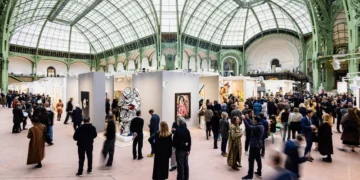



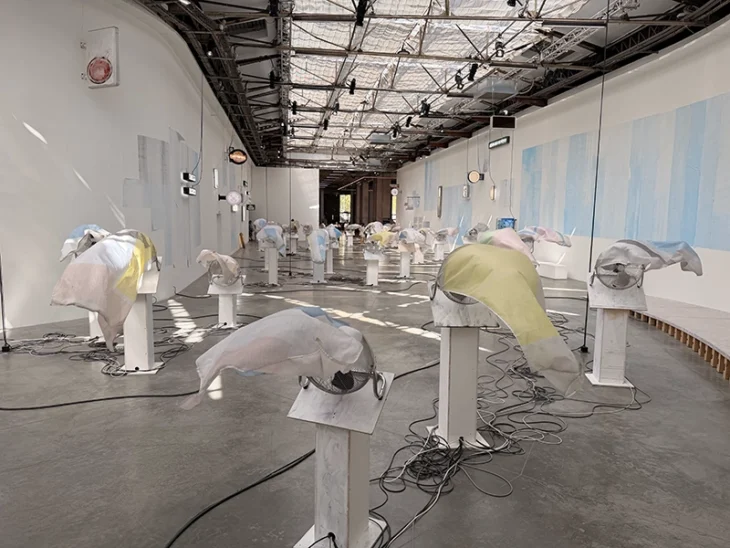
There is something deliberately unstable about Jesse Darling’s The Ambassadors. Installed in the Grande Verrière of Palais de Tokyo, the exhibition gathers familiar objects associated with communication, commerce and institutional authority, then deprives them of their usual certainty. Lecterns stand like a crowd waiting to speak. Flags flutter above them. Posters and advertising signs remain present while their messages become illegible. The machinery of public communication continues to operate, yet meaning has started to disappear.
ART
Darling, who won the Turner Prize in 2023, has spent over a decade examining how social and political structures determine bodies and objects. His sculptures frequently begin with industrial materials, found items and discarded objects, including material collected near exhibition sites. He assembles these fragments into forms that retain evidence of use, damage and deterioration. At Palais de Tokyo, that approach takes on an architectural scale.
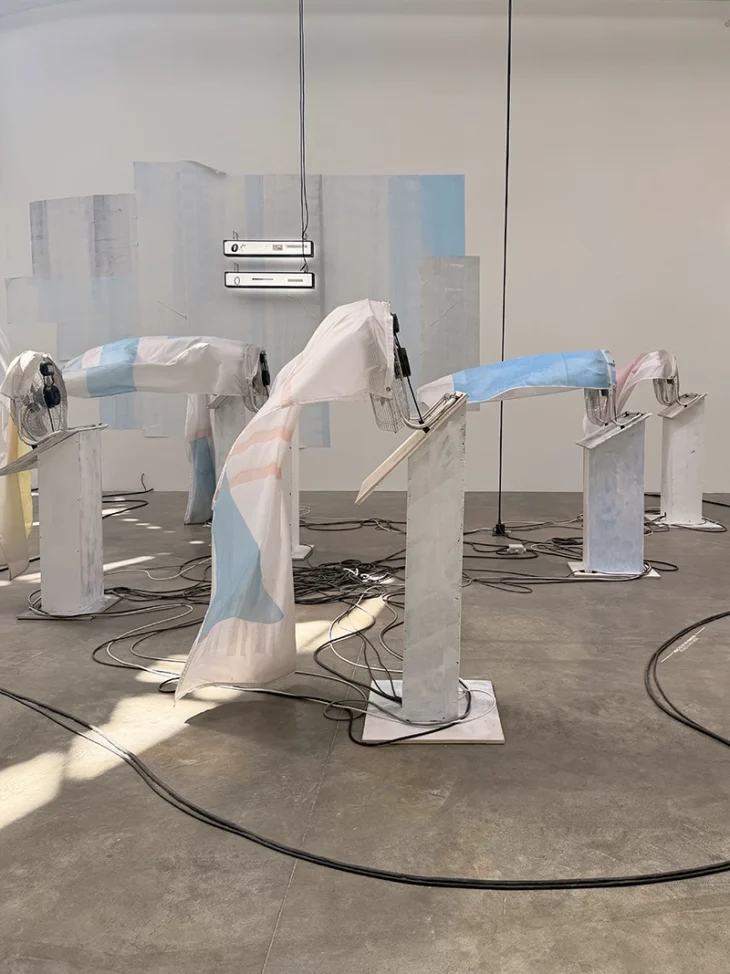
The Grande Verrière gives Darling an unusually expansive space, and he resists filling it with conventional monumentality. Instead, the installation creates the impression of infrastructure losing its function. Objects remain recognizable enough to carry their associations, while alteration and decay interrupt their original purpose. A lectern suggests authority because somebody should stand behind it. A flag usually identifies a nation, institution or cause. An advertisement depends on its ability to communicate. Darling keeps these formats intact just long enough for their failure to register.
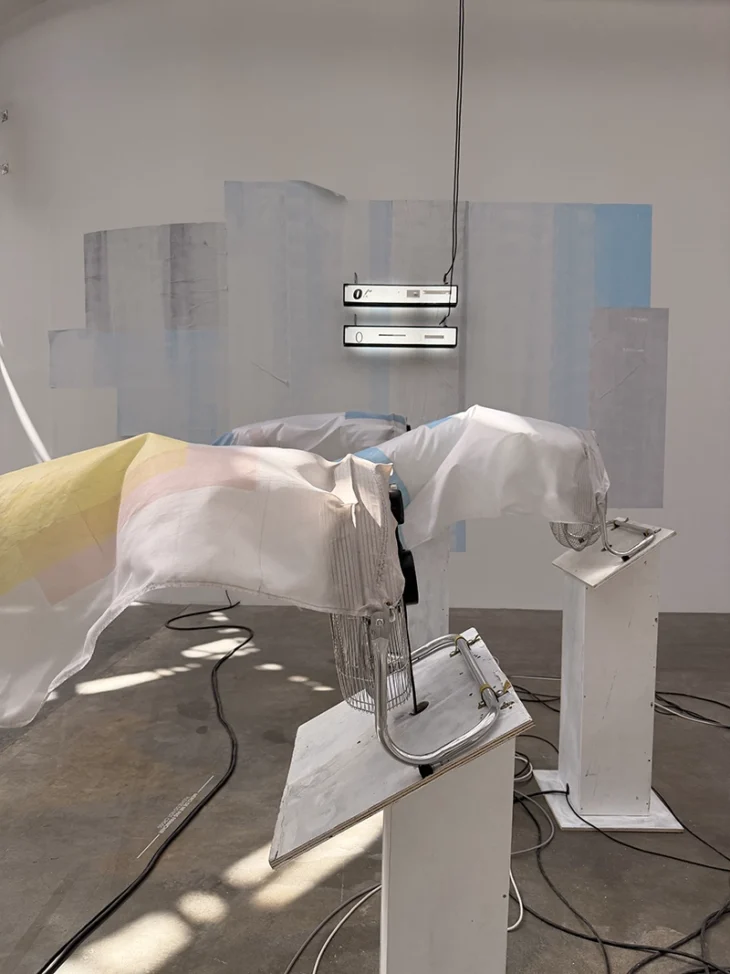
This makes the crowd of lecterns particularly effective. They resemble figures despite their absence of bodies, creating an assembly without speakers and a public address without intelligible speech. The flags above them still react to moving air, giving the installation an uncanny sense of activity. Something continues to perform even after its message has collapsed.
The title pushes this reading further. The Ambassadors refers to Hans Holbein the Younger’s 1533 painting of the same name, a work filled with objects that communicate knowledge, status, wealth and intellectual authority. Its famous distorted skull introduces mortality into that display of accomplishment. Darling draws on the Renaissance tradition of vanitas, where material possessions and symbols of achievement ultimately confront decay and death.
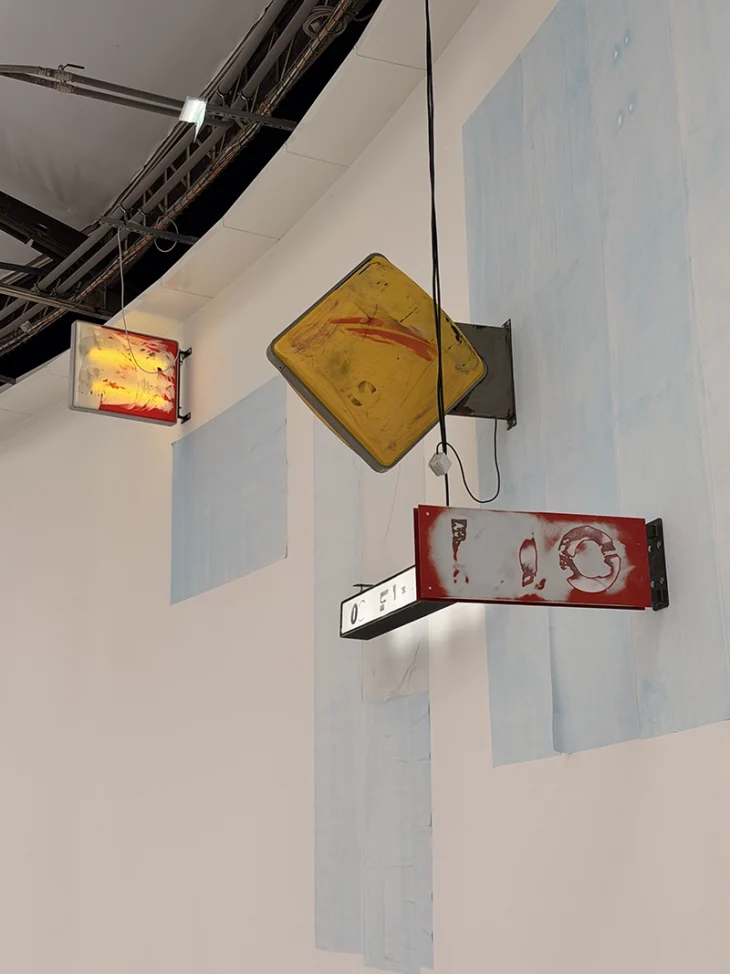
His version transfers that idea into the material language of contemporary production. Advertising structures, industrial components and discarded objects become present-day relics. Their deterioration concerns physical matter, while their damaged ability to communicate raises another question: what happens when the symbols through which institutions establish authority remain visible after confidence in their meaning begins to erode?
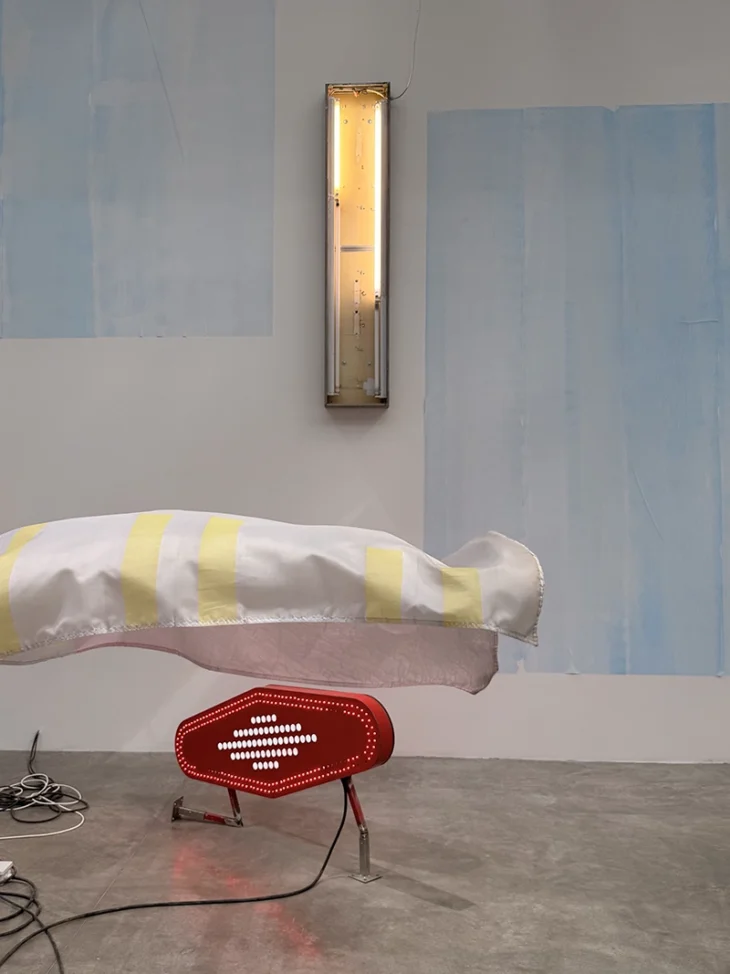
Darling avoids illustrating a single political argument. The installation works through impairment. Signs become unreadable. Platforms for speech lose their speakers. Flags remain in motion while identification becomes uncertain. The exhibition therefore places considerable weight on recognition. Visitors understand what these objects normally ask us to do before encountering their inability to fulfil those expectations.
That tension also prevents the installation from becoming a straightforward ruin. These objects have not disappeared. They persist, damaged and awkward, occupying the gallery with the residue of systems of production, consumption and power. Darling treats deterioration as an active condition. Materials sag, flutter, accumulate and resist the clean efficiency expected from the structures they reference.

Curator Guillaume Désanges, gives the installation enough spatial freedom for this disorder to remain legible. Darling’s idea of “useful disorder,” understood as an undoing of order, becomes especially relevant here. The exhibition disrupts systems without replacing them with a neat alternative.
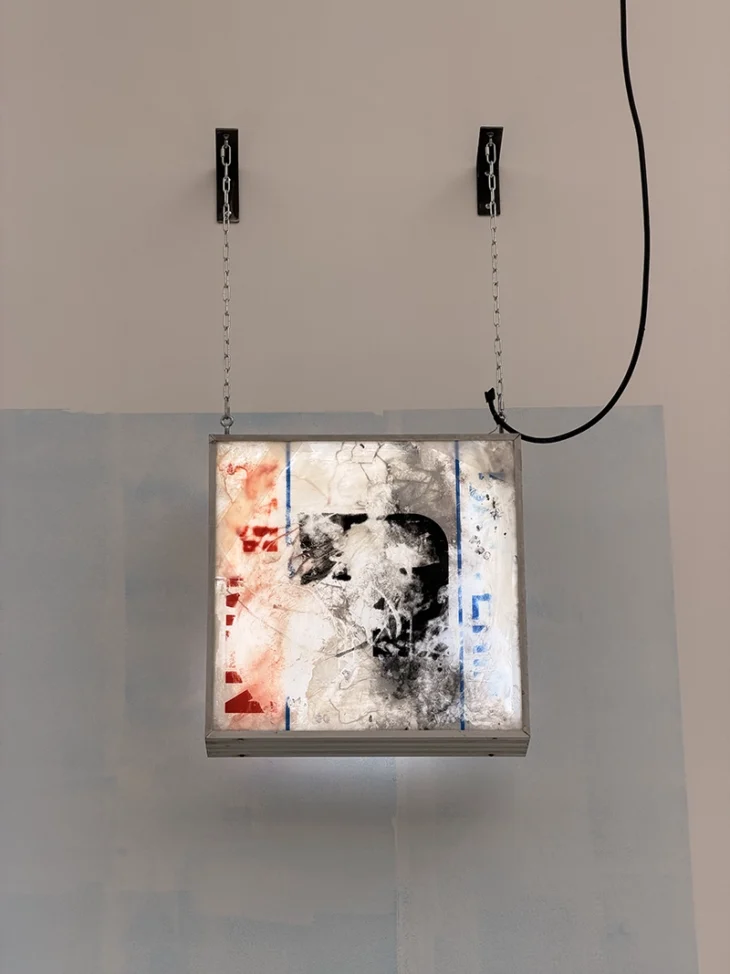
The Ambassadors ultimately leaves visitors among structures that still resemble authority while struggling to perform it. Darling finds tension in that incomplete collapse. The flags still flutter. The lecterns still stand. The signs still occupy space. Their power, however, no longer feels guaranteed.