


ZEGNA Fall Winter 2026 unfolds around the idea of a family closet, a place where clothing lives, rests, and returns to the body again and again. The closet exists as more than storage. It holds memory, habit, and continuity. Garments wait there between moments of wear, carrying traces of past lives while remaining ready for new ones. Over time, this space grows through accumulation, linking generations through the simple act of dressing.
The collection takes shape inside an imagined closet filled with real garments belonging to Gildo Zegna and Paolo Zegna, members of the third generation of the Zegna family. Personal pieces sit alongside items passed down from earlier generations. These clothes do not function as relics. They act as living references that shape the collection’s approach to form, fabric, and proportion. At the center stands “ABITO N.1,” the first suit made in the 1930s for Count Ermenegildo Zegna, crafted Su Misura in Australian wool and preserved inside a glass case. It anchors the collection in lived history and personal use.
For Artistic Director Alessandro Sartori, fashion grows from experience. He frames clothing as an outer skin chosen daily, a record written over time through wear. In this collection, garments pass from one body to another within a shared wardrobe, protected from neglect so they can remain useful. Sartori focuses on the moment of discovery when someone encounters a piece once worn by a father, grandfather, or uncle. That encounter invites curiosity, study, and experimentation. It opens a quiet dialogue between bodies, posture, and attitude. The idea of creating clothes meant to stay in use across years and owners fuels the work.
Trofeo wool, introduced in 1965, plays a central role and appears through contemporary interpretations. The process relies on repeated testing, styling, wearing, and adjustment. Each garment undergoes direct work on the body, refined over time through use.
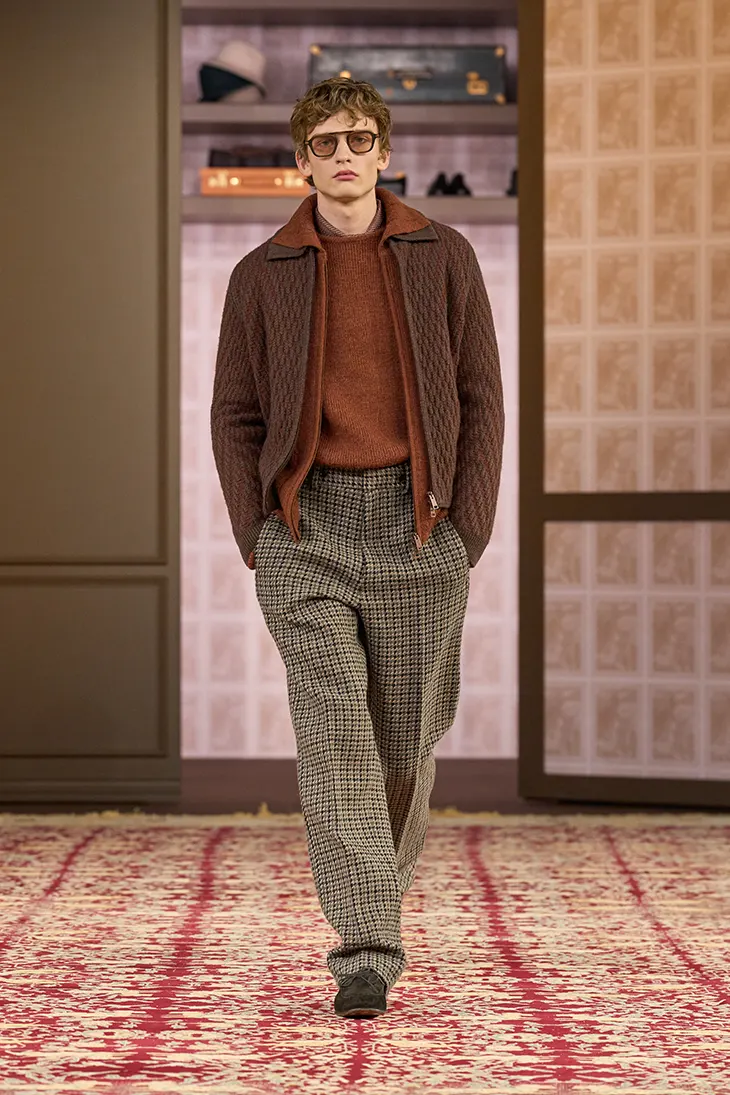
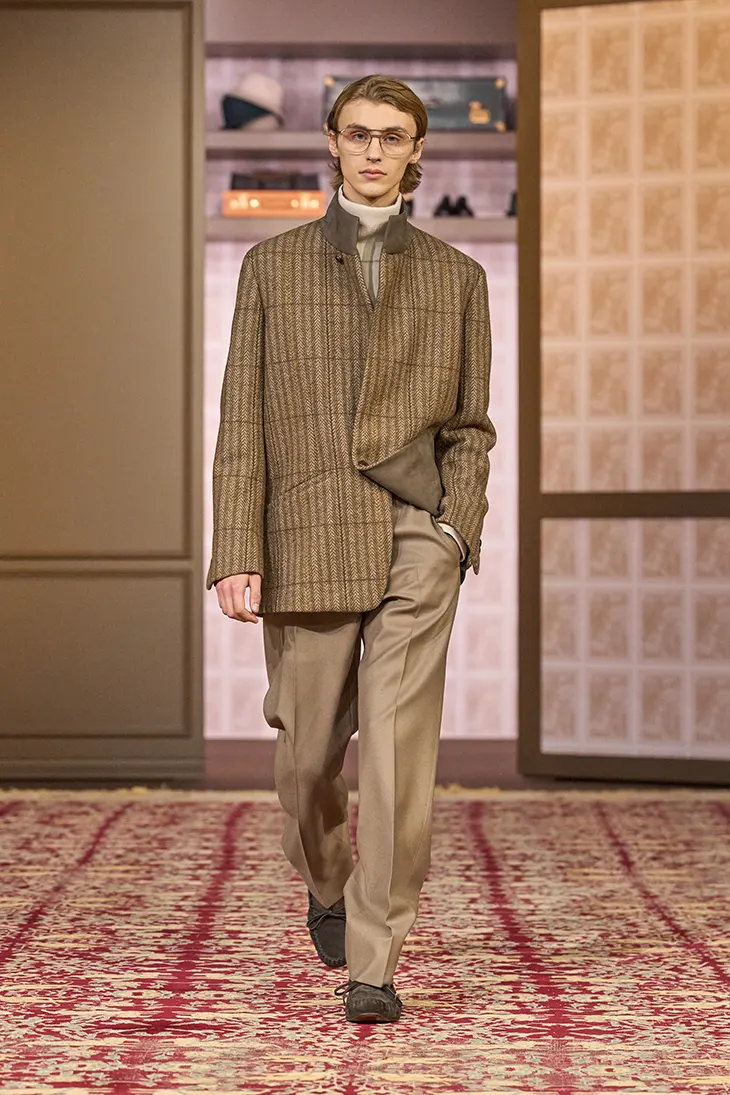
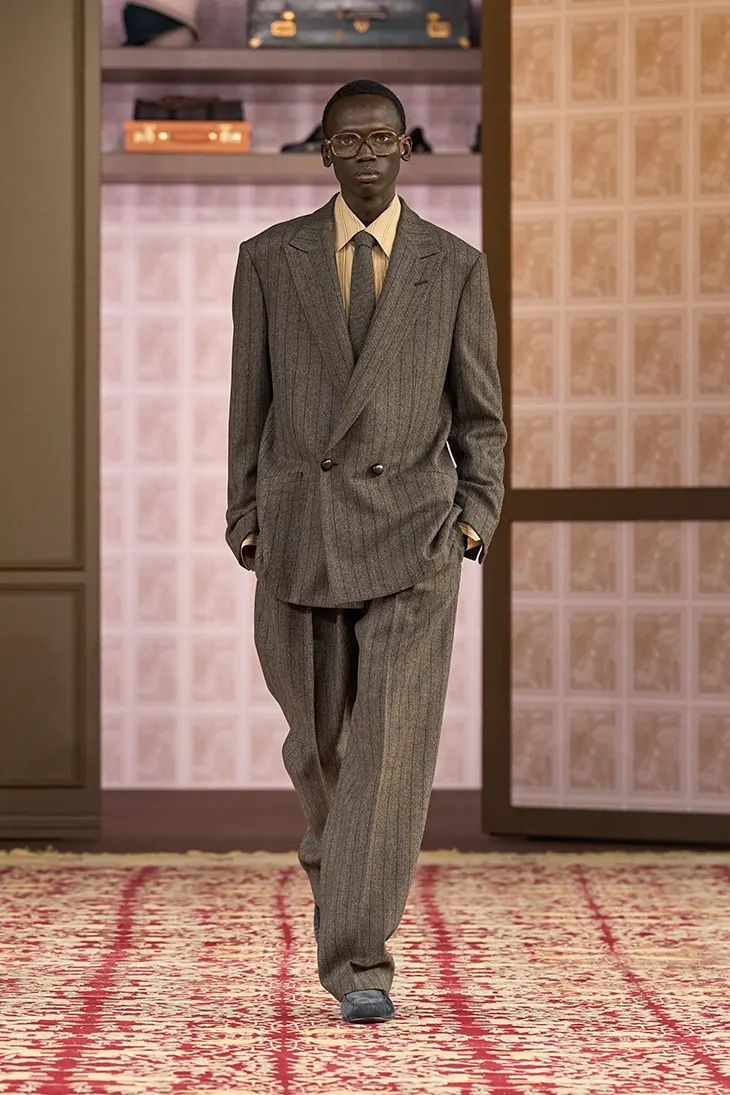
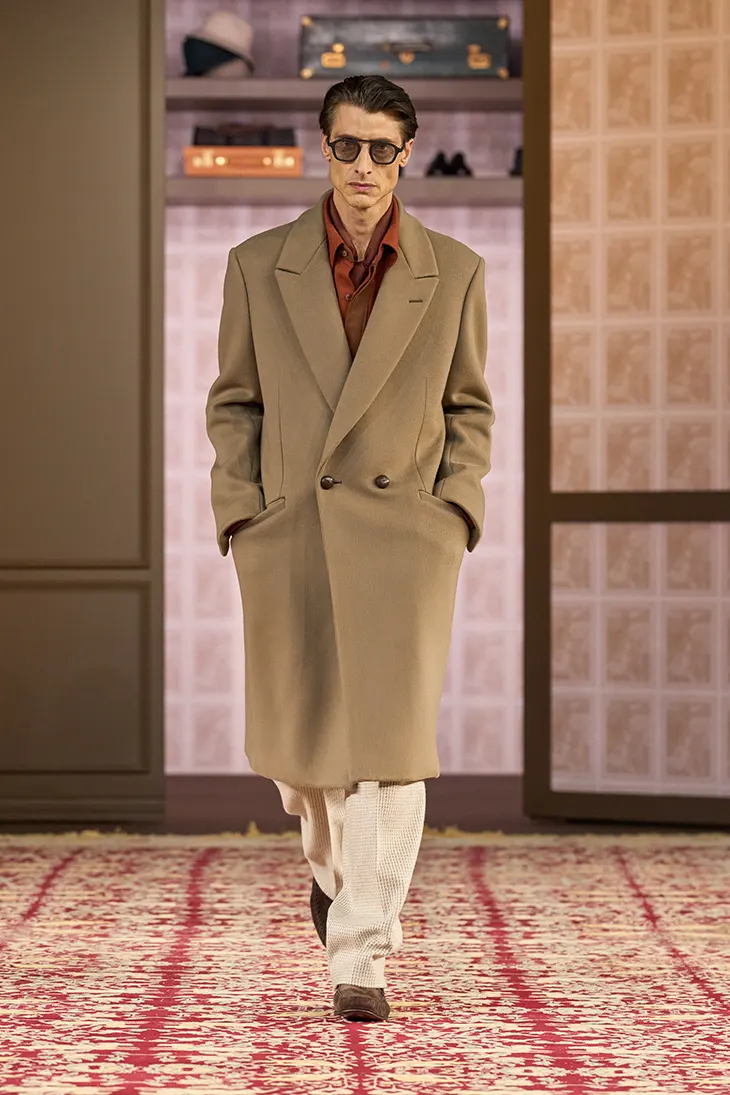
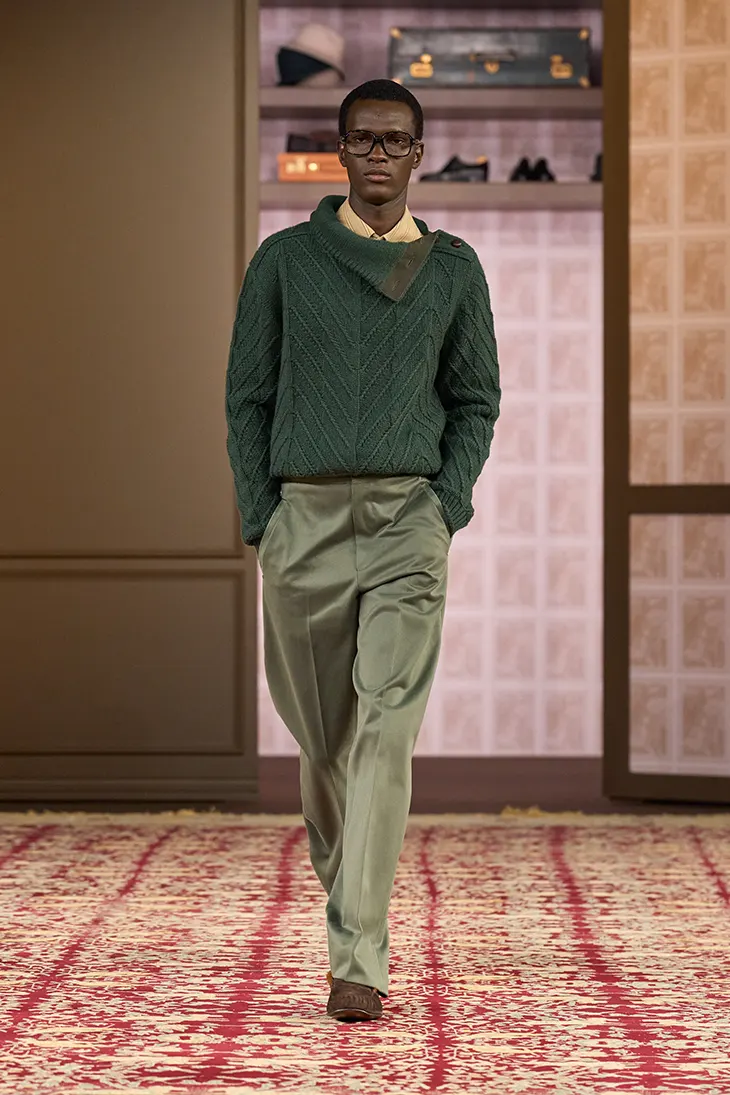
Coats and jackets extend in length and volume, marked by square shoulders. Trousers flow from a high, drawn-in waist. The double-breasted jacket shifts character. Some versions reduce the closure to a third of its usual structure, while others add a horizontal button between traditional points, allowing different fastening options and varied fits. The collection insists on flexibility. Blazers feature double lapels, blousons arrive with double collars, and categories remain fluid.
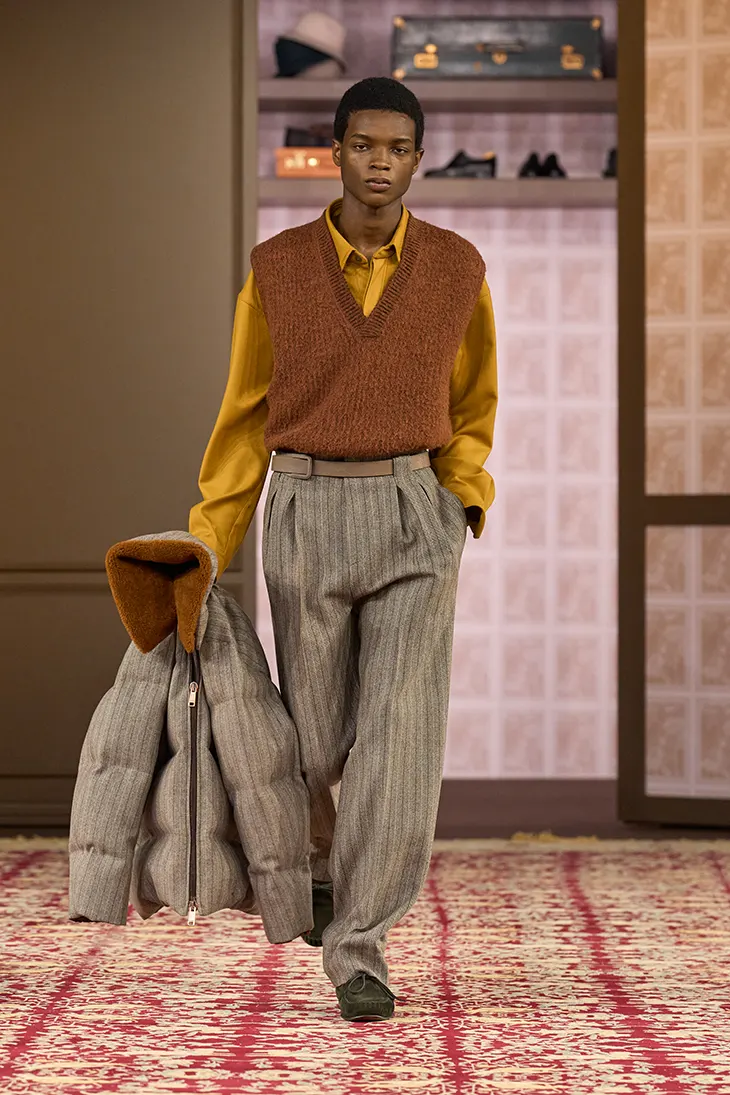
Shearling and knitted bombers add warmth and texture. Leather appears with a graphic edge in stand-up collar blazers, quilted gilets, and bombers. Accessories extend the wardrobe logic through outdoor slippers and moccasins in suede, wool felt, and nubuck, along with squared glasses, felt-lined leather rain hats, and softly structured duffel bags and briefcases.
The color range builds from creamy notes of stella alpina, meliga, and larice to deeper tones of mogano, brandy, terra, corteccia, betulla, torba, and bosco. Accents of zaffiro, bruma, and giada punctuate the palette, while anthracite grey and softened black reference classic menswear origins. Fabrics span tweeds, flannels, denim, gabardines, and cashmere variations, chosen for weight, texture, and longevity of use.