


Maison Christian Louboutin presents the first Men’s Fall Winter 2026 collection under Men’s Creative Director Jaden Smith in Paris through an immersive exhibition conceived as a slow reveal. Unfolding across a sequence of spaces, the project introduces Smith’s creative direction while acknowledging the established codes of Christian Louboutin Men. The debut takes the form of an experience moving through fashion, visual art, music, and historical reference.
Each space adds a layer to the narrative, guiding visitors through Smith’s approach to image, form, and time. The structure allows the collection to emerge gradually, positioning the work as an opening chapter rather than a conclusion. Throughout the exhibition, Smith addresses the past, present, and future through an intergenerational lens.
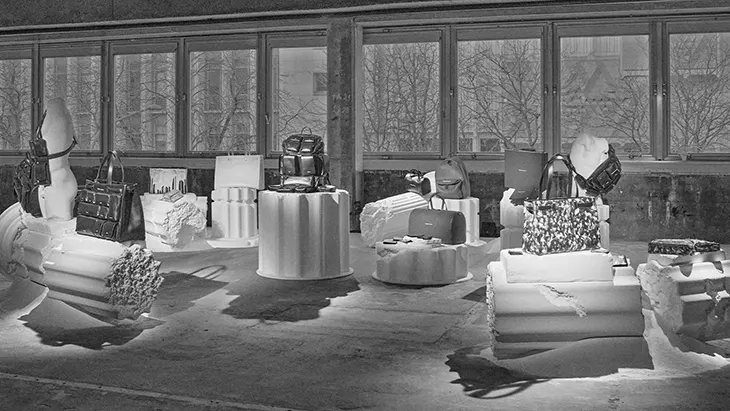
Photography and cinema anchor the visual language of the project. These mediums sit at the center of Smith’s practice and connect directly to France as their place of origin. The exhibition references 19th-century experiments that examined light and movement as forces shaping identity. By drawing from these early visual histories, Smith situates his work within a longer continuum of image-making.
The debut also introduces an avant-première capsule that offers an early glimpse into Smith’s universe. Available from January 22 in select boutiques and online, the capsule revisits established silhouettes while introducing new, more experimental forms. A chromatic trilogy of red, black, and white structures the selection. This capsule precedes the full Men’s Fall Winter 2026 collection, which will arrive in stores in June.
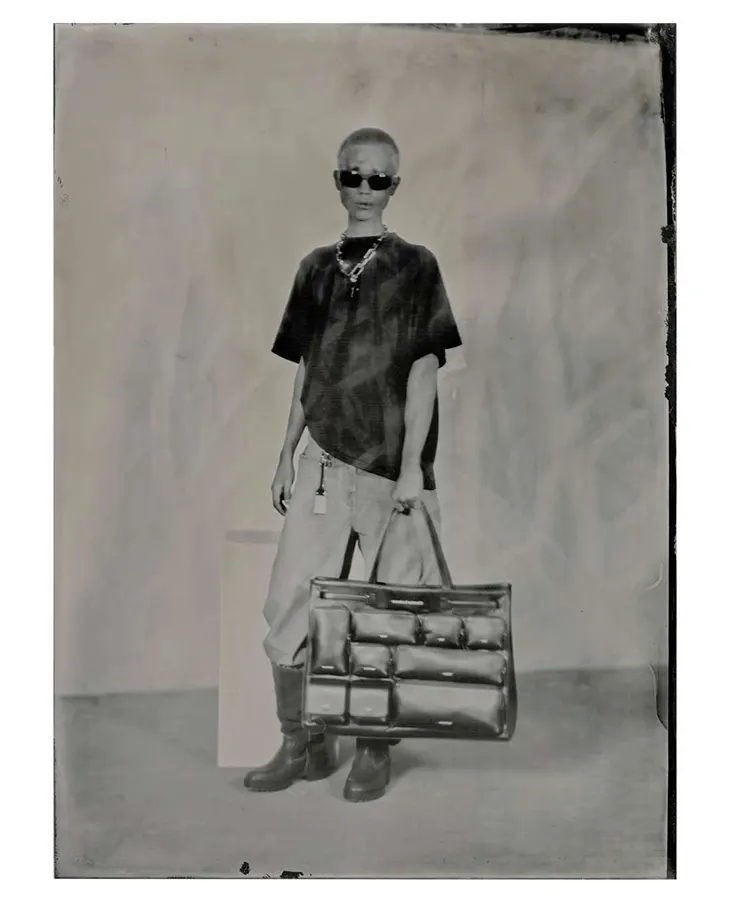
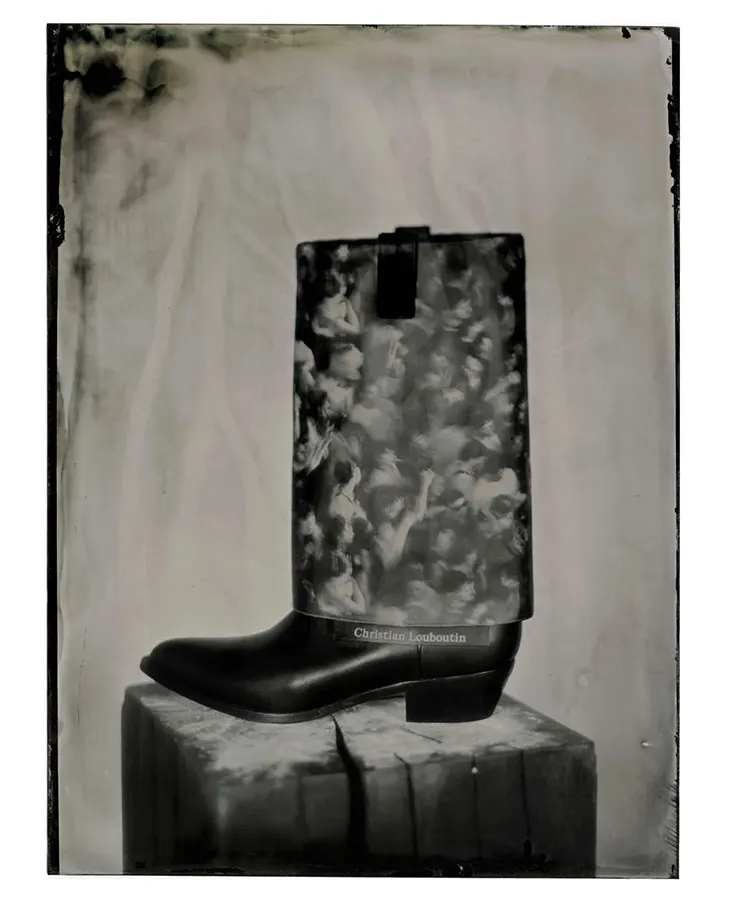
At the core of the collection stands the Corteo, a shoe first introduced in Fall Winter 2019. Within the exhibition, the Corteo operates as an entry point into the Maison’s history. For Smith, the model represents elegance and presence through discipline and intention. He associates it with figures who build through effort, including working men across professions and eras. His own words describe the collection as inspired by “the history of working men throughout the centuries,” referencing stone masons, scribes, and doctors while situating these roles within a broader cosmic imagination shaped by pressure and time.
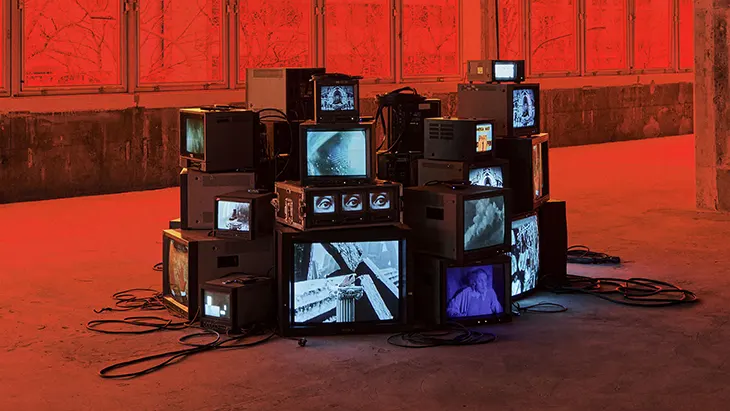
Beyond the garments and footwear, the exhibition reflects on the circulation of images and their quiet influence on collective memory. A 360-degree installation composed of vintage television screens assembles footage from different historical periods.
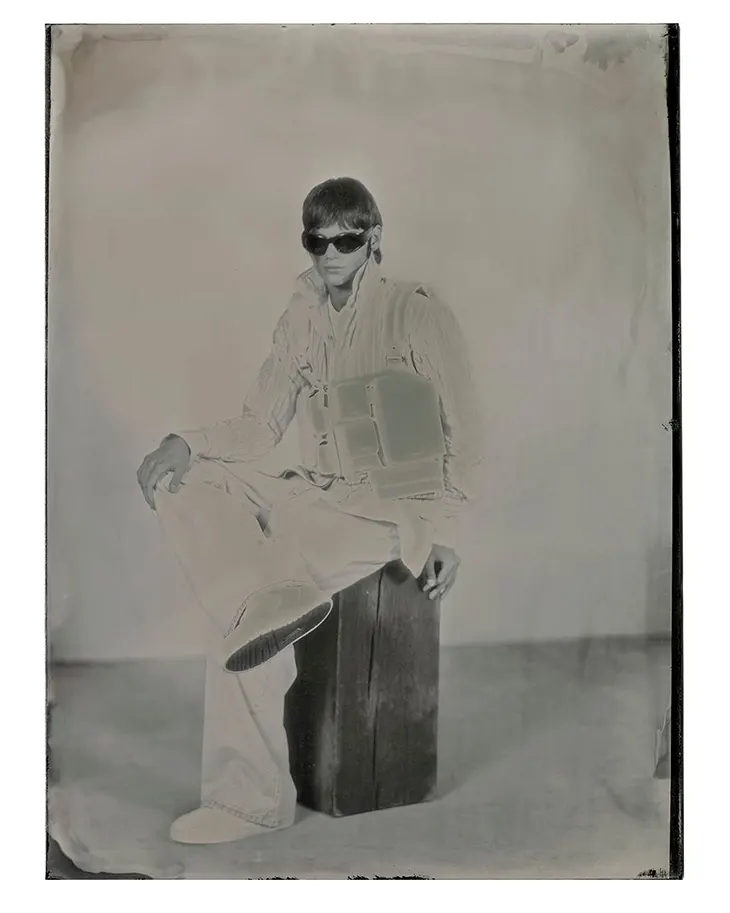
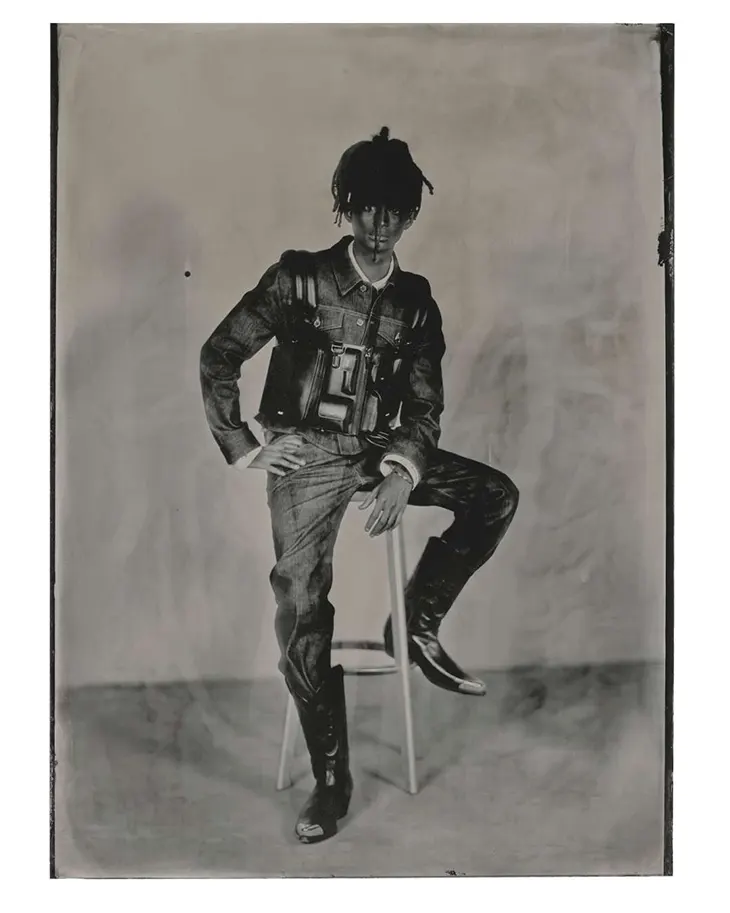
A separate photographic installation presents pieces from the collection captured using early photographic techniques. Each image forms under a cloth and develops by hand through silver and chemical processes, allowing forms to surface gradually.
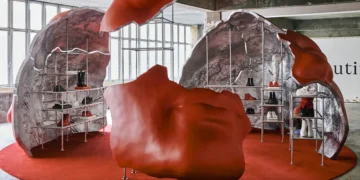
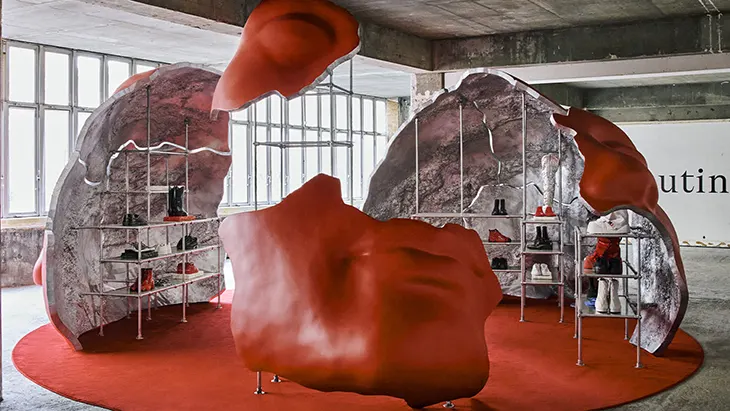
The experience concludes with a monumental exploded red head that dominates the final space. This sculptural form acts as an immersive display and signals the closing chapter of the exhibition. Through this sequence of environments, Jaden Smith introduces his first vision for Christian Louboutin Men as a system shaped by image, history, and evolving identity.