


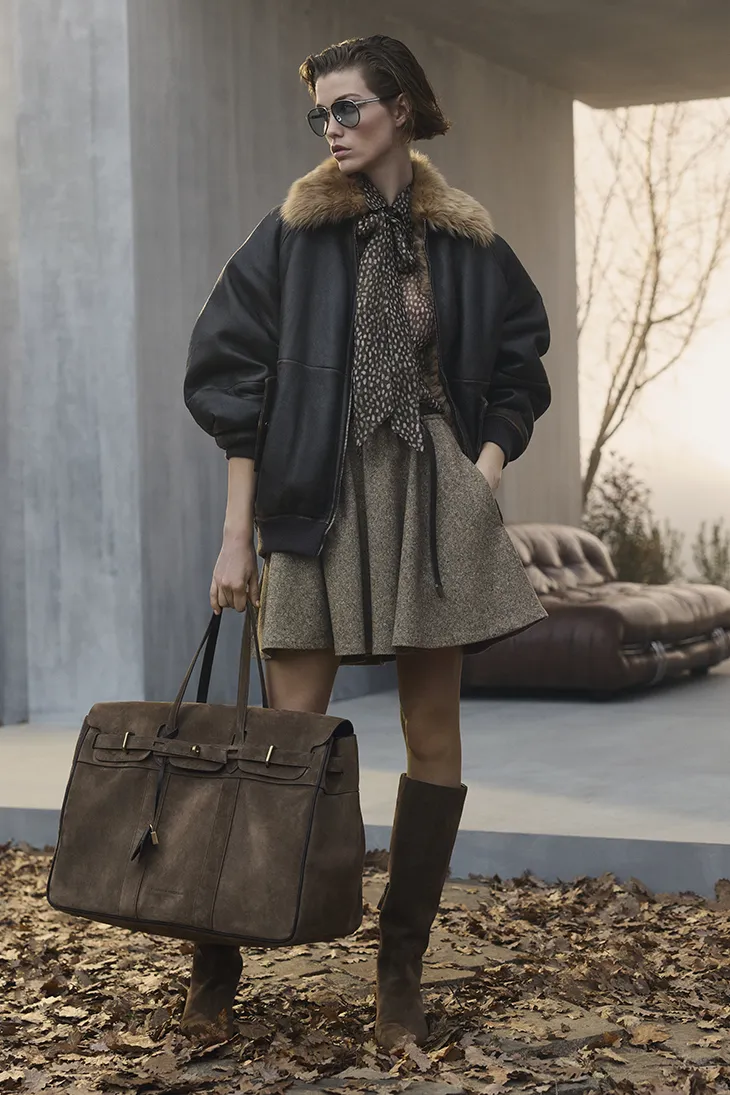
Fashion house Brunello Cucinelli presents its Fall Winter 2026 collection shaped through narrative, material, and tailoring. The season reflects the house’s established identity, with craftsmanship, natural fibers, and refined construction guiding each garment. The collection develops through references drawn from memory, place, and texture, forming silhouettes that balance delicacy and strength. Tailoring, knitwear, and fabric treatment define the foundation of this direction.
FALL WINTER 2026 WOMENSWEAR
Tailoring introduces structure through references to the British countryside. Checks, houndstooth, Prince of Wales, windowpane, and tartan patterns appear throughout the collection. These motifs appear across woven textiles, jacquard knits, printed silk, and shearling. Orthogonal lines derived from British tailoring create graphic structure, while embroidery and lace introduce softer visual elements. Animalier-inspired detailing adds variation within this framework. These components shape garments that reflect rustic influence combined with refined construction.
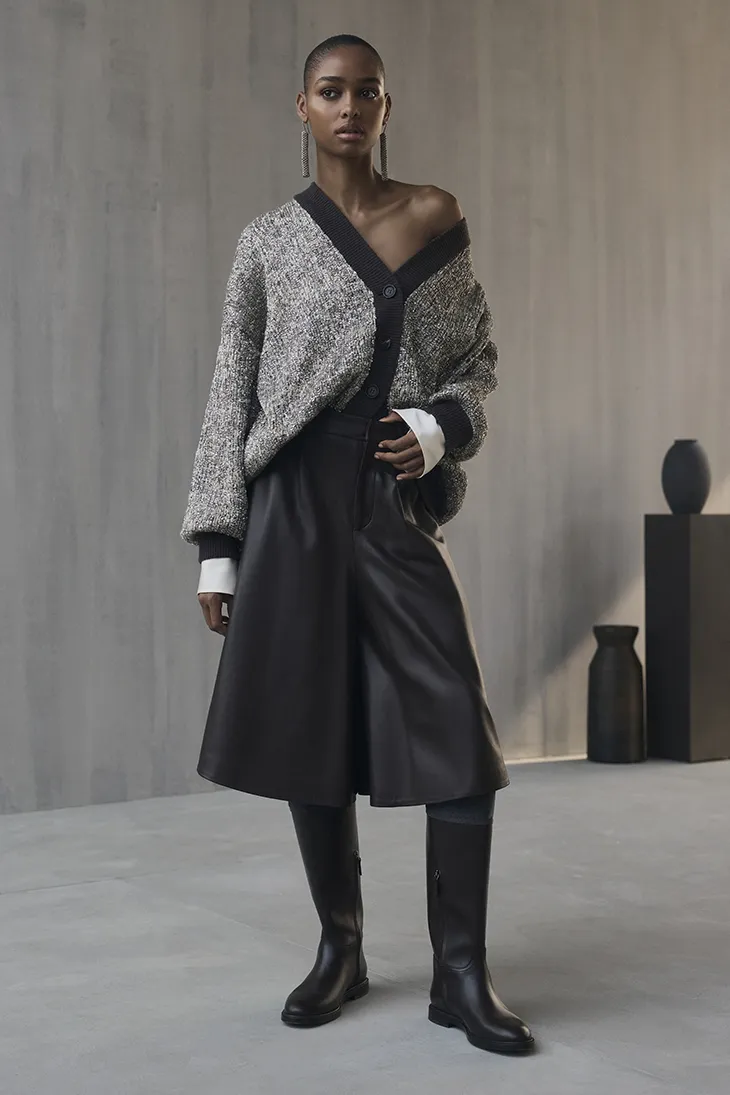
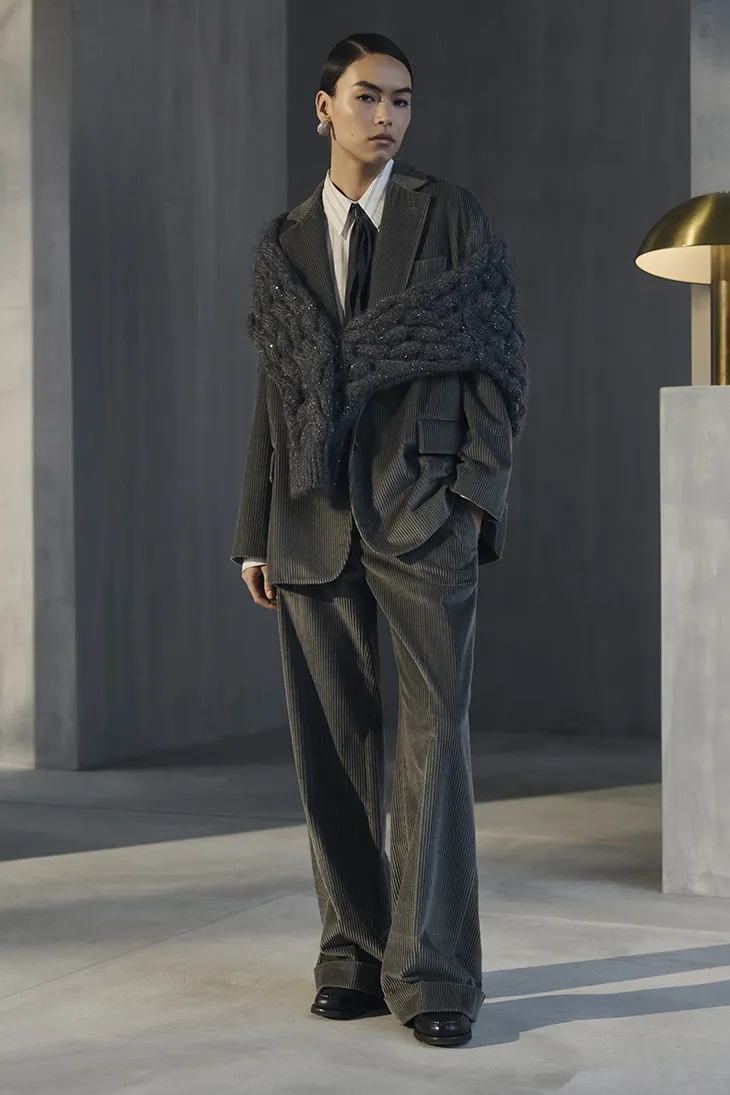
Fabric selection emphasizes surface and texture. Tweed, brushed wool, and malfilé introduce density and structure. Transparent weaves, lace, and silk introduce lighter material presence. These variations create contrast between heavier and lighter fabrics, allowing garments to shift between solidity and fluidity. Neutral tones dominate the palette, reinforcing material depth through tactile effect. Subtle tonal variation strengthens the visual complexity of woven and knitted surfaces.
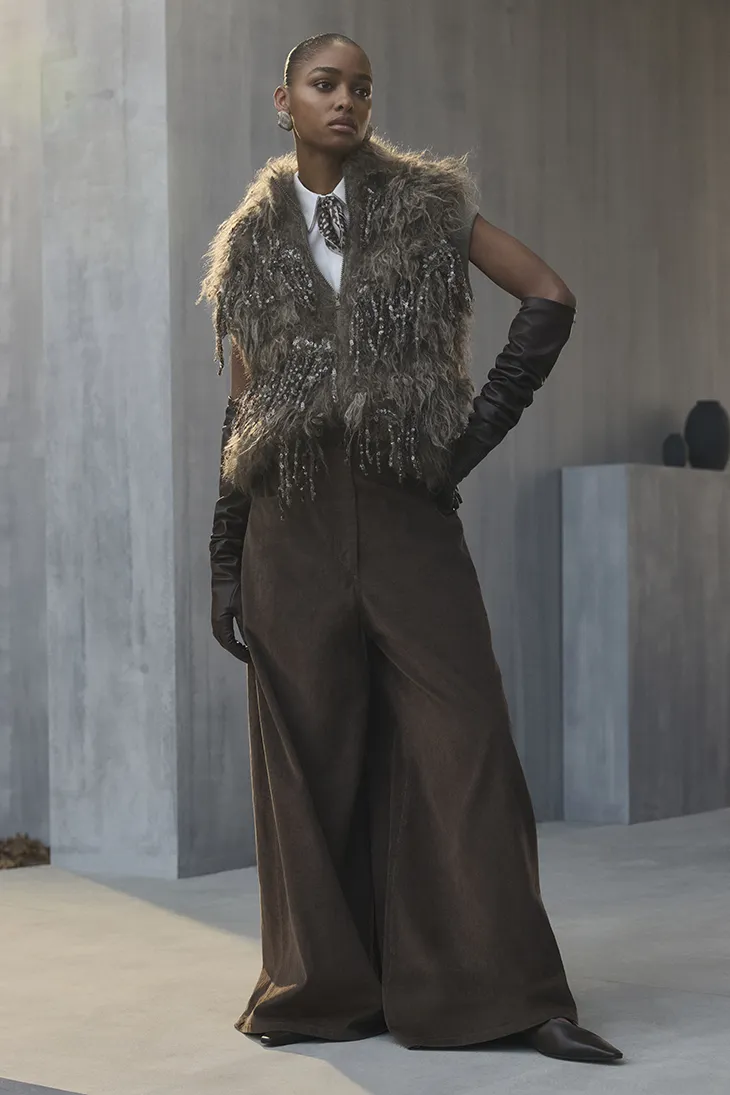
Knitwear develops through advanced textile techniques. Yarn manipulation introduces three-dimensional structure through fur-like stitches and mouliné-effect fringes. Mohair and sequin threads integrate into knit constructions, creating reflective surfaces and layered texture. These garments expand knitwear beyond conventional function, presenting it as a primary element within the wardrobe. Each knitted piece reflects technical expertise through construction and material treatment.
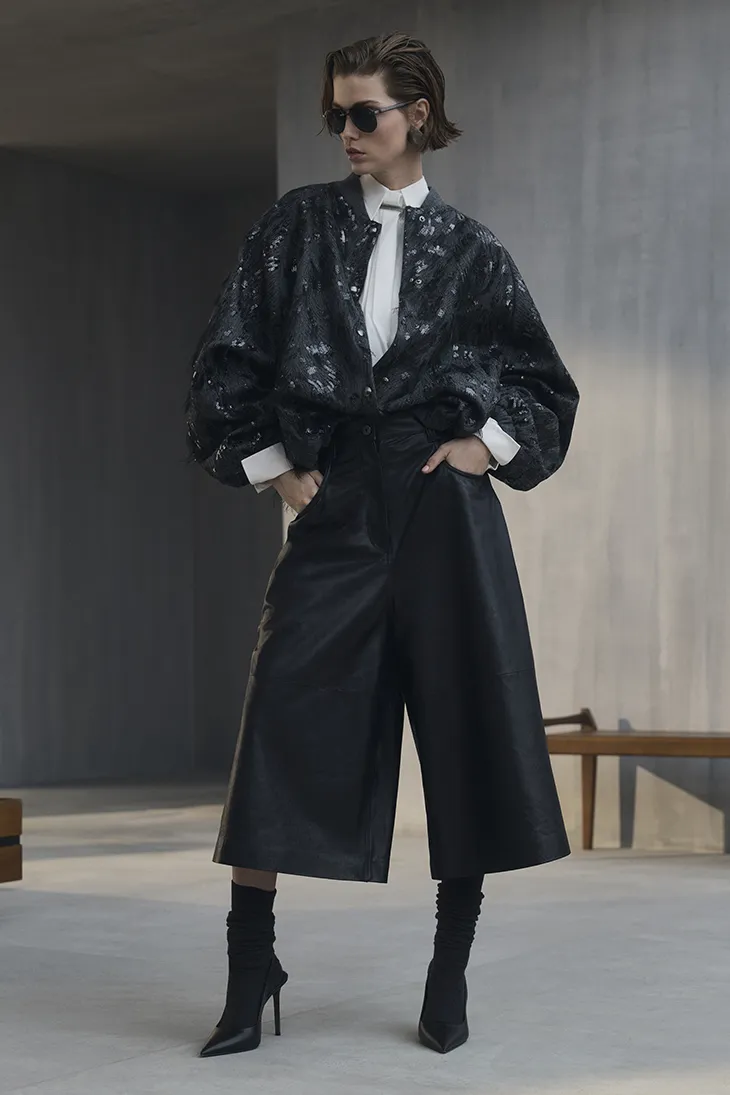
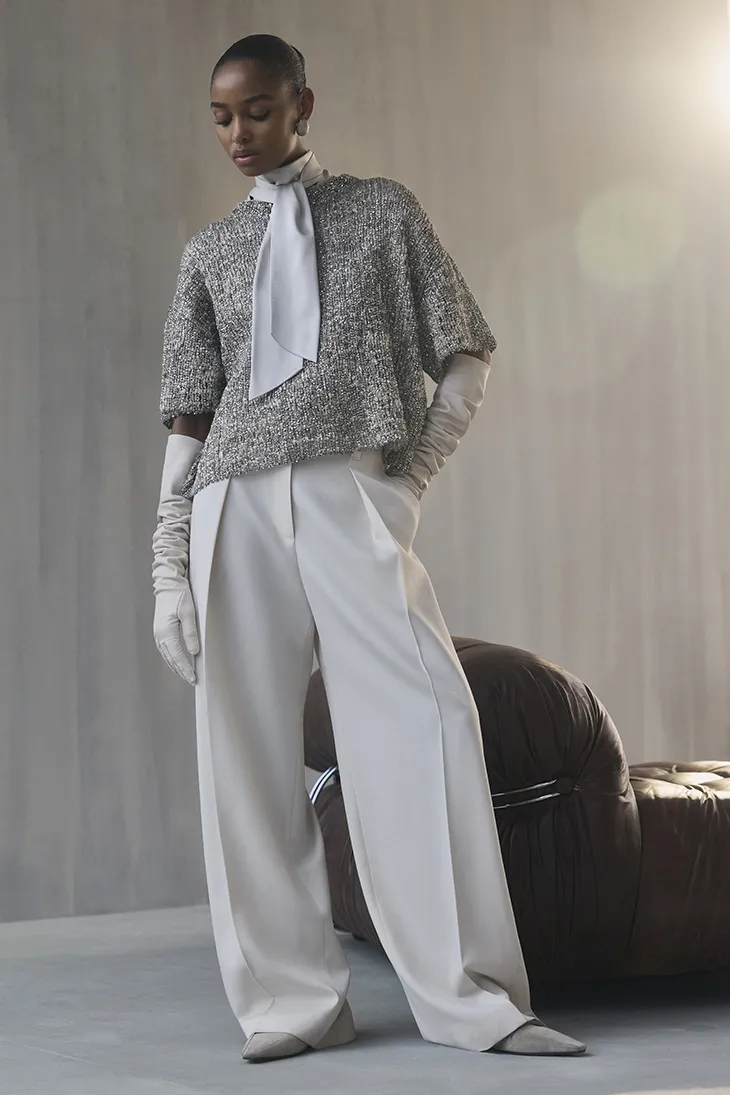
Silhouettes shift through proportion and tailoring adjustments. Oversized garments appear alongside fitted pieces, creating variation in scale. Maxi and mini lengths introduce further contrast. Tailored jackets and coats retain structured construction while incorporating softer shaping. This approach refines tailoring through proportion, allowing garments to function across daywear and evening contexts. Fabric selection reinforces this adaptability, with lighter materials introducing fluid drape and heavier textiles maintaining form.
Surface decoration reinforces the collection’s tactile direction. Embroidery, patterned textiles, and textured finishes add depth across tailoring and knitwear. Shearling and jacquard fabrics expand the material range, reinforcing the focus on textile richness. Lace and transparent layers introduce variation within structured silhouettes, allowing texture to define visual impact.