


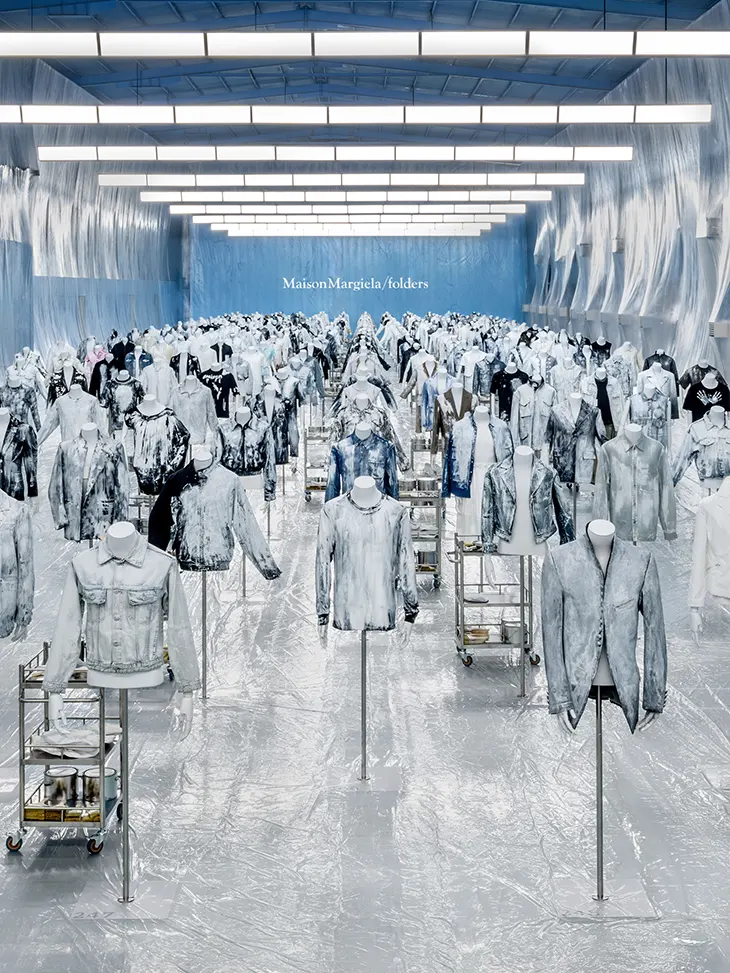
Maison Margiela presented the Bianchetto Atelier Experience in Shenzhen on April 11 and 12, inviting participants to engage directly with one of the house’s defining techniques. Held at Hairun Badminton Courts in Nanshan District, the project placed visitors inside a working process guided by the Maison Margiela Atelier team. Each participant arrived with an item from their own wardrobe and worked on it during the session, turning a personal piece into a surface shaped by Bianchetto.
EVENTS
Participants applied white paint across garments, covering fabric with visible brush strokes that define the technique. The process shifted each item into a form connected to Maison Margiela codes. The Atelier team directed the application, guiding participants through each step while maintaining the method’s original intent.
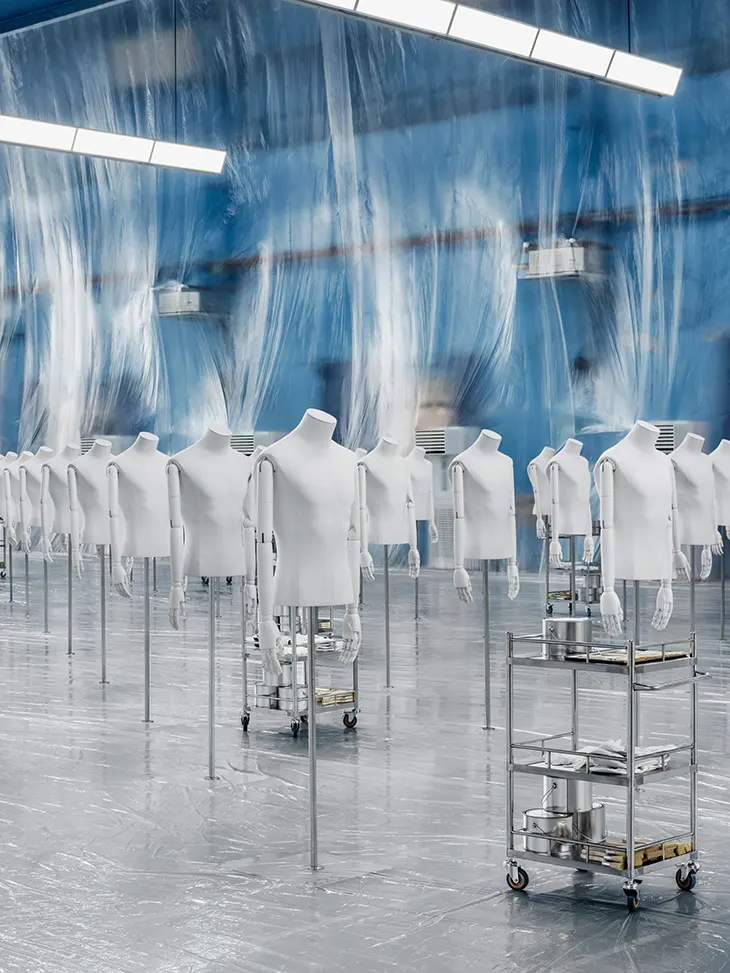
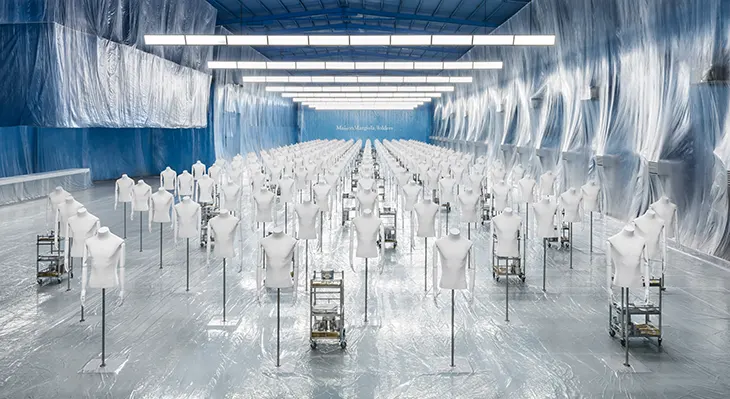
Each participant wore a blouse blanche, the white lab coat used by the house’s teams in Paris. This element placed every attendee within the same visual framework as the Atelier. The coat functioned as a marker of process, aligning the experience with the environment in which the technique first developed.
Bianchetto traces back to the house’s first show in 1989, where Maison Margiela introduced the white overpaint method as part of its early vocabulary. The technique applies paint across garments, objects, and interiors, leaving brush marks that remain visible on the surface. Over time, the paint cracks and fades, revealing signs of wear beneath. This gradual change records the life of the piece, turning use into a visible layer that builds over the original surface.
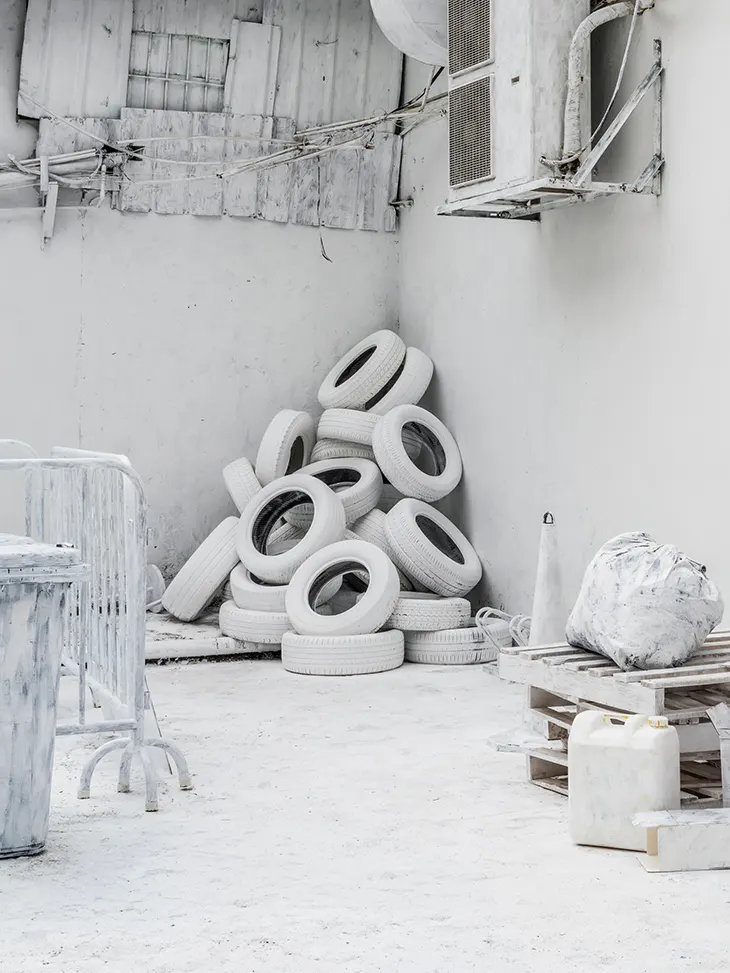
The Shenzhen activation forms part of MaisonMargiela/folders, a broader project that examines the ideas and systems behind the house. The initiative presents selected materials from physical and digital archives, opening internal processes to a wider audience. It focuses on how the Maison organizes, stores, and revisits its work, using documents and objects to trace development across time.
Maison Margiela launched the project with the Fall Winter 2026 show in Shanghai, then expanded it through exhibitions and experiences across China. Each location focuses on a specific house code, creating a series of moments that build a larger narrative. The Shenzhen experience centered on Bianchetto, offering participants a direct encounter with the technique.
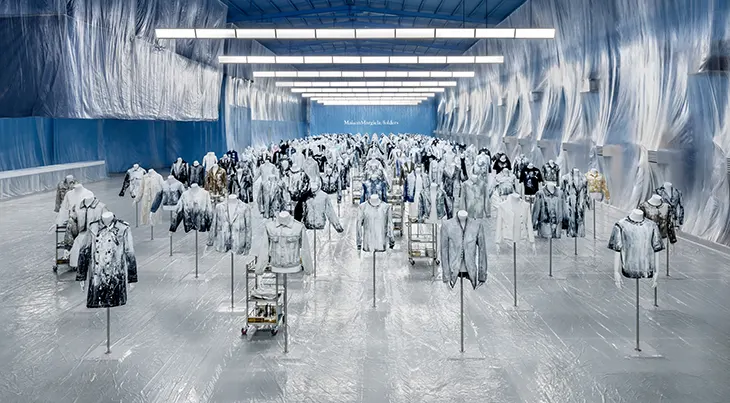
The project also extends into a digital format. The team uploads exhibition materials and installation documentation to a shared Dropbox connected to MaisonMargiela/folders. These working folders provide ongoing access to the evolving archive, with updates added as the project develops.
Through the Bianchetto Atelier Experience, Maison Margiela places process at the center of engagement. Participants move beyond observation and take part in the transformation of garments, guided by a method that carries the house’s history.