


For centuries, artists have relied on sketchbooks as creative companions. From the notebooks of Leonardo da Vinci to the field studies of J. M. W. Turner, sketchbooks have served as places to experiment, record observations, develop ideas, and refine techniques. They have traveled in backpacks, coat pockets, and satchels, collecting rough concepts, abandoned ideas, and the occasional masterpiece.
Despite countless technological advances, the sketchbook remained remarkably unchanged. Until recently.
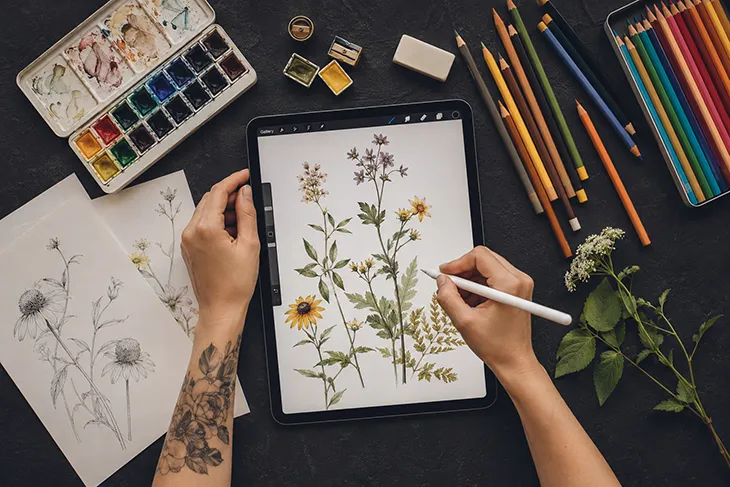
Today, a growing number of artists are swapping paper for pixels. Digital drawing tablets have evolved from specialist tools used primarily by professional illustrators into accessible creative platforms suitable for hobbyists, students, designers, architects, tattoo artists, and working professionals alike.
This shift isn’t about abandoning traditional art. Many artists continue to use pencils, ink, paint, and paper every day. Instead, digital canvases are becoming valuable additions to the creative process, offering new possibilities that traditional sketchbooks simply cannot provide.
Why Artists Are Exploring Digital Tools
Artists have always adopted new technologies to expand creative possibilities. Oil paints revolutionized European art. Portable paint tubes transformed landscape painting. Photography changed how artists approached realism. Graphic tablets opened new opportunities for digital illustration. Digital drawing devices represent another step in this evolution.
Modern tablets now offer:
- Exceptional display quality
- Highly responsive styluses
- Pressure sensitivity
- Tilt recognition
- Palm rejection
- Professional creative software
- Long battery life
- Portable form factors.
As the technology has advanced, the experience of drawing digitally has become increasingly natural. For many artists, the transition feels less like using a computer and more like drawing on a highly adaptable sketchbook.
The Freedom to Experiment Without Fear
One of the most significant advantages of digital sketching is psychological rather than technical. Traditional sketchbooks can sometimes create pressure. Every mark feels permanent. Mistakes require erasing, covering, or starting again. Artists may hesitate to experiment for fear of ruining a page. Digital canvases remove much of this anxiety. The ability to undo mistakes instantly encourages experimentation.
Artists can:
- Test new compositions
- Explore unusual color combinations
- Adjust proportions
- Rework line art
- Try multiple approaches
without worrying about permanently damaging their work. This freedom often encourages greater creative risk-taking. Many artists find themselves more willing to explore unconventional ideas.
Layers Change Everything
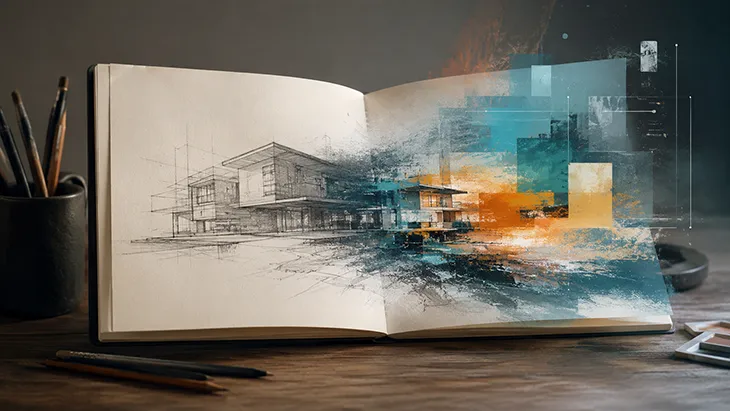
Ask experienced digital artists which feature transformed their workflow most dramatically, and many will give the same answer: layers.
Layers allow artists to separate different elements of a piece while working non-destructively.
For example:
- Sketches can sit on one layer
- Line art on another
- Colors on separate layers
- Highlights and shadows are independently adjustable
- Background elements are isolated from foreground details.
This flexibility dramatically simplifies editing and refinement. Rather than redrawing entire sections, artists can make targeted adjustments without affecting the rest of the composition. The result is greater efficiency and creative control.
Carrying an Entire Studio Anywhere
Traditional art often requires significant equipment. Depending on the medium, artists may need:
- Sketchbooks
- Pencils
- Pens
- Erasers
- Markers
- Paints
- Brushes
- Ink
- Reference materials.
While many artists enjoy working with physical materials, portability can become challenging. A digital drawing tablet consolidates much of this equipment into a single device. Artists can access hundreds of brushes, colors, textures, and tools without carrying additional supplies.
If you are traveling, commuting, attending classes, or working remotely, an entire creative toolkit becomes available almost anywhere. For professionals who frequently work on the move, this convenience can be transformative.
From Concept to Finished Artwork
Historically, sketchbooks primarily served as places for preliminary ideas. Finished artwork typically requires additional materials and processes. Digital workflows often blur these boundaries.
The same device used for rough sketches can also support:
- Detailed illustrations
- Graphic design projects
- Character development
- Storyboarding
- Logo creation
- Tattoo concepts
- Client presentations
- Finished commercial artwork.
This continuity streamlines creative workflows considerably. Artists can move seamlessly from concept to completion without changing tools or environments.
Why Digital Art Appeals to Tattoo Artists
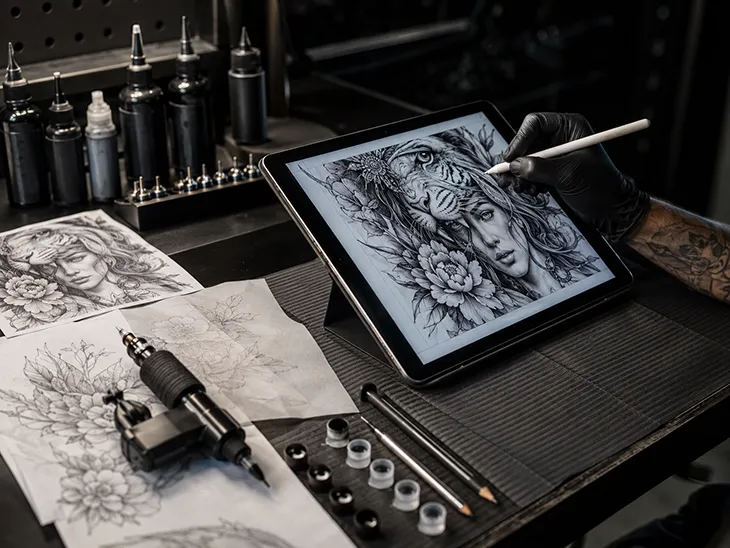
Tattoo artists have been among the most enthusiastic adopters of digital sketching technology. Designing tattoos often involves multiple revisions as concepts evolve through discussions with clients. Digital tools simplify this process dramatically.
Artists can:
- Resize elements instantly
- Adjust compositions
- Experiment with placement
- Explore variations
- Create mock-ups
- Present multiple options.
without repeatedly redrawing designs from scratch. Many tattoo artists still sketch by hand, but digital platforms have become invaluable for refining concepts and collaborating with clients more efficiently.
Learning Becomes Easier
Digital drawing applications often include features that support artistic development.
Students can:
- Record drawing sessions
- Review techniques
- Study layer structures
- Analyze color choices
- Follow guided tutorials
- Practice repeatedly without wasting materials.
The ability to learn directly within the same environment used for creating artwork can accelerate skill development. Additionally, online communities make it easier than ever to share work, receive feedback, and discover new techniques. For aspiring artists, access to educational resources has never been greater.
The Importance of Ergonomics for Digital Artists
Long creative sessions can place significant strain on the body. Artists often spend hours sketching, refining details, and reviewing compositions. Poor positioning can contribute to discomfort in the neck, shoulders, wrists, and back. This makes ergonomics particularly important when working digitally.
Many artists prefer drawing surfaces at specific angles, depending on the type of work being done. Quick concept sketches may require one angle, while detailed rendering or note-taking may benefit from another.
For this reason, many illustrators invest in accessories that provide stable positioning and flexible viewing angles. A ZUGU iPad case with multiple stand positions can create a more comfortable drawing environment while also protecting expensive equipment during travel between studios, meetings, conventions, or client appointments. Comfort often has a direct impact on creative endurance.
Does Digital Mean the End of Traditional Art?
The relationship between traditional and digital art is often misunderstood. Most artists do not view them as competitors. Instead, they are simply different tools. Many professionals use both approaches depending on the project.
An artist might:
- Sketch digitally
- Paint traditionally
- Design digitally
- Print physical artwork
- Create mixed-media pieces.
The goal is not to replace traditional creativity but to expand creative possibilities. Each medium offers unique strengths. The most successful artists often embrace whichever tool best serves their vision.
The Future of the Sketchbook
The sketchbook is unlikely to disappear entirely. There will always be something satisfying about putting pencil to paper. Many artists value the tactile experience, physical permanence, and simplicity of traditional materials.
Yet digital canvases have clearly earned a permanent place within the creative world. They offer flexibility, portability, experimentation, collaboration, and efficiency that paper alone cannot match. For a new generation of artists, the sketchbook is no longer bound by paper covers. It lives inside a device capable of holding thousands of drawings, hundreds of tools, countless colors, and endless creative possibilities.
And while the medium may be changing, the purpose remains exactly the same as it was for artists centuries ago: a place to explore ideas, solve visual problems, and bring imagination to life.