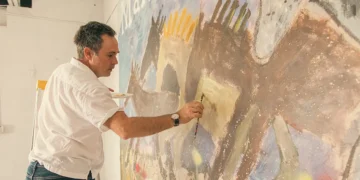



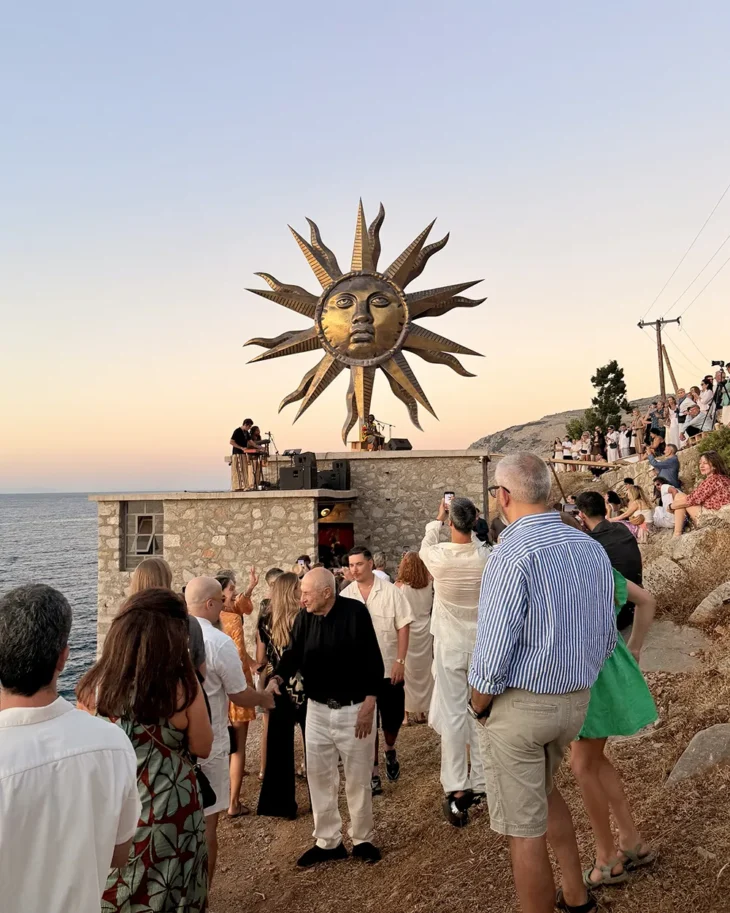
The art crowd gathered on Hydra once again for the annual DESTE opening, turning the island into a charged meeting point for artists, curators, collectors, writers and everyone drawn to the strange pull of this place. Each year, the trip feels close to a pilgrimage, shaped as much by the boat ride, the port, the heat and the island’s beauty as by the exhibition itself.
ART
This summer, that ritual led to Nari Ward: Until That Day at the DESTE Foundation Project Space, the former slaughterhouse that has become one of Hydra’s most memorable art sites. The exhibition opened on June 23 and runs through October 31, 2026.
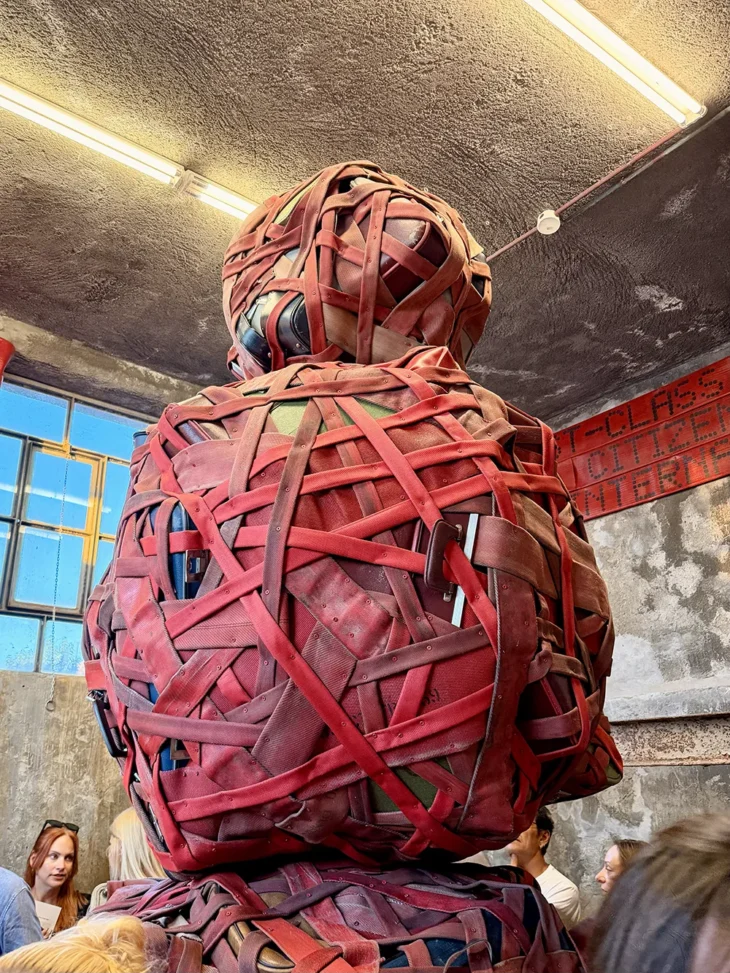
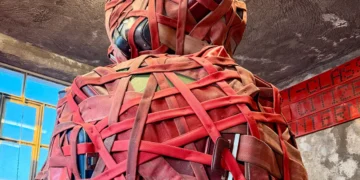
Ward arrives at Hydra with a practice built from found materials, social memory and the afterlives of objects. Born in St. Andrew, Jamaica, and based in New York, he has developed a body of work that often uses collected materials to address race, migration, democracy, identity and community. In Until That Day, those concerns meet the Slaughterhouse with unusual force. Emergency blankets, fire hoses, rocks, keys, metal, scorched poplar, speakers, luggage and water pumps carry a physical charge before they become symbols. Ward gives these materials presence, then lets their histories speak through pressure, residue and placement.
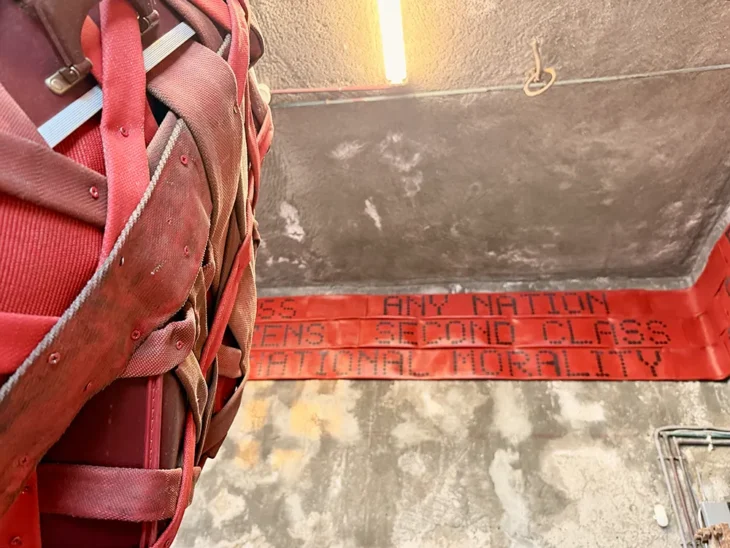
The exhibition takes its title and emotional frame from Haile Selassie’s 1963 address to the United Nations, where he called for equality, solidarity and peace in the face of racial injustice. Ward uses that reference as a point of entry into migration, displacement and belonging. DESTE describes the project as a site-specific commission that reconfigures found materials into a meditation on the Afro-Greek community, identity and belonging. On Hydra, that focus feels especially resonant. The island sits inside histories of movement, trade, exile, labor and reinvention. Ward understands that context without forcing it into illustration.
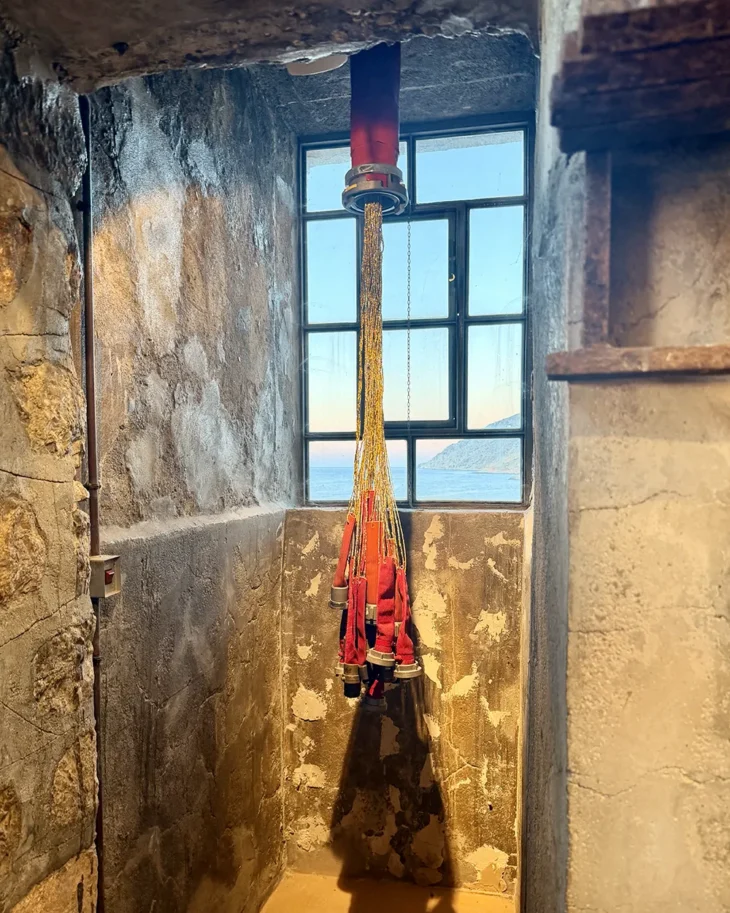
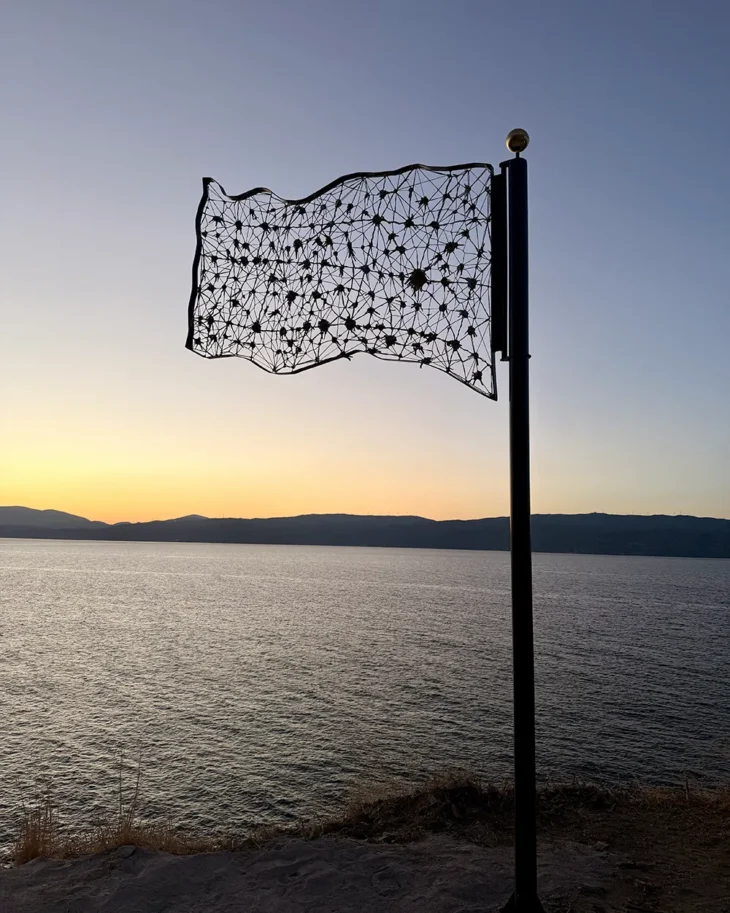
The strongest works hold tension between fragility and alarm. Emergency blankets appear again and again, suggesting rescue, heat, crisis and exposure. Fire hoses carry another register, tied to protection, control, violence and public emergency. In works such as Warning Trails, Travel Flag, Distant Sound and Redacted Sound, Ward builds a language of warning signs and interrupted communication. The materials feel familiar, yet they appear displaced from ordinary use. They become evidence, relic, signal and barrier.
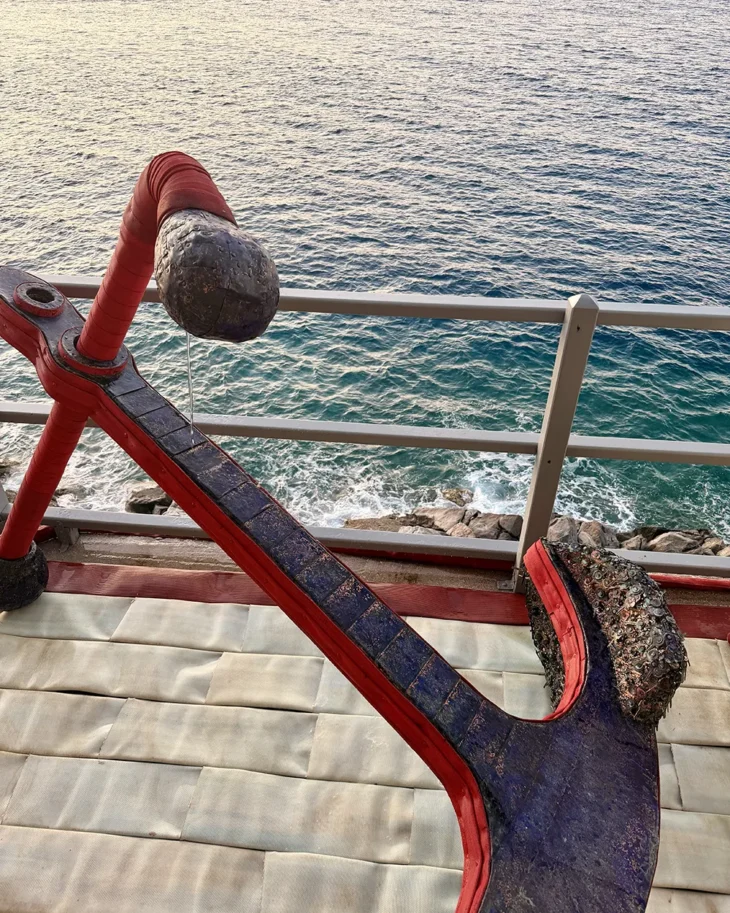
The immigrant exists in every nation as both witness and builder, carrying histories that connect one place to another. Their stories remind us that migration is not exception to human history, but one of its oldest and most enduring truths. Until that day when their humanity is fully recognized and embraced, their voices, labor, and songs will continue to shape the world.
– Nari Ward
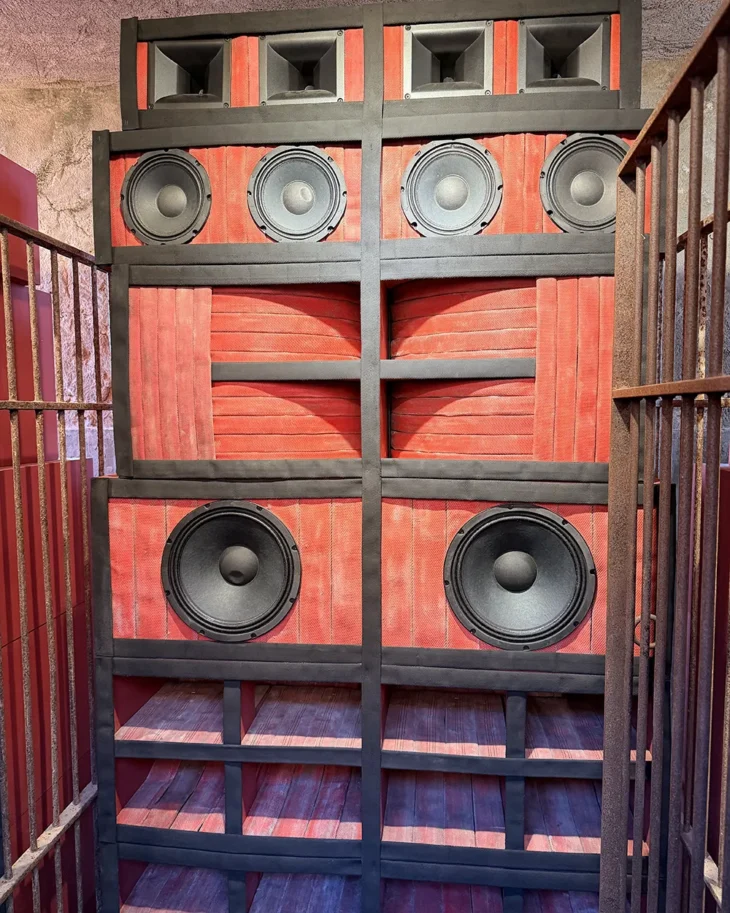
The exhibition feels especially sharp in this moment. Migration dominates political speech across Europe and the United States, often through fear, suspicion and abstraction. Ward returns the subject to material life. He reminds the viewer that migration carries memory, labor, language, music and family history. His work refuses pity and spectacle. It asks for attention to what people carry, what they lose and what societies choose to recognize.
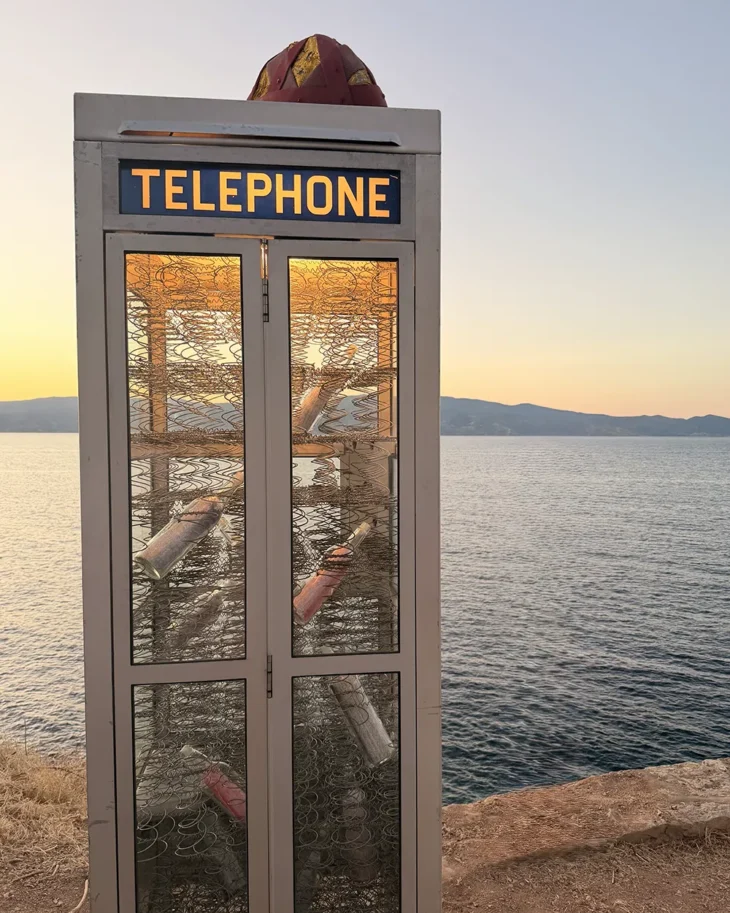
The Slaughterhouse intensifies that reading. Its rough structure, proximity to the sea and distance from the polished spaces of the art circuit give Ward’s installation a raw physical setting. The works never feel over-explained. They sit, lean, hang and mark the space with direct force. The exhibition feels well thought through, from the route through the building to the way sound and material build gradually. It has weight, yet it leaves enough room for the viewer to connect fragments.
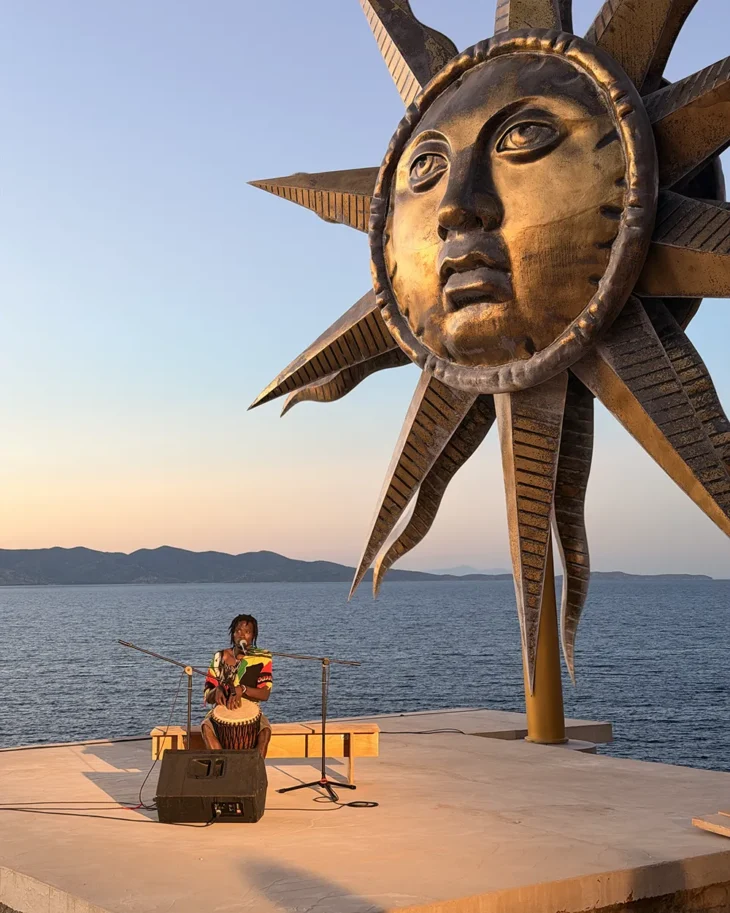
The opening day performance brought another layer to the project. Live music on the roof of the Project Space turned the evening into something close to ceremony. Aggelos Aggelou and the musicians created a soundscape connected to Greek folk traditions, Afro-Greek presence and Ward’s invocation of Selassie’s speech. From the roof, with the sea and island around it, the performance felt magical in the most precise sense of the word. It transformed the exhibition from a set of objects into a living encounter.
Afterwards, people returned to the port for the after party, where the mood shifted from contemplation to release. The same crowd that had climbed toward the Slaughterhouse gathered by the water, talking, drinking, dancing and carrying the exhibition back into the night. That movement from art space to roof to port made the evening feel complete. Until That Day stayed with the island after the opening ended, folded into its music, conversations and summer darkness.