


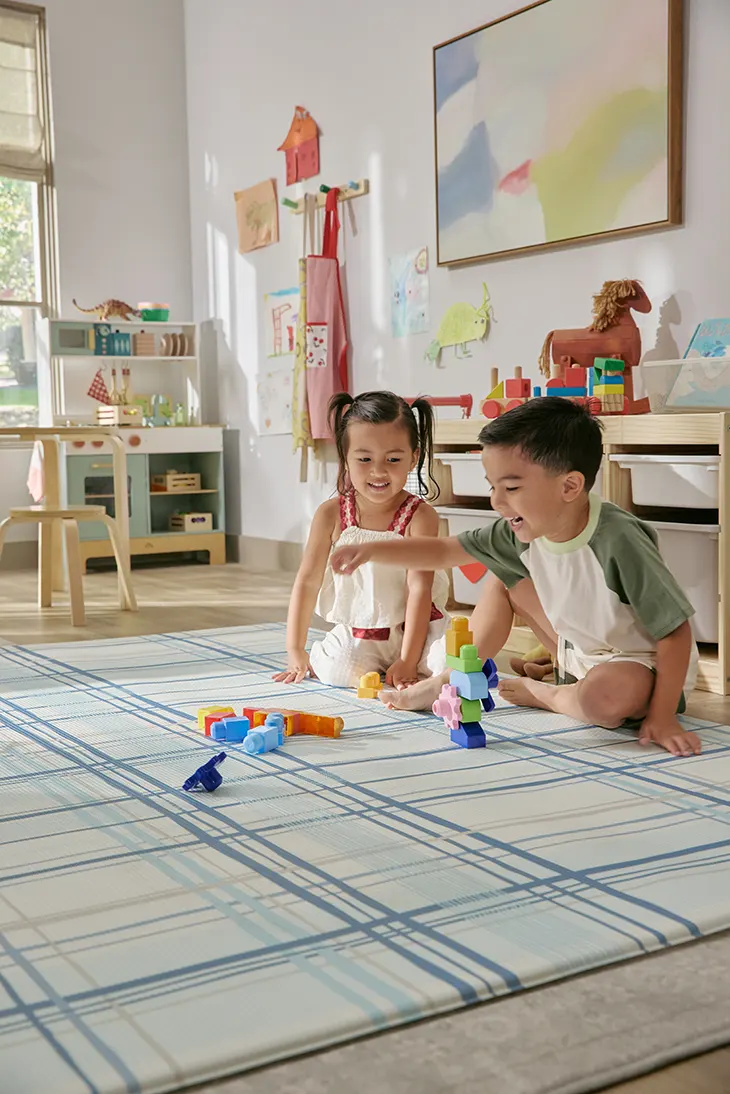
Every parent arrives at the same crossroads: design a home that still feels like theirs, or surrender it entirely to the chaos of childhood. The assumption, of course, is that these two things are mutually exclusive. A beautiful living room becomes impossible once a toddler arrives. A stylish nursery gets buried under plastic toys and stained fabric. Family life and considered design seem fundamentally at odds.
But Ruggable’s new Play Mats Collection of rugs, launching July 30, operates from a different premise: that thoughtfully designed play spaces actually serve children better, and that parents deserve homes that don’t feel like they’ve been colonized by bright primary colors and cartoon characters.
Developmental Case for Intentional Play Spaces
Research in child development consistently shows that environment shapes behavior and learning. Infants and toddlers are hyperaware of their surroundings, and while they don’t need expensive or trendy décor, they do benefit from calm, organized spaces that invite exploration without overwhelming. A curated play mat becomes more than a protective surface; it’s a defined zone that signals to a child: this is where play happens, and it’s safe.
For babies beginning to crawl and explore, a soft, cushioned surface isn’t just comfort, it’s foundation. Tummy time strengthens neck and shoulder muscles essential for later development. Crawling builds coordination and spatial awareness. A generously sized play mat (Ruggable’s spans 4.5′ x 7′) accommodates all of this without confining a child to a rigid play pen. Parents and caregivers can sit alongside, making the mat a gathering point rather than a barrier between adult and child spaces.
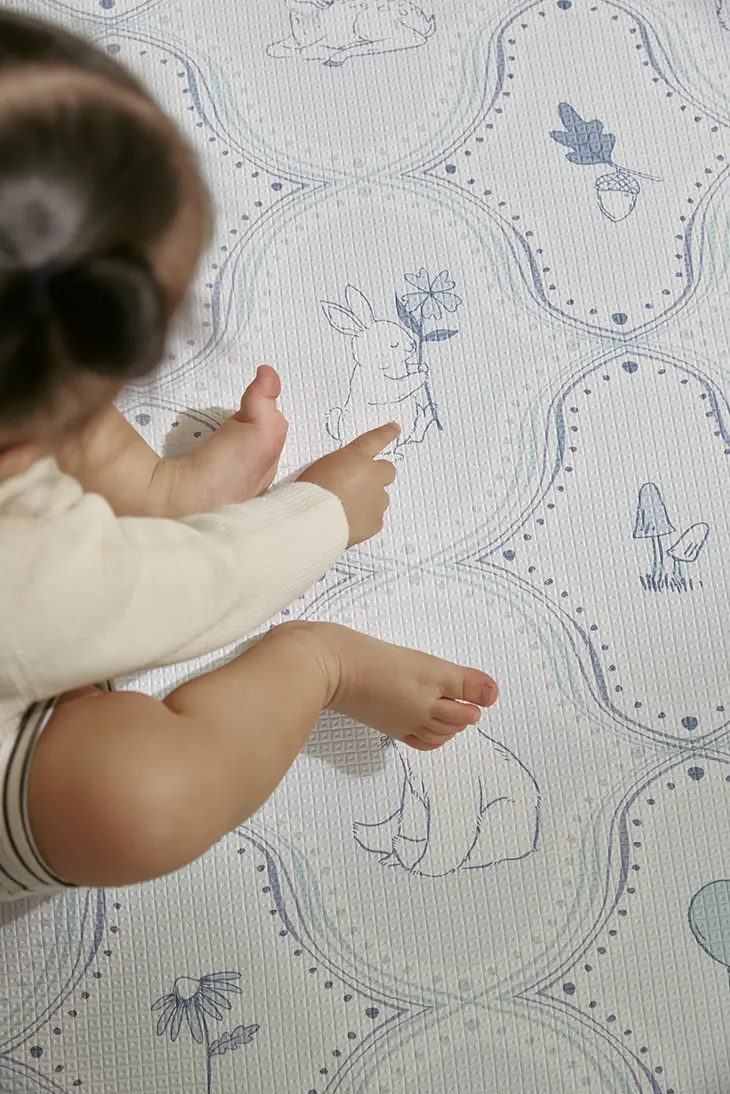
As children grow from toddlers into preschoolers, the space evolves with them. A well-designed mat becomes the foundation for imaginative play, building projects, and the kind of purposeful mess that signals development in progress. The difference between a toddler creating art on a designated surface versus sprawling chaos across a white sofa isn’t just practical, it’s psychological. Boundaries, even soft ones, help children understand structure.
Why Aesthetics Matter More Than Parents Realize
There’s a secondary benefit to designing spaces intentionally: parents who like their homes stay more present and patient. When a nursery or playroom feels considered rather than compromised, when the colors and patterns reflect deliberate choice rather than resignation to licensed characters, parents spend more time in those spaces without resentment. They’re more likely to sit down for an extra story, get on the floor for building, stay engaged rather than watching from the doorway.
There’s a secondary benefit to designing spaces intentionally: parents who like their homes stay more present and patient
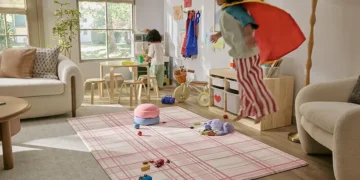
Ruggable understands this. The Play Mats Collection doesn’t treat childhood design as a separate category from adult interior design. The collection features soft plaids, hand-drawn figures, and a restrained palette of muted blues, pastel pinks, and warm neutrals, the kind of palette that would work in any considered home. The designs are playful without being juvenile, which means they work equally well in a nursery, a playroom, or a shared family living space where parents have also claimed ownership.
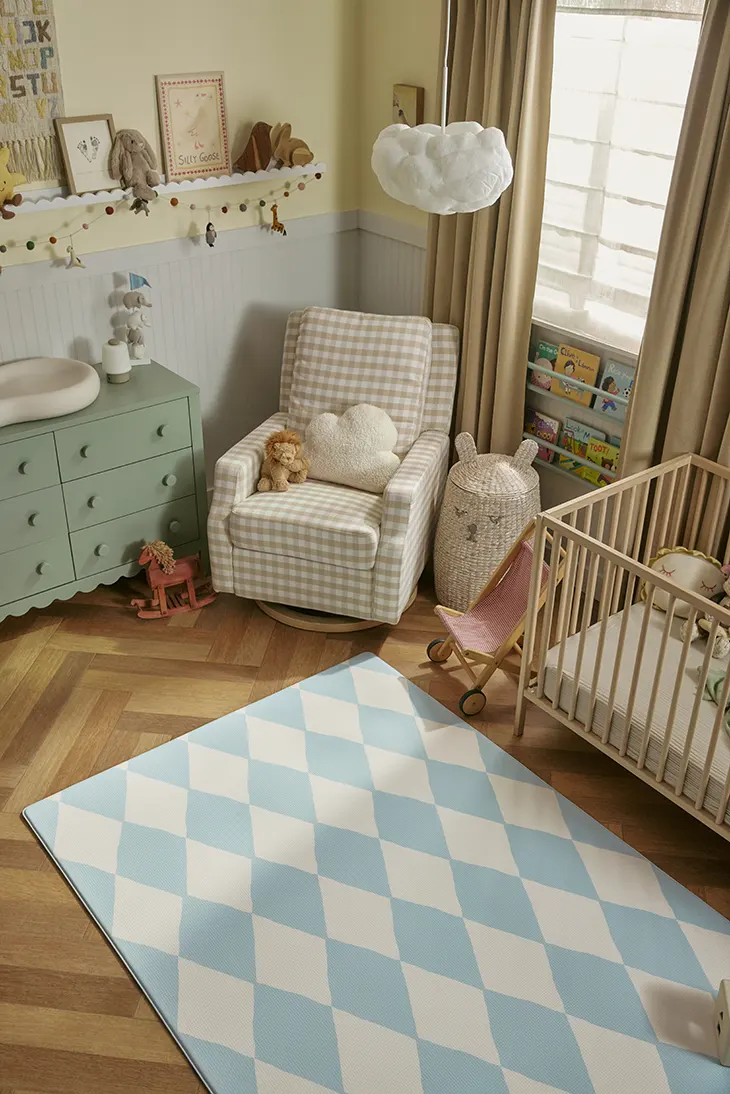
Reversible designs amplify this flexibility. Each of the four designs offers two different looks, which means a mat can shift as a child develops or as a family’s needs change. A whimsical woodland pattern on one side can be flipped to reveal a more subdued complementary design, effectively giving parents two mats in one while maintaining the collection’s cohesive, grown-up aesthetic.
Practical Foundation
Intentional design is only part of the equation. The Play Mats Collection prioritizes the unglamorous realities of family life. All mats feature easy-to-wipe, non-toxic materials that comply with ASTM F963, EN 71 EU Toy Safety Standards, and CPSIA requirements, the certifications that matter when a child puts everything in their mouth. Soft cushioning accommodates the inevitable spills, knocked-over cups, and padded landings that come with childhood.
The spacious 4.5′ x 7′ footprint is key here too. Unlike cramped play mats designed to fit in corners, this size comfortably holds a baby, a parent, toys, and growing children simultaneously. It’s large enough that a parent can sit on it too, collapsing the hierarchy between adult and child space. That matters. Family moments, reading together, building with blocks, sorting through a puzzle, happen on generous surfaces, not confined corners.
For families navigating the complexities of modern living, shared spaces, blended schedules, kids of different ages, the collection’s reversibility and scaled footprint mean the mats adapt to actual family life rather than forcing life into predetermined categories.
Discover more of the collection in our gallery:
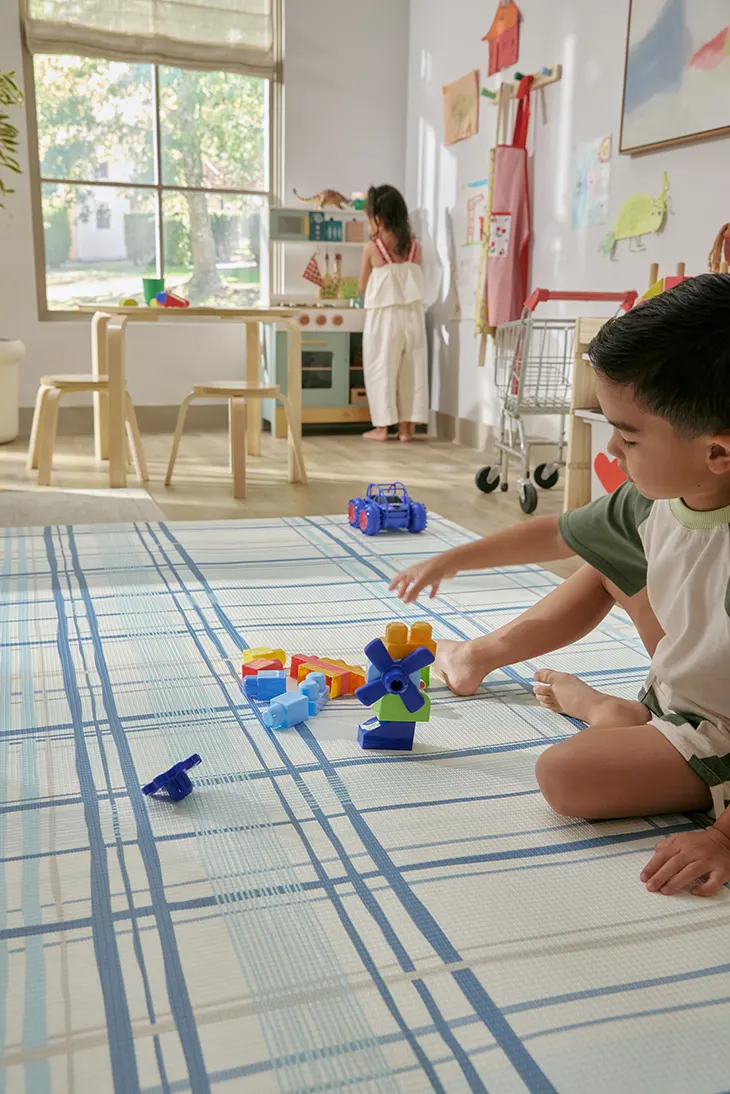
Finally, Ruggable’s decor approach reflects a quiet revolution in family design: the assumption that children don’t require their own aesthetic ecosystem separate from adult life. Instead, when parents have agency in the design choices surrounding their kids, homes feel less fractured. A nursery or playroom designed with intention, with colors and patterns the adults also enjoy, becomes a space everyone wants to be in. Ruggable team understands the importance of design for a contemporary home.
That shift in thinking might seem small, but for families trying to build homes that feel coherent, it truly matters. The Play Mats Collection catches our eye because it doesn’t compromise on either front: it provides the soft, safe, developmentally appropriate foundation children need, while respecting the design sensibility and home ownership of the adults raising them.