


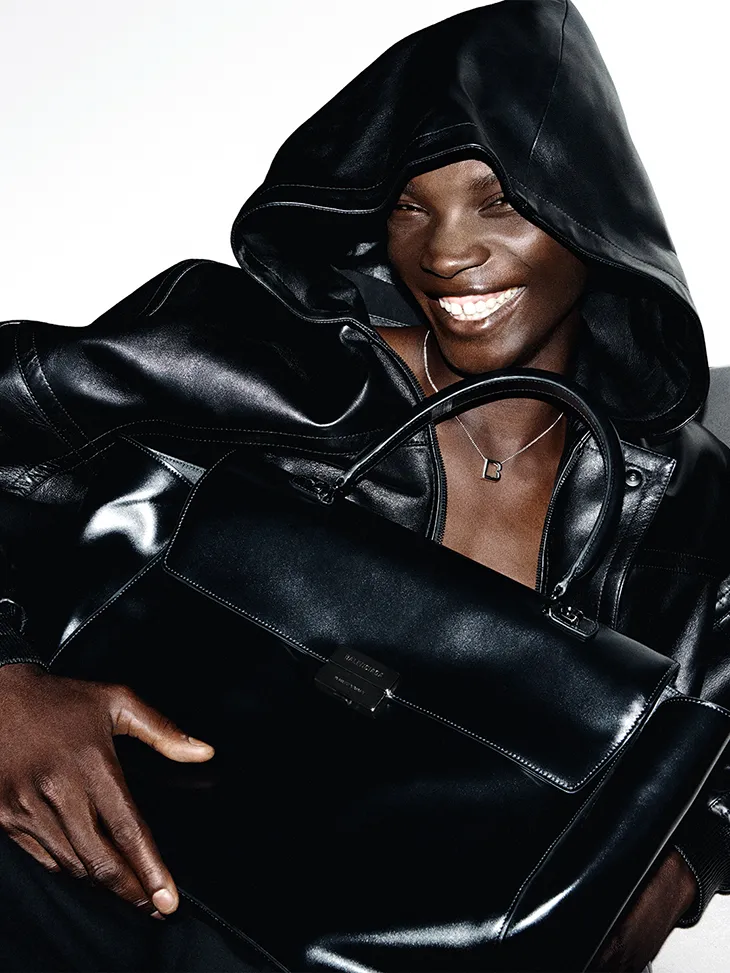
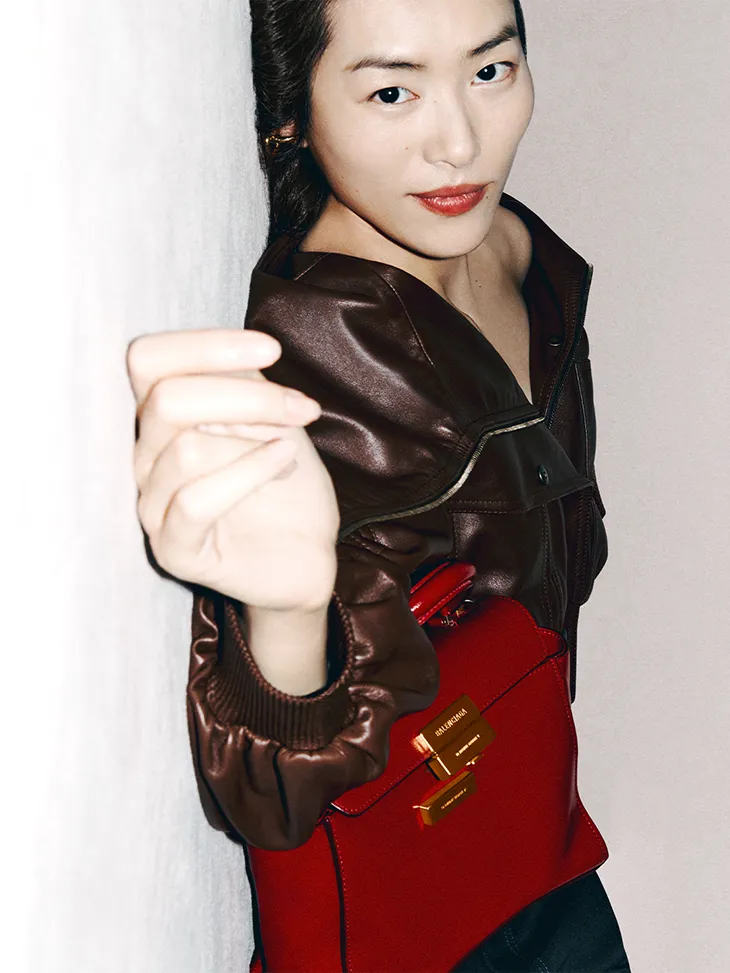
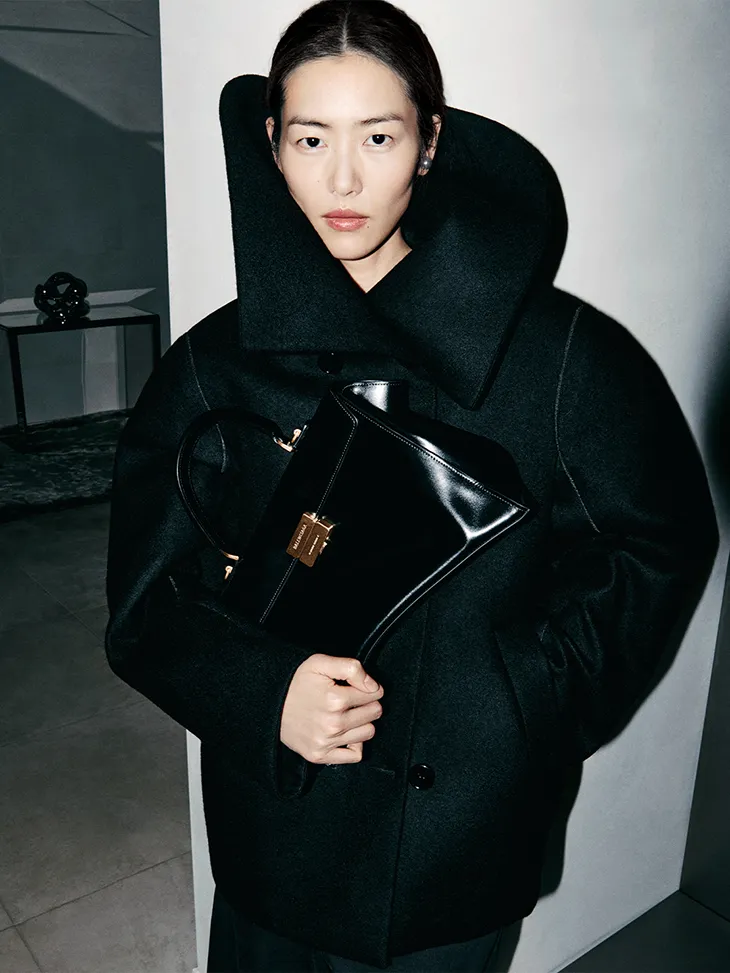
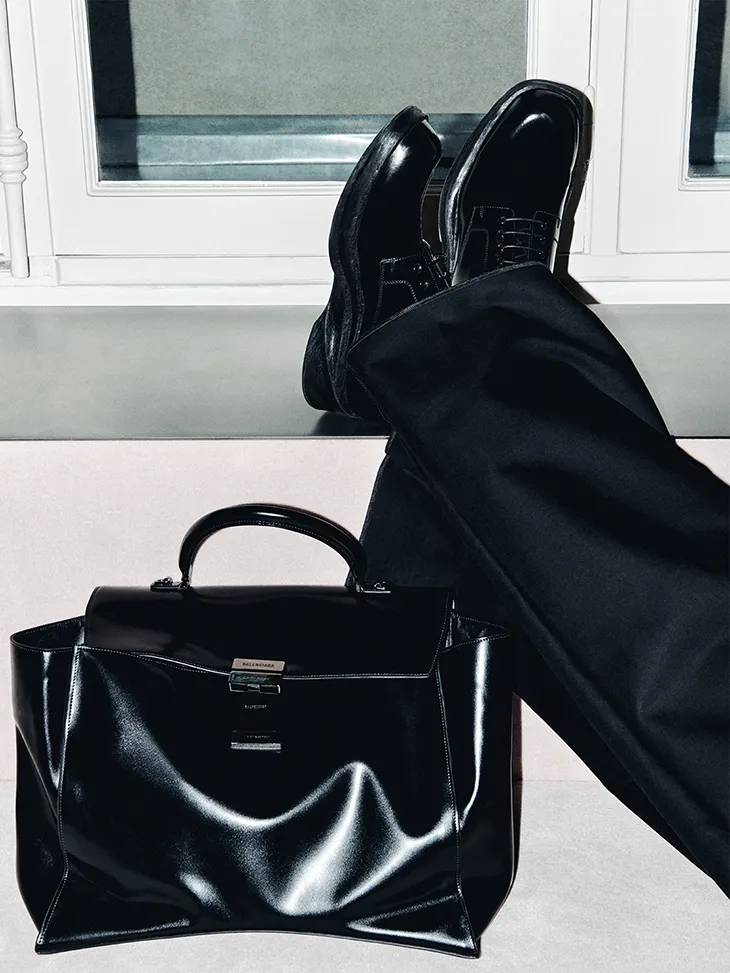
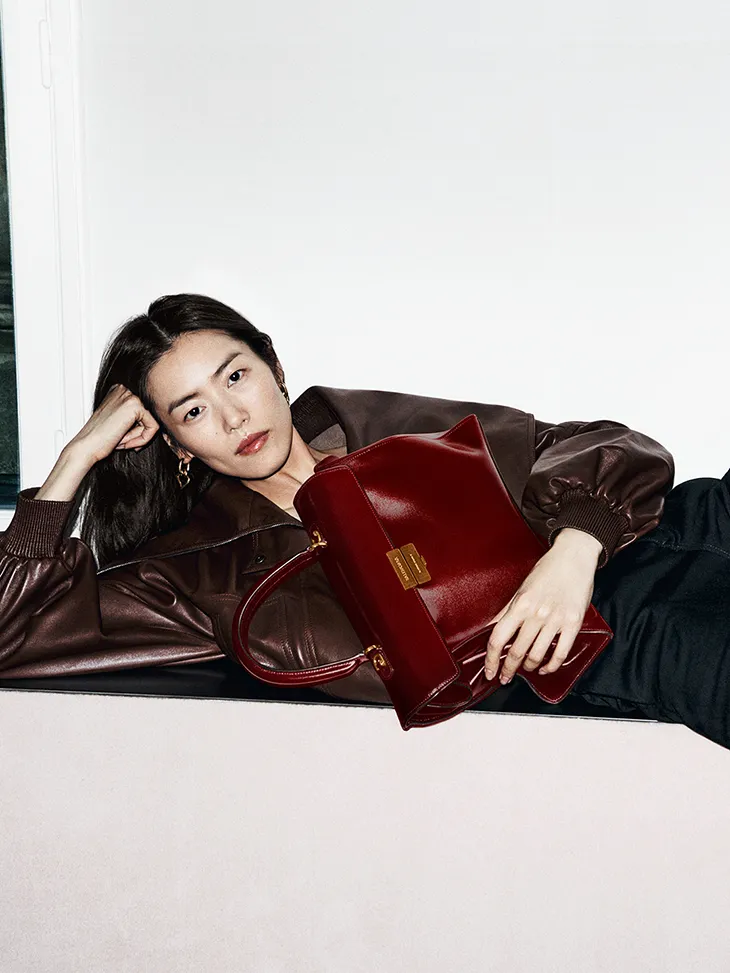
Balenciaga introduces the Hourglass Avenue Bag, revisiting a form that traces back to Cristóbal Balenciaga‘s work in the 1940s. Creative Director Pierpaolo Piccioli retains the recognizable curved profile of the House’s Hourglass line and gives the new bag a softer construction, practical carrying options, and a closure that carries the address of Balenciaga’s Paris headquarters.
CAMPAIGNS
The history of the Hourglass form begins with Cristóbal Balenciaga’s interpretation of shapes from his Basque Country origins. After expanding his ateliers from San Sebastián to Paris’s Haute Couture in 1937, he introduced motifs and techniques that referred to those origins, including mantilla lace and the Infanta-style dress. In the Summer 1943 collection, he presented tailored suits with peplumed jackets that created what became one of the House’s recognizable silhouettes: the hourglass.
French fashion terminology at the time used the word Basque for a bodice that resembled traditional attire. Balenciaga developed highly structured suits that emphasized the hip through internal padding instead of rigid corsetry. He continued exploring the idea for years, drawn to the associations of its name and the freedom the construction could give the wearer. Hidden seams created the appearance of restriction while leaving room inside the garment. The resulting curve appeared suspended around the body.
The House later applied the Hourglass name to voluminous, lightweight jackets, dresses, and coats. These pieces extended beyond the body’s natural proportions and maintained the curved architecture that linked them to Balenciaga’s earlier tailoring.
That same arching negative space informed the Hourglass Bag, which Balenciaga introduced with the Winter 2019 collection. Its sculpted base curves upward, preventing the bag from resting flush against a flat surface and recalling the suspended form of the original silhouette.
Piccioli revisits the concept with the Hourglass Avenue, introduced as part of his Winter 26 collection, ClairObscur. The design keeps the defining curvature of the Hourglass line while introducing a more fluid construction. Piccioli applies the silhouette to a classically utilitarian top-handle bag, giving the base a curvilinear form that recalls the cinch of a fitted bodice. The shape remains firm and relaxed, preserving the recognizable Hourglass profile while giving the bag a softer structure.
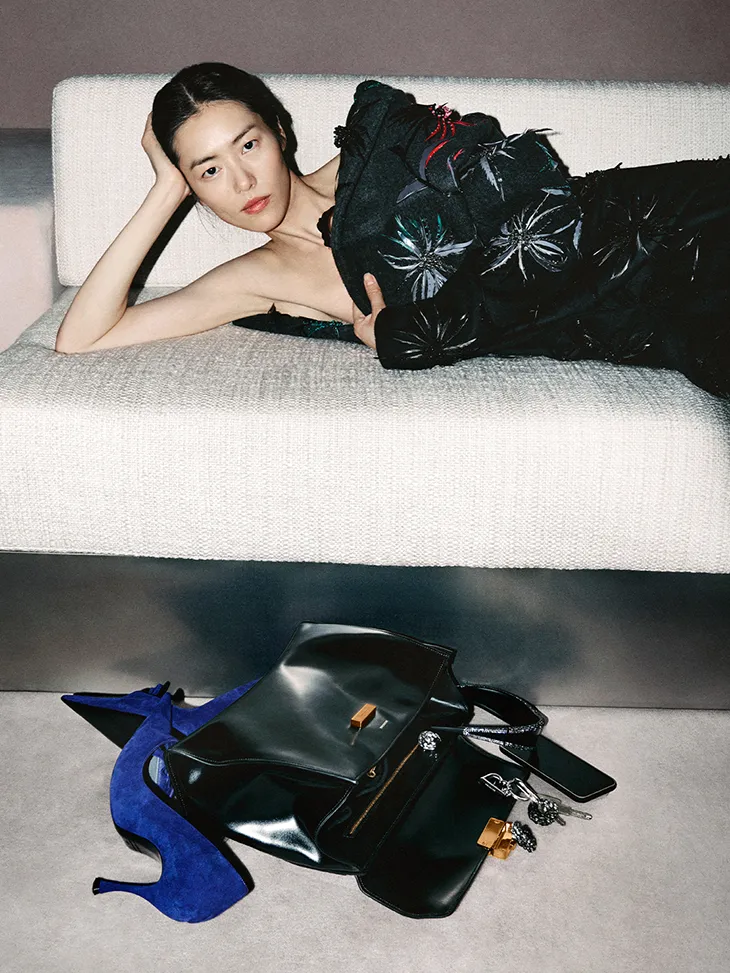
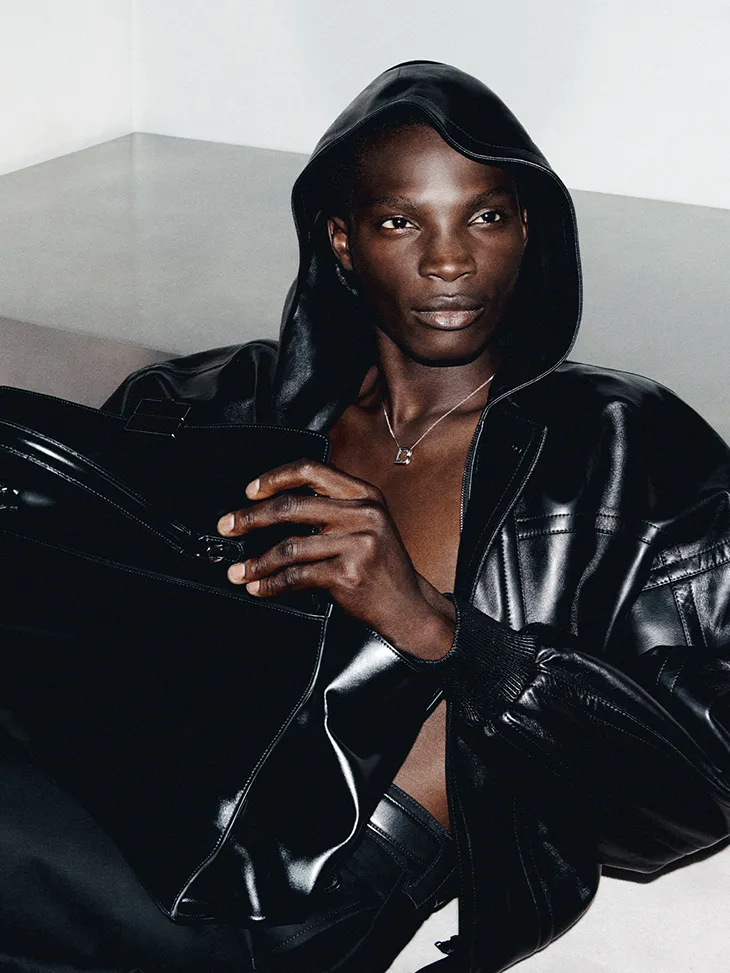
The Hourglass Avenue includes a hidden second handle that makes carrying easier when the bag holds its full contents. A detachable crossbody strap adds another carrying option, while the elongated East West version replaces the leather strap with a chain. A folding top flap closes over the opening and secures with a lock composed of two minimalist metal bars. Balenciaga engraves the closure with “Balenciaga 10 Avenue George V,” referring to the historic address of Cristóbal Balenciaga’s Paris ateliers and the House’s headquarters today.
Balenciaga constructs the body from reworked box leather, combining a supple feel with a structured form. The leather carries a glossy sheen that emphasizes its natural creases as the material changes through use. Larger styles include an internal zippered pocket for smaller items and an external flat pocket at the back, adding extra storage to the already roomy interior.
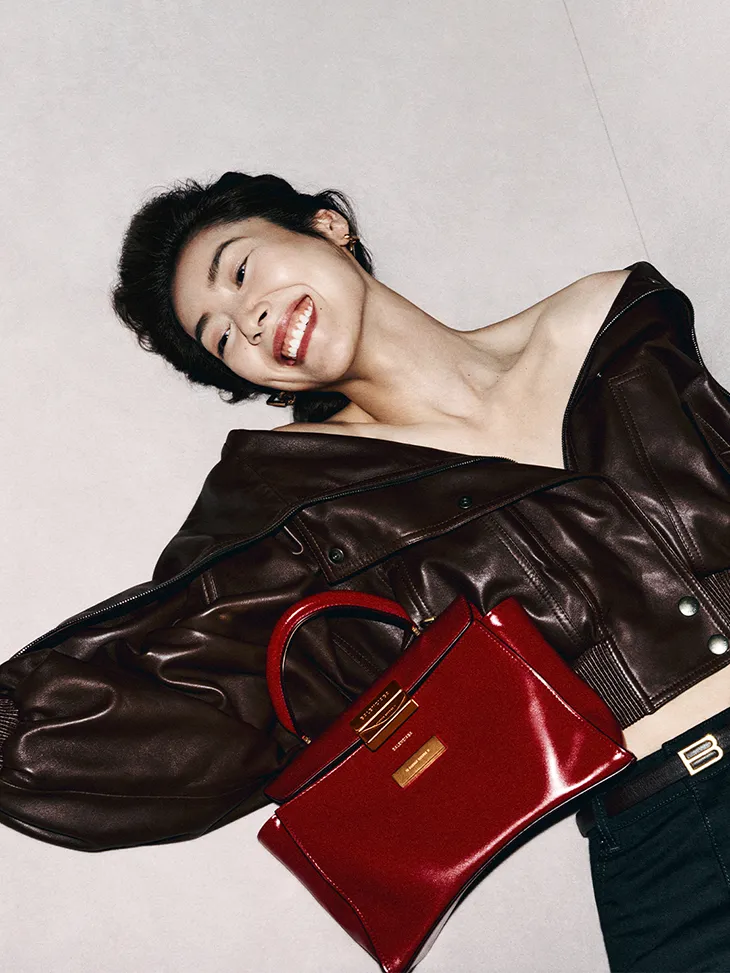
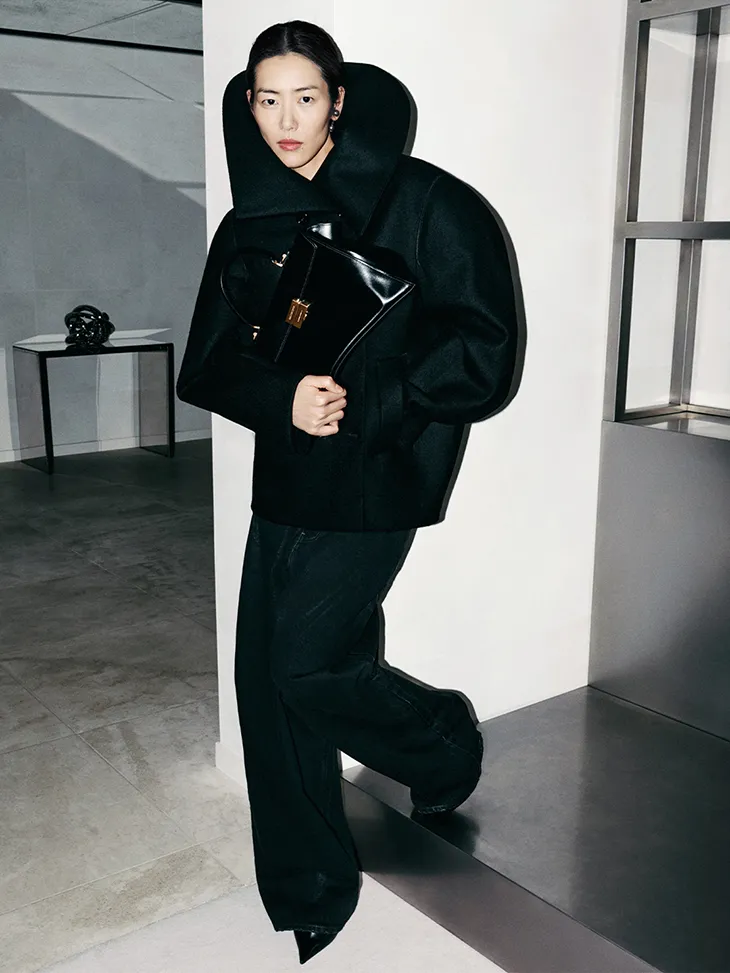
The Hourglass Avenue comes in black, raisin, carmin red, snow white, and photo-printed black shiny box calf. Balenciaga offers the bag in select stores worldwide and on balenciaga.com.