




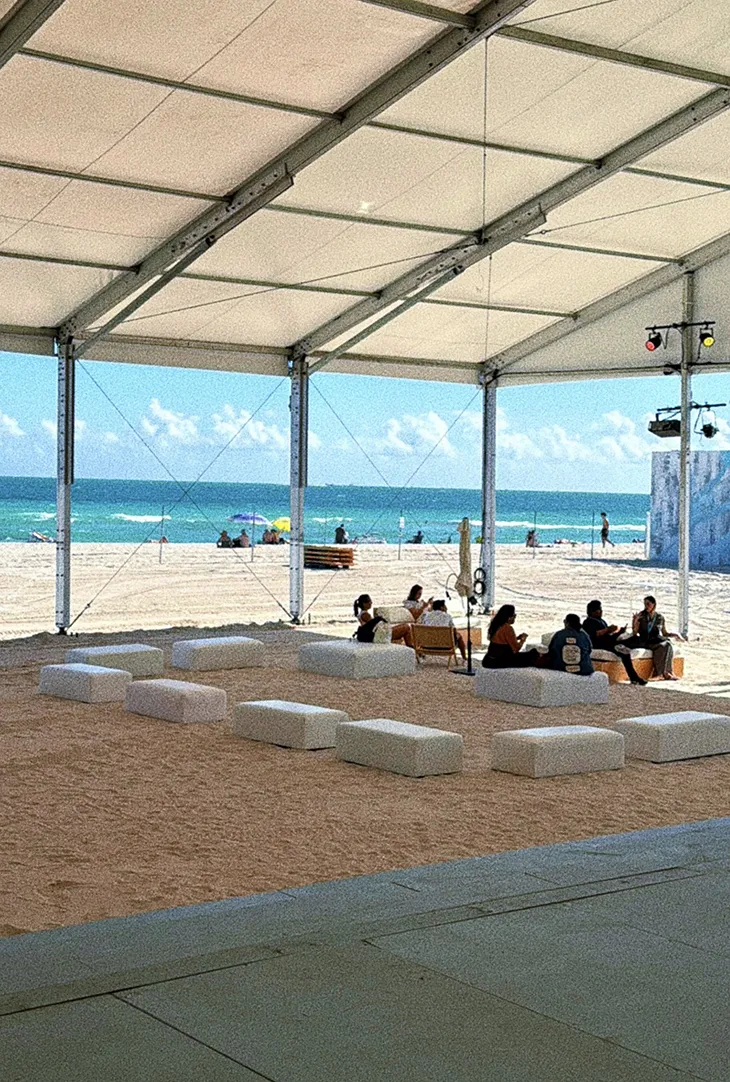
I love Miami. I don’t say that defensively or ironically. I love the light, the air, the way December there feels like a correction after months of gray. I’m weather-sensitive, and Miami understands that instinctively. Give me sun and warmth and my body recalibrates before my brain has time to argue. During Art Week, that physical relief becomes part of the seduction. You arrive tired, overstimulated, stretched thin from the year, and suddenly the climate does half the emotional labor for you. Sometimes it feels like that alone is enough.
But loving Miami doesn’t mean suspending judgment. In fact, it sharpens it.
DORIC ORDER
I came to Miami this year to work. DSCENE had several events, meetings, and collaborations during Art Week, which meant we were fully embedded in the week’s machinery. We weren’t observing from a distance or dropping in selectively. We were scheduling, hosting, showing up, adjusting, improvising. Participating in the same compressed rhythm as everyone else makes the contradictions impossible to ignore. You feel them in your body before you articulate them intellectually.
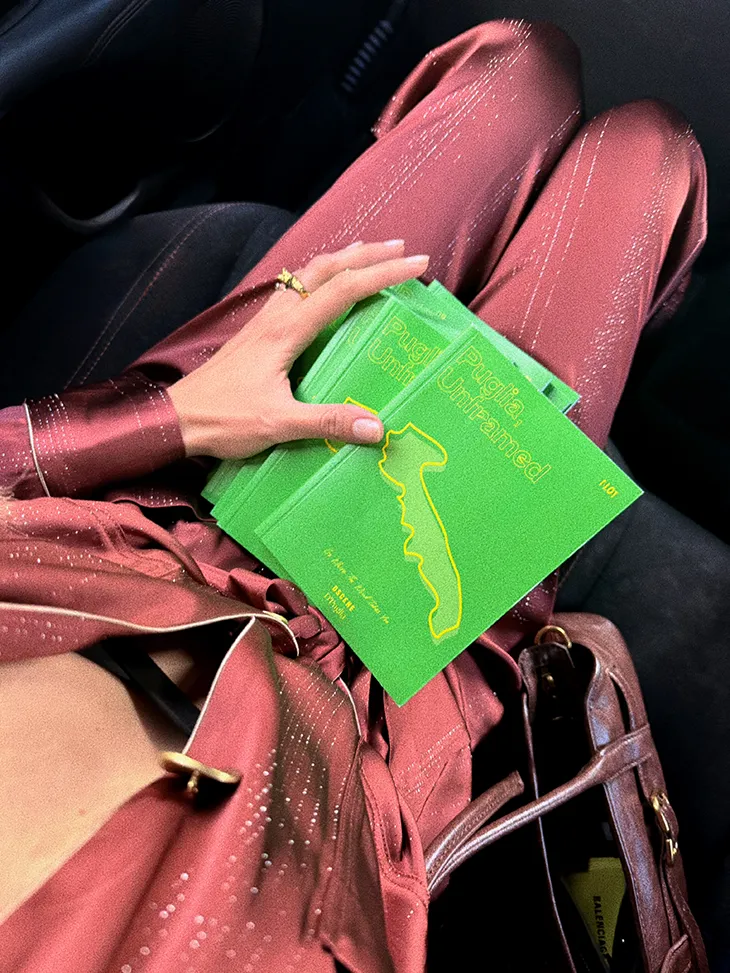
Miami Art Week runs on attendance as performance. Being there becomes the primary act. The fairs, the booths, the installations form the backdrop, but the real choreography unfolds in movement; hotel lobbies, sidewalks, street crossings, bars where everyone somehow ends up by default. You try to get back to your hotel and run into three people you know. You stop for a greeting and get pulled into an after-party because the collective fear of missing out overrides whatever plan you had five minutes earlier.
Showing up becomes the primary task; everything else adjusts around it.
That spontaneity is real, and it’s part of what makes the week intoxicating. There is something genuinely pleasurable about bumping into familiar faces without effort, about the city briefly functioning like a small village where everyone is temporarily available. You go to the same bars not because they’re exceptional, but because that’s where the density is. That’s where conversations overlap. That’s where the art world collapses into a handful of tables and shared cigarettes outside.
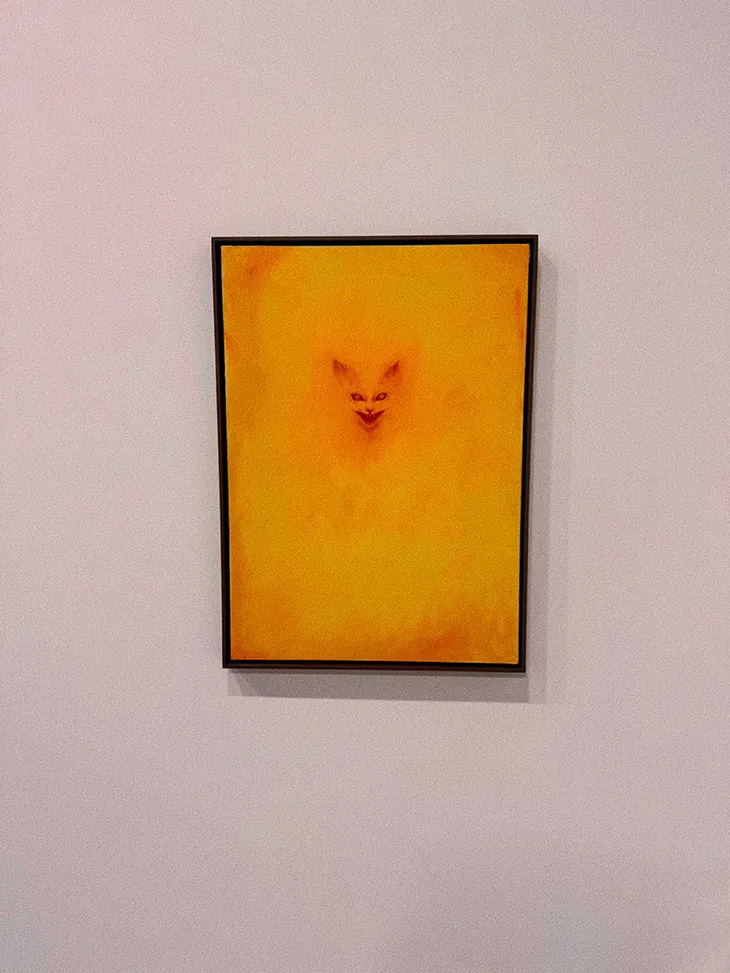
At the center of it all sits Art Basel, still the gravitational anchor whether people admit it or not. Around it orbit NADA, Untitled, Alcova, and a long list of satellite fairs, pop-ups, and temporary exhibitions. Some feel necessary, thoughtful, and well-paced. Others feel rushed, thin, or overly reliant on surface appeal. There is no shortage of questionable art, work that seems designed to fill walls rather than hold attention. Miami Art Week doesn’t filter aggressively. It accumulates.
Most of what matters happens between fairs, not inside them.
That accumulation shapes the experience. You move fast. You promise yourself you’ll return to a booth later, knowing you probably won’t. Attention fractures. Looking becomes scanning. Even when you care, the week conditions you to skim. Still, moments break through, an installation that interrupts your pace, a work that refuses to be absorbed casually. Those moments feel almost defiant precisely because they resist the speed of the week.
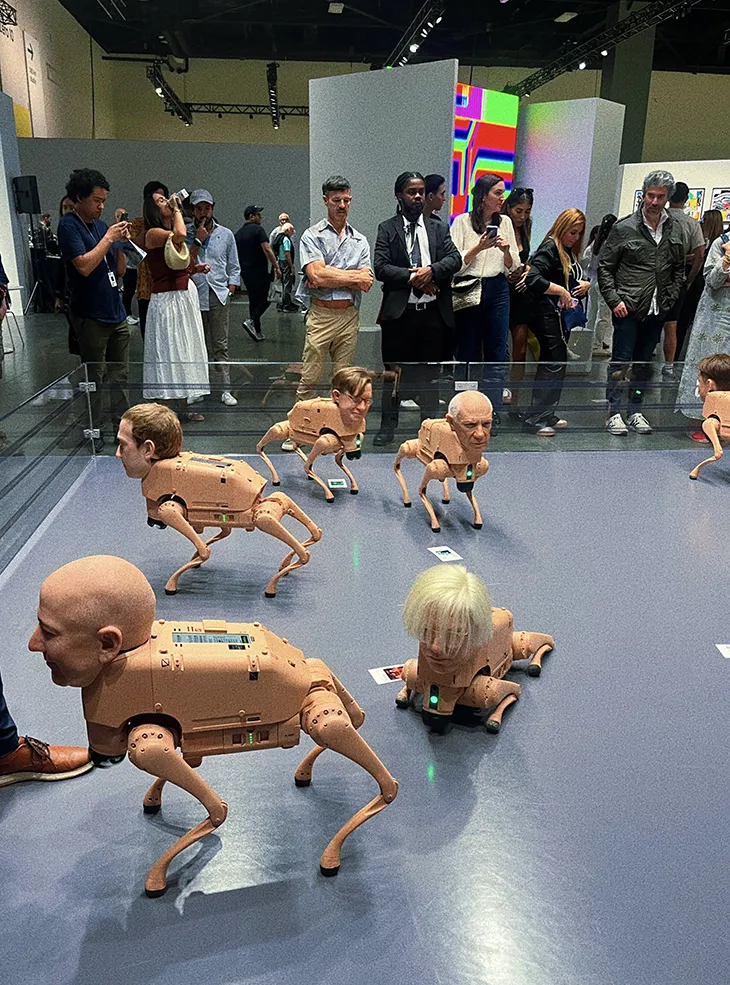
What complicates any clean critique is that Miami Art Week is also deeply social. It creates access that doesn’t exist the rest of the year. Conversations happen in motion. Hierarchies soften temporarily. You talk to people you wouldn’t normally reach, simply because you’re standing next to each other waiting for a drink. That kind of proximity matters, and dismissing it entirely would be dishonest.
Art circulates faster than it can be absorbed.
Yet the performance aspect is unavoidable. Attendance itself becomes currency. Wristbands, invitations, proximity to certain rooms or people, these signals structure experience as much as the art does. The market logic runs openly through the week. Conversations drift toward sales, placements, visibility, and alignment. Even well-meaning exchanges bend toward transaction. Art becomes something that circulates alongside capital rather than standing apart from it.
View this post on Instagram
By midweek, the sun that initially felt restorative turns relentless. Burnout arrives predictably, not as a personal failure but as a structural outcome. Miami Art Week asks too much of everyone. The days blur. Your body keeps moving while your capacity to absorb quietly drains away. You start to feel the difference between being present and being productive, between attending and experiencing.
The social structure of the week determines what gets seen.
And still, affection persists. I loved our DSCENE events. I loved seeing collaborators and friends I rarely encounter outside this compressed moment. I loved the familiar routes, the repetition, the strange comfort of knowing exactly where everyone would end up by nightfall. Miami Art Week irritates and energizes simultaneously. That tension is part of its identity.
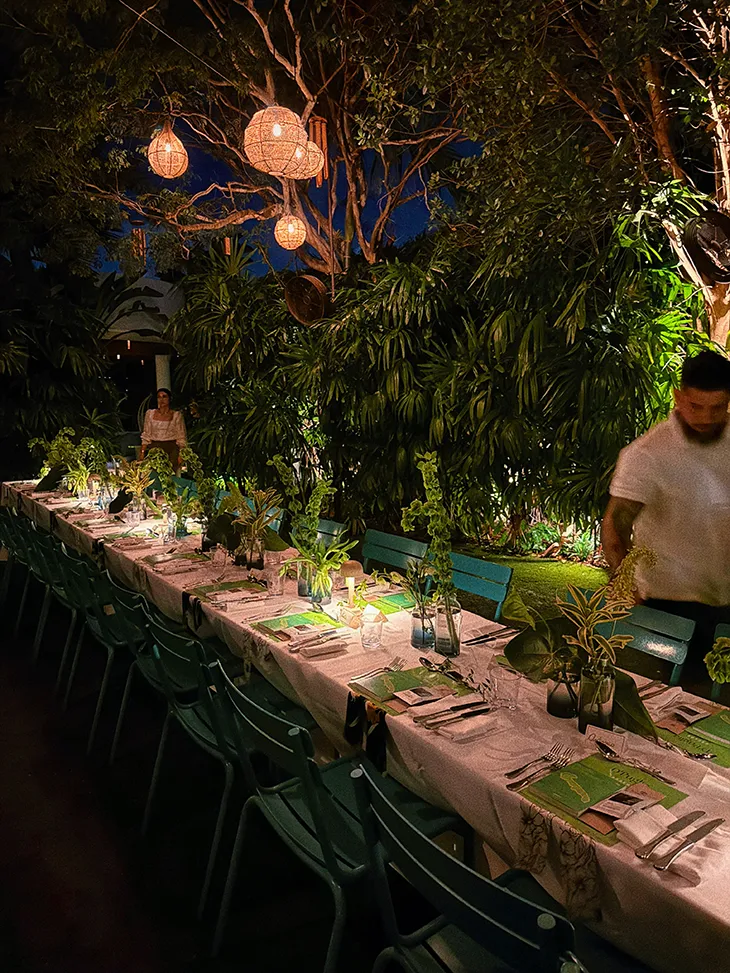
The problem isn’t that Miami Art Week exists as spectacle. It’s that spectacle becomes the default mode, leaving little room for slowness, depth, or refusal. The week rewards endurance more than attention. It privileges visibility over reflection. You survive it, then assess it afterward, once the noise drops and your phone stops vibrating.
Miami Art Week sustains itself by exhausting everyone involved.
The aftermath is always the most honest part. You leave Miami and the adrenaline fades quickly. What remains is a quieter reckoning: which moments stayed with you, which conversations mattered, which artworks you actually remember once the context disappears. Burnout sharpens that clarity. It separates experience from exposure.
I left Miami tired but aware. Loving the city doesn’t require romanticizing the week. Criticism doesn’t cancel affection. Miami Art Week is alive, messy, uneven, excessive, and social in ways that still feel meaningful. It offers sun, warmth, collision, and community, then asks you to pay for it with exhaustion.
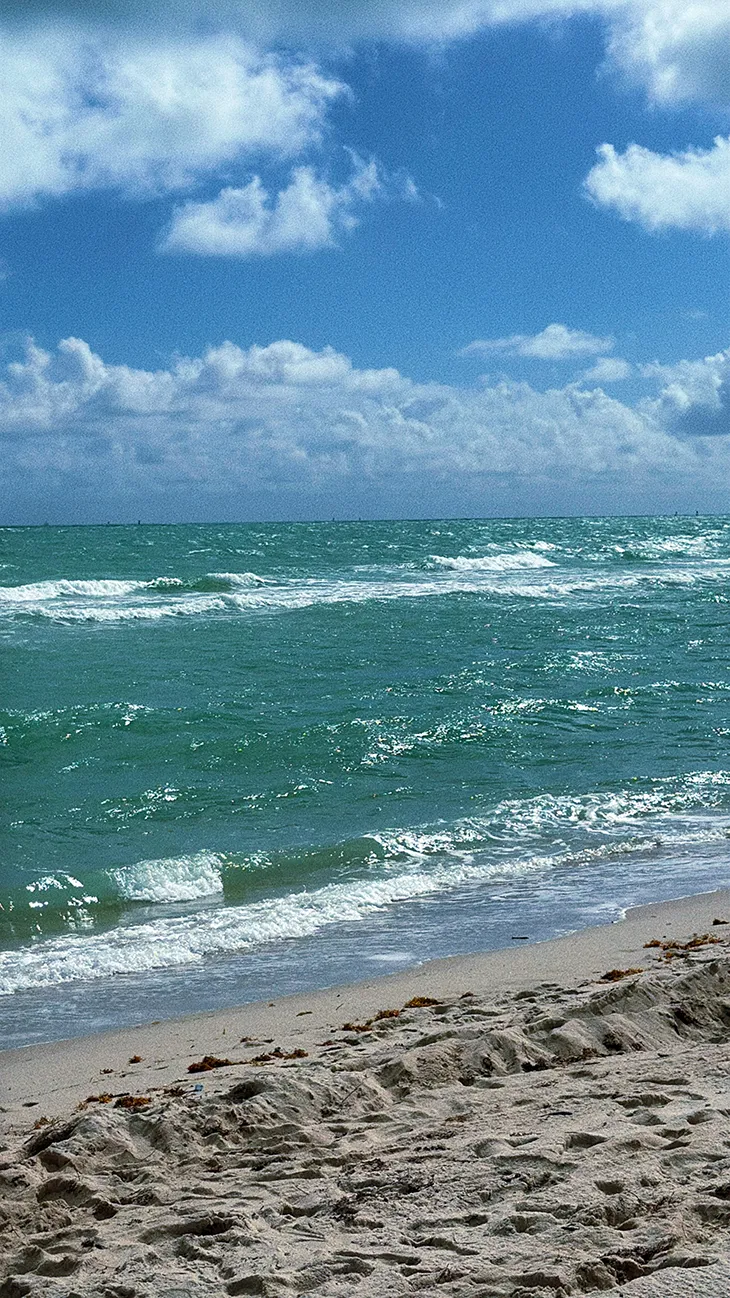
I’ll probably return, because the light still works on me, and because despite the flaws, there are moments when the noise breaks just enough to remind you why you showed up in the first place.