



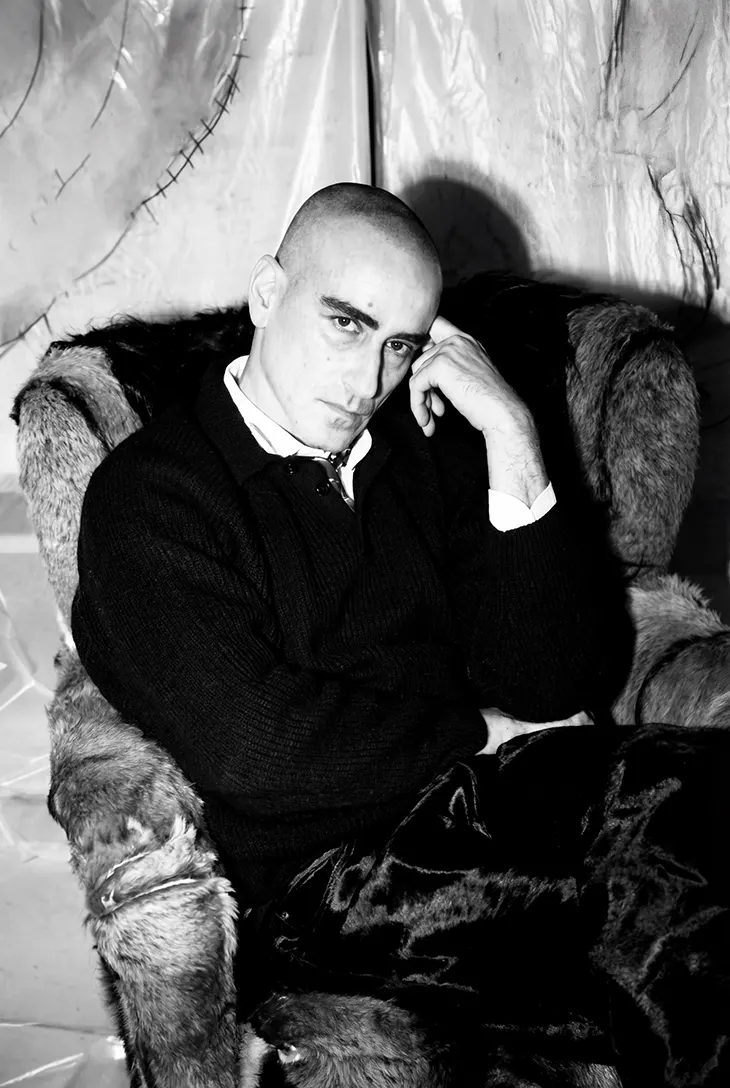
The fashion industry is witnessing a seismic shift in how creative talent flows between the rarefied world of luxury and the democratic expanse of mass-market retail. Francesco Risso, the Italian designer who spent nearly a decade transforming Marni into one of fashion’s most intellectually stimulating houses, has accepted the role of creative director at GU, Uniqlo’s trend-focused sister brand under Fast Retailing’s umbrella.
From Marni’s Genius to Mass Fashion Architect
Risso’s departure from Marni in June 2025 marked the end of an era defined by maximalist oddball-isms, unexpected collaborations, and collections that challenged conventional notions of beauty and wearability. Under his direction, Marni became synonymous with joyful experimentation, attracting a cult following that appreciated his ability to merge artisanal craftsmanship with conceptual depth. His shows were theatrical experiences, his clothes conversation starters. Risso was appointed at Marni back in 2016.
Now, that same creative energy will be channeled into GU, a brand that Fast Retailing launched in 2006 with a fundamentally different mission: delivering trendy fashion at accessible price points. According to Fast Retailing’s official announcement, Risso’s debut collection for GU is scheduled for Fall/Winter 2026, with an additional collaboration line with Uniqlo also slated for the same year. The appointment signals Fast Retailing’s ambition to inject genuine design credibility into its value-oriented brand as it expands beyond Japan into the American market.
The Great Creative Migration
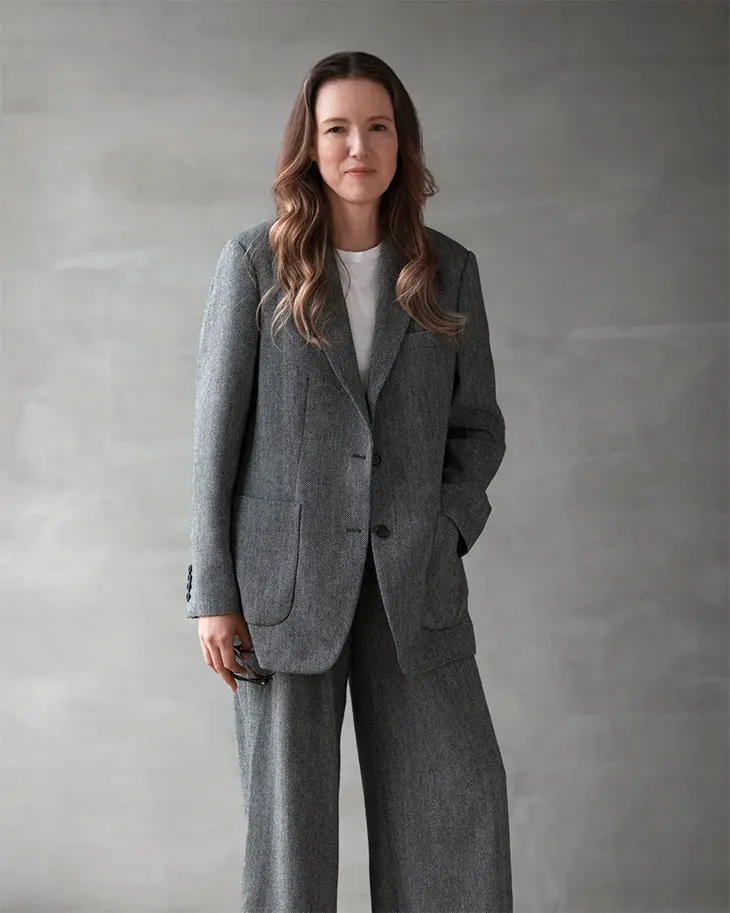
Risso joins an increasingly notable roster of luxury designers who have traded runway prestige for mass-market influence. Clare Waight Keller, the British designer who created Meghan Markle’s wedding dress during her tenure at Givenchy, was appointed Uniqlo’s creative director in September 2024. Her Uniqlo : C collection has successfully demonstrated that elevated design principles can translate to accessible price points without sacrificing sophistication. Waight Keller now oversees both her eponymous sub-brand and Uniqlo’s mainline collections for men and women.
Meanwhile, Zac Posen, known for his meticulously constructed ball gowns and red carpet stunners, took on the role of Executive Vice President and Creative Director of Gap Inc. in February 2024, simultaneously serving as Chief Creative Officer of Old Navy. His GapStudio initiative has already begun reshaping perceptions of what the heritage American brand can offer. We have also seen Kim Jones taking helm at a brand focused on growth in Asia, quickly after his Dior departure.
Why This Matters
This migration pattern reflects broader transformations within the fashion ecosystem. The traditional luxury model, with its reliance on exclusivity and aspiration, faces mounting pressure from shifting consumer values, economic uncertainty, and a younger generation that prioritizes access over status. According to McKinsey’s State of Luxury report, the industry confronts new macroeconomic headwinds that demand strategic adaptation.
For designers, mass-market positions offer something increasingly rare in luxury: creative freedom paired with genuine reach. At Marni, Risso’s vision touched thousands; at GU, it could influence millions. The scale of impact becomes exponentially greater when a $30 garment carries the same design intelligence as a $3,000 one.
Fast Retailing clearly understands this calculus. The company has positioned GU as more than just Uniqlo’s cheaper alternative. As executives have stated, they envision GU as a brand overflowing with trendy products that remain easily affordable, making people feel excited about fashion regardless of budget constraints. Risso’s appointment elevates that ambition considerably.
The Challenge Ahead
The transition from luxury to mass is not without its complexities. The infrastructure, production timelines, and margin structures of fast fashion operate on entirely different principles than those of luxury houses. Risso will need to translate his conceptual approach into commercially viable products that can be manufactured at scale without losing their distinctive character.
Yet his history suggests he may be uniquely suited for this challenge. The 2022 collaboration between Uniqlo and Marni, executed during Risso’s tenure, demonstrated his ability to distill his aesthetic into accessible formats. That partnership’s success likely informed Fast Retailing’s decision to bring him fully into the fold.
What does it mean when fashion’s most inventive minds choose scale over exclusivity? Perhaps it signals a maturation of the industry, a recognition that true creative influence in the twenty-first century requires meeting consumers where they are. The runway remains important as a laboratory for ideas, but the real test of a designer’s vision may be whether it can survive translation into the everyday wardrobes of ordinary people. Francesco Risso, Clare Waight Keller, and Zac Posen are not abandoning fashion; they are redefining where fashion happens. And for consumers who have long been excluded from the conversation, that redefinition could not come soon enough.





it just shows in what a nad position runway ready to wear actually is . i am sure marni was paying way less than if u were at Dior but also it is not an lvmh company you are very limited with any other choices. that is why Uniqlo makes good sense.