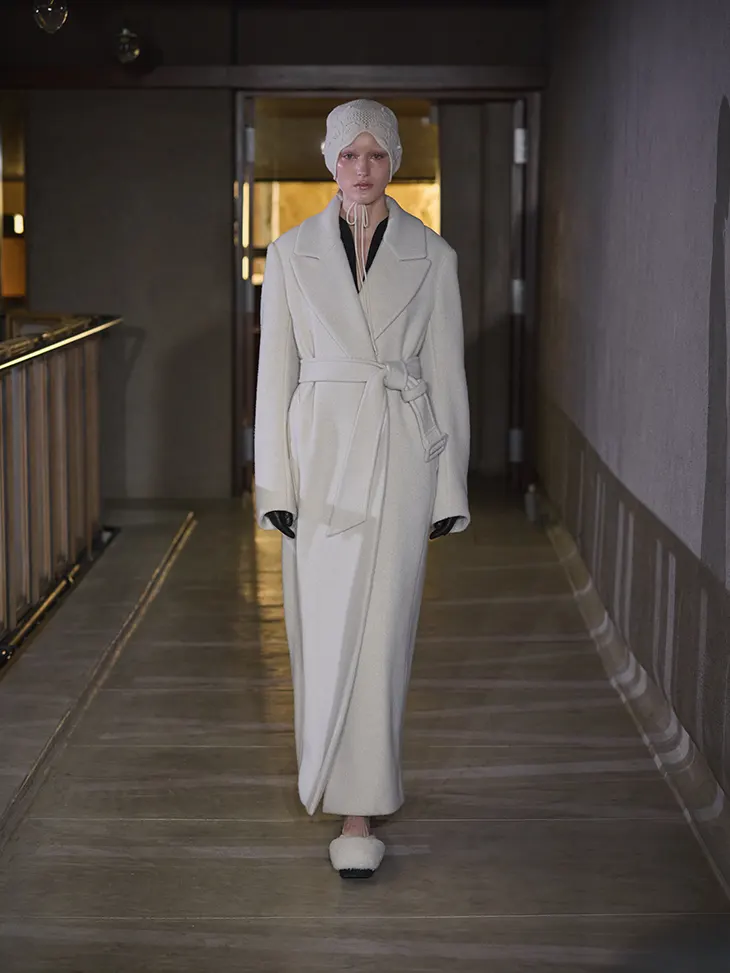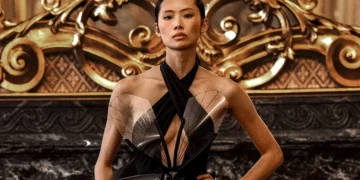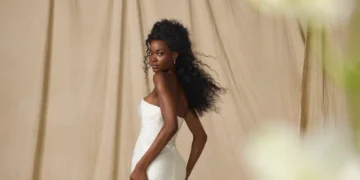



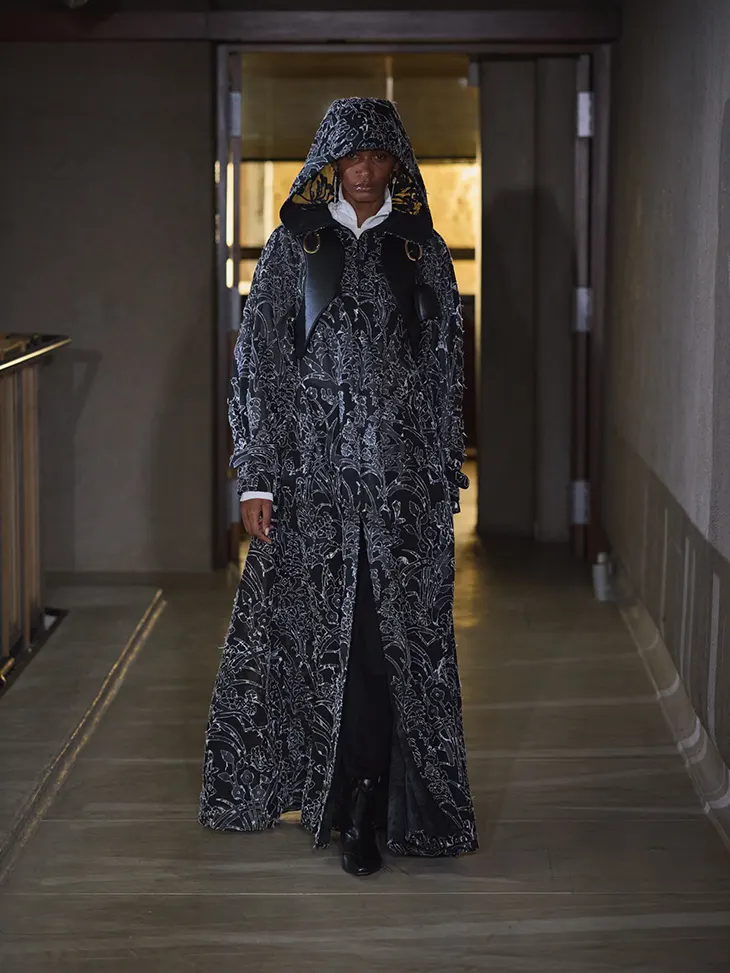
Mame Kurogouchi presents the Fall Winter 2026 collection, Reflection. The collection begins with an image of distant mountains partially concealed by mist after evening rain softens their contours. This atmosphere informs a body of work that approaches clothing as a series of transparent environments. Designer Maiko Kurogouchi examines how shifting mountain forms appear through haze and pairs this visual study with the delicate material qualities of Japanese Wa-glass, produced in Japan from the seventeenth to the early twentieth century.
FALL WINTER 2026
Kurogouchi developed the collection through personal memory and daily observation. Her upbringing between the mountains of Nagano and the urban pace of Tokyo continues to shape the direction of the brand. These experiences guide garments that move between city life and natural surroundings. Earlier work focused on landscapes connected to the past. For Fall Winter 2026, Kurogouchi directs her attention toward the present and studies familiar scenes through both close and distant perspectives. Ridgelines that appear through fog, mountain surfaces concealed beneath ice, and the texture of historic Japanese glass serve as visual references. The studio translated these observations into textiles created through weaving, knitting, dyeing, and printing.
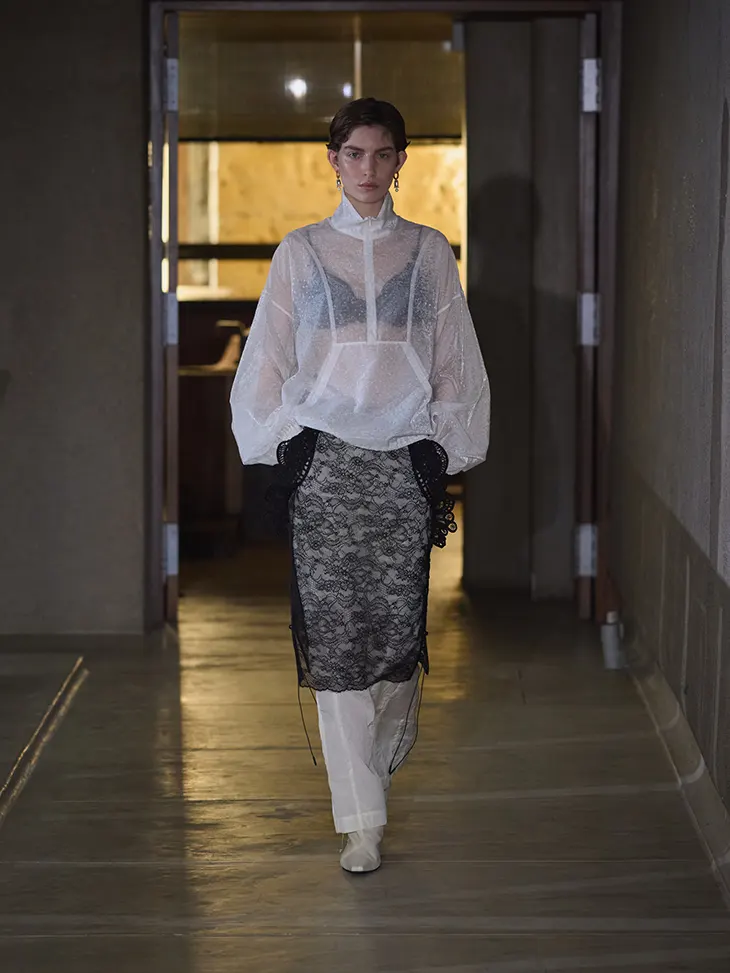
Designers wove ultra-fine nylon spark yarn into a soft textile that drifts with a light, vapor-like surface. This material forms dresses and blouses shaped through asymmetrical draping. The collection also develops the brand’s craft-driven vocabulary through references to outdoor clothing. Kurogouchi approaches nature through the idea of viewing it behind a translucent layer.
Washi paper cut into forms of mountain plants appears across garments through hand-printing techniques. Primula Japonica, bell flower, and aconite appear as motifs across surfaces. Sheer anoraks and capes present surfaces that recall frost-covered wildflowers or the patterned clarity of glass. The studio also studied cloth wrappings traditionally used to protect farming tools. Cord embroidery developed from these accidental shapes appears across garments with sculptural draping.
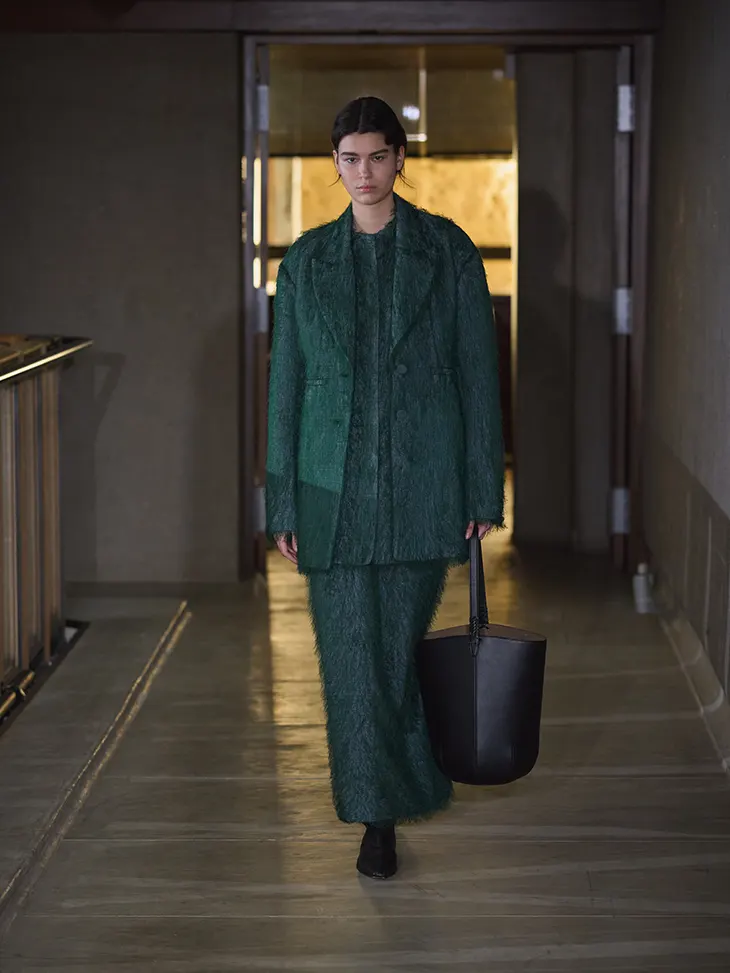
Kurogouchi builds the palette around a deep shade of green. The tone recalls fresh foliage, the dense shadows of trees seen through mist, and the emerald pigment historically used in Japanese glass production.
Accessories continue the dialogue between nature and handwork through forms inspired by the Japanese lady bell flower found in mountain environments. The form also recalls delicate glass wind chimes. These references appear in sculptural glass earrings and a necklace shaped around curved bell silhouettes.
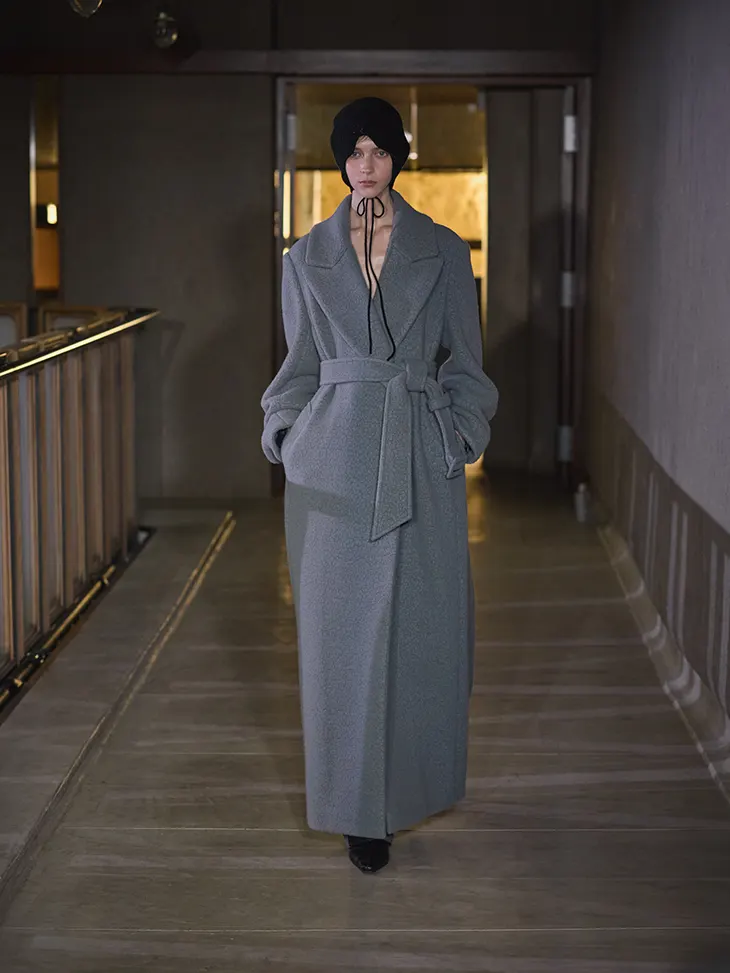
The runway also introduces a leather accessories project developed with the Japanese leather house TSUCHIYA KABAN. Founded in 1965, the company built its reputation through the production of randoseru schoolbags. This collaboration translates that technical knowledge into a new group of objects. The lineup includes a bucket bag shaped with the cocoon silhouette associated with the brand, a leather vest inspired by the structure of the school satchel, and small leather goods defined by curved forms.