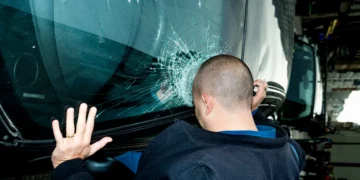



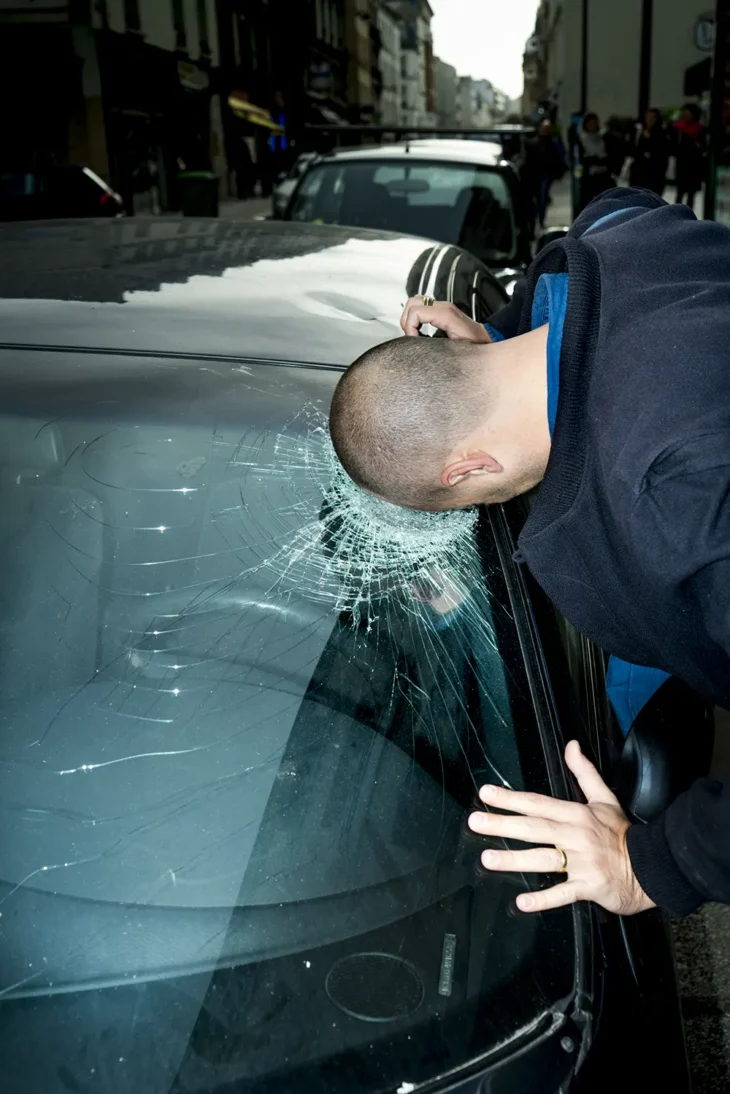
Feng Li works from the edges; of awareness, of performance, of whatever we call reality before it fractures into something stranger. His photographs interrupt the everyday with a flash that exposes the theatre people walk through without noticing, catching them in a state that feels both accidental and perfectly cast. After nearly two decades of White Night, he speaks with a calm certainty about the world he documents: that human nature repeats itself endlessly, that truth functions more like an illusion, and that stillness is a temporary condition at best. His images push the viewer into that in-between space where clarity and confusion sit side by side, and neither resolves.
ORDER IN PRINT AND DIGITAL
In this conversation with DSCENE Magazine’s Jana Kostic, Feng Li reflects on performance, the irrelevance of answers, the artificiality embedded in every environment touched by people, and the absurd continuity of human behavior across cities. He talks about the threshold where the real becomes unreal, the instinct that tells him when to raise the camera, and how two decades of images have widened the emotional register of White Night, from satire and discomfort to something gentler, almost romantic.
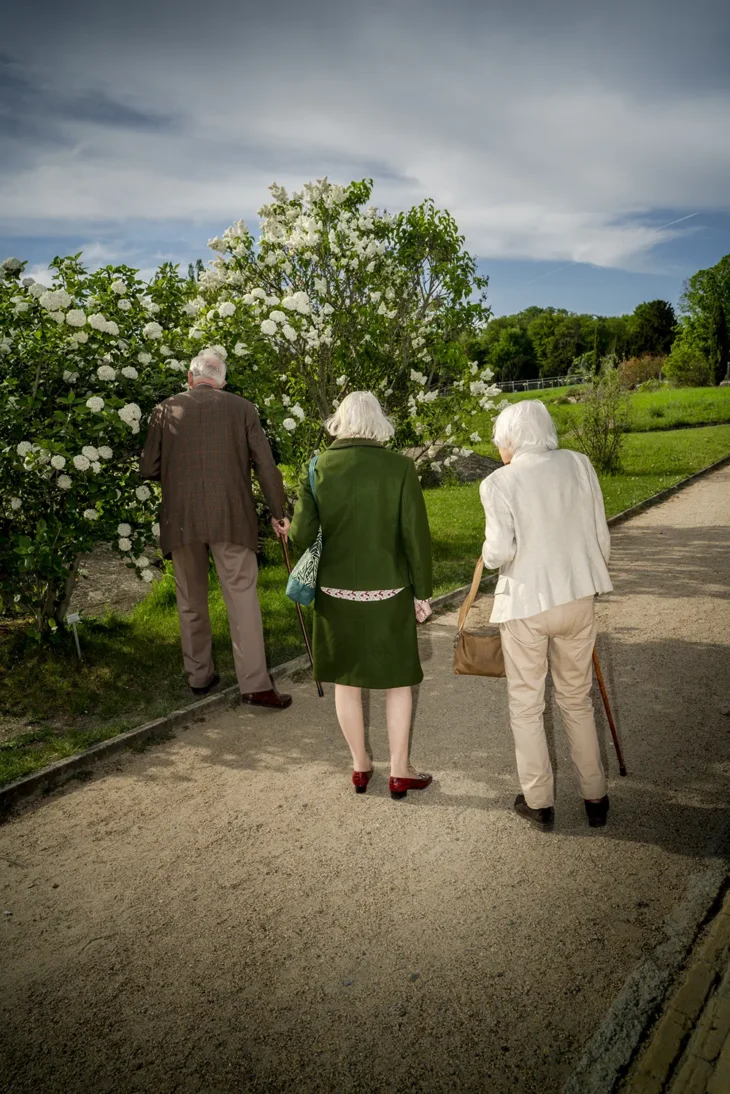
You once said a good question is more important than a good answer. What’s the most persistent question you haven’t answered yet? – I no longer have questions about this world. Once you realize that the world is nothing more than a makeshift troupe, all questions about humanity lose their meaning. In the end, we return to philosophy to contemplate and explain everything before us: Who are we? Where do we come from, and where are we going?
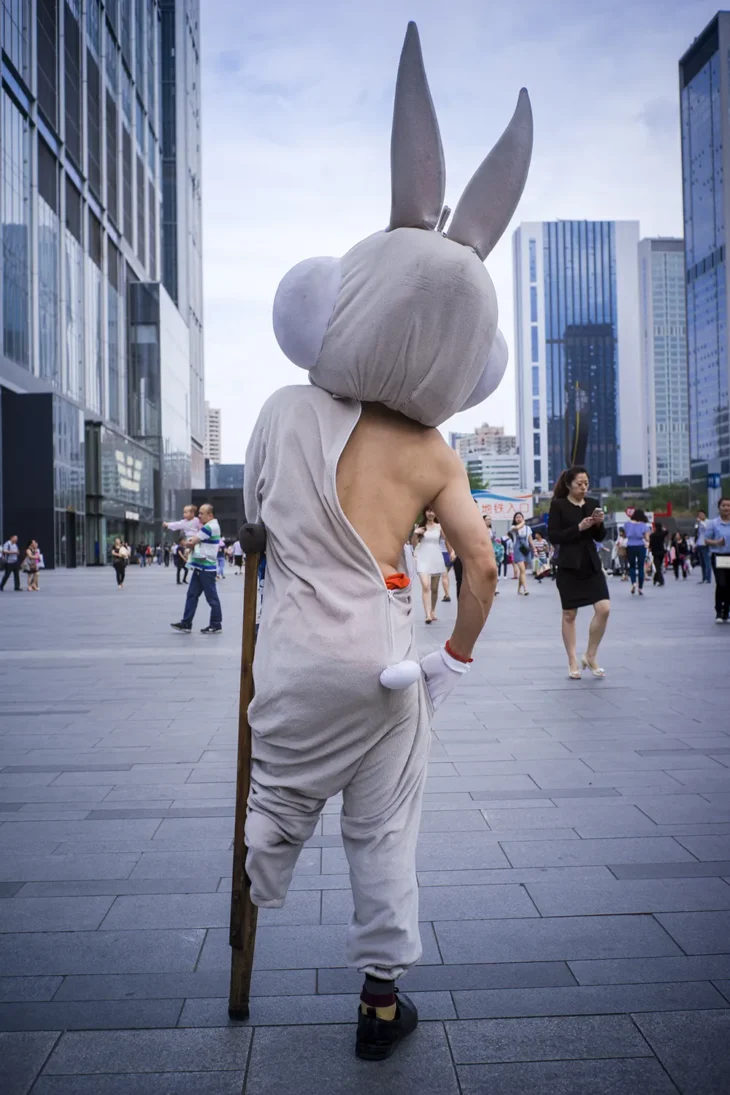

You often catch people on the edge of awareness, half in character, half lost in their own world. What truths do you think emerge in that in-between state? – It is a threshold, a convergence of the real and the unreal. I like to let what is real appear in a blurred or abstract state, opening up more space for imagination. I only present what I see; I have no desire to explain it. Reality is nothing more than Schrödinger’s cat.
Everyone is an actor, myself included. We are constantly performing our roles.
Do you believe people are performing most of the time? Or do you think reality only leaks out in moments of distraction? – Everyone is an actor, myself included. We are constantly performing our roles. The people who appear in my photographs inevitably become my actors as well. I have no script; I press the shutter only when their performance aligns with the narrative I seek. Often, those being photographed are unaware that they have entered my storyline. At times, they know they are being photographed. I don’t care whether it’s staged or candid, what I wish to express is not some so-called truth.
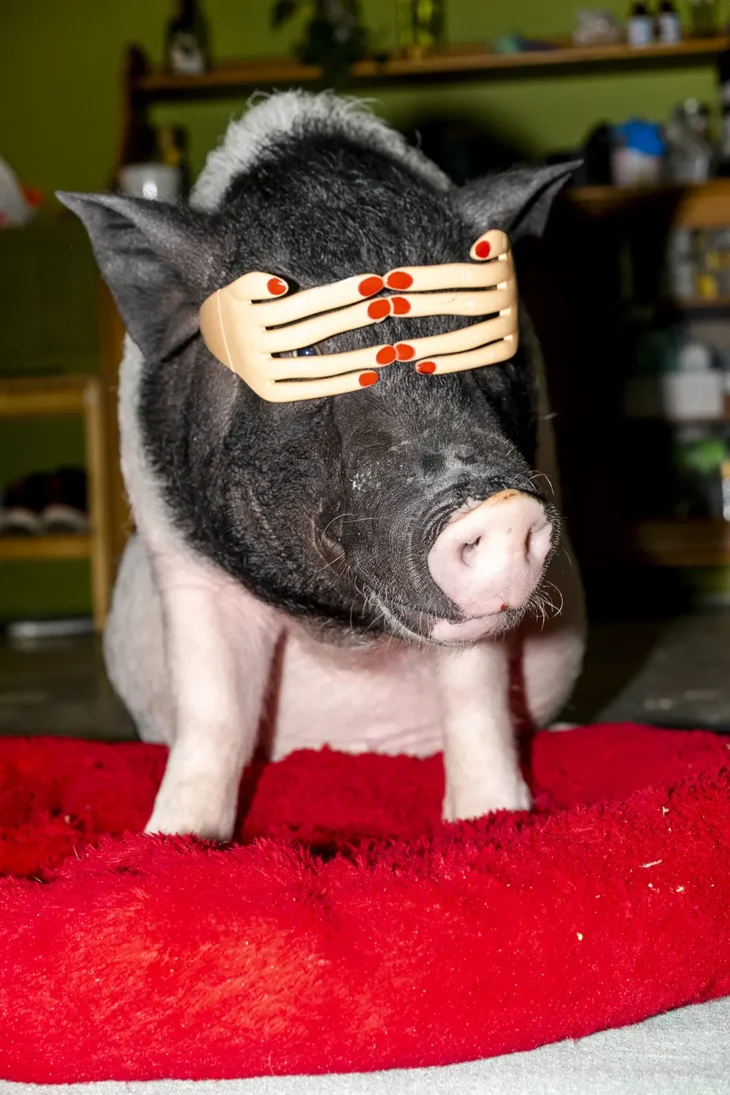
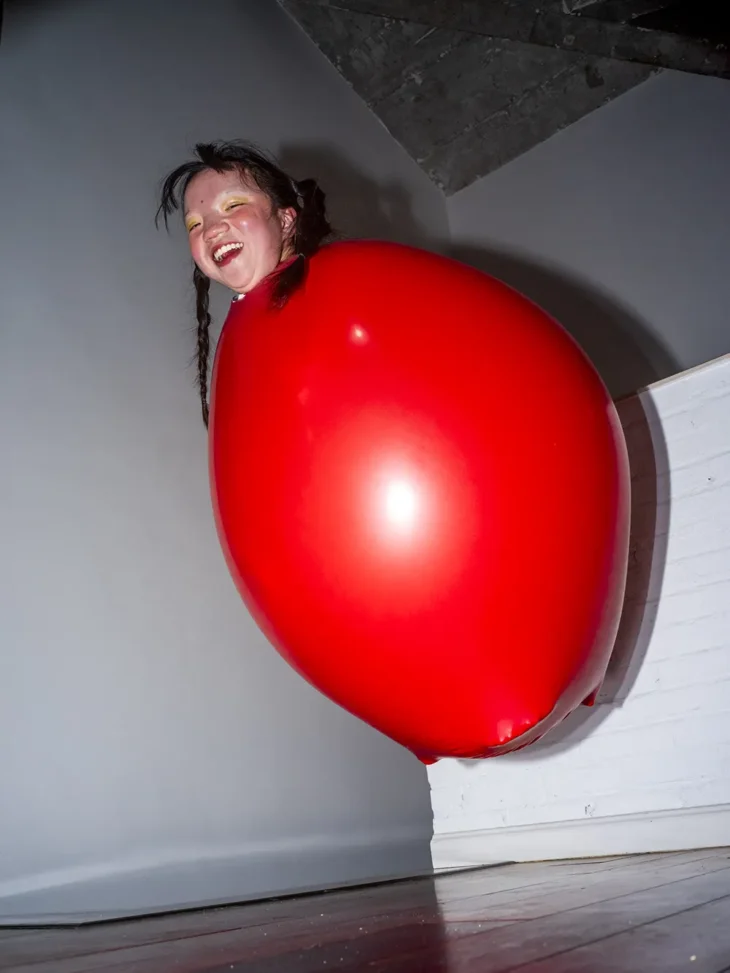
Do you think of yourself as a storyteller, or as someone interrupting the story? – Each of my photographs conceals a story, more or less, like One Thousand and One Nights. All these small stories eventually merge into a whole. Of course, they can also be rearranged like tarot cards, generating new sequences and meanings at any time. I hope that every image contains a single point, from which countless storylines can emerge.
Reality is nothing more than Schrödinger’s cat.
What kind of moment makes you lift the camera? – Only in the instant of seeing do I realize it is time to act; before that, I know nothing. That is why I always carry my camera, waiting for that moment.
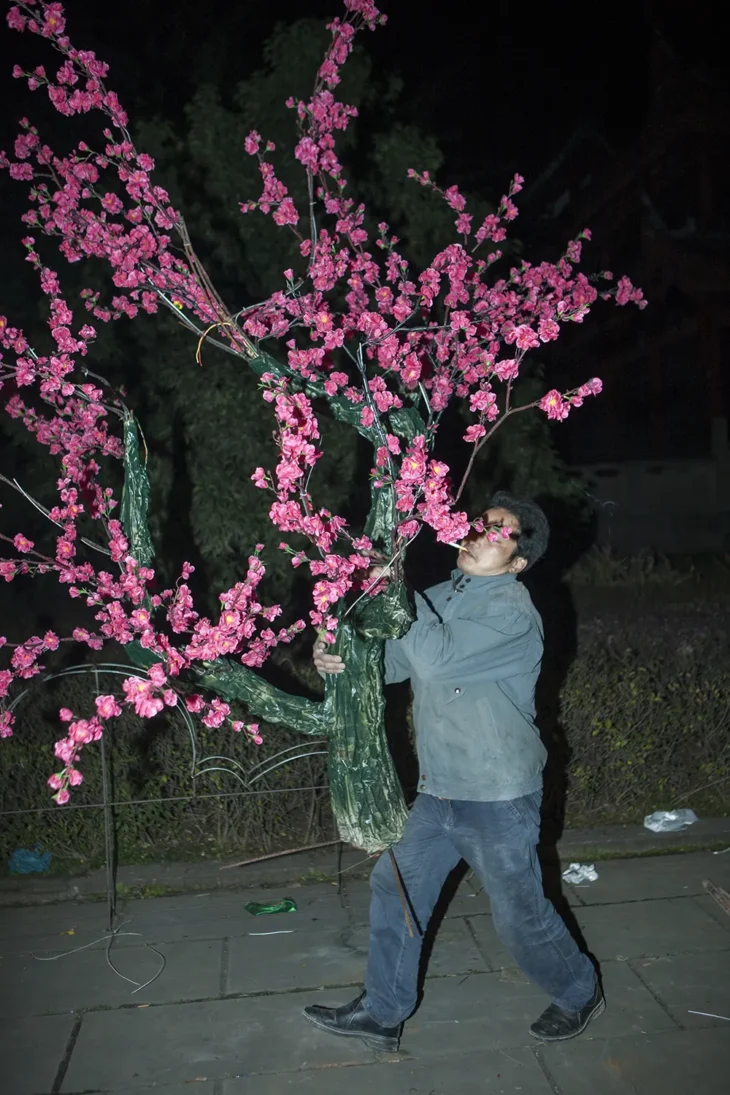
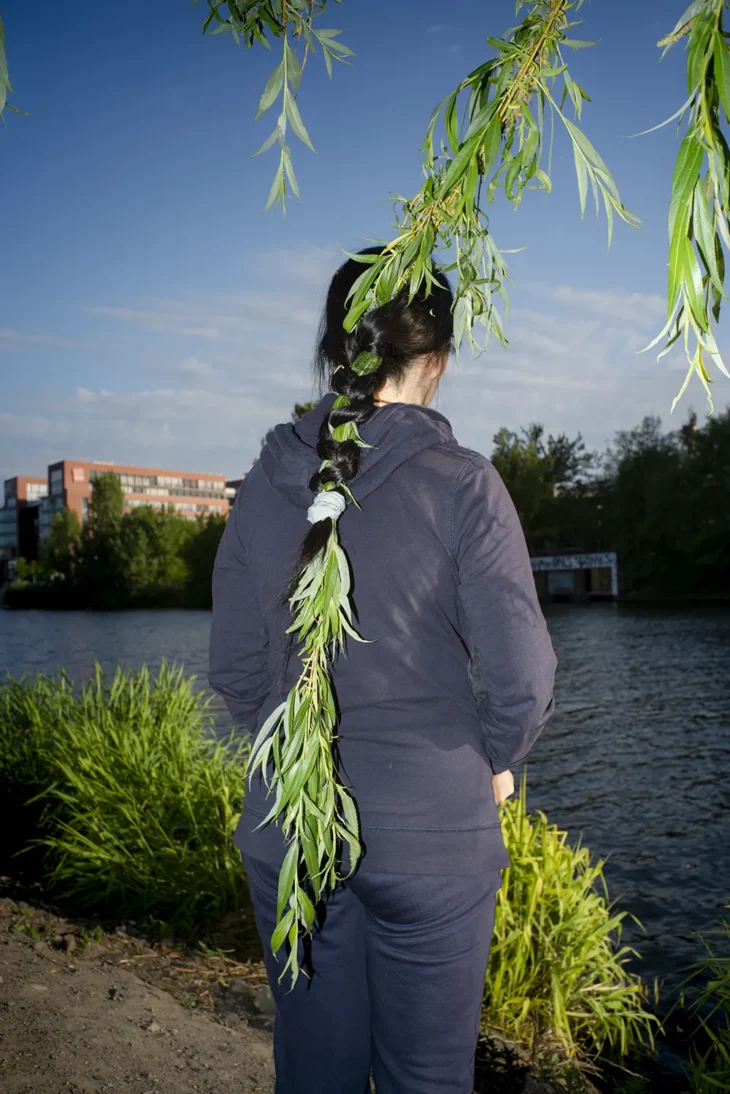
You’ve worked for years as a government photographer, capturing officials, factories, and infrastructure. Which world feels more artificial to you? – Now I see no difference, wherever there are people, there are traces of human intervention. Our planet is scarred all over, covered in artificial marks.
As long as people are involved, nothing surprises me.
Much of the White Night series is photographed in Chengdu, but you’ve also worked in Paris, Tokyo, Berlin. What stays the same no matter where you are and what surprises you? -What remains unchanged is the universality of human nature. Whether in Paris, Tokyo, Berlin, or the city where I live, human complexity is the same everywhere. My photographs are not about geography. As long as people are involved, nothing surprises me.

After nearly two decades of White Night, do you still feel like you’re chasing something? – From the initial search and observation to the present, I no longer have lingering questions about the human world. Once you realize that all these issues, past, present, and future, are merely repeating themselves endlessly, there is nothing left worth probing. Rather than a pursuit, it is more a process of gradual growth.
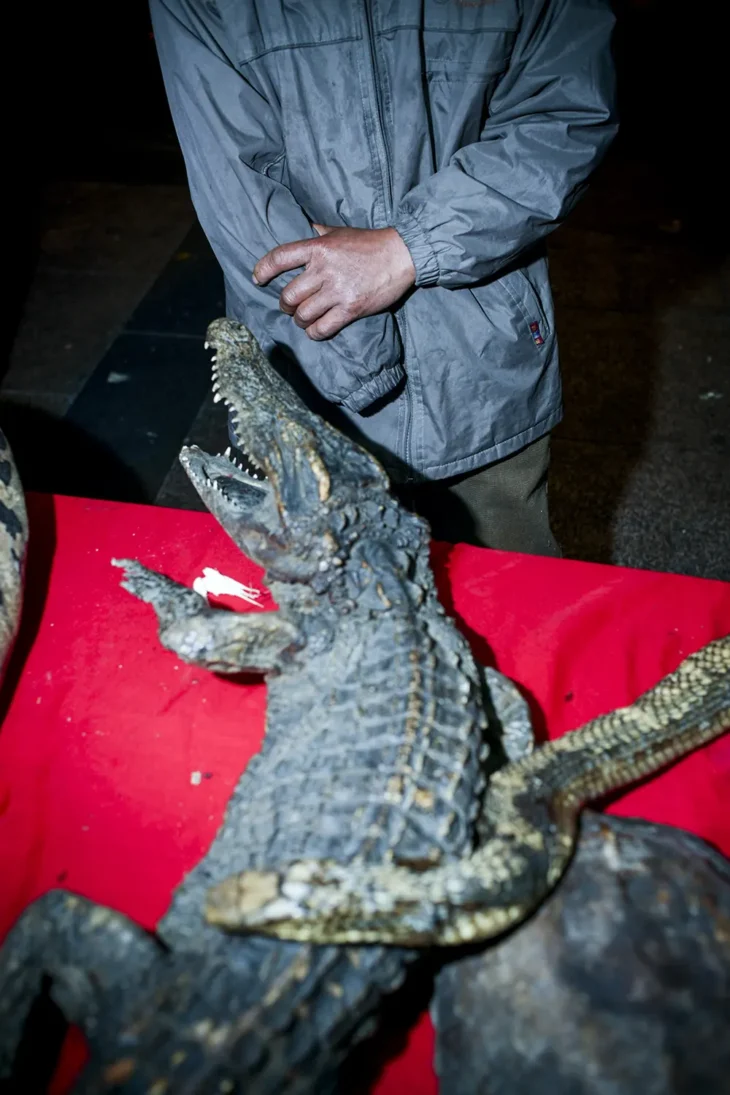
If White Night has been an ongoing conversation since 2005, what is it starting to say now that it didn’t before? – From the very beginning of White Night until now, what I have sought to express is a sense of the surreal, or unreal, within reality. For me, the past of the past is also the future, and this logic has always run through my entire creative process.
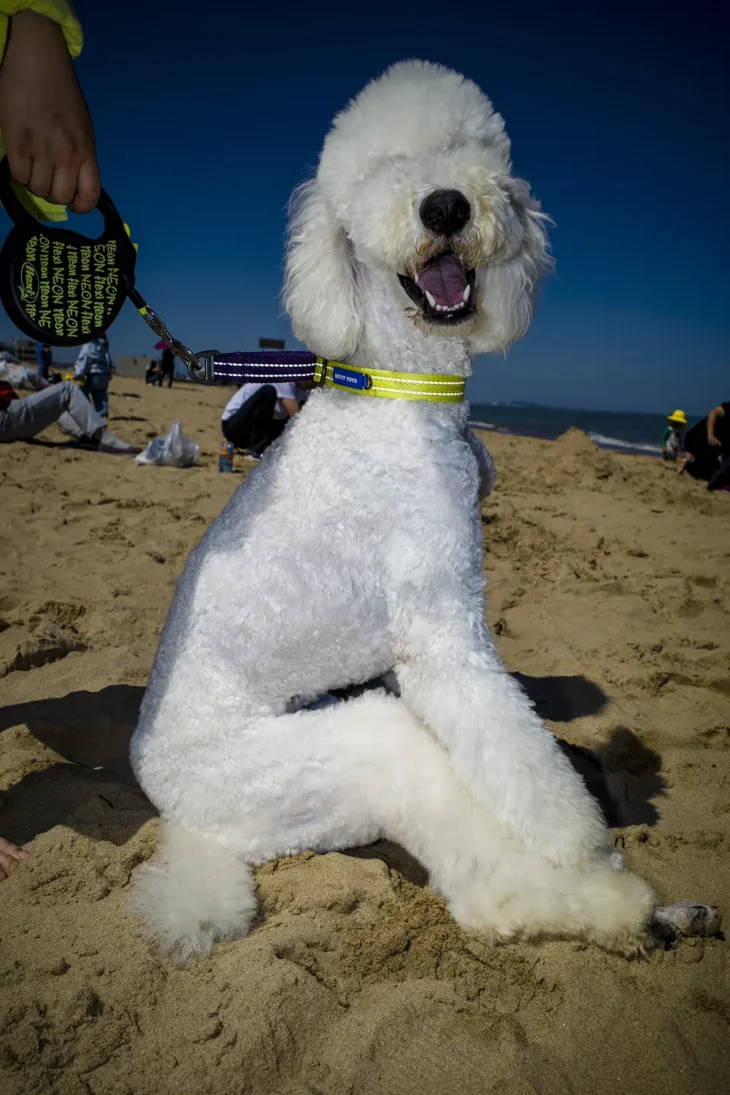
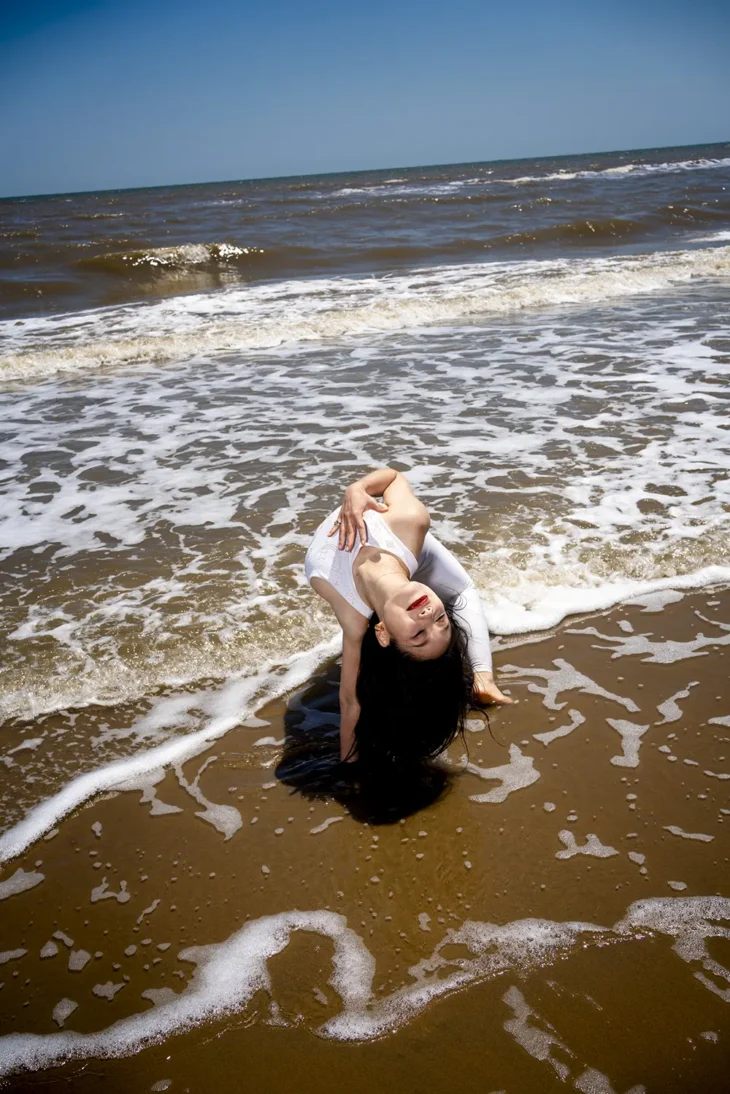
White Nights in Wonderland brings together two decades of your work in one space. When you see these images side by side, what story do you think they tell now that they didn’t tell before? – Over time, the photographs, once few, have accumulated and grown richer. Viewers can see that the emotions in my images are not only absurd, satirical, or sharp, but also romantic and poetic. From the early works brimming with power to later ones suffused with gentler, more restrained emotions, the range has broadened.
I press the shutter only when their performance aligns with the narrative I seek.
The photos are suspended between humor, discomfort, and something unnameable. What do you hope lingers with viewers once they leave the exhibition space? – That question I leave to the audience. I never impose preconceived meanings on my work. Every response from the viewer is acceptable to me, just as, when I encounter these scenes in real life, most people around me remain indifferent.
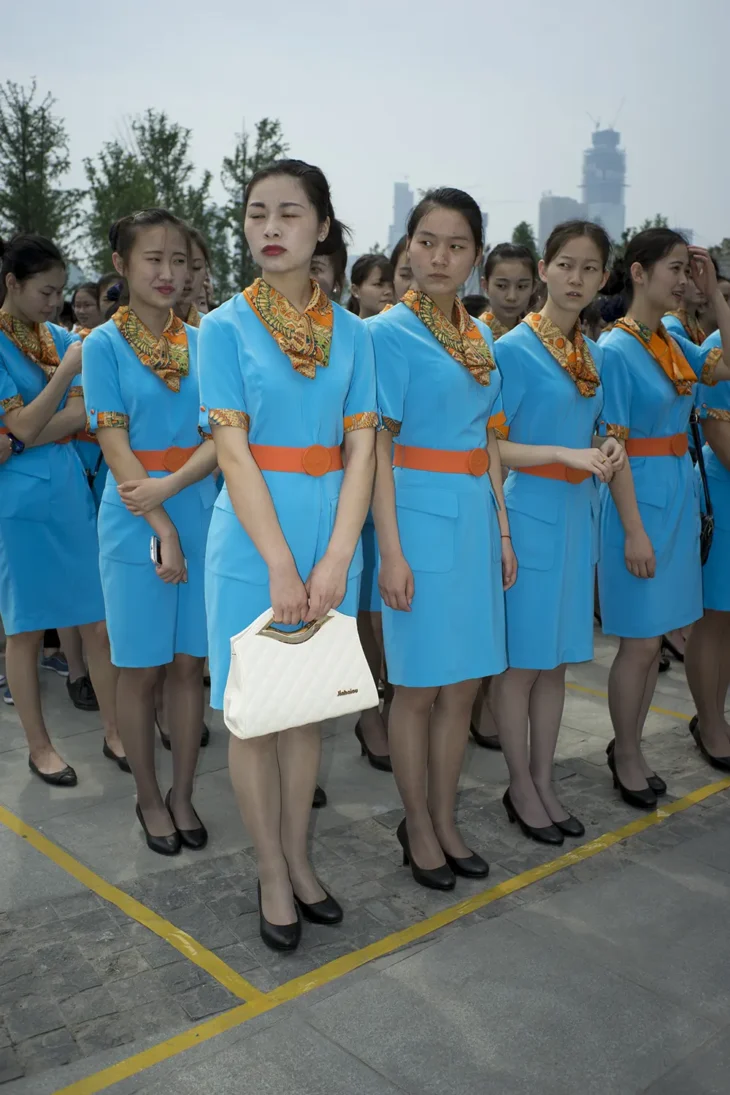
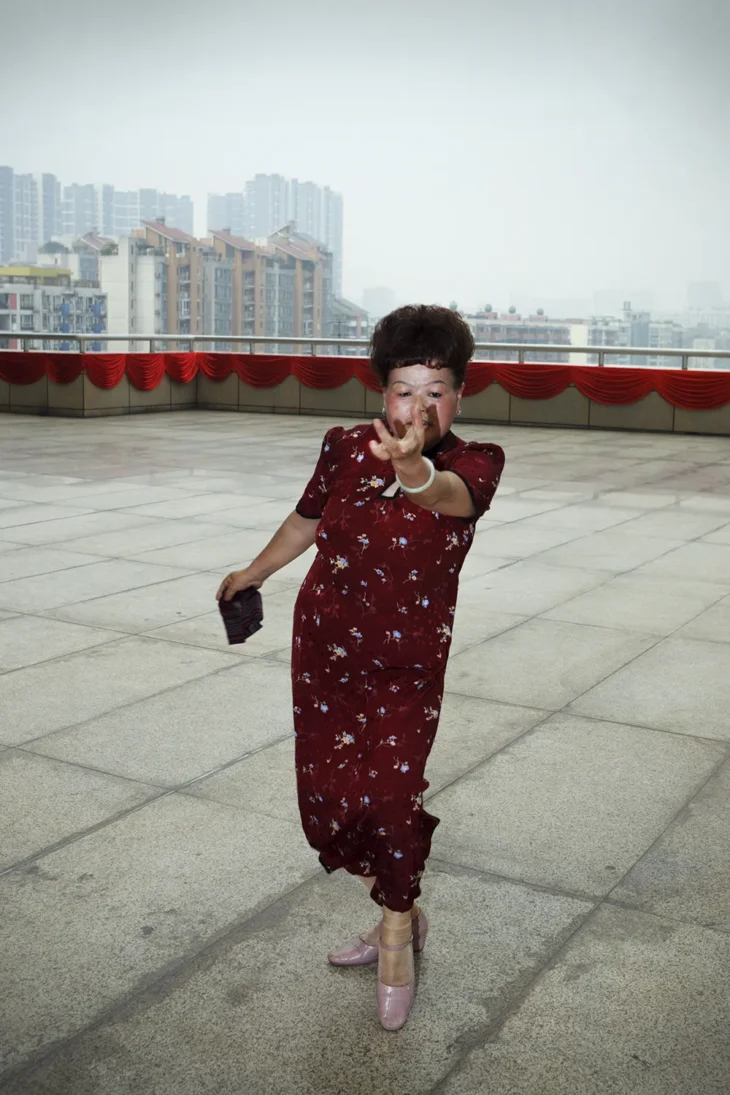
In a time where everything moves quickly, do you think stillness is becoming radical or even impossible? – Stillness does not mean backwardness, especially in times of rapid change. We need relative stillness to reflect and to settle. What we must be wary of is not being “left behind,” but rather the blindness brought on by constant acceleration. Personally, I prefer to remain as an observer, to avoid being swept into the torrent, but even then, it is beyond my control. In a raging current, relative stillness is almost impossible. Even the hardest, most angular stones are eventually smoothed by the flow.
Even if the world we inhabit is a mess, there are still countless things beyond humanity that deserve our attention.
When disorder becomes the norm, what does clarity look like? – You must realize that “peaceful times” is nothing but an empty phrase. But that does not mean abandoning courage or curiosity. Even if the world we inhabit is a mess, there are still countless things beyond humanity that deserve our attention and care – plants, animals, nature, and the cosmos.
Originally published in DSCENE “The New Disorder” Issue.




thanks
thanks